Support

Heringsdorf

Attractions

About

Welcome to Heringsdorf, a sophisticated and elegant seaside resort located on the sun-drenched island of Usedom. Often referred to as the "Nice of the Baltic," this charming town is one of the famous "Imperial Baths" (Kaiserbäder), renowned for its glamorous atmosphere and stunning coastal scenery. With a population of approximately 9,000 residents, it offers a peaceful yet vibrant environment where the fresh sea breeze meets high-class culture.

Geographically, Heringsdorf is situated in the state of Mecklenburg-Vorpommern in the northeastern part of Germany. The town stretches along the fine, sandy shores of the Baltic Sea, boasting a mild maritime climate that attracts visitors year-round for wellness and relaxation. The lush beech forests surrounding the area add to its natural beauty, making it a perfect destination for nature lovers and hikers.
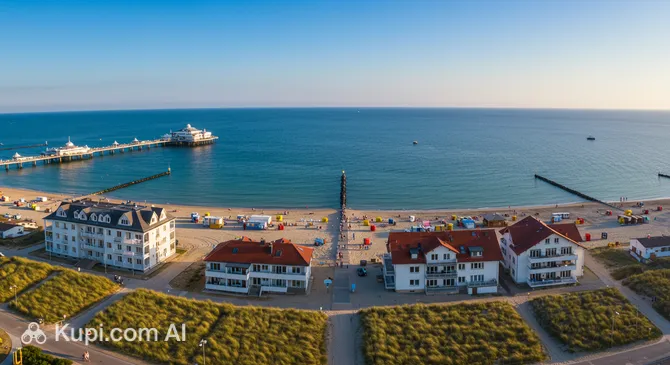
Heringsdorf. Source: Kupi.com Binoculars

The town is celebrated for its unique resort architecture (Bäderarchitektur), characterized by magnificent villas with ornate facades, balconies, and turrets that line the promenade. Exploring the history of Heringsdorf reveals its transformation from a small fishing village into a premier holiday destination for the aristocracy and royalty in the 19th century. Today, these restored historical buildings provide a nostalgic backdrop to a modern vacation experience.

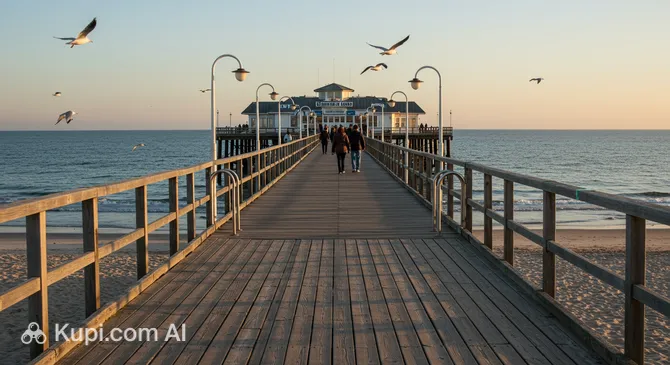
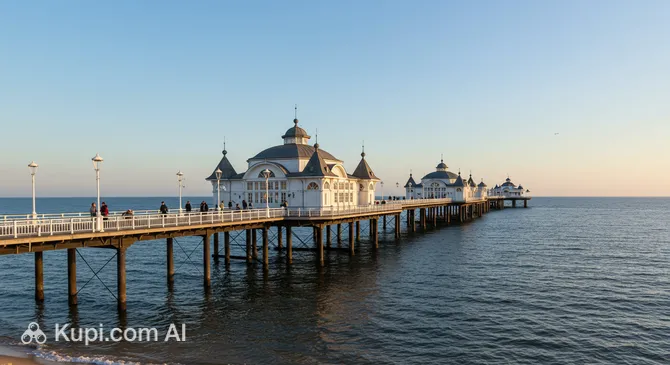
One of the city's main highlights is the Heringsdorf Pier (Seebrücke), which is the longest pier in Germany, stretching 508 meters into the sea. Visitors can stroll along the pier to enjoy panoramic views, visit shops, or dine in the restaurants located above the waves. Additionally, the endless white sandy beach invites tourists to sunbathe, swim, or take long, refreshing walks by the water's edge.

Whether you are looking for a luxurious spa retreat, a cultural journey through architectural gems, or simply a quiet escape by the sea, Heringsdorf has something special to offer. It is an idyllic place to unwind and experience the timeless charm of the Baltic coast.
Weather Overview

Heringsdorf features a temperate maritime climate that is heavily influenced by the Baltic Sea, resulting in moderate conditions year-round. Summers are generally pleasant and mild, making them the most popular time for beach activities. From June to August, average temperatures range between 17.8°C and 19.5°C, with daily highs peaking around 22.4°C in August. While the weather is often comfortable, light rain is possible even in summer, so packing a light jacket is advisable.

The winter months bring cooler air, though extreme cold is relatively rare for this latitude. Average temperatures from December to February hover around 3°C, with minimums dipping close to 1°C. Precipitation is spread fairly evenly throughout the year, often manifesting as frequent light showers; months like January and October can see up to 15 wet days. For a more detailed breakdown to help you plan your trip, you can check the specific forecast for the weather in Heringsdorf. Expect mild, comfortable summers and cool, damp winters with consistent precipitation patterns throughout the seasons.

Interesting Facts

Beyond its reputation as a sophisticated seaside resort, Heringsdorf holds several intriguing historical details and geographic curiosities that many visitors overlook. Digging a bit deeper into its past reveals unique connections to artistic icons and record-breaking architectural feats.
Heringsdorf Pier. Source: Kupi.Binoculars
  • Historically, Heringsdorf was affectionately nicknamed the "Bathtub of Berlin." In the late 19th and early 20th centuries, it became the preferred summer retreat for the capital's wealthy bankers and industrialists, who commissioned the opulent villas that define the town's skyline today.

  • The famous Russian writer Maxim Gorky sought solace here in 1922. He resided in the Villa Irmgard to recover from tuberculosis; today, the villa serves as a local history museum and a memorial to the author, preserving the room where he lived and worked.

  • The modern Heringsdorf Pier has a dramatic predecessor known as the Kaiser Wilhelm Bridge. The original wooden structure was destroyed by a fire in the 1950s, and for decades the town was without its landmark until the current pier was constructed in 1995.

  • Heringsdorf is part of the longest beach promenade in Europe. This continuous path stretches for approximately 12 kilometers, seamlessly connecting the "Imperial Baths" of Bansin, Heringsdorf, and Ahlbeck with the Polish city of Świnoujście.

How to Get There

Reaching the beautiful island of Usedom is the first step to a relaxing holiday. Whether you prefer flying or taking the train, there are several convenient options to reach this seaside resort. For a comprehensive guide on all available routes, you can read more about how to get to Heringsdorf.

The city of Heringsdorf does not have its own major international airport listed in the immediate vicinity, but you can fly into Goleniow Airport (IATA: SZZ) in the city of Szczecin, which is the closest option at about 64.5 km from Heringsdorf. The estimated travel time by car from there is approximately 1 hour. For a wider range of international connections, many travelers choose Berlin Brandenburg (IATA: BER) in Berlin. Although it is located about 182.8 km away, it serves as a major hub with high passenger traffic. The journey by road from Berlin to Heringsdorf typically takes around 2.5 to 3 hours, or you can utilize the train network for a scenic transfer.

For clarity, here is a summary of the main airports located near the region:

Airport Name City Passenger Traffic Km from City
Berlin Brandenburg Berlin Large 182.8
Malmo Airport Malmö Medium 183.4
Goleniow Airport Szczecin Medium 64.5
Bornholm Airport Rønne Small 129.2
Laage Airport Rostock Small 124.0

If you prefer traveling by rail, it is important to note that while Heringsdorf is connected to the regional network, major long-distance hubs are located in larger cities nearby. You can arrive at the Berlin Hauptbahnhof station in the city of Berlin, which is about 167.8 km from Heringsdorf. From there, visitors usually transfer to regional trains or rent a car to complete the journey to the coast. Alternatively, Rostock Hauptbahnhof in Rostock is closer, situated approximately 133.3 km away, offering another convenient gateway to the Baltic Sea.

Below is a list of significant railway stations that serve as gateways to the region:

Station City Passenger Traffic Km to Center
Berlin Hauptbahnhof Berlin Very Large 167.8
Berlin Ostbahnhof Station Berlin Large 167.9
Berlin Zoologischer Garten Station Berlin Large 170.5
Malmö Syd Station Malmö Medium 194.1
Rostock Hauptbahnhof Rostock Medium 133.3

Main Attractions

Attractions:

Heringsdorf is a treasure trove of architectural gems and natural wonders, offering visitors a variety of ways to experience the charm of the Baltic coast. From historic structures extending into the sea to elevated paths through the forest, the city's landmarks provide unforgettable views and experiences.

Undoubtedly the most iconic landmark is the Heringsdorf Pier. Stretching over half a kilometer into the Baltic Sea, it is a vibrant hub of activity rather than just a walkway. Unlike many traditional piers, this structure features a complex of shops, boutiques, and restaurants encased in glass, allowing visitors to dine and shop while suspended above the waves. At the end of the pier, a pyramid-shaped building offers panoramic views, making it a perfect spot for a romantic sunset dinner or a leisurely afternoon stroll.

Heringsdorf Pier. Source: Kupi.Binoculars

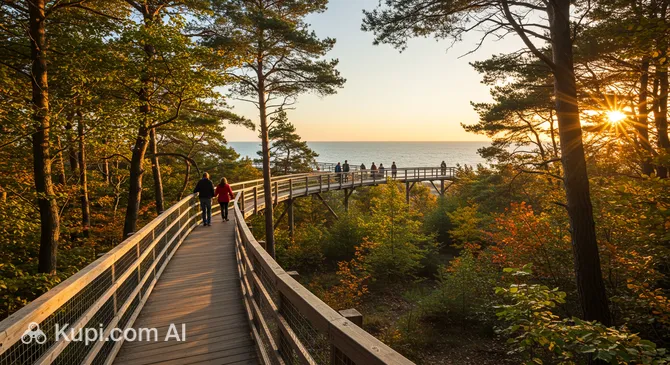
For nature enthusiasts, the Usedom Treetop Walk offers a unique perspective of the island's landscape. Located near the Heringsdorf train station, this barrier-free path winds through the canopy of the beech forest, culminating in an observation tower that stands 33 meters high. As you ascend, you learn about the local flora and fauna through educational stations before reaching the top, where you are rewarded with breathtaking vistas of the sea, the lagoon, and the lush green surroundings.

Usedom Treetop Walk. Source: Kupi.Binoculars

Just a short distance away in the neighboring district, the Bansin Pier offers a more tranquil experience. Unlike its bustling counterpart in Heringsdorf, this pier is a simple, elegant walkway without buildings, allowing the sound of the waves and the fresh sea breeze to take center stage. It serves as an ideal starting point for excursions by ship and provides an unobstructed view of the magnificent villas that line the coast.

Bansin Pier. Source: Kupi.Binoculars

Connecting these beautiful locations is the scenic Bansin Promenade. This stretch is perfect for walkers and cyclists who wish to admire the famous resort architecture that defines the region. Lined with impeccably restored 19th-century villas, manicured gardens, and artistic sculptures, the promenade invites tourists to soak in the sophisticated atmosphere that has attracted visitors to these "Imperial Baths" for over a century.

Local Cuisine

The culinary scene in Heringsdorf is deeply rooted in its maritime location, offering a delightful mix of fresh Baltic flavors and hearty Pomeranian traditions. As one might expect from a seaside resort, fish plays a starring role on almost every menu. Local fishermen deliver their daily catch of herring, cod, flounder, and zander directly to the restaurants and smokehouses, ensuring that seafood lovers enjoy the freshest ingredients possible.

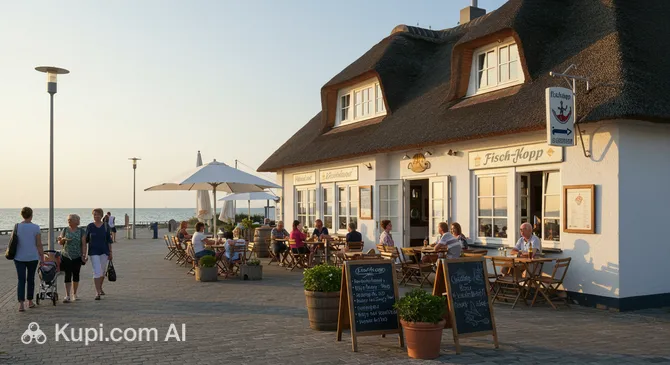
One of the most iconic snacks you must try is the Fischbrötchen (fish bun). This simple yet delicious street food consists of a crispy bread roll filled with fresh onions, lettuce, and various types of prepared fish, such as pickled herring (Bismarckhering), fried fish, or delicate North Sea shrimp. It is the perfect grab-and-go meal for a walk along the beach. For a more substantial dinner, look for Räucherfisch (smoked fish), often served warm straight from the oven with a side of fried potatoes or dark bread.

Fischkopp Restaurant. Source: Kupi.Binoculars

Beyond seafood, the region is famous for Sea Buckthorn (Sanddorn), often referred to as the "Lemon of the North." This bright orange berry grows abundantly in the dunes of Usedom and is incredibly rich in vitamins. Locals process it into everything imaginable: jams, cakes, ice cream, and savory sauces. You will definitely want to sample a glass of Sanddorn juice or warm up with a hot Sanddorn grog on a breezy day.

When it comes to drinks, the local culture favors regional brews and fruit-based spirits. Alongside the ubiquitous Sanddorn liqueur, you can enjoy beers from nearby breweries in Mecklenburg-Vorpommern. Dining out in Heringsdorf offers a variety of atmospheres, from elegant restaurants housed in historic villas to rustic pubs. For a traditional meal, you might visit Fischkopp Restaurant, which is well-regarded for its authentic local dishes. Alternatively, if you are looking for a relaxed evening with good drinks, Carl's Kneipe offers a cozy pub environment popular with both locals and visitors.

The dining experience here is often enhanced by the stunning surroundings. Many establishments are located along the promenade or even above the water on the pier, allowing you to enjoy sunset views while savoring regional specialties. Whether you are indulging in a fine dining experience or sharing a simple plate of smoked fish, the food in Heringsdorf captures the essence of the Baltic coast.

Travel Tips

To ensure your visit to Heringsdorf is as relaxing and enjoyable as the refreshing Baltic breeze, a little preparation goes a long way. These practical tips are designed to help you navigate the local customs, weather patterns, and logistics of this elegant seaside resort with ease.

  1. Clothing and Gear: The weather on Usedom can be changeable, even in summer. It is best to dress in layers (the "onion principle") so you can adapt to shifting temperatures. A windproof and waterproof jacket is an absolute must, as the sea breeze can be cool. Pack comfortable walking shoes for strolling along the long promenade and hiking in the beech forests. If you plan to visit upscale restaurants or attend cultural events in the evening, smart-casual attire is recommended.
  2. Transportation: Heringsdorf is best explored without a car. The Usedomer Bäderbahn (UBB) is a convenient train service that connects the "Imperial Baths" (Bansin, Heringsdorf, Ahlbeck) and runs all the way to Świnoujście in Poland. Bicycles are the preferred mode of local transport; rental shops are abundant, and the bike paths are excellent. Taxis are available but can be pricey, and finding parking for a rental car in high season can be difficult and expensive.
  3. Finances: The official currency is the Euro (€). While major hotels, restaurants, and supermarkets accept credit cards (Visa and Mastercard), Germany is still very much a cash-based society. You will definitely need cash for small purchases, local bakeries, beach kiosks (for your Fischbrötchen), and bus fares. ATMs are widely available throughout the town. Tipping is customary; rounding up the bill or leaving about 5-10% is polite in restaurants.
  4. Health and Safety: Heringsdorf is a very safe destination for tourists. Pharmacies are marked with a large red "A" (Apotheke) and can provide advice for minor ailments. For emergencies, dial 112. If you plan on hiking in the wooded areas or tall grass, it is wise to use insect repellent and check for ticks afterwards, as they are common in the region.
  5. Communication: The official language is German. While staff in hotels and tourist hotspots generally speak English, it may be less understood in smaller shops or by older residents. Learning a few basic phrases like "Guten Tag" (Good day) or "Danke" (Thank you) is appreciated. Free Wi-Fi is available in many public areas and cafes, but buying a local SIM card at a supermarket is reliable for staying connected.
  6. Local Etiquette: As a designated spa town, Heringsdorf charges a visitor's tax known as the Kurtaxe. You will receive an "Ostseecard" upon paying this at your hotel or tourist office; always carry it with you, as it is required for beach access and offers discounts. When entering shops or greeting locals, a friendly "Moin" (a common Northern German greeting) works at any time of day.
  7. What to Avoid: Do not walk on the designated bicycle lanes on the promenade. The bike traffic can be fast and heavy, and locals can get frustrated with pedestrians blocking the path. Also, avoid being loud or boisterous late at night; the town values its reputation as a place of rest and relaxation (Ruhezeit).
  8. Additional Tip: Take advantage of the borderless promenade! You can walk or cycle from Heringsdorf directly into Świnoujście, Poland. It’s a unique experience to cross a national border during a casual beach stroll. Just remember to bring your ID or passport, even though there are no permanent checkpoints.

With these tips in hand, you are ready to fully immerse yourself in the sophisticated charm and natural beauty of Heringsdorf. Whether you are cycling through the coastal forests or enjoying a sunset on the pier, you can look forward to a seamless and memorable holiday on the sunny island of Usedom.

Entertainment & Nightlife

The nightlife in Heringsdorf reflects the town's character as an elegant "Imperial Bath" (Kaiserbad). Rather than loud nightclubs and neon-lit discos, the evening entertainment here focuses on sophistication, relaxation, and cultural enjoyment. The atmosphere is generally laid-back yet refined, catering to couples, families, and visitors looking to unwind after a day at the beach. The main hub of activity is the bustling beach promenade and the area surrounding the pier, where the sound of the waves provides a perfect backdrop for a night out.

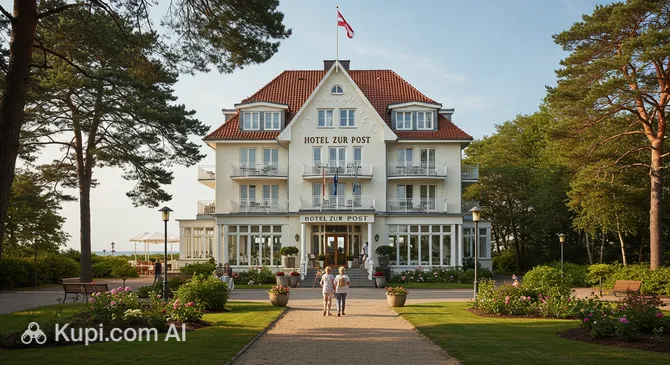
For those seeking a classic resort experience, the bars and lounges within the historic hotels are a highlight. Many of these venues are open to non-guests and offer an extensive selection of wines and cocktails in a stylish setting. A notable mention is the Hotel zur Post, where you can enjoy a quiet drink in a polished atmosphere that harkens back to the golden age of seaside travel. If you prefer a more rustic and convivial vibe, Carl's Kneipe is a popular local spot. This cozy pub is known for its friendly service and is the perfect place to sip a refreshing German beer while mingling with locals and fellow travelers.

Hotel zur Post. Source: Kupi.Binoculars

Another essential part of the evening ritual is a visit to the Heringsdorf Pier. As the sun sets, the pier transforms into a romantic promenade. Visitors often gather here to watch the colors of the sky reflect over the Baltic Sea, and the restaurants located on the pier offer a unique dining experience directly above the water. In the summer months, the area around the pier often hosts open-air concerts and cultural events at the concert shell (Konzertmuschel), providing live music ranging from classical to jazz.

When planning your evening, keep in mind that Heringsdorf is not a city that stays awake until dawn. Most bars and restaurants close around midnight or 1:00 AM, even during the peak season. The dress code is generally "smart casual"; while the vibe is relaxed, swimwear is not appropriate for evening venues. Prices for drinks and entertainment can be slightly higher than the German average, reflecting the town's status as a premium resort destination.

Safety is rarely a concern in Heringsdorf, making it an excellent destination for night walks. The promenade is well-lit and monitored, allowing you to stroll peacefully late into the evening. Getting around is best done on foot, as most major venues are concentrated along the coast. If you need to travel further or return to your accommodation late at night, local taxis are reliable. It is advisable to save the number of a local taxi service in your phone, as hailing one on the street can sometimes be difficult in quieter residential areas.

While the nights are enchanting, Heringsdorf offers plenty of entertainment during the day as well. Culture lovers can visit the Chapeau Rouge theater tent for plays and cabaret, or explore local history at the Villa Irmgard museum. For families and those seeking relaxation, the OstseeTherme offers thermal baths and water slides, ensuring that there is something to do regardless of the weather.

Parks & Museums

While the majestic Baltic Sea is the main draw, Heringsdorf offers a delightful array of green spaces and cultural institutions that provide a deeper look into the region's heritage. The town seamlessly blends its natural surroundings with artistic expression, offering visitors serene parks for relaxation and intimate museums that chronicle the area's illustrious past as a meeting place for the aristocracy and artists.

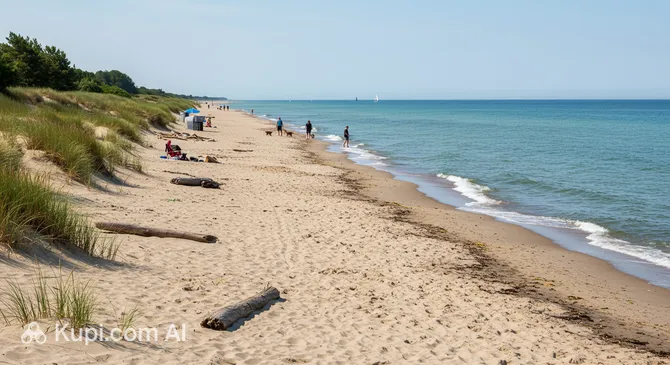
The most significant natural asset of the city is undoubtedly its miles of pristine coastline, which serves as a massive recreational park. Beyond the main swimming areas, the Heringsdorf Bansin Dog Beach is a perfect example of the town's inclusive approach to nature. Located between the districts of Heringsdorf and Bansin, this designated stretch of sand allows pet owners and nature lovers to enjoy the Baltic waves freely. It is backed by the lush coastal forest (Küstenwald), a protected green belt that runs parallel to the shore, offering cool, shaded paths for hikers and cyclists seeking respite from the sun.

Heringsdorf Bansin Dog Beach. Source: Kupi.Binoculars

For a more manicured green experience, the Goethe Park offers a quiet retreat in the heart of the town. This small but charming park features well-tended flower beds, old trees, and plenty of benches, making it an ideal spot for reading or a peaceful afternoon break. Additionally, the entire beach promenade functions as a linear garden, lined with landscaped lawns and sculptures that complement the historic architecture.

On the cultural front, the Villa Irmgard is a must-visit for history enthusiasts. Situated on the dunes, this Maxim Gorky Memorial Museum is housed in a beautiful Neoclassical villa where the famous Russian writer stayed in 1922. The museum preserves the living quarters and study of the author, offering a glimpse into the lifestyle of the early 20th century. It also hosts regular readings, concerts, and temporary art exhibitions, serving as a vibrant cultural hub for the community.

Another fascinating stop is the Muschel-Museum (Seashell Museum), located near the entrance of the Heringsdorf Pier. This private collection is one of the most extensive in Germany, showcasing thousands of shells, corals, and marine snails from around the world. It provides an educational and visually stunning experience, particularly for families, highlighting the diversity of marine life beyond the local Baltic waters.

For art lovers, the Kunstpavillon Heringsdorf (Art Pavilion) is a gem worth discovering. Located directly on the promenade, this glass-walled gallery focuses on contemporary art, featuring works by regional and international artists. Its location allows natural light to flood the exhibition space, creating a unique atmosphere where art and the seaside landscape interact. It is an excellent place to find unique souvenirs or simply admire the creative spirit of Usedom.

Getting Around

Navigating Heringsdorf is remarkably stress-free, as the public transport system is designed to connect the "Imperial Baths" (Kaiserbäder) efficiently while maintaining a relaxed resort atmosphere. Since the town is relatively small, there is no metro or tram system. Instead, the backbone of local transit is the Usedomer Bäderbahn (UBB), a regional train network that functions almost like a surface subway. These distinct blue-and-white trains run frequently along the coast, linking Heringsdorf with neighboring Bansin and Ahlbeck, as well as the Polish city of Świnoujście to the east and the mainland to the west.

Complementing the trains is a reliable bus network that covers the town and reaches into the island's hinterland. For a more scenic and leisurely journey, visitors can hop on the Kaiserbäder-Express. This nostalgic road train (a tractor disguised as a locomotive pulling carriages) offers a charming way to travel between the three seaside resorts. It provides an audio guide commentary along the way, making it as much a sightseeing tour as a mode of transport.

When it comes to paying for your rides, the system is tourist-friendly. A significant perk for visitors staying in Heringsdorf is the Kurkarte (guest card/spa card), which you receive upon paying the tourist tax at your accommodation. This card typically grants you free access to the local bus network within the Kaiserbäder (Ahlbeck, Heringsdorf, and Bansin), making bus travel the most economical option. For the UBB train, standard tickets must be purchased. You can buy these at ticket machines located at every station (which accept cash and cards), via the "DB Navigator" mobile app, or directly from customer service centers.

If you plan to travel extensively by train beyond the local area, the Germany-wide "Deutschland-Ticket" is valid on the UBB network. For single journeys, remember that tickets bought from machines are usually time-stamped, but always check if validation is required before boarding. On buses (if you are traveling outside the free zone or without a guest card), it is best to have small cash change ready to pay the driver directly.

Beyond motorized transport, the most popular way to get around is on two wheels. Bicycle rentals are ubiquitous, with systems like "UsedomRad" allowing you to rent a bike at one station and drop it off at another. The infrastructure is excellent, with dedicated paths running parallel to the promenade and through the coastal forests. Walking is also a viable and pleasant option, as the 12-kilometer beach promenade seamlessly connects the resorts, allowing you to commute with a sea view.

Alternatives like taxis are available but can be expensive compared to public transit. It is advisable to book a taxi in advance by phone, as hailing one on the street is not common practice. Additionally, during the summer season, excursion boats (Adler-Schiffe) depart from the Heringsdorf Pier, offering a maritime alternative for reaching other coastal towns, although these are used more for leisure day trips than for practical commuting.

Accommodation

Accommodation in Heringsdorf is as varied and elegant as the town itself, catering to a wide spectrum of tastes and budgets. The options range from luxurious wellness resorts and historic 4-star hotels to cozy, family-run guesthouses (Pensionen). A particularly popular choice in this region is the vacation rental apartment (Ferienwohnung), often located within the beautifully restored villas that define the town's unique resort architecture. While there are fewer budget hostels compared to large cities, visitors can find affordable private rooms and smaller inns slightly further from the beach.

The most sought-after area to stay is undoubtedly along the Promenade and the "first row" facing the Baltic Sea. Staying here grants you immediate access to the beach and stunning ocean views right from your balcony. For travelers seeking tranquility, the areas slightly inland or near the coastal forest offer a peaceful retreat while still being within walking distance of the center. The districts connecting Heringsdorf to Bansin and Ahlbeck are also excellent, providing seamless access to the train stations and the beach path.

For those looking to experience the classic charm of the "Imperial Baths," the Hotel zur Post is a prominent establishment. It combines traditional hospitality with modern amenities, making it a favorite for visitors who appreciate a central location and a touch of history. If you prefer a resort-style experience surrounded by greenery, the Villas in the Park Baltic Sea Hotel offers a luxurious setting with extensive spa facilities, perfect for a relaxing wellness getaway.

Villas in the Park Baltic Sea Hotel. Source: Kupi.Binoculars

Booking Tip: Heringsdorf is a premier summer destination, and the best accommodations fill up very quickly. If you plan to visit during the peak season of July and August, it is highly recommended to book your stay several months in advance. The same applies to major holidays like Easter or New Year's Eve, when the town is particularly festive.

In terms of pricing, Heringsdorf leans towards the mid-to-high range, especially for properties with sea views or spa access. However, traveling in the shoulder seasons (spring and autumn) can offer excellent value for luxury stays. Reservations can be easily made through major online booking platforms, though many local agencies and hotels also offer direct booking options, which sometimes include perks like bicycle rentals or the local visitor's tax (Kurtaxe) in the package.

Nearby Cities

For those looking to explore the surroundings, Heringsdorf serves as an excellent base for day trips to several interesting nearby locations:

City Population Distance (km)
Neubrandenburg 64,086 72
Greifswald 59,382 52
Stralsund 59,205 81
Schwedt 33,525 100
Neustrelitz 20,140 98

Among these options, Greifswald is a standout destination located just a short distance from the coast. As a historic university town and a member of the Hanseatic League, it offers a vibrant atmosphere mixed with rich history. Visitors can admire the Brick Gothic architecture, explore the ruins of Eldena Abbey, or follow in the footsteps of the famous Romantic painter Caspar David Friedrich, who was born here.

Another highlight is Stralsund, a UNESCO World Heritage site renowned for its beautifully preserved medieval center. The city is almost surrounded by water and serves as a gateway to the island of Rügen. Beyond its architectural marvels, Stralsund is home to the Ozeaneum, an award-winning aquarium that showcases marine life from the Baltic and North Seas, making it a fantastic excursion for families.

For those interested in fortifications and nature, Neubrandenburg is known as the "City of Four Gates." It boasts one of the most complete medieval city walls in Germany, featuring four impressive brick Gothic gates. The city is also situated directly on the Tollensesee lake, providing a lovely setting for a relaxing walk after exploring the historic center.

These nearby destinations offer a glimpse into the diverse culture and landscapes of the region.

Shopping & Souvenirs

Shopping in Heringsdorf is a delightful experience that perfectly mirrors the town’s elegant and relaxed atmosphere. Rather than large, impersonal shopping malls, visitors will find a charming selection of owner-operated boutiques, exclusive fashion stores, and souvenir shops scattered along the seaside and the town center. A stroll through the shopping streets here is as much about enjoying the architecture and sea breeze as it is about finding the perfect item to take home.

One of the most unique places to indulge in retail therapy is the Heringsdorf Pier. As you walk above the waves, you pass through a covered shopping arcade that features a variety of stores offering everything from maritime clothing and high-quality knitwear to books and toys. It is a rare opportunity to browse for gifts while suspended over the Baltic Sea, often accompanied by the sound of the surf below.

For those interested in fashion, the area around Friedenstraße and Delbrückstraße serves as the town's main commercial hub. Here, elegant villas house upscale boutiques showcasing international brands, designer labels, and chic resort wear. Whether you are looking for a windproof jacket for a beach walk or a stylish outfit for a dinner at a fine restaurant, the selection caters to a sophisticated clientele.

No shopping trip to Usedom would be complete without admiring the "Gold of the Baltic." Amber (Bernstein) is the region's most famous treasure, and Heringsdorf is home to numerous jewelers and goldsmiths who craft this fossilized resin into stunning pieces. From raw, unpolished stones to intricate silver and gold settings, amber jewelry makes for a timeless souvenir. Keep an eye out for workshops where you can watch the artisans at work or even learn how to distinguish real amber from imitations.

Another local specialty that makes for an excellent gift is Sea Buckthorn (Sanddorn). Known as the "Lemon of the North," this vitamin-rich berry is processed into a wide array of products sold in specialty shops throughout the town. Visitors can purchase Sanddorn oils, cosmetics, jams, liqueurs, and sweets, bringing a taste of the Baltic coast back to their own kitchens.

Bansin Promenade. Source: Kupi.Binoculars

The shopping experience extends seamlessly along the coast via the promenade. Walking towards the neighboring district, the Bansin Promenade offers additional browsing opportunities with a view of the sea. This continuous stretch allows you to combine a healthy walk with stops at small art galleries and craft stores that feature works by local artists inspired by the island's landscapes.

A practical advantage for tourists in Heringsdorf is the special "Bäderregelung" (resort regulation). Unlike most of Germany where shops are closed on Sundays, retailers in the Imperial Baths are often allowed to open on Sundays and public holidays during the peak season (usually from mid-March to the end of October). This ensures that you have ample time to explore the shops at your own pace, even on the weekend.

Reached the end of the page?

That means the route is fully explored