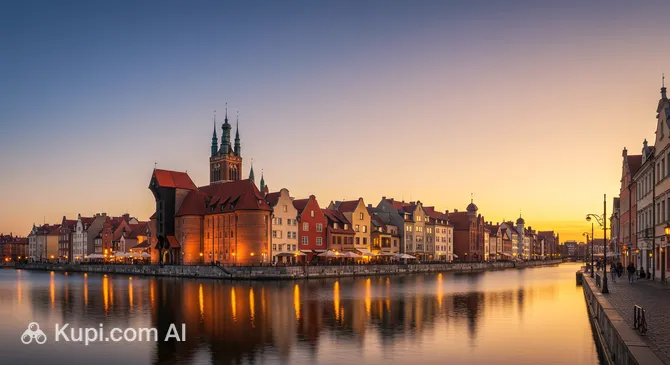
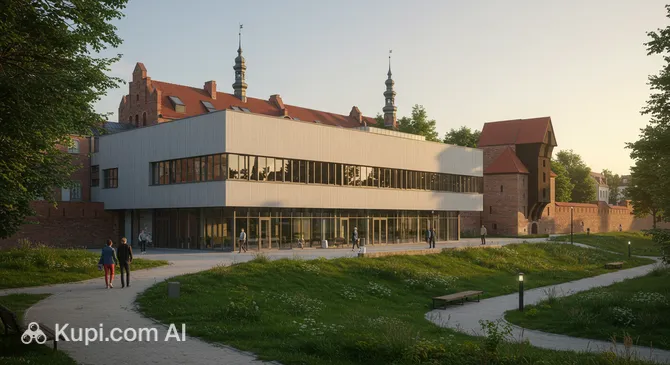
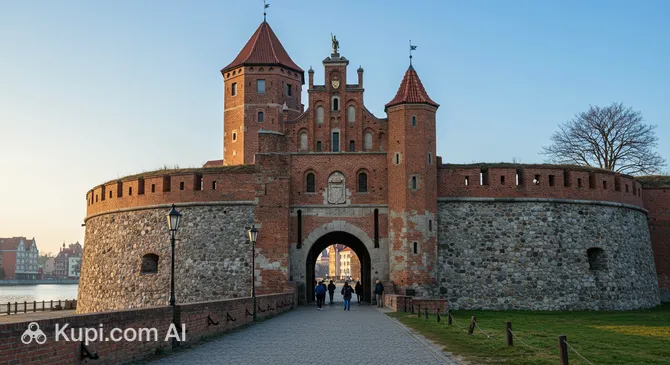
Gdansk is a captivating port city that stands as one of the most significant cultural and economic hubs on the Baltic coast. Known for its distinct Hanseatic architecture and maritime heritage, the city offers a unique atmosphere that sets it apart from other destinations in the region. Located in northern Poland, it serves as the capital of the Pomeranian Voivodeship and forms part of the vibrant metropolitan area known as the Tricity, alongside Gdynia and Sopot.
With a population of approximately 486,000 inhabitants, the city bustles with life while maintaining a charming, historic character. Its location at the mouth of the Motława River gives it a scenic waterfront appeal that attracts visitors year-round. The local climate is influenced by the sea, offering refreshing breezes in the summer and a picturesque, sometimes snowy, setting in the winter.
Gdansk. Illustration.
Source: Kupi.com AI
The city's past is deeply woven into its streets and buildings. Exploring the history of Gdansk reveals a rich tapestry of trade, craftsmanship, and resilience that has defined its identity for a thousand years. This legacy is visible in the stunning facades of the Main Town, where merchants once gathered from across Europe.
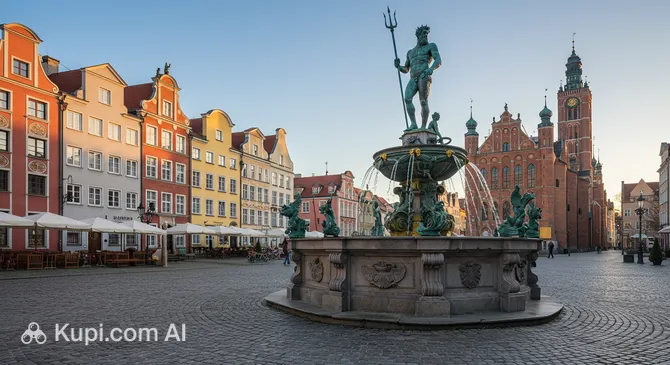
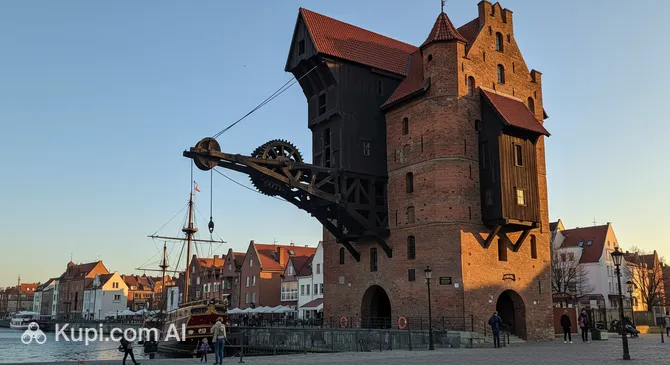
Travelers are drawn to iconic landmarks such as the vibrant Long Market (Długi Targ), home to the famous Neptune's Fountain, and the imposing St. Mary's Church, which is one of the largest brick churches in the world. Another must-see is the medieval Crane (Żuraw), a symbol of the city's trading power. Whether you are interested in world-class museums, searching for Baltic amber, or simply enjoying a coffee by the river, Gdansk promises an unforgettable travel experience.
Weather Overview
Gdansk experiences a temperate maritime climate, characterized by moderate temperatures and the refreshing influence of the Baltic Sea. The city avoids extreme weather conditions, making it a year-round destination, though the atmosphere changes distinctively with the seasons. Summers are generally warm and pleasant, with August being the warmest month, seeing average highs of around 22.5°C. However, travelers should note that July can be quite rainy, with precipitation occurring on approximately 16 days of the month.
Winters in the city are cold but usually manageable, with average lows dipping just below freezing to -0.9°C in January and February. The transition seasons of spring and autumn offer crisp air and milder temperatures, perfect for sightseeing without the crowds. For those planning a trip, checking the detailed weather in Gdansk is recommended to pack appropriately. Expect warm summers with occasional rain and cold winters with frequent but light precipitation.
Average monthly temperature
Average monthly precipitation
Interesting Facts
Beyond the main attractions, Gdansk holds many fascinating secrets and legends that add depth to its historic cobblestone streets. From famous inventors to mythical origins of local delicacies, the city offers plenty of intriguing stories for the curious traveler.
The city is the birthplace of Daniel Gabriel Fahrenheit, the renowned physicist who invented the mercury thermometer and the temperature scale that bears his name. A meteorological column stands in the city center to honor his legacy and scientific contributions.
A popular local legend surrounds Neptune's Fountain and the famous Goldwasser liqueur. It is said that the sea god, annoyed by tourists throwing coins into his fountain, struck the water with his trident, smashing the gold into the tiny flakes that now float in the city's signature herbal vodka.
In the Middle Ages, The Crane was the largest port crane in all of Europe. This massive wooden structure could lift loads of up to four tons to a height of 11 meters and was powered solely by human strength, with men walking inside two giant treadwheels.
Inside St. Mary's Basilica (Bazylika Mariacka) in Gdańsk, you can find a 15th-century astronomical clock that stands over 14 meters high. Legend has it that the clock was so magnificent that its creator was deliberately blinded by city officials so he could never build another one to rival it.
Gdansk is widely known as the "Amber Capital of the World." The Amber Museum (Branch of the Gdańsk Museum) highlights this heritage, showcasing rare lumps of "Baltic Gold" containing insects and plants trapped millions of years ago.
Neptune's Fountain. Illustration.
Source: Kupi.com AI
Traveler photos:
How to Get There
Reaching this historic maritime city is convenient thanks to its well-developed transport infrastructure. Whether you prefer flying or taking the train, there are excellent connections from major European hubs. For a detailed overview of all travel options, you can read more about how to get to Gdansk.
The most direct way to arrive by air is via Gdansk Lech Walesa Airport (IATA: GDN). Located approximately 12 km from the city center, it is a bustling international airport serving millions of passengers each year. Travelers can easily reach the downtown area by taxi or bus in about 30 to 40 minutes. For those exploring the broader region, Bydgoszcz Airport (IATA: BZG) in the city of Bydgoszcz is another option, though it is situated about 146.5 km away. A transfer from there would typically take over two hours by road.
For clarity, here is a summary of the main airports:
If you prefer rail travel, the city is excellently connected by train. The primary hub is Gdańsk Główny Railway Station (IATA: RGD), which is conveniently located just 0.4 km from the city center. This allows visitors to step straight into the heart of the city immediately upon arrival. Another significant regional node is Olsztyn Główny Station (IATA: QYO) in Olsztyn, situated roughly 136.6 km away, which serves as a key junction for travelers coming from the lake district.
Gdansk is a city where history is etched into every brick and cobblestone, offering visitors a profound journey through time. From architectural marvels to poignant modern museums, the city's landmarks tell stories of trade, war, and the unyielding spirit of freedom. Whether you are an architecture enthusiast or a history buff, the main sights provide a deeply moving and visually stunning experience.
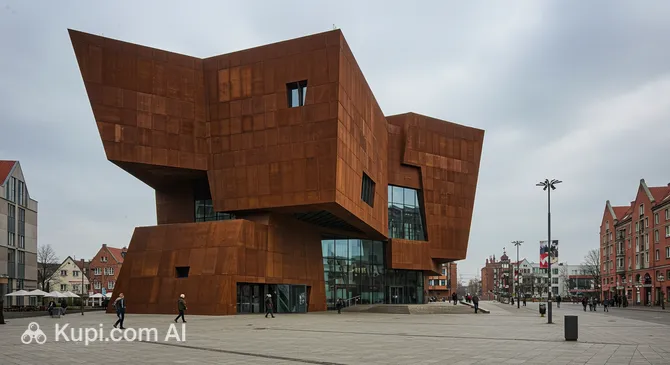
One of the most significant modern additions to the city's cultural landscape is the Museum of the Second World War. Housed in a striking, tilted prism structure that seems to rise from the ground, this museum is an architectural icon in itself. The main exhibition is located 14 meters underground, symbolizing the buried past. It offers a comprehensive and emotional narrative of the war, focusing not only on military strategies but also on the harrowing experiences of civilians. It is widely regarded as one of the most important historical museums in Europe.
Museum of the Second World War. Illustration.
Source: Kupi.com AI
Traveler photos:
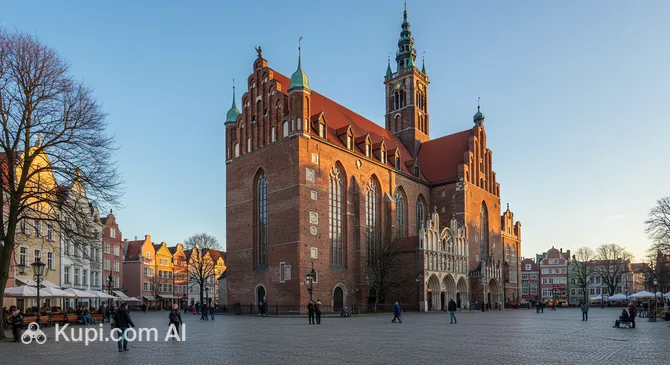
Dominating the skyline of the Main Town is the colossal St. Mary's Basilica. As one of the largest brick churches in the world, its sheer scale is breathtaking, capable of holding up to 25,000 people. While the interior is known for its stark, whitewashed walls and the famous astronomical clock, the true highlight for many is the climb to the top of the tower. After ascending roughly 400 steps, visitors are rewarded with an unparalleled panoramic view of the city's red rooftops and the surrounding area.
St. Mary's Basilica (Bazylika Mariacka) in Gdańsk. Illustration.
Source: Kupi.com AI
Traveler photos:
For those interested in recent history, the European Solidarity Centre is an absolute must-see. Located near the historic Gdansk Shipyard, the building's rusty steel façade evokes the hull of a ship, paying homage to its industrial roots. Inside, the interactive exhibitions chronicle the history of the Solidarity movement and the peaceful opposition that led to the fall of communism in Central and Eastern Europe. It serves as a vibrant cultural hub and a testament to the power of civil resistance.
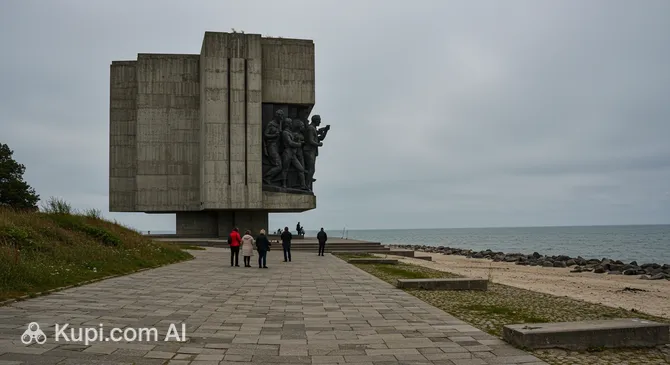
A short trip from the city center takes you to Westerplatte, a place of immense symbolic importance. This peninsula is where the first shots of World War II were fired on September 1, 1939. Today, it stands as an open-air memorial site featuring the towering Monument of the Coast Defenders. Walking through the ruins of the barracks and the wooded paths offers a somber yet peaceful reflection on the resilience of the Polish soldiers who held out against overwhelming odds.
Westerplatte. Illustration.
Source: Kupi.com AI
Traveler photos:
Local Cuisine
Gdansk offers a culinary journey that perfectly blends traditional Polish flavors with its unique maritime heritage. As a historic port city, the local diet is heavily influenced by the Baltic Sea, making it a paradise for seafood lovers. You will find fresh fish features prominently on menus across the city, with herring (śledź) being a particular local favorite, served in oil, cream, or vinegar. Fried cod, often caught the same morning, is another seaside staple that tastes best when eaten near the waterfront.
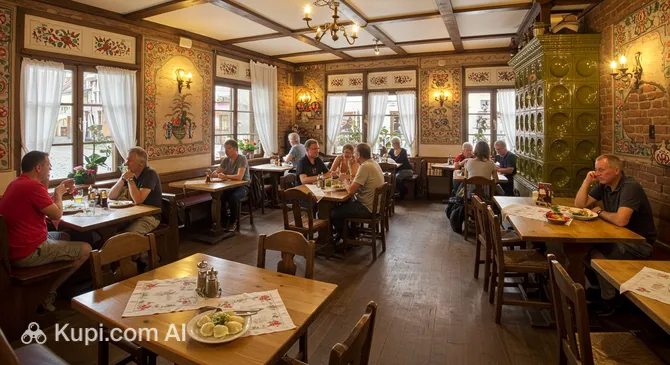
No visit to Poland is complete without tasting pierogi, and Gdansk is home to some of the best dumplings in the country. These pockets of dough are stuffed with savory fillings like meat, sauerkraut, and mushrooms, or sweet options like berries and sweet cheese. For a truly authentic experience, visitors often flock to Mandu Pierogi House Gdansk City Center, where you can watch the dumplings being hand-made through a glass window while enjoying traditional and modern variations of this classic dish.
Mandu Pierogi House Gdansk City Center. Illustration.
Source: Kupi.com AI
Traveler photos:
When it comes to drinks, the city is famous for Goldwasser (Gold Water), a strong herbal root and spice liqueur that has been produced here since the 16th century. What makes it unique are the small flakes of 22-karat gold floating in the bottle. Legend says it was a favorite of royalty, including Catherine the Great. For beer enthusiasts, the region has a thriving craft beer scene, with many local microbreweries offering excellent lagers and porters that pay homage to the city's long brewing traditions.
The food culture in Gdansk is diverse, ranging from elegant restaurants in the historic Main Town to casual milk bars (bar mleczny) serving affordable homemade meals. For a taste of the city's modern, creative vibe, you should visit 100cznia. Located in the post-industrial shipyard area, this vibrant cultural space features shipping containers turned into bars and street food stalls. It is the perfect place to relax, enjoy a burger or pizza, and soak up the artistic atmosphere that defines contemporary Gdansk.
100cznia. Illustration.
Source: Kupi.com AI
Traveler photos:
Sweet treats are also a big part of the seaside experience. Walking along the Motława River or the nearby beaches, you will encounter numerous stalls selling "gofry" (waffles) topped with whipped cream, fruit, and jams. These crispy delights are a beloved snack for both locals and tourists enjoying a leisurely stroll. Whether you are dining in a centuries-old cellar or grabbing a quick bite at a food truck, the gastronomic scene here is sure to leave a lasting impression.
Travel Tips
To ensure your visit to this Baltic gem is as enjoyable and stress-free as possible, we have compiled a set of essential travel guidelines. These practical insights will help you navigate local customs, logistics, and daily life in the city with the ease of a local.
Clothing and Gear: The weather on the coast can be variable, so dressing in layers is the best strategy to handle the shifting Baltic breeze. Even in summer, evenings can be cool, so a light jacket is recommended. Since the historic Main Town is paved with cobblestones, bring comfortable walking shoes and avoid high heels for sightseeing.
Transportation: Getting around is efficient thanks to an extensive network of trams and buses managed by ZTM. For travel between Gdansk, Sopot, and Gdynia, the SKM commuter train is the fastest option. Remember to validate your paper ticket immediately upon boarding or at the station platform before entering the train to avoid fines. Ride-hailing apps like Uber and Bolt are also widely available.
Finances: Although Poland is an EU member, the local currency is the Polish Złoty (PLN), not the Euro. Card payments are extremely popular and accepted almost everywhere, from museums to small kiosks. If you need cash, use bank ATMs (bankomat) for better rates, or exchange money at a "Kantor" (exchange office). A tip of around 10% is standard in restaurants.
Health and Safety: The city is generally very safe for tourists, but standard precautions against pickpocketing in crowded areas apply. Pharmacies are marked with a green cross and the word "Apteka"; many over-the-counter medicines are readily available. In an emergency, dial 112 for police, ambulance, or fire services.
Communication: English is widely spoken, especially in the service industry and among younger generations. However, learning a few basic Polish phrases like "Dzień dobry" (Good morning) and "Dziękuję" (Thank you) is always appreciated. Free Wi-Fi is common in cafes, but if you need a local SIM card, be aware that you must register it with your passport at the point of purchase.
Local Etiquette: Polish culture values politeness; it is customary to say hello when entering a small shop or elevator. When visiting religious sites like St. Mary's Basilica, dress modestly and remain silent. If invited to a local's home, removing your shoes at the door is the expected norm.
What to Avoid: Do not cross the street at red lights or in unmarked areas (jaywalking), as this is strictly enforced and can result in a fine. Also, avoid drinking alcohol in public places such as parks or streets, as it is prohibited by law unless you are in a designated beer garden.
Shopping Tip: If you plan to buy amber jewelry, which the region is famous for, always purchase from certified galleries or reputable shops rather than street stalls. Look for a certificate of authenticity to ensure you are getting genuine Baltic amber rather than a synthetic imitation.
Armed with these practical tips, you are ready to explore the charming streets and maritime history of the city with confidence. Embrace the local vibe, taste the delicious food, and enjoy every moment of your Baltic adventure!
Entertainment & Nightlife
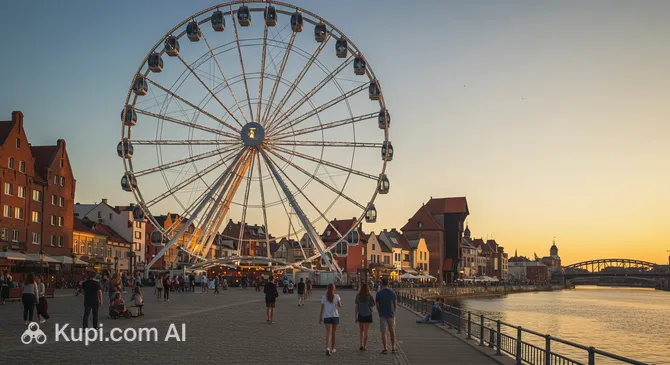
Gdansk is a city that knows how to balance its rich history with vibrant modern leisure. Beyond the museums and monuments, there is a wealth of activities to keep visitors of all ages entertained. A great way to start is by seeing the city from a different perspective aboard the AmberSky Ferris Wheel. Located on Ołowianka Island, this attraction offers breathtaking panoramic views of the historic center, the river, and the shipyard cranes, especially enchanting during sunset.
AmberSky Ferris Wheel. Illustration.
Source: Kupi.com AI
Traveler photos:
For those traveling with children or seeking active fun, the city has plenty of options. Loopy's World Amusement Park is a massive indoor playground perfect for burning off energy on rainy days. Animal lovers will delight in a visit to Mini Zoo Papugarnia Gdańsk, where colorful parrots fly freely and interact with guests. Alternatively, you can defy gravity at Jump City Gdańsk, a trampoline park that offers fun for both kids and adults.
Culture enthusiasts should not miss the Polish Baltic Philharmonic. Housed in a beautifully converted neo-Gothic power station on Ołowianka Island, it hosts world-class concerts and events. Nearby, the Hevelianum combines history with science. Located in a 19th-century fort on Gradowa Hill, it features interactive exhibitions and offers one of the best viewpoints over the city skyline.
Hevelianum. Illustration.
Source: Kupi.com AI
Traveler photos:
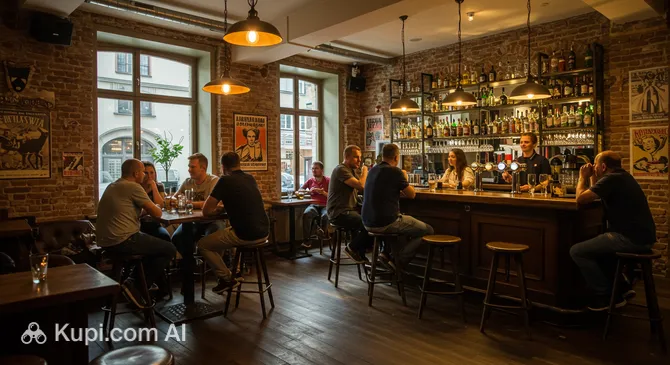
When the sun goes down, the city's nightlife comes alive. While the Main Town has numerous pubs, the shipyard area is the trendy heart of the party scene. LEKKO is a popular spot for those looking to dance and enjoy signature cocktails in a stylish setting. For a more laid-back vibe, Łąka Bar offers a relaxing atmosphere, often featuring live music and open-air events during the warmer months.
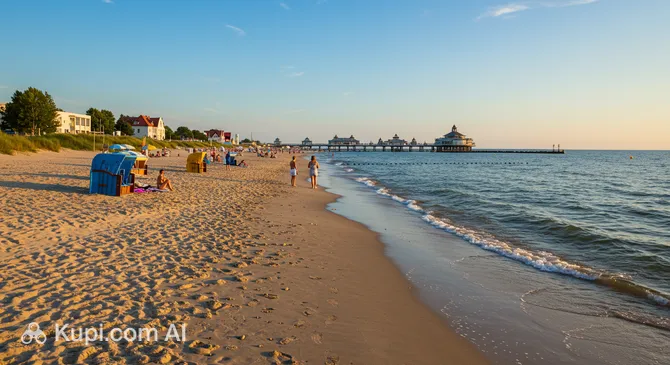
In the summer, the city transforms into a beach destination. A short tram ride from the center takes you to the golden sands of the Baltic coast. Brzezno Beach is a favorite among locals for its long wooden pier and promenade lined with cafes. Further east, Stogi Beach is known for its cleaner water and wider sands, making it an ideal spot for sunbathing and swimming.
Brzezno Beach. Illustration.
Source: Kupi.com AI
Traveler photos:
Parks & Museums
While Gdansk is renowned for its brick architecture and bustling waterfront, the city also offers serene green spaces and a wealth of cultural institutions that delve deeper than the typical tourist trail. Beyond the main thoroughfares, visitors can find tranquil parks perfect for a leisurely stroll and museums that showcase everything from precious stones to optical illusions.
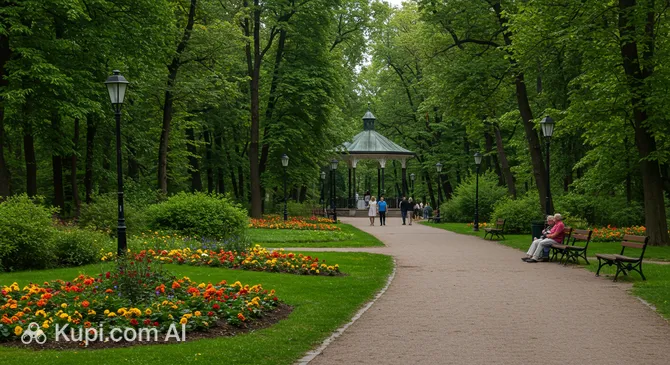
One of the most charming yet often overlooked green areas is Oruński Park (Emilia Hoene Park). Located in a picturesque valley in the southern part of the city, this historic park dates back to the late 16th century. It offers a romantic atmosphere with its terraced paths, ponds, and the gentle stream of the Potok Oruński. It is a favorite among locals seeking a quiet escape from the city center, providing a perfect setting for a relaxing afternoon surrounded by nature.
Oruński Park (Emilia Hoene Park). Illustration.
Source: Kupi.com AI
Traveler photos:
Another essential green stop is the famous Oliwa Park. Although located a bit further from the center, it is easily accessible by train and well worth the trip. This beautifully maintained park features French-style gardens, a botanical garden, and the intriguing "Whispering Grottos" (acoustic mirrors). It sits adjacent to the Oliwa Cathedral, known for its magnificent organ, making it easy to combine a nature walk with a bit of architectural sightseeing.
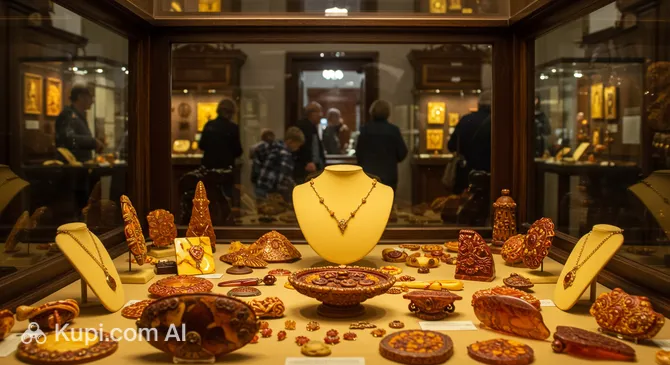
For those looking to explore the city's specific cultural heritage, the Amber Museum (Branch of the Gdańsk Museum) is a must-visit. Since Gdansk is known as the World Capital of Amber, this museum provides a comprehensive look at the history of "Baltic Gold." Housed in the historic Great Mill, the exhibits range from natural specimens with trapped insects to exquisite handcrafted jewelry and modern artistic creations. It beautifully illustrates how this fossilized resin has shaped the region's economy and art for centuries.
Amber Museum (Branch of the Gdańsk Museum). Illustration.
Source: Kupi.com AI
Traveler photos:
Travelers interested in maritime defense and military history should head to the unique Wisłoujście Fortress. Unlike many other fortifications in Europe, this stronghold is located directly on the water, guarding the mouth of the Vistula River. It is a rare example of a marine fortress and features a central cylindrical tower that once served as a lighthouse. Visitors can explore the bastions and casemates, gaining insight into the naval strategies of the past.
Wisłoujście Fortress. Illustration.
Source: Kupi.com AI
Traveler photos:
For a completely different experience that appeals to both adults and children, the Deja Vu Museum offers a break from traditional history. This interactive museum focuses on optical illusions and digital art, encouraging visitors to question their perception of reality. It is a fun, engaging spot where you can take creative photos and enjoy mind-bending exhibits.
Insider Tip: If you visit the Zaspa district, you will find an "open-air gallery" consisting of dozens of large-scale murals painted on the sides of communist-era apartment blocks. It is one of the largest collections of monumental wall art in Europe and offers a fascinating contrast to the Old Town's historic charm.
Getting Around
Navigating Gdansk is straightforward and efficient thanks to a well-integrated public transport network that connects the historic center with residential districts and neighboring cities. The system primarily relies on trams and buses managed by ZTM, which are easily recognizable by their distinctive red and cream colors. Trams are generally the fastest way to move around the city center and reach popular districts like Oliwa or Wrzeszcz, bypassing traffic jams. Buses complement the tram lines, serving areas further afield and operating extensive night routes (marked with the letter 'N') when the trams stop running.
For travel beyond the city limits or to the nearby coastal resort towns of Sopot and Gdynia, the SKM (Fast Urban Railway) is the most convenient option. These yellow and blue commuter trains function like an above-ground metro, running frequently throughout the day. It is important to note that the SKM is a separate entity from the city buses and trams, so standard ZTM tickets are generally not valid on these trains unless you purchase a specific metropolitan ticket that covers multiple carriers.
The ticketing system offers flexibility for tourists, with options ranging from single-journey tickets to time-limited passes (e.g., 75 minutes or 24 hours). Prices are affordable, with a standard single fare costing only a few zlotys. Tickets can be purchased at red ticket machines located at major stops, at kiosks, or directly inside some vehicles (though onboard machines often accept card payments only). For the utmost convenience, most locals and visitors use mobile apps like Jakdojade, SkyCash, or mPay, which allow you to plan your route and buy tickets instantly on your phone.
If you opt for a paper ticket, remember the golden rule: validate it immediately upon boarding a bus or tram. Validation machines are bright orange and located near the doors. For SKM trains, paper tickets must be stamped in the yellow machines on the platform before you board the train. Failure to do so can result in a hefty fine during routine inspections. Transport typically operates from early morning until around 11:00 PM, after which the night bus network takes over.
A unique feature of the local transport scene is the Water Tram (Tramwaj Wodny). Operating seasonally during the summer months, these ferries offer a scenic alternative to land transport. They connect the city center with destinations like Westerplatte, Sobieszewo, and the Hel Peninsula. While slower than a bus, the journey provides beautiful views of the port and shipyards, effectively doubling as a sightseeing cruise.
For those who prefer private transport, ride-hailing apps like Uber, Bolt, and Free Now are widely available and offer a reliable, often cheaper alternative to traditional taxi stands. Active travelers can take advantage of the Mevo bike-sharing system, which features electric-assisted bicycles perfect for tackling the city's occasional hills. Simply download the app to locate and unlock a bike. Car-sharing services like Trafficar are also popular for short, self-driven trips across the Tricity area.
Accommodation
Gdansk offers a diverse array of accommodation options that cater to every type of traveler, from backpackers seeking adventure to visitors looking for luxury. The city's lodging landscape has evolved significantly, providing a healthy mix of high-end international hotel chains, charming boutique hotels housed in restored tenement houses, and a vast selection of modern apartments. The latter is particularly popular in Poland, offering a "home away from home" experience that is often more spacious and affordable than traditional hotel rooms.
For those who want to be in the heart of the action, the Main Town (Główne Miasto) is the premier choice. Staying here puts you within walking distance of the city's most famous landmarks, such as the bustling Long Market and the historic gates. This area is perfect for first-time visitors who want to step out of their door and immediately be immersed in the city's Hanseatic atmosphere, though it can be a bit livelier and noisier into the late evening.
Another highly desirable location is the waterfront along the Motława River. Hotels and apartments here often offer stunning views of the marina and the iconic The Crane. Waking up to the sight of passing ships and the historic skyline is a highlight for many tourists. For a quieter, more local vibe, the district of Wrzeszcz is an excellent alternative, offering great transport connections and a growing culinary scene, while the Oliwa district provides a peaceful, green retreat near the cathedral and park.
The Crane. Illustration.
Source: Kupi.com AI
Traveler photos:
During the summer months, many visitors prefer to stay closer to the Baltic Sea. Areas near Stogi Beach or the Jelitkowo district are ideal for those who want to combine sightseeing with sunbathing. These locations offer a resort-like feel and are well-connected to the city center by tram, allowing you to enjoy the best of both worlds.
Booking Tip: Gdansk is a very popular destination, especially during the summer season (July and August) and during the famous St. Dominic's Fair, which takes place in late July and early August. During these times, accommodation prices can rise significantly, and the best spots sell out weeks in advance. It is highly recommended to book your stay well ahead of time if you plan to visit during these peak periods.
Prices in the city are generally reasonable compared to Western Europe. Budget travelers can find well-equipped hostels and affordable guest rooms, while mid-range options typically include 3-star hotels and comfortable private apartments. The luxury segment features 5-star properties, often located on Granary Island or near the Long Market. Booking is most commonly done through major online platforms, which offer the widest range of choices and verified reviews, though booking directly with smaller boutique hotels can sometimes yield better rates or special offers.
Nearby Cities
For those looking to explore the surroundings, Gdansk serves as an excellent base for day trips to several interesting nearby locations. The region offers a mix of modern maritime cities, historic towns, and unique engineering marvels, all within a short distance.
One of the most popular destinations is Gdynia, which, along with Gdansk and Sopot, forms the Tricity metropolitan area. Unlike its historic neighbor, Gdynia is known for its modernist architecture and vibrant port atmosphere. Visitors can explore the Kościuszko Square, visit the Gdynia Aquarium, or tour museum ships like the destroyer ORP Błyskawica and the tall ship Dar Pomorza. It is a perfect spot for those who enjoy a breezy, seaside vibe with a modern twist.
Another fascinating option is Elbląg, one of the oldest cities in the province. While it suffered heavy damage during the war, its Old Town has been meticulously reconstructed in a style known as "retroversion." However, Elbląg is most famous as the starting point for the Elbląg Canal cruises. This unique hydro-engineering system uses rail-mounted trolleys to transport boats over land between different water levels, a truly one-of-a-kind experience in Europe.
For those interested in engineering and history, Tczew is worth a visit. Located on the Vistula River, it is renowned for its historic bridges, which were once the longest in the world and are considered masterpieces of 19th-century engineering. The city is also home to the Vistula River Museum, offering deep insights into the significance of Poland's most important waterway.
City
Population
Distance
Suchanino
10 392
3 km
Jasień
18 014
7 km
Pruszcz Gdanski
31 582
10 km
Kokoszki
9 693
10 km
Sopot
37 457
11 km
These nearby destinations offer a glimpse into the diverse culture and landscapes of the region, making them perfect for extending your stay beyond the city limits.
Shopping & Souvenirs
Shopping in this Baltic city offers a delightful mix of modern convenience and historical charm. Visitors can find everything from high-end international brands to unique local handicrafts. The city is particularly renowned as the world capital of amber, making it the perfect place to purchase exquisite jewelry and artistic stones. Whether you are looking for the latest fashion trends or a traditional keepsake, the diverse retail landscape caters to all tastes and budgets.
For a scenic shopping experience, the heart of the Main Town is the best place to start. The famous Long Market (Długi Targ) and the adjacent Długa Street form the Royal Route, which is lined with souvenir shops, boutiques, and historic tenement houses. However, for the most atmospheric shopping, one must visit Mariacka Street. This narrow, cobblestone lane is flanked by ornate porches and is densely packed with small galleries and workshops selling authentic silver and amber jewelry, often handcrafted by local artisans.
If you prefer a comprehensive modern shopping experience, the city boasts several large commercial centers. The most popular among them is Galeria Bałtycka, located in the Wrzeszcz district. It houses over 200 stores, including major European fashion chains, electronics retailers, and a wide food court. It is easily accessible by tram or train and serves as a primary fashion hub for the entire Tricity area.
Galeria Bałtycka. Illustration.
Source: Kupi.com AI
Traveler photos:
Another notable location is the Morena Shopping Center. Situated a bit further from the tourist center, it offers a more relaxed atmosphere with a cinema, a gym, and a variety of shops ranging from clothing to home decor. It is a convenient stop for those staying in the western residential districts or looking for everyday essentials alongside their retail therapy.
For a taste of local life, the historic Market Hall (Hala Targowa) is an essential stop. Built in a neo-Gothic style, this bustling indoor market offers fresh produce, local cheeses, meats, and bakery items on the ground floor, with clothing and other goods on the upper levels. Additionally, if you visit in late July or August, you will encounter the St. Dominic's Fair (Jarmark św. Dominika). This centuries-old event transforms the streets into a massive open-air market filled with antiques, crafts, and regional delicacies, attracting millions of visitors.
When it comes to souvenirs, "Baltic Gold" (amber) is the undisputed king. Beyond jewelry, you can find amber-decorated boxes, chess sets, and even cosmetics. Another classic gift is a bottle of Goldwasser, the city's legendary herbal liqueur featuring floating gold flakes. For those who appreciate folk art, look for items featuring Kashubian embroidery, characterized by its vibrant floral patterns in seven traditional colors.
Most shops in shopping malls are typically open from Monday to Saturday, usually between 9:00 AM and 9:00 PM. It is important to note that Poland enforces a Sunday trading ban, meaning most large shops and supermarkets are closed on Sundays, with a few exceptions throughout the year (such as before major holidays). Payment is very convenient, with credit and debit cards (Visa, Mastercard) accepted almost everywhere, including small kiosks. Contactless payment is the standard, so you can often pay with your phone or smartwatch.
Travelers from outside the European Union may be eligible for a VAT refund on purchases made in stores that participate in the Tax-Free Shopping scheme (often Global Blue). Look for the "Tax Free" signage in shop windows. To qualify, you generally need to spend a minimum amount in a single store and present your passport to receive the necessary forms, which must then be validated by customs upon leaving the EU.