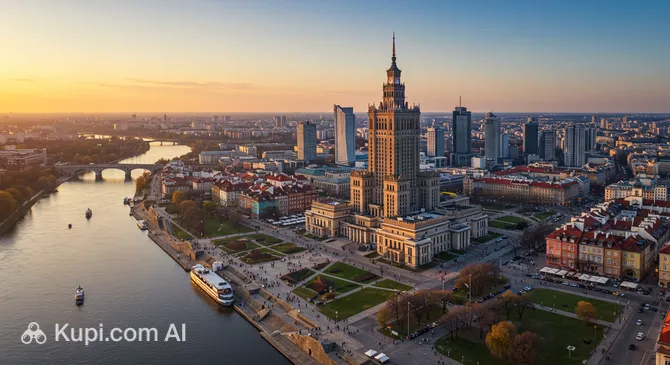
Warsaw, the sprawling and vibrant capital of Poland, is a city of distinct character where deep-rooted tradition seamlessly blends with modern energy. Situated in the heart of the country within the Masovian Voivodeship, it stands proudly on the banks of the Vistula River. As the nation's largest metropolis with a population of over 1.8 million, it serves as a bustling economic, academic, and cultural hub that attracts visitors from all over the world.
Warsaw. Illustration.
Source: Kupi.com AI
The city is renowned for its incredible resilience and architectural diversity, offering a unique visual journey through time. delving into the history of Warsaw reveals a fascinating narrative of restoration and growth, best exemplified by the meticulously reconstructed Old Town, which is now a UNESCO World Heritage site. Visitors can marvel at the colorful tenements and the majestic Royal Castle, or look towards the sky to see the monumental Palace of Culture and Science, a landmark that dominates the modern skyline.
Beyond its urban architecture, Warsaw is surprisingly green, boasting vast open spaces like the picturesque Łazienki Park, home to palaces, pavilions, and roaming peacocks. Whether you are exploring its dynamic culinary scene or walking along the scenic Vistula Boulevards, the city offers a welcoming atmosphere for every traveler. Warsaw invites you to discover its many charms and enjoy an unforgettable European city break.
Weather Overview
Warsaw experiences a temperate climate with four clearly defined seasons, making it a year-round destination with varying atmospheres. To help you plan your packing list effectively, it is useful to consult the detailed guide to the weather in Warsaw. The warmest time of the year is undoubtedly the summer, particularly from June to August, when average temperatures hover around 20°C and daily maximums frequently reach a pleasant 25°C.
In contrast, winters are cold and require warm clothing, as temperatures often drop close to or below freezing. January is typically the coldest month, featuring an average temperature of just 0.2°C and lows dipping to -1.8°C. The transition seasons of spring and autumn are generally mild and comfortable; for example, May and September see average temperatures between 14°C and 16°C. Expect warm summers with occasional rain and cold winters where temperatures frequently linger near the freezing mark.
Average monthly temperature
Average monthly precipitation
Interesting Facts
Beyond its famous landmarks and restored architecture, Warsaw holds many fascinating secrets that often escape the casual observer. Uncover the unique character of the Polish capital with these surprising details that reveal its hidden depth.
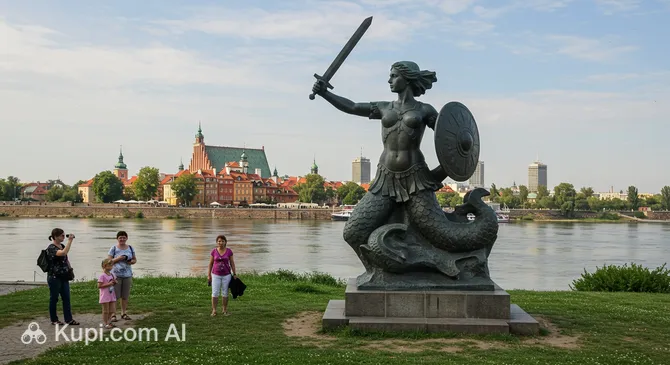
Mermaid of Warsaw. Illustration.
Source: Kupi.com AI
Traveler photos:
The city's official emblem features a legendary protector, the Mermaid of Warsaw. According to local folklore, she is the sister of the famous Little Mermaid in Copenhagen, but unlike her sibling, she chose to stay in the Vistula River to guard the city with her sword and shield.
Warsaw is home to the Keret House, an art installation that serves as one of the narrowest residential buildings in the world. Inserted into a tiny crevice between two existing structures, this fully functional house measures only 122 centimeters at its widest point and a mere 72 centimeters at its narrowest.
It is one of the rare capital cities globally to have a massive nature reserve directly adjacent to its urban borders. The Kampinos National Park offers a sprawling wilderness of dunes and forests that was historically a hunting ground for Polish kings and now serves as the city's "green lungs."
The towering Palace of Culture and Science is not only a landmark but also a nesting ground for peregrine falcons. A pair of these birds of prey lives on the 43rd floor, using the skyscraper as a perfect vantage point to watch over the city.
How to Get There
Reaching the Polish capital is straightforward thanks to its central location in Europe and excellent connectivity. Whether you are arriving by air or rail, the city is well-served by major transport hubs. For a comprehensive guide on all available routes and travel tips, you can read more about how to get to Warsaw before starting your journey.
The primary gateway for international travelers is Frederic Chopin Airport (IATA: WAW), located conveniently within the city limits, just about 8 km from the center. It is the busiest airport in the country, handling a vast number of connections. A trip to the city center by taxi or bus typically takes around 30 to 35 minutes. Another significant option, particularly for those flying with low-cost airlines, is Warsaw-Modlin Airport (IATA: WMI). Please note that this airport is situated in the city of Nowy Dwor Mazowiecki, approximately 35 km from Warsaw. The transfer from Modlin generally takes about 1 hour and 15 minutes by road.
For clarity, here is a summary of the main airports:
Traveling by train is also a very popular and efficient way to arrive, as the city is a major railway hub. The most significant station is Warszawa Centralna (IATA: RWA), located right in the heart of the city, less than a kilometer from major landmarks and hotels. Its central position makes it an ideal arrival point, allowing immediate access to public transport and the bustling city atmosphere without the need for a long commute.
Below is a list of railway stations in the region:
Warsaw is a city of remarkable contrasts, where historical monuments meticulously restored after World War II stand alongside modern architectural marvels. Exploring the capital offers a journey through different eras, from the baroque splendor of royal residences to contemporary interactive centers. The city's diverse attractions ensure that every traveler finds something to admire, whether they are history buffs, art lovers, or families seeking entertainment.
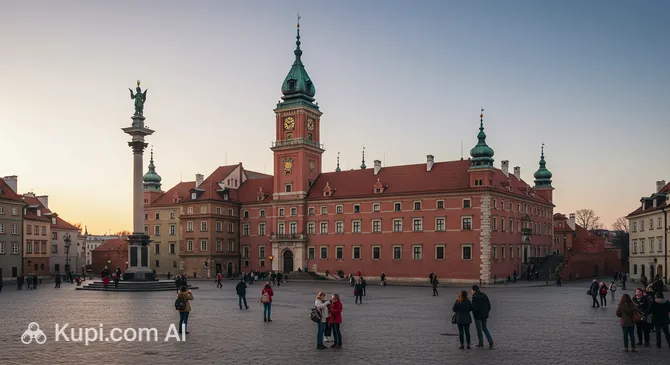
At the heart of the reconstructed Old Town lies the majestic Royal Castle in Warsaw. Once the residence of Polish monarchs, this stunning baroque-classicist structure was completely rebuilt from rubble to become a symbol of the nation's resilience. Visitors can tour the lavish royal apartments, admire the Throne Room, and view the extensive art collection, including works by Rembrandt. It serves not only as a museum but also as a testament to Polish history and culture.
Royal Castle in Warsaw. Illustration.
Source: Kupi.com AI
Traveler photos:
For a relaxing escape from the urban bustle, the Royal Łazienki Park is the perfect destination. This expansive garden complex, created in the 18th century, was the summer residence of Poland's last king. Its centerpiece is the breathtaking Palace on the Isle, surrounded by water and often visited by the park's resident peacocks. The park hosts famous open-air Chopin concerts during the summer, blending nature with world-class music in a serene atmosphere.
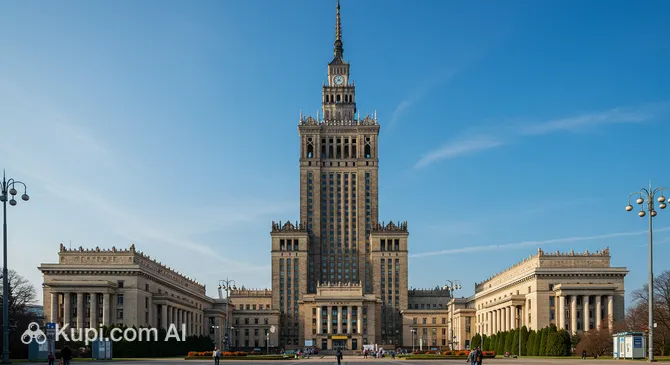
Dominating the city skyline is the iconic Palace of Culture and Science, a gift from the Soviet Union in the 1950s that stands as a monumental landmark. While it is no longer the tallest building in Poland, it remains an undeniable symbol of the city, housing theaters, cinemas, and museums. Tourists flock to the viewing terrace on the 30th floor, which offers an unparalleled panoramic view of the metropolis, stretching from the modern skyscrapers to the distant winding Vistula River.
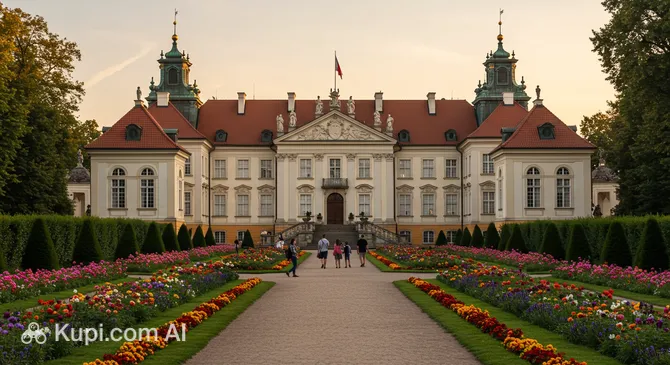
Museum of King Jan III's Palace at Wilanów. Illustration.
Source: Kupi.com AI
Traveler photos:
Further south lies the "Polish Versailles," the Museum of King Jan III's Palace at Wilanów. Unlike much of the city, this baroque masterpiece survived the wars largely intact, preserving its original historical charm. The palace is renowned for its magnificent interiors and beautifully landscaped gardens that change with the seasons. It provides a fascinating glimpse into the life of one of Poland's most famous kings and the artistic heritage of the era.
Science enthusiasts and families should not miss the Copernicus Science Centre, located on the banks of the Vistula. This modern facility is one of the largest of its kind in Europe, featuring hundreds of interactive exhibits that encourage visitors to conduct their own experiments. It is a place where learning becomes an adventure, making it a favorite spot for curious minds of all ages looking to understand the laws of the universe through hands-on fun.
Local Cuisine
Warsaw's culinary landscape is a delicious reflection of its history, blending hearty traditional recipes with a rapidly evolving modern gastronomy. For any visitor, tasting the local flavors is an essential part of the experience. Polish cuisine is renowned for its comfort foods, such as pierogi (dumplings filled with meat, cheese, or fruit) and żurek, a sour rye soup often served in a hollowed-out loaf of bread. The city offers everything from historic dining rooms to the culturally unique milk bars (bar mleczny), which serve affordable, home-style meals.
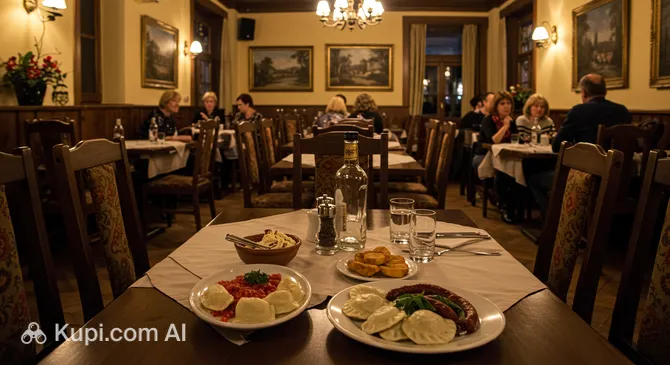
To experience authentic Polish hospitality and classic dishes prepared with care, a visit to Stary Dom is highly recommended. This restaurant captures the essence of old Warsaw with its elegant wooden interiors and a menu focused on traditional recipes passed down through generations. It is the perfect place to try a robust bigos (hunter's stew) or freshly made dumplings in a warm, atmospheric setting.
Stary Dom. Illustration.
Source: Kupi.com AI
Traveler photos:
The city has also embraced a trend of revitalizing historic industrial spaces into vibrant culinary hubs. The Elektrownia Powiśle, a former power plant, has been transformed into a trendy shopping and dining complex with a diverse food hall. Similarly, the Koneser Praga Center, located in a former vodka factory, offers a mix of restaurants, bars, and cultural spaces, making it a lively spot to explore the flavors of the Praga district.
For those seeking contemporary creativity or international tastes, Warsaw offers plenty of options. Bibenda is a popular choice known for its seasonal, vegetable-focused dishes and relaxed vibe, perfect for a casual evening. Meanwhile, SHUK mezze & bar brings the vibrant spices of the Middle East to the Polish capital, serving excellent hummus and sharing plates that are ideal for a social dining experience.
Travel Tips
Welcome to Warsaw! To ensure your visit to this dynamic metropolis is as smooth and enjoyable as possible, we have compiled a list of essential practical advice. From navigating the efficient transit system to understanding local customs, these tips will help you explore the Polish capital with the confidence of a local.
Clothing and Gear: The weather in Warsaw varies significantly by season, so layering is your best strategy. In winter, a heavy coat, scarf, and gloves are non-negotiable, while summers can be warm enough for light fabrics. Be sure to pack comfortable walking shoes, as the cobblestones in the Old Town can be unforgiving on heels or thin soles. If you plan to visit churches, remember to dress modestly, covering your shoulders and knees.
Getting Around: Warsaw boasts an excellent public transport system (ZTM) consisting of the metro, trams, and buses. It is the most efficient way to travel; tickets are affordable and valid across all modes, but remember to validate your ticket immediately upon boarding or entering the metro station to avoid fines. Car rental is generally unnecessary and can be a hassle due to traffic and paid parking zones. For late nights, ride-hailing apps like Uber and Bolt are widely available and reliable.
Finances and Currency: Although Poland is in the EU, it uses its own currency, the Polish Złoty (PLN). While you should have some cash for small vendors, card payments (especially contactless) are accepted almost everywhere, including museums and restaurants. ATMs are plentiful throughout the city. Tipping is customary in restaurants; leaving around 10% of the bill is standard if you are satisfied with the service.
Health and Safety: Warsaw is considered one of the safest capitals in Europe, but standard precautions against pickpocketing should be taken in crowded tourist spots like the Old Town. Pharmacies, marked with a green cross and known as Apteka, are easy to find; look for those marked "Całodobowa" if you need 24/7 service. In case of any serious emergency, dial 112 for assistance.
Communication and Connectivity: English is widely spoken, especially by younger people and in the service industry, so you will have little trouble communicating. However, learning a simple "Dzień dobry" (Good day) or "Dziękuję" (Thank you) goes a long way with locals. If you need a local SIM card, you can buy one at kiosks or convenience stores, but be aware that you must register it with a valid passport or ID at the point of sale to activate it.
Local Etiquette: Politeness is highly valued here. It is polite to say "Dzień dobry" when entering a small shop or elevator and "Do widzenia" when leaving. On public transport, it is expected that you give up your seat to elderly people, pregnant women, or those with small children. When greeting someone, a firm handshake is the norm, while close friends might exchange kisses on the cheek.
What to Avoid: strictly avoid jaywalking. Crossing the street at a red light or in an unauthorized place is considered a serious offense in Poland and often results in an immediate fine from the police. Also, avoid referring to Poland as "Eastern Europe"; locals strongly prefer the term "Central Europe" as it is geographically and culturally more accurate.
Sunday Shopping Ban: Be aware that most shops, including supermarkets and malls, are closed on Sundays due to trading laws. Only small convenience stores (like Żabka), gas stations, and souvenir shops remain open. Plan your grocery and souvenir shopping for Saturday to avoid disappointment.
Armed with these practical insights, you are ready to dive into the rich history and modern energy of Warsaw without the common tourist hiccups. Enjoy the delicious food, the beautiful parks, and the welcoming atmosphere of this unique European capital!
Entertainment & Nightlife
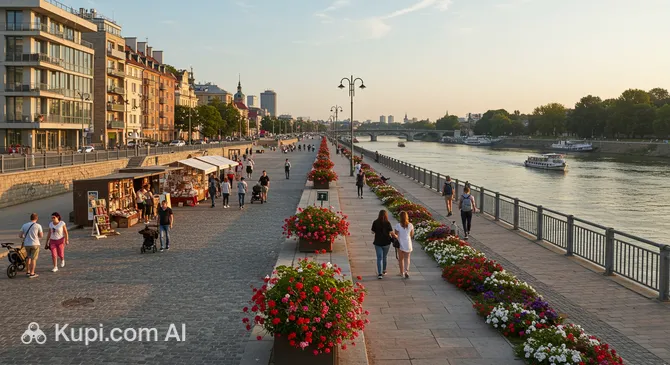
Warsaw comes alive after dark, transforming into a vibrant hub of energy that rivals any European capital. The city's nightlife is incredibly diverse, ranging from sophisticated rooftop cocktail lounges to gritty, alternative clubs in repurposed industrial spaces. One of the most unique features of Warsaw's summer nightlife is the bustling atmosphere along the Vistula Boulevards. During warmer months, this riverside promenade becomes the heart of the city's social life, filled with open-air bars, music, and thousands of people enjoying the evening breeze by the water.
Vistula Boulevards. Illustration.
Source: Kupi.com AI
Traveler photos:
For those seeking a concentration of pubs and casual drinking spots, the "Pawilony" area, tucked away in courtyards just off Nowy Świat Street, is a legendary destination among locals and students. It offers a labyrinth of small, quirky bars where the atmosphere is relaxed and the prices are wallet-friendly. If you prefer a more polished clubbing experience, the street of Mazowiecka is famous for its high-energy dance clubs and stricter door policies, attracting a crowd dressed to impress.
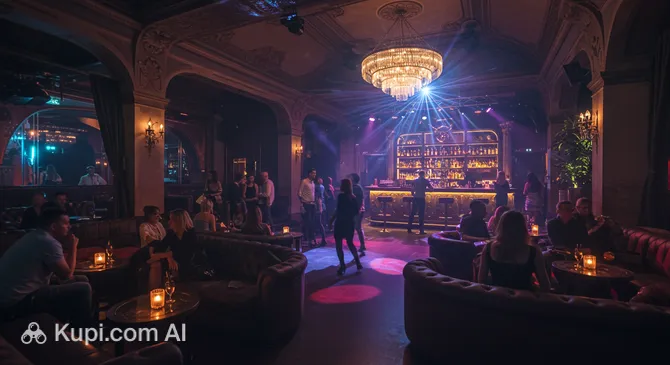
The city also boasts a thriving cultural scene that extends well into the evening. A great example is the Kamienica Theatre, founded by a famous Polish actor. Located in a historic tenement house, it combines theatrical performances with a distinct artistic vibe, often hosting events that blend culture with social gatherings. It is an excellent choice for travelers looking for entertainment with a touch of local history and sophistication.
Kamienica Theatre. Illustration.
Source: Kupi.com AI
Traveler photos:
Warsaw is a city that respects the late-night hunger pangs of party-goers. Venues like the Pianka 24-Hour Restaurant are institutions for those who need a meal or a drink at any hour of the day or night. Whether you are starting your evening or winding down at sunrise, such places ensure that the city's hospitality is always available. The dress code in Warsaw varies; while casual wear is perfectly fine for pubs and the riverbanks, smart casual or cocktail attire is recommended for high-end clubs and hotel bars.
Regarding safety and logistics, Warsaw is generally very safe for night walks, especially in the city center and well-lit tourist areas. Public transport, including the metro and night buses (marked with the letter 'N'), runs efficiently, but ride-hailing apps like Uber, Bolt, and FreeNow are the most convenient way to get around at night. Prices are reasonable, with a beer typically costing between 15 and 25 PLN, and cocktails ranging from 30 to 50 PLN depending on the venue.
While the nights are for partying, the days offer their own brand of excitement. Beyond the historical museums, thrill-seekers can visit Tepfactor Warsaw, an adventure park offering physical and mental challenges perfect for groups. Whether you are solving puzzles by day or dancing by the Vistula by night, Warsaw ensures there is never a dull moment.
Parks & Museums
Warsaw is a city that breathes through its vast green belts and remembers through its world-class cultural institutions, offering visitors a compelling mix of relaxation and education. With nearly a quarter of the city dedicated to parks and gardens, along with museums that are lauded as some of the best in Europe, the Polish capital provides endless opportunities to explore both nature and narrative.
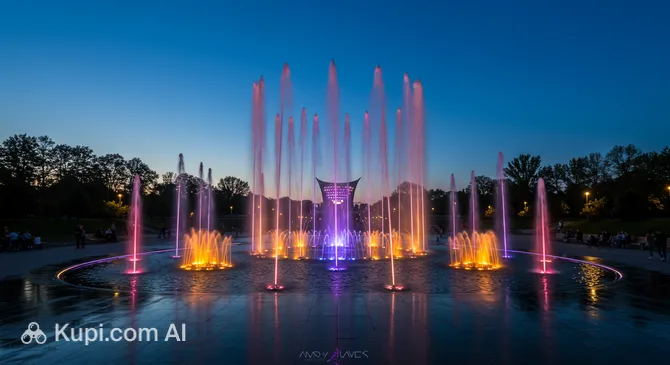
For those seeking a break from the urban pavement, Mokotów Field is a favorite local hangout. Once an airfield, this sprawling central park now serves as a major recreational hub where residents enjoy picnics, jogging, and cycling. It captures the laid-back side of the city perfectly. Another spectacular green space is the Multimedia Fountain Park, located near the Old Town. By day, it is a refreshing spot to cool off, but on summer evenings, it transforms into a dazzling stage for light, sound, and water shows that attract thousands of spectators.
Multimedia Fountain Park. Illustration.
Source: Kupi.com AI
Traveler photos:
If you prefer a more natural riverside setting, the Żoliborz Beach offers a sandy escape right on the banks of the Vistula. Surrounded by riparian forests, it is an ideal place for a bonfire or a sunset walk, making you feel miles away from the bustling city center.
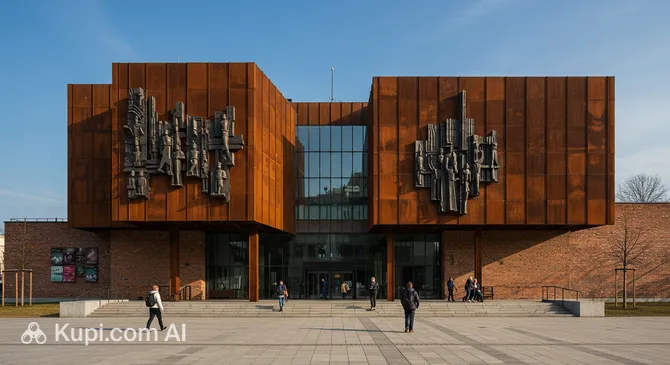
To truly understand the spirit of Warsaw, a visit to the Warsaw Uprising Museum is essential. Housed in a former tram power station, this interactive museum is dedicated to the heroic 1944 struggle against the Nazi occupation. Through immersive exhibits, sounds, and personal artifacts, it tells a deeply moving story of sacrifice and resilience that defines the modern identity of the capital.
Warsaw Uprising Museum. Illustration.
Source: Kupi.com AI
Traveler photos:
Equally impressive is the POLIN Museum of the History of Polish Jews, located in the Muranów district. This architectural marvel chronicles 1,000 years of Jewish history in Poland, celebrating a rich culture that was an integral part of the nation's fabric. For art enthusiasts, the National Museum in Warsaw boasts an extensive collection ranging from ancient Nubian frescoes to masterpieces of Polish painting, offering a comprehensive artistic journey.
Warsaw's streets are also lined with significant historical markers. In the Saxon Garden, you will find the Tomb of the Unknown Soldier, a solemn monument guarded eternally by soldiers, commemorating those who died for Poland's freedom. In the heart of Castle Square stands Sigismund's Column, the city's oldest secular monument and a popular meeting point that has watched over the capital since the 17th century.
Families and animal lovers should cross the river to visit the Warsaw Zoo. It is not only a home to diverse species but also a place of historical significance, as the zoo director's villa was a hiding place for Jews escaping the Ghetto during World War II.
For a unique and lesser-known experience, check out the NBP Money Centre. This highly modern and free-to-enter facility offers a fascinating, hands-on look at the history of money and economics, complete with a real bank vault and a chance to lift a gold bar.
Getting Around
Navigating Warsaw is remarkably easy and efficient, thanks to a well-integrated public transport system managed by ZTM. The network is comprehensive, connecting the city center with outer districts through a combination of the metro, trams, buses, and SKM (urban rapid rail). The metro is the fastest way to travel, consisting of two lines: M1, which runs north to south, and M2, which connects the east and west banks of the Vistula River. Trams are another popular choice; the distinct yellow carriages are a common sight and offer a scenic way to view the city streets while moving between major attractions.
The ticketing system is unified, meaning a single ticket is valid across all modes of transport, including the metro, trams, and buses. Warsaw is divided into two tariff zones: Zone 1 (city limits) and Zone 2 (suburbs). For most tourists, including those traveling to and from the main airport, a Zone 1 ticket is sufficient. Tickets are time-based, with options typically including 20-minute, 75-minute, and 90-minute transfers, as well as 24-hour and weekend passes. Prices are very affordable compared to other European capitals, with a standard 75-minute ticket costing approximately 4.40 PLN (around €1).
Purchasing tickets is straightforward. You can buy them at multilingual ticket machines located at metro stations, near major stops, and often on board vehicles (though onboard machines may only accept cards). For added convenience, many visitors prefer using mobile apps like Jakdojade, SkyCash, or moBiLET, which allow you to plan your route and buy tickets directly on your phone. If you use a paper ticket, you must validate it immediately upon boarding the bus or tram, or at the gate when entering the metro. Failure to do so can result in a hefty fine during routine inspections.
Public transport generally operates from around 5:00 AM until shortly after 11:00 PM. However, the city never truly sleeps thanks to an extensive network of night buses (marked with the letter 'N'), which run every 30 or 60 minutes depending on the route. These buses converge at the central station, making it easy to transfer and get home safely after a night out. On weekends, the metro lines often extend their operating hours until late into the night, providing a quick way to return from evening events.
For those who prefer alternative ways to get around, the city offers a popular public bike-sharing system called Veturilo. With stations scattered every few hundred meters, renting a bike via the mobile app is a fantastic way to explore the flat terrain and extensive cycle paths, especially along the river boulevards. Additionally, ride-hailing apps like Uber, Bolt, and FreeNow are widely available, offering a safe and competitively priced alternative to traditional taxis.
A unique feature for summer visitors is the operation of historic tourist lines. During the holiday season, the transport authority launches special lines served by vintage trams and buses from the mid-20th century. Riding these restored vehicles is not just a mode of transport but a journey back in time, allowing you to experience the city's atmosphere as it was decades ago while traveling between key landmarks.
Accommodation
Accommodation:
Finding the perfect place to stay in Warsaw is relatively easy, as the city offers a wide spectrum of accommodation options to suit every budget and preference. The hospitality sector has grown significantly, providing everything from luxury international hotel chains and sophisticated boutique properties to affordable hostels and a vast array of short-term rental apartments. Compared to many Western European capitals, Warsaw offers excellent value for money, allowing travelers to often enjoy higher standards of comfort for a lower price.
For most visitors, the City Center (Śródmieście) is the most convenient area to base themselves. Staying here places you within walking distance of the central railway station, major shopping malls, and excellent transport links. It is also where the modern skyline meets history, dominated by the towering Palace of Culture and Science. This district is ideal for those who want to be in the heart of the action, with easy access to both business hubs and tourist sights.
Palace of Culture and Science. Illustration.
Source: Kupi.com AI
Traveler photos:
If you prefer a more romantic and historic atmosphere, looking for accommodation in or near the Old Town is a fantastic choice. While it can be a bit pricier and less accessible by car due to pedestrian zones, waking up surrounded by colorful tenements and cobblestone streets is a unique experience. Alternatively, the Praga district across the Vistula River offers a more alternative and artistic vibe, often with more budget-friendly prices and a distinct local character.
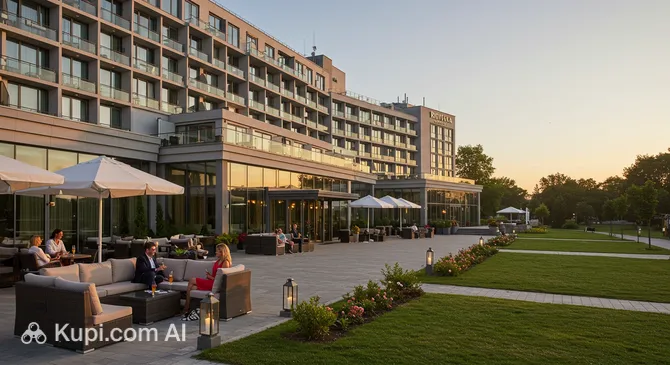
The city's accommodation landscape is diverse, featuring various types of facilities. Among the options available in the region, you might encounter places like the Riviera Resort, representing the variety of lodging styles that cater to different traveler needs. Whether you are looking for a standard city hotel or something with specific amenities, it is worth exploring the full range of listings to find a match for your itinerary.
Riviera Resort. Illustration.
Source: Kupi.com AI
Traveler photos:
Booking Tip: Warsaw is a year-round destination, but it can get particularly busy during the summer months (June to August) and around major holidays. It is highly recommended to book your accommodation in advance during these peak times to secure the best rates and availability. Most bookings can be easily made through major online platforms, though checking direct hotel websites can sometimes yield special offers.
Prices generally range from budget-friendly options (hostels and basic apartments) starting at around 150–250 PLN per night, to mid-range hotels costing between 300 and 600 PLN. Luxury stays in top-tier hotels can exceed 800 PLN per night. Regardless of your choice, the high standard of Polish hospitality ensures a comfortable and welcoming stay.
Nearby Cities
For those looking to explore the surroundings, Warsaw serves as an excellent base for day trips to several interesting nearby locations:
Just a short distance away lies Otwock, a town renowned for its unique "Świdermajer" wooden architecture. Nestled among pine forests along the Świder River, it offers a refreshing escape with its distinct villas and relaxing microclimate. Another popular spot is Piaseczno, which attracts visitors with its historic Narrow Gauge Railway, providing a nostalgic journey through the scenic Mazovian landscape perfect for families. Closer to the capital, Pruszkow offers interesting cultural sites such as the Museum of Ancient Mazovian Metallurgy and the expansive Potulicki Park, making it a pleasant destination for a quiet afternoon.
City
Population
Distance
Ząbki
43 740
9 km
Marki
42 252
12 km
Ozarow Mazowiecki
14 375
13 km
Piastow
23 281
13 km
Zielonka
18 219
13 km
These nearby destinations offer a glimpse into the diverse culture and landscapes of the region.
Shopping & Souvenirs
Shopping:
Warsaw has rapidly established itself as a premier shopping destination in Central Europe, offering a diverse mix of international luxury brands, high-street favorites, and thriving local design scenes. The city's retail landscape is a fascinating blend of modern glass-ceilinged malls and historic streets lined with independent boutiques. Whether you are looking for global fashion trends or unique Polish craftsmanship, the capital provides a shopping experience that caters to every taste and budget.
For a traditional high-street experience, the pedestrian-friendly Chmielna Street and the elegant Nowy Świat are the places to start. These areas are dotted with bookstores, cafes, and small boutiques, perfect for a leisurely stroll. Fashion enthusiasts seeking upscale Polish design and luxury brands should head to Mokotowska Street, often regarded as the most fashionable address in the city, where historic tenement houses host some of the country's best designers.
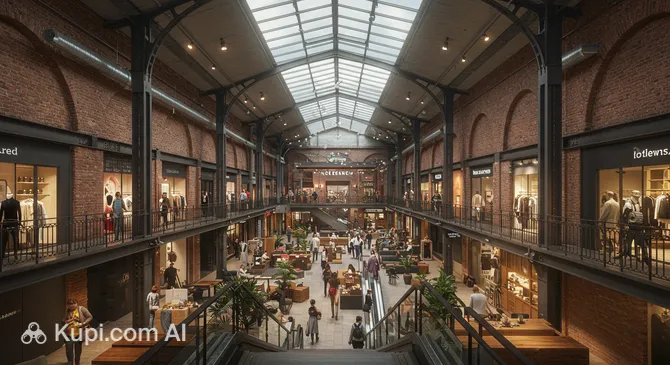
The city is also famous for its impressive shopping centers, which often serve as social hubs. One of the most iconic is Złote Tarasy, instantly recognizable by its undulating glass roof, located right next to the central railway station. However, Warsaw's true retail strength lies in its revitalized industrial spaces. The Norblin Factory is a shining example, where a former metal factory has been transformed into a vibrant complex of shops, restaurants, and a bio-bazaar, seamlessly blending history with modern lifestyle trends.
Norblin Factory. Illustration.
Source: Kupi.com AI
Traveler photos:
Another must-visit location is Elektrownia Powiśle. Housed in a beautifully restored power plant, this center offers a curated selection of fashion and design stores, along with a beauty hall and numerous dining options. These unique venues provide a shopping atmosphere that goes far beyond simple retail, allowing visitors to admire industrial architecture while browsing for goods.
For those interested in local flavor and antiques, Warsaw’s markets are a treasure trove. The Bazar na Kole (Koło Bazaar) operates on weekends and is the go-to spot for collectors seeking antiques, vintage furniture, and memorabilia. Meanwhile, the historic Hala Mirowska remains a bustling center for fresh produce and flowers, offering an authentic glimpse into the daily lives of Varsovians.
When it comes to souvenirs, there are several local specialties worth bringing home. Baltic amber jewelry is a classic choice, available in many forms throughout the Old Town. Polish pottery from Bolesławiec, known for its distinctive blue and white patterns, makes for a durable and beautiful gift. Additionally, sweets such as Ptasie Mleczko (chocolate-covered marshmallow) or a bottle of high-quality Polish vodka or mead are excellent edible souvenirs.
Standard shopping hours in Warsaw are generally from 10:00 AM to 9:00 PM for malls, while smaller street shops may close around 6:00 PM or 7:00 PM. It is important to remember that a Sunday trading ban is in effect in Poland, meaning most large shops and malls are closed on Sundays, with the exception of a few designated "shopping Sundays" throughout the year. Payments are incredibly convenient, with credit and debit cards (especially contactless) accepted almost everywhere, even in small kiosks. Non-EU residents can also take advantage of Tax-Free shopping at participating stores, allowing for a VAT refund upon departure.