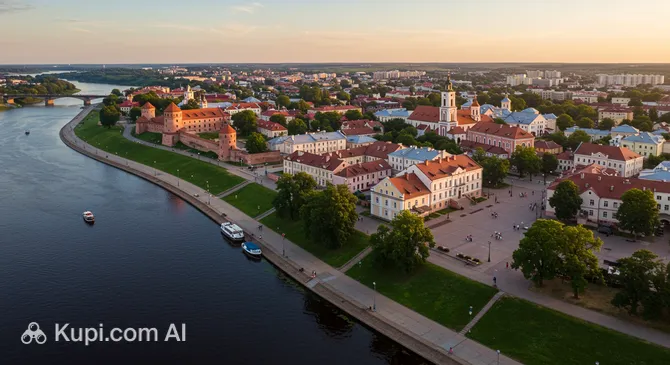
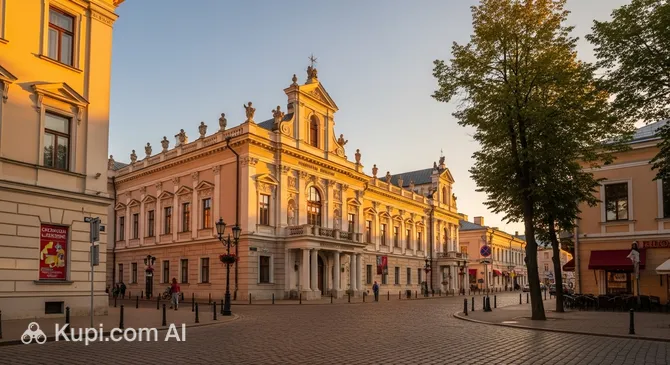
Welcome to Grodno, a city that effortlessly blends medieval charm with modern vibrancy. Often referred to as the "Royal City," it stands as a cultural jewel in western Belarus, located picturesquely on the banks of the Neman River. Its proximity to the borders of Poland and Lithuania has shaped a unique multicultural atmosphere that sets it apart from other destinations in the region.
Home to approximately 375,000 residents, Grodno is the administrative center of the Grodno Region. The city is renowned for its well-preserved historic center, which survived many of the turbulent events of the past centuries better than other locations. The deep and complex history of Grodno is reflected in its diverse architecture, where ancient churches stand alongside grand palaces.
Grodno. Illustration.
Source: Kupi.com AI
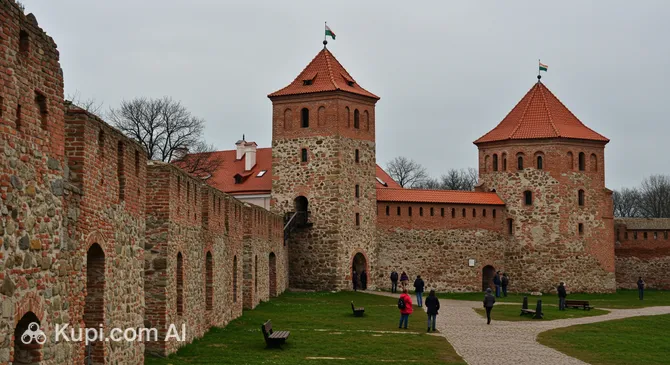
Travelers are drawn to the city's impressive landmarks, particularly the Old and New Castles, which offer a glimpse into the lives of grand dukes and kings. Another must-see is the Kalozha Church of Sts. Boris and Gleb, a 12th-century architectural marvel known for its unique colored brickwork and acoustics. The skyline is dominated by the majestic St. Francis Xavier Cathedral, often called the Farny Church, with its stunning baroque interior.
Whether you are strolling through the cobblestone streets, enjoying the views from the castle hills, or relaxing in one of the cozy local cafes, Grodno offers a memorable experience for every visitor. It is a perfect destination for those seeking to explore a city rich in heritage and European flair.
Weather Overview
Understanding the local climate is key to planning a comfortable visit to this historic city. Generally, travelers can expect warm summers with occasional rain and cold, damp winters. For a comprehensive breakdown of monthly forecasts and conditions, you can check the detailed guide to the weather in Grodno.
The summer months of June, July, and August are typically the most pleasant, with average temperatures ranging from 18°C to 19°C and daytime highs reaching up to 24°C. However, rain is not uncommon, with about 12 to 14 wet days per month during this season. In contrast, winters require warm clothing; January is usually the coldest month, with an average temperature of -1.5°C and lows dipping to -3.5°C. Precipitation remains frequent throughout the colder months, with December seeing up to 15 wet days.
Average monthly temperature
Average monthly precipitation
Interesting Facts
Beyond the main attractions, Grodno holds many fascinating secrets and historical milestones that add depth to its charm. From ancient engineering marvels to unique royal heritage, the city offers plenty of surprises for the curious traveler.
The city is the only place in the country where two royal residences stand adjacent to one another. The Old Castle and the New Castle are connected by a centuries-old arched bridge, allowing visitors to walk between different eras of royal history in just a few steps.
The tower of St. Francis Xavier Cathedral houses one of the oldest working clock mechanisms in Europe. Historians believe this masterpiece was crafted even earlier than the famous Prague Astronomical Clock, and it has been ticking faithfully for centuries.
Medieval builders of the Kalozha Church of Saints Boris and Gleb used a clever acoustic trick that remains visible today. They embedded numerous hollow clay vessels, known as resonators, directly into the brick walls to improve the sound quality inside the temple.
Grodno is home to the oldest zoological park in Belarus. The Grodno Zoo was founded in 1927 by a biology enthusiast and teacher, starting as a small educational corner before growing into the significant attraction it is today.
Old Castle. Illustration.
Source: Kupi.com AI
Traveler photos:
How to Get There
Planning a trip to this historic city requires some logistical preparation, as it sits near the borders of Poland and Lithuania. Whether you prefer flying or taking the train, there are several viable routes. For a comprehensive overview of all transport options, routes, and tips, you can read more about how to get to Grodno on our detailed page.
The city of Grodno does not have its own major international airport, so most travelers choose to fly into neighboring cities and complete the journey by road. One of the closest major hubs is Vilnius International Airport (IATA: VNO), located in the city of Vilnius, approximately 144 km from Grodno. The transfer by taxi or bus typically takes around 4 hours, depending on border crossing times. Another option is Kaunas Airport (IATA: KUN) in Kaunas, situated about 145 km away, offering similar travel times. For those traveling from within Belarus, Brest Airport (IATA: BQT) in Brest is roughly 174 km to the south.
For clarity, here is a summary of the main airports:
Traveling by train is often the most convenient way to arrive directly in the city. The primary hub is the Grodno Railway Station, which is centrally located just 2.7 km from the heart of the city. This station handles a high volume of passengers and connects Grodno with major cities across Belarus and beyond. Upon arrival, you can easily reach your hotel by a short taxi ride or public transport.
Below is a list of the nearest railway stations:
Station
Passenger traffic
Distance
Grodno Railway Station
3.6 mln
3 km
Skidzyel Station
—
29 km
Mosty Railway Station
250 000
55 km
Rozhanka Station
—
65 km
Vawkavysk-Gorod Station
—
71 km
Zelva Railway Station
—
86 km
Main Attractions
Grodno is a city where history comes alive, offering a diverse array of architectural styles and cultural landmarks. Walking through its streets feels like a journey through time, from the Middle Ages to the present day. Below are some of the most significant places that capture the spirit of this unique destination.
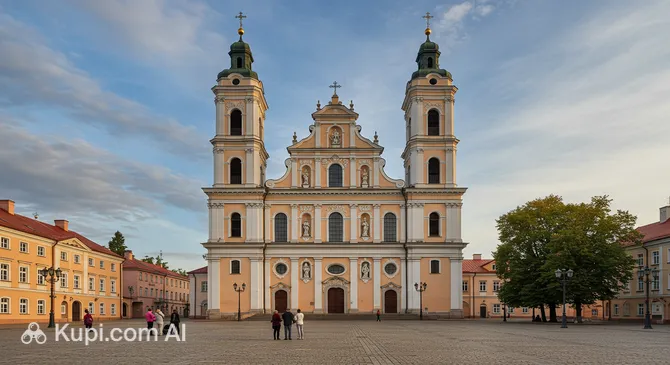
Undoubtedly the most prominent landmark in the city center is the St. Francis Xavier Cathedral. Originally part of a Jesuit monastery, this Baroque masterpiece commands attention with its twin towers and intricate facade. Inside, visitors are often awestruck by the sheer scale of the 21-meter high wooden altar, which is one of the tallest in Europe. The cathedral is not just a place of worship but a gallery of artistic excellence, featuring elaborate sculptures and frescoes that have been carefully preserved.
St. Francis Xavier Cathedral. Illustration.
Source: Kupi.com AI
Traveler photos:
Another architectural gem is the Kalozha Church of Saints Boris and Gleb, standing majestically on the high bank of the Neman River. Dating back to the 12th century, it is unique for its exposed brick and stone walls, decorated with polished granite and gneiss stones. This ancient structure is a candidate for UNESCO World Heritage status and offers a serene atmosphere where you can admire medieval engineering and enjoy panoramic views of the river below.
For a change of pace, Zhiliber Park provides a lush, green escape right in the heart of the city. Named after the famous French botanist Jean-Emmanuel Gilibert, who founded a botanical garden here in the 18th century, the park is a favorite spot for locals and tourists alike. With its manicured paths, charming bridges, and the gentle flow of the Gorodnichanka River, it is the perfect place for a leisurely stroll or a quiet break between sightseeing stops.
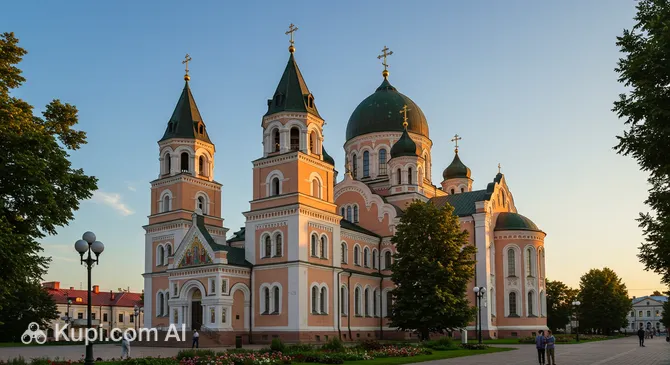
Cathedral of the Intercession. Illustration.
Source: Kupi.com AI
Traveler photos:
A striking example of Neo-Russian architecture can be found at the Cathedral of the Intercession. Built in the early 20th century to honor soldiers who died in the Russo-Japanese War, this Orthodox cathedral stands out with its intricate brickwork and distinctive domes. The interior is equally impressive, housing significant religious icons and offering a solemn, reflective environment that contrasts with the bustling city streets outside.
Local Cuisine
The culinary landscape of Grodno is a delightful reflection of its multicultural history, blending traditional Belarusian recipes with strong Polish and Lithuanian influences. The result is a hearty and flavorful cuisine that relies heavily on locally sourced ingredients. Potatoes, often called "the second bread" in Belarus, take center stage in many meals. No visit is complete without trying draniki, crispy potato pancakes typically served with a generous dollop of sour cream or a savory mushroom sauce.
For a more substantial meal, look for machanka, a rich pork stew designed to be eaten with pancakes or yeast crepes. Another local favorite is bigos, a hunter’s stew made with sauerkraut and various cuts of meat, reflecting the region's shared heritage with its western neighbors. In the warmer months, locals often enjoy kholodnik, a refreshing cold beet soup topped with fresh dill, cucumber, and a hard-boiled egg.
Kronon Park Hotel. Illustration.
Source: Kupi.com AI
Traveler photos:
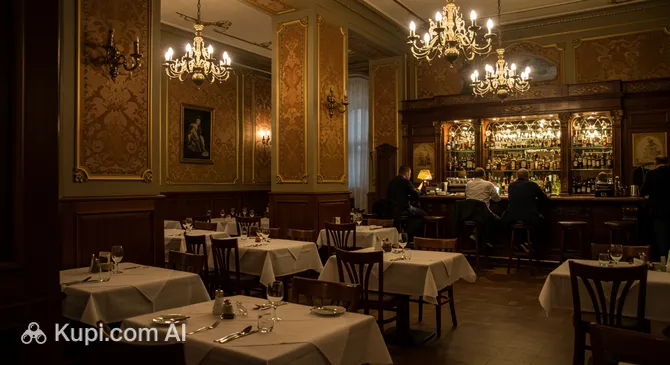
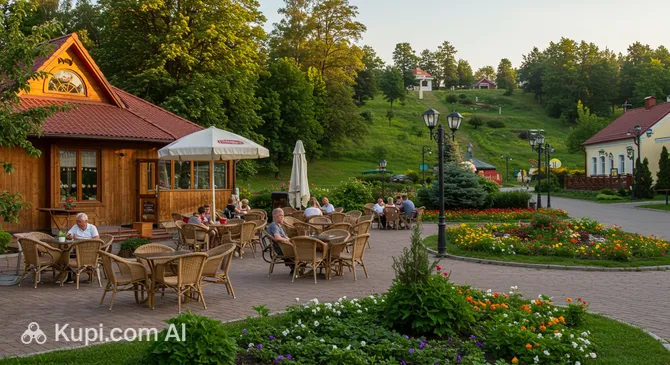
The dining scene in Grodno ranges from casual street food to elegant establishments. For a sophisticated experience surrounded by forest scenery, the Kronon Park Hotel offers a refined menu that often features both local specialties and European classics. It is an excellent place to sample high-quality interpretations of traditional dishes in a serene atmosphere.
Beverages are an integral part of the gastronomic culture here. On hot days, you will find vendors selling kvas, a fermented bread drink that is both sweet and tangy. For something stronger, the region is known for herbal balms and tinctures, such as krambambula, a honey-spiced alcoholic drink served warm or cold. Beer enthusiasts will also appreciate the local varieties, as brewing traditions run deep in western Belarus.
Cocoa Coffeehouse. Illustration.
Source: Kupi.com AI
Traveler photos:
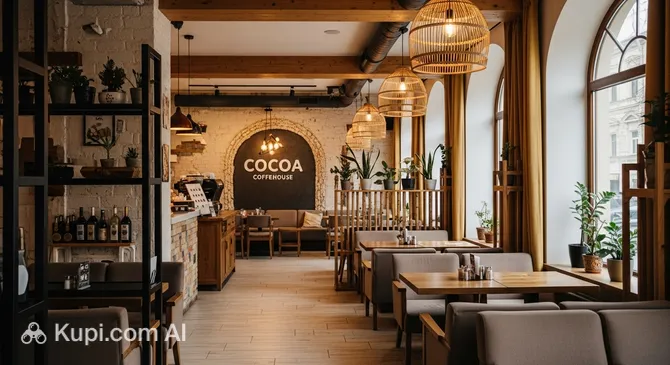
Grodno also boasts a vibrant coffee culture, arguably the most developed in the country. The pedestrian-friendly Sovetskaya Street is lined with charming cafes where you can linger over a cup of aromatic coffee and a slice of cake. One such popular spot is the Cocoa Coffeehouse, known for its cozy ambiance and excellent selection of brews. As evening approaches, the city offers various venues to unwind, such as the Faraday Bar, where you can enjoy creative cocktails in a unique setting.
Travel Tips
Visiting Grodno is a delightful experience, thanks to its compact historic center and welcoming atmosphere. To help you navigate the city with ease and confidence, here are some practical tips to keep in mind while planning your journey.
Clothing and Gear: The weather in Grodno varies significantly by season. If you visit in winter, bring a heavy coat, gloves, and thermal layers, as temperatures often drop below freezing. Summers are generally warm and pleasant, perfect for light clothing, though an umbrella is useful for occasional showers. Since the city is famous for its cobblestone streets, comfortable walking shoes are a must. When visiting religious sites like the Kalozha Church or the Cathedral of the Intercession, dress modestly; women are often expected to cover their heads and shoulders, and men should remove hats.
Transportation: The city center is very walkable, and most major attractions are close to one another. For longer distances, Grodno has an extensive network of buses and trolleybuses. You can purchase tickets at kiosks or directly from the driver (cash only). Taxis and ride-hailing apps are also affordable and convenient options for getting around. Car rental is available but generally not necessary if you plan to stay within the city limits.
Finances: The local currency is the Belarusian Ruble (BYN). While credit cards are accepted in many hotels, restaurants, and supermarkets, it is highly advisable to carry cash for small purchases, public transport, and souvenir stalls. Currency can be exchanged at bank branches and exchange offices located throughout the city; remember to bring your passport for the transaction. Tipping is appreciated but not mandatory; rounding up the bill or leaving about 10% is standard in cafes.
Health and Safety: Grodno is considered a safe city for tourists, even for those walking alone at night. Pharmacies, marked with a green cross and the word Apteka, are widespread, and some operate 24 hours a day. In case of a medical emergency, dial 103 for an ambulance. It is generally recommended to drink bottled water rather than tap water to avoid any stomach upset.
Communication: The official languages are Belarusian and Russian, with Russian being the most commonly spoken in daily life. English is spoken by younger people and staff in the tourism sector, but it may be less understood in smaller shops or by older residents. Downloading an offline translation app and an offline map is very helpful. You can easily purchase a local SIM card at mobile provider shops in the city center by presenting your passport.
Local Etiquette: Belarusians are known for their hospitality and politeness. A firm handshake is a common greeting. In public transport, it is polite to give up your seat to elderly passengers or parents with small children. When entering a home, you should always remove your shoes. In churches, speak softly and be respectful of worshippers.
What to Avoid: Strictly avoid drinking alcohol in public places such as streets, parks, or squares, as this is prohibited by law and can result in a fine. Also, be mindful of traffic rules; jaywalking is taken seriously, so always use designated pedestrian crossings to avoid penalties.
Shopping Tip: If you are looking for authentic souvenirs, Grodno is known for its high-quality linen products and straw crafts. Many shops along the pedestrian Sovetskaya Street offer unique local goods and stay open later in the evening, making it a perfect spot for an after-dinner stroll and shopping.
By keeping these simple tips in mind, you will be well-prepared to enjoy everything Grodno has to offer. Embrace the local culture, explore the historic streets, and have a wonderful trip!
Entertainment & Nightlife
While Grodno may not have the frenetic energy of a massive metropolis, its nightlife offers a cozy and vibrant atmosphere that perfectly complements its historic charm. The city comes alive after sunset, particularly along the pedestrian-friendly Sovetskaya Street and the surrounding areas. This district serves as the heart of evening entertainment, where locals and tourists alike gather to enjoy live music, street performances, and a variety of welcoming venues.
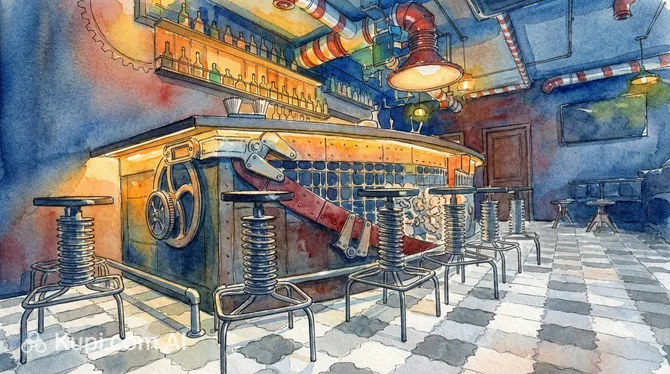
The nightlife scene here is dominated by stylish bars, gastropubs, and lounges rather than massive nightclubs. The crowd is generally diverse, ranging from university students to professionals, creating a laid-back and friendly vibe. One of the popular spots to unwind is Hookah Place, known for its relaxed environment and wide selection of blends. It is an ideal location for those looking to have a quiet conversation in a comfortable setting. For those seeking unique cocktails and a distinct steampunk aesthetic, the Faraday Bar remains a favorite destination, offering creative drinks that are as much a visual treat as they are delicious.
Faraday Bar. Illustration.
Source: Kupi.com AI
Traveler photos:
Most venues in the city center operate until 2:00 AM or 4:00 AM on weekends, with a more relaxed schedule during the week. The dress code is typically casual to smart-casual; you do not need to dress up formally unless you are visiting a high-end restaurant or a theater premiere. Prices are quite reasonable compared to many European cities, making a night out in Grodno very affordable. A cocktail or a pint of local beer typically costs a fraction of what you might pay elsewhere.
For those interested in entertainment beyond bars, the city offers excellent modern facilities. The Triniti shopping and entertainment complex is a major hub for evening activities. It houses a modern cinema, an ice-skating rink, and numerous food courts, making it a perfect spot for families or groups of friends who want a fun night out without the bar scene.
Safety is a strong point for Grodno. The city center is well-lit and safe for walking at night. However, if you need to travel further or prefer not to walk, taxis are readily available and inexpensive. Popular ride-hailing apps like Yandex Go work reliably here, or you can call local taxi services. It is advisable to have a taxi app downloaded on your phone for convenience.
During the day, the entertainment options are equally engaging. Families will appreciate a visit to the Grodno Zoo, located near the railway station, which offers a chance to see a variety of animals in a historic setting. For active travelers, Jungle Park provides an adventurous rope course experience set among the trees, perfect for both children and adults seeking a bit of adrenaline.
Parks & Museums
Grodno is a city that invites leisurely exploration, offering a harmonious mix of lush greenery and intellectual enrichment. Beyond its famous royal residences, the city boasts serene parks and unique museums that delve deep into its multicultural heritage, making it a perfect destination for travelers who appreciate both nature and history.
For a refreshing escape right in the city center, the Swiss Valley is a favorite among locals. This picturesque landscape park stretches along the Gorodnichanka River, featuring manicured paths, rock gardens, and small bridges that create a romantic atmosphere. It serves as a natural extension of the larger Zhiliber Park, offering a quieter, more intimate setting for a walk. The valley is particularly beautiful in the spring and summer when the flowerbeds are in full bloom.
Swiss Valley. Illustration.
Source: Kupi.com AI
Traveler photos:
Another significant green space is Kalozha Park, located on the high bank of the Neman River. This area is not only a haven of tranquility but also a place of great historical significance, as it surrounds the ancient Kalozha Church. Visitors come here to enjoy panoramic views of the river and the city skyline. It is an ideal spot for a sunset picnic or a contemplative stroll away from the bustle of the main streets.
When it comes to cultural immersion, the Grodno State Museum of the History of Religion stands out as one of the most unique institutions in Belarus. Housed in the magnificent 18th-century Chreptowicz Palace, the museum explores the complex interplay of different faiths that have shaped the region. The exhibits cover Orthodoxy, Catholicism, Judaism, Islam, and Protestantism, featuring rare icons, books, and liturgical objects that reflect the city's diverse spiritual past.
Grodno State Museum of the History of Religion. Illustration.
Source: Kupi.com AI
Traveler photos:
Architecture enthusiasts should not miss the Evangelical Lutheran Church of Grodno. This striking Neo-Gothic building, with its pointed spire and stained glass, offers a distinct contrast to the city's Baroque and Orthodox landmarks. It is a functioning church known for its excellent acoustics, and lucky visitors might catch an organ concert here. Nearby, you can also find the Old Mill, a historical industrial building that adds a touch of rustic charm to the cityscape.
For a truly authentic experience, take a walk across the Old Bridge connecting the two banks of the Neman River. While it is a functional transport artery, the pedestrian path offers one of the best vantage points for photographing the historic center, including the castles and the drama theater, especially during the golden hour.
Getting Around
Navigating Grodno is straightforward and affordable, thanks to a well-developed public transport network that covers the entire city. Unlike larger capitals, Grodno does not have a metro system or trams; instead, the city relies on an extensive web of buses and trolleybuses. These vehicles run frequently and connect the historic center with residential districts and the railway station, making it easy for tourists to reach major attractions without a car.
For a faster alternative, you can use minibuses, locally known as marshrutkas. These yellow or white vans follow specific routes like regular buses but make fewer stops and travel more quickly. While they are slightly more expensive than standard public transport, they offer a convenient way to get across town efficiently. In a marshrutka, you typically pay the driver directly in cash upon entering.
The payment system for buses and trolleybuses is simple. You can purchase single-journey paper tickets, often called talons, at newsstands, "Tabak" kiosks, or directly from the driver (though buying from the driver may cost a fraction more). Once you board, you must validate your ticket immediately using the mechanical punchers or electronic validators located near the doors. Failure to validate can result in a fine if ticket inspectors board the vehicle.
Modern technology has also made its way into the local transport system. Many vehicles are equipped with QR codes for the Oplati mobile app, allowing passengers to pay for their ride digitally. This is a convenient option if you have mobile data and prefer not to carry small change. Travel passes for ten days or a month are also available, though single tickets are usually sufficient for short-term visitors.
Public transport generally operates from around 5:30 AM to midnight. If you are traveling late at night or prefer more comfort, taxis are a popular and inexpensive choice. Ride-hailing apps like Yandex Go are widely used, offering transparent pricing and the ability to pay by card. During the warmer months, the city is also bicycle-friendly, with rental points available in parks and near major recreational areas, allowing you to explore the scenic banks of the Neman River at your own pace.
Accommodation
Finding the perfect place to stay in Grodno is relatively easy, as the city offers a diverse range of accommodation options to suit various preferences and budgets. Unlike some larger European capitals dominated by international chains, the hospitality scene here is characterized by a mix of renovated Soviet-era hotels, charming boutique establishments, and a vibrant market of short-term rental apartments.
For travelers who prioritize location and atmosphere, the historic center is undoubtedly the best area to base yourself. Staying near the pedestrian-friendly Sovetskaya Street or the Old Castle places you within walking distance of the main attractions, cafes, and museums. This area is particularly convenient for those who want to explore the city on foot and enjoy the evening lights of the old town without worrying about transportation.
Another popular option is to look for accommodation along the banks of the Neman River. Hotels and rentals in this area often offer scenic views and a quieter environment while still being close to the city's heart. For budget-conscious travelers and backpackers, there are several modern hostels and guest houses that provide clean and comfortable lodging at very affordable rates.
Short-term apartment rentals are a very common and high-quality alternative to traditional hotels in Grodno. Many locals offer stylish, fully furnished apartments in the city center, often providing more space and privacy than a standard hotel room. These can be an excellent choice for families or groups of friends seeking a "home away from home" experience.
Booking Tips: While Grodno is generally affordable, availability can become limited during the peak summer months (June to August) and around major holidays. It is advisable to book your accommodation at least a few weeks in advance to secure the best options. Most establishments accept reservations through major online travel platforms, though booking directly through a hotel's website can sometimes offer better rates. Prices in the city are typically lower than in Western Europe, with mid-range options offering excellent value for money.
Nearby Cities
For those looking to explore the surroundings, Grodno serves as an excellent base for day trips to several interesting nearby locations:
One of the most popular destinations is Lida, located just over an hour's drive away. The city is famous for the majestic Lida Castle, founded in the 14th century by Grand Duke Gediminas. This red-brick fortress is a center for medieval reenactments and festivals, offering visitors a chance to step back in time. Lida is also known for its brewing traditions, making it a great stop for both history buffs and foodies.
Another fascinating option is Slonim, a town that boasts a rich tapestry of religious and architectural history. Here, you can admire the baroque St. Andrew's Church and the historic Great Synagogue, one of the oldest in the country. Just outside the town center lies the Albertin estate, a former noble residence surrounded by a scenic park, perfect for a quiet afternoon walk.
For a longer day trip, consider visiting Brest, a major city on the border with Poland. While it requires a bit more travel time, it is home to the monumental Brest Fortress, a symbol of resistance during World War II. The city's charming pedestrian Sovetskaya Street offers a unique daily ritual where a uniformed lamplighter manually lights the gas streetlamps at dusk.
City
Population
Distance
Skidzyel
10 168
28 km
Sokółka
17 616
36 km
Druskininkai
13 170
39 km
Czarna Białostocka
8 943
54 km
Masty
15 197
55 km
These nearby destinations offer a glimpse into the diverse culture and landscapes of the region.
Shopping & Souvenirs
Shopping:
Shopping in Grodno offers a pleasant balance between modern retail experiences and the charm of discovering local craftsmanship. While the city may not be a global fashion capital, it provides an excellent opportunity to purchase high-quality Belarusian goods, particularly textiles, cosmetics, and food products. Visitors will find that prices are often quite reasonable compared to Western Europe, making it a great destination for picking up unique gifts and daily essentials.
The heart of the city's shopping scene is undoubtedly the pedestrian-only Sovetskaya Street. This historic thoroughfare is lined with a variety of small boutiques, jewelry stores, and souvenir shops housed in beautifully preserved buildings. It is the perfect place to enjoy a leisurely stroll, popping into stores to admire locally made linen clothing or browsing through bookstores. The atmosphere here is relaxed, often accompanied by the sounds of street musicians, turning a simple shopping trip into a cultural experience.
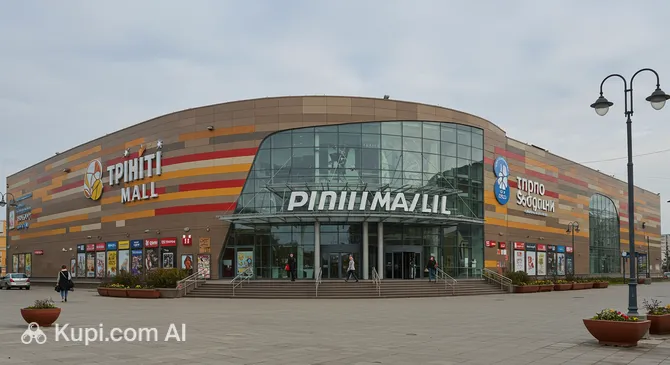
For those seeking a more comprehensive retail experience with international brands and entertainment under one roof, Grodno boasts several modern shopping centers. The largest and most impressive is Triniti, a massive complex that serves as a city within a city. It features three floors of fashion retailers, a hypermarket, and extensive leisure facilities. Another popular destination is the Korona Mall, known for its spacious layout and a wide selection of electronics, clothing, and household goods.
Triniti. Illustration.
Source: Kupi.com AI
Traveler photos:
To get a taste of authentic local life, a visit to the Skidzyelski Market (often referred to simply as the Central Market) is a must. Located near the bus station, this bustling hub is where locals go for fresh produce, seasonal fruits, and farm-fresh dairy products. Apart from food, you can find rows of stalls selling affordable clothing, shoes, and household items. It is a lively place where cash is king, and bargaining is occasionally part of the interaction.
When it comes to souvenirs, Grodno has plenty to offer. The region is famous for its flax (linen) products, ranging from high-quality bedding and tablecloths to stylish summer clothing. Traditional straw crafts, which are inscribed on the UNESCO Intangible Cultural Heritage list, make for lightweight and beautiful gifts. Additionally, visitors often bring back Belarusian cosmetics, known for their natural ingredients, and sweets from famous local confectioneries like Spartak or Kommunarka.
Most shops in Grodno operate from 10:00 AM to 8:00 PM or 9:00 PM, while major shopping malls like Triniti stay open until 10:00 PM. Grocery supermarkets often have extended hours or operate around the clock. Credit and debit cards are widely accepted in almost all shops, malls, and restaurants. However, it is advisable to carry some cash (Belarusian Rubles) if you plan to visit outdoor markets or small kiosks.
Tourists visiting Belarus may be eligible for a Tax-Free refund on purchases made in participating stores. If you spend above a certain threshold (typically 80 BYN) in a single day at a shop displaying the Tax-Free logo, you can request a refund form. This form must be stamped by customs upon leaving the country, allowing you to reclaim a portion of the VAT.