Poznan is a vibrant metropolis in western Poland, celebrated for its dynamic energy, significant trade fairs, and rich cultural heritage. As the capital of the Greater Poland Voivodeship, it serves as a crucial economic and academic hub, seamlessly blending historical charm with modern innovation to create a unique atmosphere.
Situated on the banks of the Warta River, the city is home to a population of approximately 546,000 people. Its strategic geographical location has made it an important crossroads between East and West for centuries, fostering a cosmopolitan spirit while maintaining its local traditions and distinct character.
The city is often revered as the cradle of the Polish state. Visitors eager to understand the roots of this nation will find the history of Poznan truly captivating, as it was one of the primary residences of the country's first rulers. This deep historical legacy is visibly preserved in the city’s stunning architecture and numerous museums.
Poznan. Illustration.
Source: Kupi.com AI
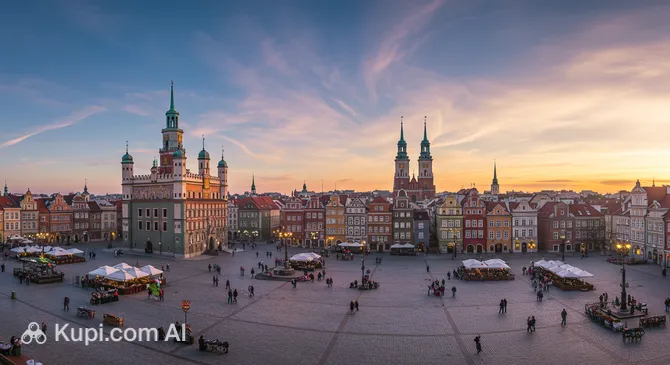
Among the top attractions is the colorful Old Market Square, dominated by the magnificent Renaissance Town Hall. Every day at noon, crowds gather here to watch the famous mechanical goats butt heads atop the tower, a symbol of the city. Another must-see is Ostrów Tumski (Cathedral Island), a serene and historic district that offers a peaceful escape and features one of the country's oldest cathedrals.
Whether you are visiting for business, culture, or leisure, Poznan welcomes you with open arms. With its lively street life, expansive green spaces like Malta Lake, and delicious regional cuisine, it stands out as an inviting destination for your next European adventure.
Weather Overview
Poznan experiences a temperate climate with four distinct seasons, offering a variety of atmospheres depending on when you choose to visit. Generally, you can expect warm summers with occasional rain and cold, damp winters. The transition periods of spring and autumn are often mild and pleasant, making them excellent times for sightseeing.
The summer months are the warmest, with August reaching an average temperature of 20.1°C and maximums climbing to around 24.9°C. While this is a great time for outdoor activities, it is wise to carry an umbrella, as the city sees about 11 to 12 wet days per month during this season. For those planning a trip, looking up the detailed weather in Poznan is recommended to prepare for specific conditions.
Winter brings a significant drop in temperature, with January averages hovering around 1.3°C and minimums dipping to -0.7°C. This season is characterized by crisp air and frequent precipitation, with up to 14 wet days in January. Meanwhile, months like September offer a comfortable balance, boasting an average temperature of 15.7°C and fewer rainy days, perfect for exploring the city's historic streets.
Average monthly temperature
Average monthly precipitation
Interesting Facts
Beyond the main attractions, Poznan holds many fascinating secrets and quirks that often escape the casual visitor's eye. From sweet local traditions to pivotal moments in world history, the city offers plenty of surprises for the curious traveler.
Imperial Castle in Poznań. Illustration.
Source: Kupi.com AI
Traveler photos:
While the world often associates Enigma code-breaking with Bletchley Park, the initial breakthrough was actually achieved by Polish mathematicians from Poznań University. In the 1930s, Marian Rejewski, Jerzy Różycki, and Henryk Zygalski solved the cipher before passing their knowledge to the British, a feat commemorated by a monument in the city center.
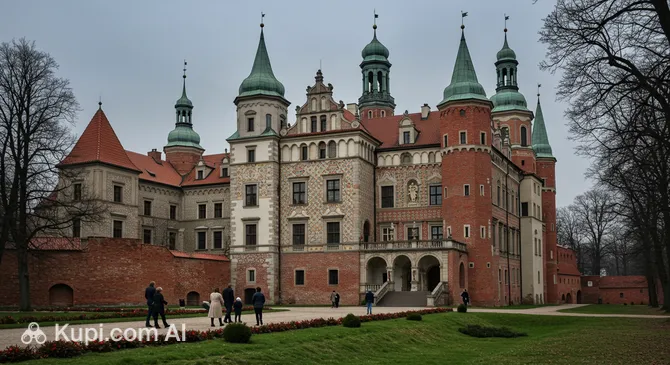
The Imperial Castle in Poznań holds the title of the youngest imperial residence in Europe. Unlike medieval strongholds, this massive neo-Romanesque structure was constructed in 1910 for the German Emperor William II, featuring modern amenities like central heating that were rare for castles of that scale.
Residents of the city are affectionately known as "Pyry," which translates to "potatoes" in the local dialect. This nickname celebrates the region's historical reliance on the vegetable, a heritage so cherished that you can visit the dedicated Poznań Potato Museum to explore its cultural significance.
Poznań is the only place in the world authorized to bake the authentic St. Martin's Croissant (Rogal świętomarciński). This horseshoe-shaped pastry, filled with white poppy seeds and nuts, is protected by EU law, and visitors can learn about its 150-year-old tradition at the Croissant Museum.
How to Get There
Reaching this vibrant city is quite straightforward thanks to its central location and well-developed transport network. Whether you prefer flying or taking the train, there are convenient options to suit your itinerary. You can find detailed information and all ways to reach the city on our dedicated page.
The most direct way to arrive is via Poznan Airport (IATA: POZ), also known as Ławica Airport. It serves as the primary international gateway and is conveniently located just 7.3 km from the city center. A taxi or bus ride to the heart of the city typically takes around 30 minutes, making it an extremely accessible option for travelers. The airport handles a significant volume of passengers annually, connecting the region with numerous European destinations.
Alternatively, visitors can fly into Wroclaw Airport (IATA: WRO) located in the city of Wroclaw. Although it is situated approximately 145 km away, it is a major hub with extensive international connections. From Wroclaw, you can reach Poznan by train or bus in about 2 to 2.5 hours. Another nearby option is Bydgoszcz Airport (IATA: BZG) in Bydgoszcz, roughly 104 km away, which serves as a smaller regional alternative.
For clarity, here is a summary of the main airports:
Traveling by train is another excellent way to get to the city, especially given its position on the major railway line connecting Berlin and Warsaw. The primary hub is Poznań Główny Railway Station, situated right in the city center, just 1.4 km from the main attractions. It is a busy station handling millions of passengers, offering frequent domestic and international connections.
For international travelers coming from the west, the connection via Berlin is very popular. While the city of Poznan obviously has its own station, many tourists transfer through major German hubs like Berlin Hauptbahnhof (Berlin Central Station) in Berlin, which is about 242 km away. High-speed trains frequently cover the distance between Berlin and Poznan, offering a comfortable journey of approximately 2.5 to 3 hours.
Poznan offers a captivating mix of historical landmarks, green escapes, and modern cultural centers. Whether you are a history buff or a nature lover, the city's diverse sights provide endless opportunities for exploration beyond the charming Old Market Square.
One of the most significant spiritual and historical sites in the country is the Poznań Cathedral. Located on the serene Cathedral Island (Ostrów Tumski), this imposing basilica is one of the oldest churches in Poland. It serves as the final resting place for the nation's first rulers, Mieszko I and Bolesław the Brave. Visitors are drawn here not only for its Gothic architecture and the Golden Chapel but also to connect with the very origins of the Polish state.
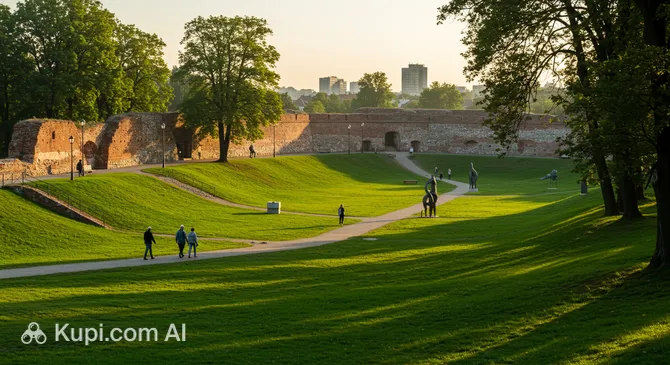
For those seeking a blend of history and outdoor recreation, Citadel Park is an absolute must. Situated on the remains of the massive 19th-century Fort Winiary, this sprawling green space is the city's largest park. It is famous for its military museums, the evocative "Unrecognized" sculptures by Magdalena Abakanowicz, and endless walking paths. It is a perfect spot for a leisurely afternoon stroll or a deep dive into the region's military past.
Citadel Park. Illustration.
Source: Kupi.com AI
Traveler photos:
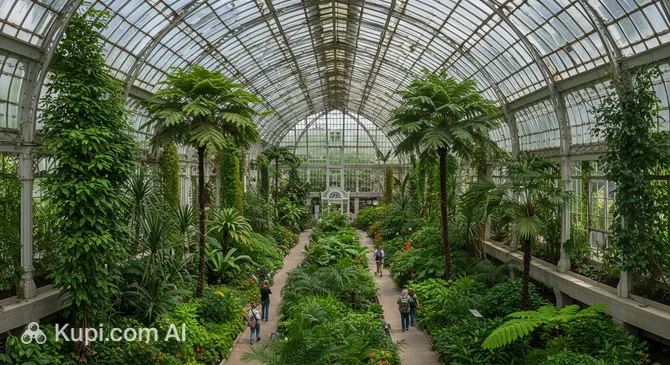
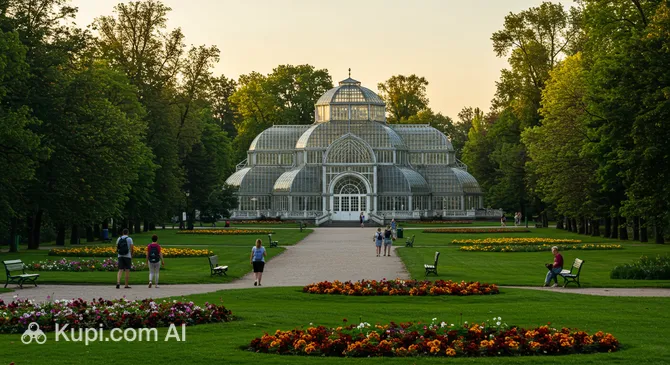
Nature enthusiasts will find a tropical paradise in the heart of the city at the Poznań Palm House. Located in Wilson Park, it is one of the oldest and largest facilities of its kind in Europe. Inside, you can wander through different climate zones, admiring exotic plants, towering cacti, and vibrant aquariums. It offers a warm and colorful escape, especially during the cooler months, making it a favorite among families and photographers.
Poznań Palm House. Illustration.
Source: Kupi.com AI
Traveler photos:
Rising above the city center is the reconstructed Royal Castle in Poznań. Originally dating back to the 13th century, the castle has been restored to offer panoramic views of the Old Town from its tower. Today, it houses the Museum of Applied Arts, where tourists can admire a vast collection of crafts, furniture, and jewelry while soaking in the medieval atmosphere of this royal residence.
To fully understand the city's heritage in a modern setting, visit the Gate of Poznań (Brama Poznania). This interactive heritage interpretation center is an architectural gem that bridges the gap between the ancient Cathedral Island and the modern city. Through multimedia exhibits and storytelling, it brings the history of the area to life in an engaging way that appeals to visitors of all ages.
Local Cuisine
Poznan's culinary scene is a delicious reflection of its history, often revolving around simple, hearty ingredients that have been perfected over generations. The region is famously known as "Pyrolandia" due to its love affair with potatoes, or "pyry" in the local dialect. You cannot leave the city without trying pyry z gzikiem, a humble yet flavorful dish consisting of boiled potatoes served with a mixture of cottage cheese, cream, onions, and chives. It is a staple comfort food that embodies the warmth of Greater Poland's hospitality.
For a more substantial meal, look for kaczka po poznańsku (Poznan-style roast duck). This festive dish is typically served with apples, red cabbage, and fluffy steamed dumplings known as "pyzy." The combination of savory meat and sweet accompaniments creates a unique flavor profile that defines the region's traditional gastronomy. If you are looking for a place that puts a modern twist on local favorites, the restaurant Zdolni is a popular spot among locals for its creative comfort food and generous portions.
Stary Browar. Illustration.
Source: Kupi.com AI
Traveler photos:
No culinary journey here is complete without indulging in a St. Martin's Croissant (Rogal świętomarciński). This legendary horseshoe-shaped pastry is filled with white poppy seeds, nuts, raisins, and candied orange peel. It is so significant that it has its own dedicated Croissant Museum, but you can find these sweet treats in certified bakeries throughout the city, especially around November 11th.
When it comes to dining locations, the city offers a diverse range of options from historic milk bars to upscale venues. A unique destination for food lovers is Stary Browar. This award-winning shopping, arts, and business center, built in a former brewery, houses numerous restaurants and cafes where you can enjoy both Polish and international cuisine in stunning brickwork surroundings.
The local beverage scene is equally vibrant, with a strong focus on craft beer. The region has a long brewing tradition, and today, numerous multi-tap bars serve locally brewed ales and lagers. For a relaxed evening with a wide selection of craft beers, you might visit Piwna Stopa, a bar known for its cozy atmosphere and extensive beer menu. Whether you are sipping a cold pint or enjoying a warm compote with your dinner, the flavors of Poznan are sure to leave a lasting impression.
Travel Tips
Exploring Poznan is a delightful experience, but like any travel destination, a little local know-how goes a long way in ensuring a smooth journey. Here is a collection of practical advice to help you navigate the capital of Greater Poland with the confidence of a local.
Clothing and Gear: The weather in Poland can be quite changeable, so dressing in layers is the best strategy, regardless of the season. Winters require warm coats, scarves, and gloves, while summers can be warm but often see sudden showers, so a compact umbrella is essential. Since the Old Town features historic cobblestone streets, bring comfortable walking shoes rather than high heels. If you plan to visit religious sites like the cathedral on Ostrów Tumski, ensure your shoulders and knees are covered out of respect.
Transportation: Poznan has an excellent public transport system managed by ZTM, consisting of trams and buses that cover the entire city efficiently. You do not need to rent a car if you are staying in the city. Download the Jakdojade app to plan routes and buy tickets easily. Alternatively, you can purchase paper tickets at machines (often card-only) or use the contactless payment terminals found on board newer vehicles. Ride-hailing apps like Uber and Bolt are also widely available and affordable.
Finances: The official currency is the Polish Złoty (PLN). While credit and debit cards are accepted almost everywhere—including small cafes and museums—it is wise to carry a small amount of cash for tips or small purchases at local markets. ATMs are plentiful throughout the city. Tipping is customary in restaurants; leaving about 10% of the bill is standard if you are satisfied with the service.
Health and Safety: Poznan is generally a very safe city for tourists, but standard precautions against pickpocketing should be taken in crowded areas like the Old Market Square. Pharmacies, marked with a green cross and known as "Apteka," are easy to find; look for "Apteka Całodobowa" if you need 24/7 service. Tap water in the city is clean and safe to drink, so feel free to refill your water bottle.
Communication: Polish is the official language, but English is widely spoken, especially by younger people and in the service industry. However, learning a few basic phrases like "Dzień dobry" (Good day) and "Dziękuję" (Thank you) will be warmly received by locals. If you need a local SIM card, you can buy one at kiosks or convenience stores, but remember that you must register it with your passport or ID card upon purchase due to Polish law.
Local Etiquette: Politeness is highly valued here. It is polite to say "Dzień dobry" when entering a small shop or elevator and "Do widzenia" (Goodbye) when leaving. On public transport, it is expected that you offer your seat to elderly people, pregnant women, or parents with small children. Also, try to keep your voice down on trams and buses, as locals generally prefer a quiet commute.
What to Avoid: Be careful not to cross the street at red lights or in undesignated areas (jaywalking), as this is strictly enforced and can result in a hefty fine. Additionally, drinking alcohol in public places like streets and parks is generally prohibited and fined, although there are specific designated zones, such as certain areas along the Warta riverbank, where it is allowed.
Shopping Hours: Be aware of the Sunday trading ban in Poland. Most large supermarkets and shopping malls are closed on Sundays, except for a few specific "shopping Sundays" throughout the year. However, smaller convenience stores (like Żabka), gas stations, and restaurants remain open, so you will not be left without essentials.
Armed with these tips, you are ready to immerse yourself in the charm and energy of Poznan without the stress of logistical surprises. Enjoy every moment of your stay in this welcoming and historic city!
Entertainment & Nightlife
As a vibrant academic center with a large student population, Poznan boasts an energetic and diverse nightlife scene that rivals many larger European capitals. When the sun sets, the city transforms into a buzzing hub of activity, catering to everyone from craft beer aficionados to electronic music lovers. The atmosphere is generally welcoming and unpretentious, reflecting the city's friendly character.
The epicenter of the action is undoubtedly the Old Market Square and its surrounding streets. In particular, Wrocławska Street serves as a primary artery for partygoers, lined with numerous pubs and shot bars. For a slightly more alternative and laid-back vibe, the area around Taczaka and Kościuszki streets offers a great selection of hip cafes and craft beer locales where you can start your evening with a relaxed conversation.
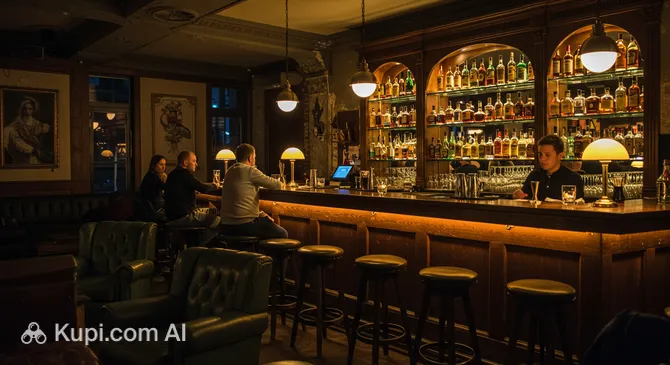
For those who appreciate the art of mixology, DRAM Cocktail Bar & Restaurant is a standout venue. Known for its sophisticated interior and expert bartenders, it is the perfect spot to enjoy a signature drink before heading out to explore the rest of the night. If you prefer a more active evening, Zakręcona Bila Billiards Club offers a fun environment to challenge friends to a game of pool or snooker in a lively setting.
DRAM Cocktail Bar & Restaurant. Illustration.
Source: Kupi.com AI
Traveler photos:
Clubbing enthusiasts will find plenty of options to dance the night away. Venues like Just Friends Poznań draw crowds with energetic music and a vibrant party atmosphere. Most clubs in the city center have a casual to smart-casual dress code, though some upscale venues might be stricter. The party typically peaks around midnight and can last until the early morning hours, especially on Fridays and Saturdays.
Regarding practicalities, a night out in Poznan is quite affordable compared to Western European standards. Public transport runs late with night buses (marked with "N"), but for safety and convenience, especially after a few drinks, using ride-hailing apps like Uber or Bolt is highly recommended. The city center is generally safe for night walks, but it is always wise to stay in well-lit areas and keep an eye on your belongings in crowded bars.
While the nightlife is thrilling, the city also offers engaging entertainment during the day. Families and thrill-seekers can solve puzzles at the Dreamscape Escape Room or enjoy water activities at the sprawling Malta Thermal Baths. For a classic cultural experience, the city's theaters and philharmonic hall provide a rich program of performances that perfectly complement the dynamic evening scene.
Parks & Museums
Poznan is a city that effortlessly balances its urban energy with serene green spaces and a profound respect for the arts. Beyond the bustling market squares, visitors will find a wealth of beautifully maintained gardens and world-class institutions that preserve the region's cultural and natural heritage.
For a peaceful retreat away from the city noise, Sołacki Park is widely regarded as one of the most picturesque spots in town. Designed in the style of an English landscape garden, it features winding paths, rustic bridges, and tranquil ponds that reflect the surrounding villas of the historic Sołacz district. It is a favorite location for romantic walks and leisurely afternoons, offering a distinct, elegant atmosphere that changes beautifully with the seasons.
Sołacki Park. Illustration.
Source: Kupi.com AI
Traveler photos:
Nature lovers should also explore the Poznań University Botanical Garden. Located in the Jeżyce district, this expansive garden is a living museum of plant diversity, showcasing thousands of species from different climate zones. It serves as both a research facility and a public sanctuary where you can admire rare shrubs, vibrant flower beds, and the impressive Alpinarium. It is an ideal place for educational trips or simply to reconnect with nature in a meticulously curated setting.
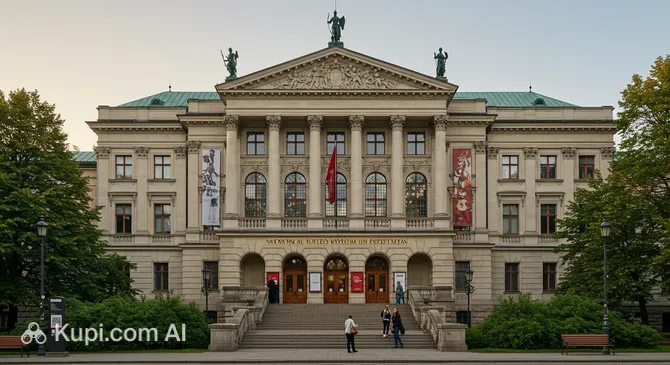
When it comes to art and history, the National Museum in Poznań stands as a premier cultural institution. Its vast collection spans centuries, featuring Polish painting, European art, and ancient artifacts. The museum's crown jewel is Claude Monet's Beach in Pourville, the only painting by the French Impressionist master in public Polish collections. Art enthusiasts will appreciate the depth of the gallery, which provides a comprehensive overview of artistic evolution in the region and beyond.
National Museum in Poznań. Illustration.
Source: Kupi.com AI
Traveler photos:
For a more modern and interactive experience, the Museum of Illusions, Science and Art offers a fascinating diversion for visitors of all ages. This venue challenges your perceptions with mind-bending exhibits, optical illusions, and scientific puzzles. It is a playful contrast to traditional museums, encouraging guests to touch, explore, and photograph the exhibits, making it a particularly hit attraction for families.
Among the city's architectural treasures, the Collegiate Basilica of Our Lady of Perpetual Help, St. Mary Magdalene and St. Stanislaus Bishop is a stunning example of Baroque splendor. Often simply called the Fara Church, its pink facade and lavishly decorated interior—filled with massive pillars, ceiling frescoes, and a monumental organ—make it one of the most impressive sacral buildings in Poland. Nearby, the Old Zoo offers a unique blend of parkland and history; functioning largely as a public park with free entry, it houses smaller animals and retains its 19th-century charm.
For a truly unique perspective on nature, venture a bit further to the Tree Canopy Walkway over the Szklarka River. This elevated wooden path allows you to walk among the treetops, offering bird's-eye views of the forest floor and a refreshing escape into the wilder side of the region.
Getting Around
Poznan boasts a highly efficient and integrated public transport system managed by ZTM (Zarząd Transportu Miejskiego), making it easy for visitors to navigate the city without a car. The network relies primarily on a dense web of tram lines, which serve as the backbone of local transit, supported by an extensive bus system that reaches into the suburbs. A highlight of the infrastructure is the Poznań Fast Tram, locally known as the "Pestka" (PST), which operates like a light metro, rapidly connecting the northern districts with the city center via a grade-separated track.
For most tourists, the tram is the most convenient mode of travel, especially within the city center and towards major attractions. Buses complement these routes and are essential for reaching areas further afield. The system operates from the early morning, around 5:00 AM, until roughly 11:00 PM. After hours, a reliable network of night buses, marked with the letter "N," takes over, ensuring safe transport for those enjoying the city's nightlife. These night lines typically converge at the Rondo Kaponiera roundabout, which serves as the main transfer hub.
The ticketing system is based on time limits rather than distance, offering flexibility for travelers. You can purchase paper tickets for durations such as 15, 45, or 90 minutes, or opt for short-term passes valid for 24 hours or even a week. It is important to remember that Zone A covers the entire city of Poznan, while Zones B, C, and D cover the surrounding municipalities; for most sightseeing, a Zone A ticket is sufficient.
Paying for your ride is straightforward. Tickets can be bought at ticket machines located at major stops and inside most buses and trams. While machines at stops usually accept cash and cards, those onboard often accept only contactless card payments. Furthermore, modern ticket terminals inside vehicles allow you to pay for your fare directly with a credit card or smartphone without printing a physical ticket. Alternatively, mobile apps like Jakdojade, SkyCash, or MoBiLET are extremely popular and allow you to buy and validate tickets directly on your phone.
If you are using a traditional paper ticket purchased from a kiosk or a street-side machine, you must validate it immediately upon boarding in the small orange or yellow validators. Failure to do so can result in a fine during routine inspections. For those planning an extended stay, the PEKA card (Poznań Electronic Agglomeration Card) offers a "tPurse" system with cheaper fares, though the paper tickets or apps are generally more convenient for short visits.
Beyond standard transit, the city is very bike-friendly. The Poznań City Bike (Poznański Rower Miejski) scheme allows you to rent bicycles from numerous docking stations across the city, offering a healthy and scenic way to explore. Ride-hailing services like Uber, Bolt, and Free Now are also widely available and offer a competitively priced alternative to traditional taxis.
For a unique experience, look out for the Maltanka Park Railway. This narrow-gauge railway runs seasonally along the shore of Malta Lake to the New Zoo and is a delightful attraction for families. Additionally, during the summer season, the city often operates special tourist lines featuring vintage trams and buses, allowing you to travel through the historic streets in retro style.
Accommodation
Poznan offers a diverse array of accommodation options tailored to every type of traveler and budget. The city's hospitality sector has grown significantly, providing everything from economical hostels and cozy guest houses to modern business hotels and luxurious apartments. Whether you are visiting for a weekend city break, a business conference, or a family vacation, finding a suitable place to rest is generally straightforward and affordable compared to many Western European destinations.
For those who want to be in the heart of the action, the Old Town (Stare Miasto) is the most popular choice. Staying here puts you within walking distance of the major sights, including the Town Hall and the Royal Castle, as well as the city's best restaurants and nightlife. If you prefer a more bohemian vibe with excellent coffee shops and Art Nouveau architecture, the Jeżyce district is a trendy alternative located just a short tram ride from the center.
Business travelers often prefer the area around the Poznań International Fair (MTP) and the main railway station, Poznań Główny. This location offers excellent connectivity and features many reliable mid-range and upscale chain hotels designed to cater to professional needs. Conversely, visitors seeking a greener, more relaxed setting might look for accommodation near Malta Lake, which offers a resort-like atmosphere perfect for families and active tourists.
The price range for accommodation varies seasonally but remains competitive. Budget travelers can find well-maintained hostels and budget rooms starting at very reasonable rates. Mid-range options, which include boutique hotels and serviced apartments, offer great value with modern amenities. For those seeking luxury, the city boasts several five-star establishments that provide top-tier service and elegance. Booking is typically done through major online platforms or directly via hotel websites.
Booking Tip: Poznan is a major trade fair city. During large international events or conferences, hotel occupancy rates soar, and prices can increase significantly. It is highly recommended to check the local events calendar and book your accommodation well in advance if your trip coincides with a major trade fair.
Nearby Cities
For those looking to explore the surroundings, Poznan serves as an excellent base for day trips to several interesting nearby locations:
One of the most historically significant destinations in the region is Gniezno. Located approximately 47 km from Poznan, it is celebrated as the first capital of Poland and the legendary cradle of the Polish state. Visitors flock here to admire the majestic Gothic Cathedral, which houses the silver coffin of St. Adalbert and the famous Romanesque Gniezno Doors, depicting scenes from the saint's life. It is a place where the early history of the nation comes alive, making it a perfect educational trip for history enthusiasts.
Just a short distance from the city lies Swarzędz, a town renowned for its unique Open-Air Museum of Apiculture. This fascinating site features a collection of over 100 historic beehives, some of which are carved into intricate shapes like bears or architectural structures. It offers a delightful and unusual experience that contrasts with the urban bustle, showcasing the region's deep connection to nature and traditional crafts.
Another charming option is Srem, situated to the south along the Warta River. It is a pleasant town known for its historic market square and the surrounding picturesque landscapes of the Warta Landscape Park. It serves as a great starting point for hiking or cycling trips, allowing travelers to enjoy the serene beauty of the Greater Poland countryside.
City
Population
Distance
Lubon
33 024
8 km
Plewiska
14 160
10 km
Komorniki
10 990
11 km
Swarzędz
29 295
11 km
Puszczykowo
9 470
14 km
These nearby destinations offer a glimpse into the diverse culture and landscapes of the region.
Shopping & Souvenirs
Shopping in Poznan is a delightful experience that perfectly blends modern convenience with historical charm. The city offers a diverse range of options, from high-end boutiques and sprawling commercial centers to quaint local shops and bustling open-air markets. Whether you are looking for the latest international fashion, unique Polish design, or traditional regional delicacies, the capital of Greater Poland has something to satisfy every taste and budget.
The heart of the city's retail scene is undoubtedly Półwiejska Street. Known locally as "Deptak," this pedestrian-only thoroughfare is one of the most popular shopping streets in the city. Lined with a mix of well-known chain stores, cafes, and independent boutiques, it bustles with energy throughout the day. Walking down Półwiejska, you can seamlessly transition from the historic center to some of the city's most impressive modern shopping destinations.
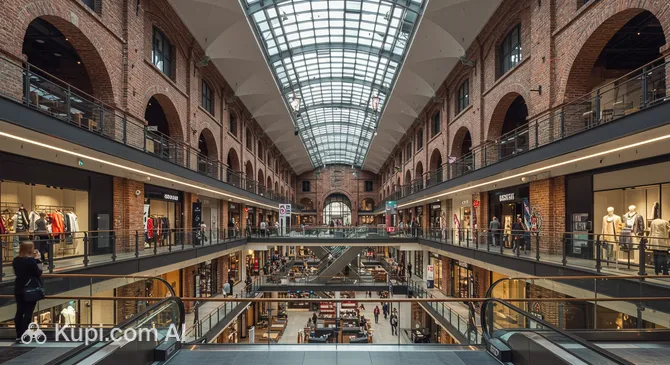
Poznan is home to several world-class shopping malls that are attractions in their own right. The most iconic is Stary Browar (Old Brewery). Far more than just a place to buy clothes, this center for commerce and art is located in a beautifully revitalized 19th-century brewery. With its stunning red-brick architecture, art installations, and a vast park, it offers a unique atmosphere where shopping meets culture.
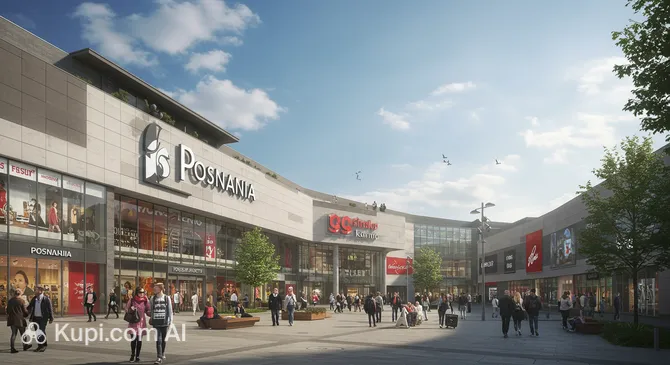
For those seeking a massive selection of brands under one roof, Posnania is the largest shopping and lifestyle center in the region. Located a bit further from the Old Town but easily accessible, it features hundreds of shops, a cinema, and a diverse food court. It is a modern consumer paradise where you can find everything from luxury labels to popular high-street names.
Posnania. Illustration.
Source: Kupi.com AI
Traveler photos:
If you prefer a more traditional and local vibe, the city's open-air markets are a must-visit. Rynek Jeżycki, located in the historic Jeżyce district, is famous for its fresh produce, flowers, and the authentic atmosphere of daily life in Poznan. Another notable spot is Plac Wielkopolski, situated near the Old Town, where you can buy seasonal fruits, vegetables, and local artisanal products directly from farmers.
When it comes to souvenirs, the most famous local specialty is undoubtedly the St. Martin's Croissant. While you can learn about its history at the Croissant Museum, you can purchase these delicious, certified pastries at many local bakeries to take home. Other popular keepsakes include Polish amber jewelry, Bolesławiec pottery, and hand-painted folk crafts, which can often be found in the souvenir shops around the Old Market Square.
Store opening hours in Poznan are generally convenient for tourists. Major shopping malls are typically open from 9:00 AM or 10:00 AM to 9:00 PM, Monday through Saturday. Smaller boutiques and street shops usually close around 6:00 PM or 7:00 PM. It is important to note that Poland enforces a Sunday trading ban, meaning most large shops and supermarkets are closed on Sundays, except for a few designated "shopping Sundays" throughout the year. However, souvenir shops, bakeries, gas stations, and restaurants remain open.
Payment is hassle-free, with credit and debit cards (Visa and Mastercard) being widely accepted almost everywhere, including small kiosks and market stalls. Contactless payment is the standard. For visitors from outside the European Union, the Tax-Free shopping scheme is available in many stores; look for the Global Blue or Tax Free signage in windows to inquire about VAT refunds on purchases exceeding a certain amount.