Support

Wroclaw

About

Welcome to Wroclaw, a captivating city known for its stunning architecture, vibrant cultural scene, and open atmosphere. Situated in western Poland, it serves as the historical and administrative capital of the Lower Silesian Voivodeship. With a population of over 670,000 residents, it is one of the country's largest and most dynamic urban centers, acting as a major hub for commerce and education.
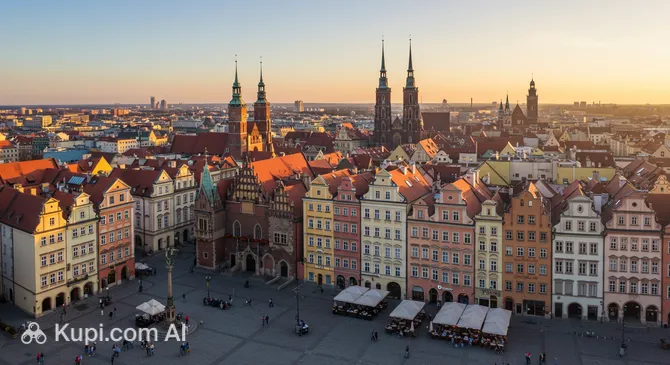
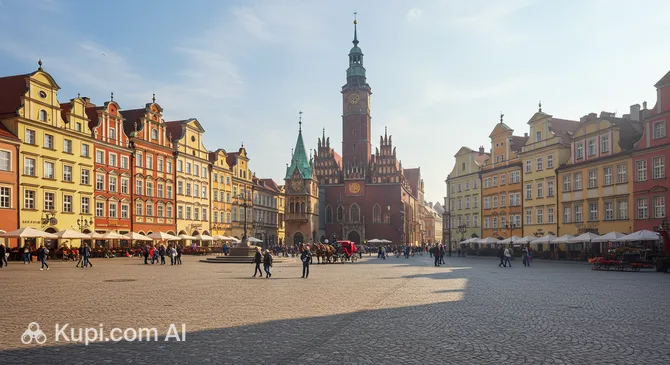
Wroclaw. Source: Kupi.Binoculars

Often referred to as the "Venice of the North," the city is uniquely built across several islands connected by over 100 bridges spanning the Odra River. This distinctive geography creates a picturesque setting perfect for riverside walks and boat cruises. Exploring the history of Wroclaw reveals a fascinating tapestry of influences, where medieval heritage seamlessly blends with modern innovation.

Visitors are consistently charmed by the magnificent Market Square (Rynek), one of the largest in Europe, which is surrounded by colorful tenement houses and the iconic Gothic Old Town Hall. Another delightful feature is the city's population of small bronze dwarfs; hunting for these whimsical statues hidden throughout the streets has become a favorite pastime for tourists of all ages. For a touch of serenity, Ostrów Tumski (Cathedral Island), the oldest part of the city, offers breathtaking views of soaring church spires and cobblestone lanes.

Whether you are an architecture enthusiast, a history buff, or simply looking for a lively European getaway, Wroclaw has something special to offer. Its blend of youthful energy and deep-rooted tradition makes it an inviting destination that leaves a lasting impression on every traveler.
Weather Overview

Wroclaw experiences a temperate climate with four distinct seasons, making it a year-round destination with varying atmospheres. Generally, travelers can expect warm summers with occasional rain and cold, relatively dry winters. The warmest months are typically June, July, and August, where average temperatures hover around 20°C, with daily maximums often reaching a pleasant 25°C.

In contrast, the winter season brings a significant chill, particularly in January and February, when average temperatures drop to between 1.4°C and 2.8°C, and nights can dip below freezing. While the volume of precipitation is generally low throughout the year—averaging around 2mm to 3mm per month—the city does experience a moderate number of wet days, ranging from 9 in September to 16 in January. To pack the right clothing for your specific travel dates, it is advisable to check the detailed forecast for weather in Wroclaw before you depart.

Interesting Facts

Beyond the well-trodden paths of the Market Square, Wroclaw conceals a wealth of intriguing stories and unique features waiting to be discovered.
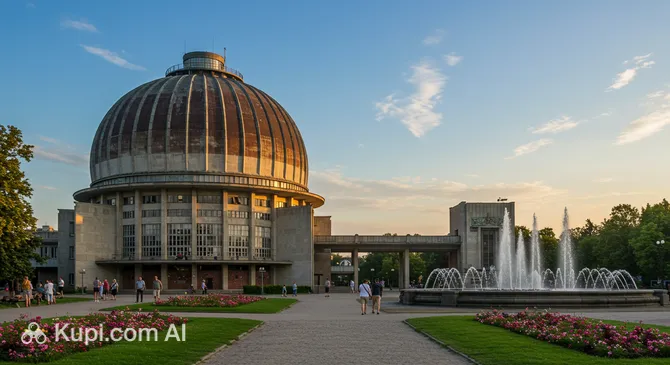
Centennial Hall. Source: Kupi.Binoculars
  • Every evening on Cathedral Island (Ostrów Tumski), a real-life lamplighter clad in a traditional cape and top hat manually lights the historic gas street lamps, keeping a magical atmosphere alive that has disappeared from nearly everywhere else in Europe.

  • The city houses the monumental Racławice Panorama, a massive 360-degree painting measuring 114 meters long, which uses special lighting and artificial terrain to create an immersive optical illusion of a historic battle.

  • According to local folklore, the Penitent Bridge connecting the two towers of St. Mary Magdalene Church is haunted by the ghosts of young women who preferred partying to domestic duties and were condemned to sweep the high walkway for eternity.

  • Recognized for its groundbreaking engineering, the Centennial Hall is a UNESCO World Heritage Site that featured the largest reinforced concrete dome in the world at the time of its completion in 1913.

  • Wroclaw is home to Hydropolis, an ultra-modern knowledge center dedicated entirely to water, which is uniquely situated within a preserved 19th-century underground clean water reservoir.

How to Get There

Reaching this vibrant Polish city is quite convenient thanks to its well-developed transport infrastructure and proximity to several major transit hubs. Whether you are flying in from abroad or traveling by train from neighboring countries, there are multiple routes to choose from. For a comprehensive guide on the best travel methods, you can read more about how to get to Wroclaw.

The most direct way to arrive is via Wroclaw Airport (IATA: WRO), which is conveniently located just 10.7 km from the city center. This international airport serves a large volume of passengers annually, offering numerous connections across Europe. A trip from the terminal to the downtown area typically takes around 35 to 40 minutes by taxi or bus. Alternatively, travelers often use Katowice International Airport (IATA: KTW), situated in Katowice, approximately 160 km away. Although it is further, it is a significant regional hub; the journey to Wroclaw from there takes roughly 2 to 2.5 hours.

For clarity, here is a summary of the main airports:

Airport Name City Passenger Traffic Km from City
Katowice International AirportKatowiceLarge160.3
Wroclaw AirportWroclawLarge10.7
Poznan AirportPoznanMedium146.7
Mosnov AirportOstravaSmall174.7
Pardubice AirportPardubiceSmall152.8

For those preferring rail travel, while the city has its own connections, some visitors may transit through major railway hubs in nearby cities. You can arrive at Poznań Główny Railway Station (IATA: RPZ) in the city of Poznan, which is about 144 km from Wroclaw. From there, catching a connecting train is a popular option, with the trip taking approximately 1.5 to 2.5 hours. Another significant option is the Prague Main Railway Station (IATA: XYG) in Prague, located approximately 217 km away. As a massive transport node, it offers extensive international links, and travelers can easily transfer to a train heading to Wroclaw.

Below is a list of relevant railway stations in the region:

Station City Passenger Traffic Km to Center
Prague Main Railway StationPragueVery Large216.8
Poznań Główny Railway StationPoznanLarge144.1
Pardubice Main Railway StationPardubice150.8
Ostrava Main Railway StationOstrava164.9
Holesovice Railway StationPrague214.9

Main Attractions

Wroclaw is a city brimming with diverse sights, from historical architectural marvels to lush green spaces and modern entertainment centers. Whether you are looking to explore the local heritage or enjoy a relaxing day out with family, the city offers a variety of destinations that cater to every interest.

The beating heart of the city is undoubtedly the Wroclaw Market Square. As one of the largest medieval squares in Europe, it serves as a central gathering place for both locals and tourists. Visitors are captivated by the vibrant rows of colorful tenement houses that surround the area, creating a perfect backdrop for photography. The square is always alive with energy, hosting seasonal fairs, street performers, and a multitude of restaurants and cafes where you can savor local Polish cuisine while watching the world go by.

Wroclaw Market Square. Source: Kupi.Binoculars

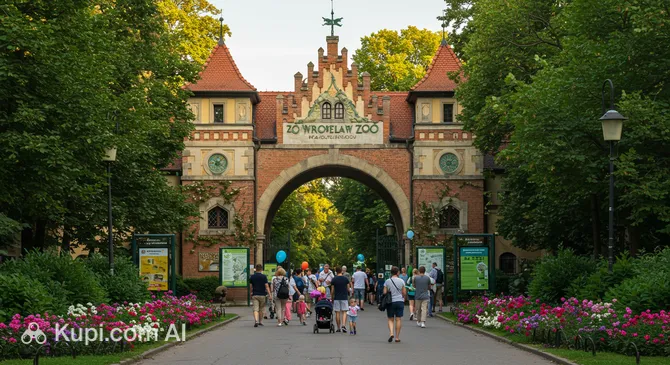
For nature lovers and families, the Wroclaw Zoo is an absolute must-see. It is the oldest zoo in Poland and boasts the largest number of animal species in the country. The highlight for many is the Afrykarium, a unique oceanarium complex dedicated solely to the diverse ecosystems of Africa. Walking through its underwater tunnels, you can observe sharks, rays, and hippos in habitats that closely mimic their natural environments, offering an immersive experience that is both educational and thrilling.

Wroclaw Zoo. Source: Kupi.Binoculars

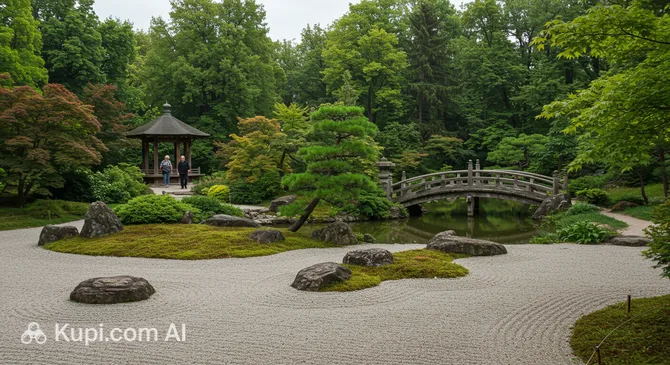
If you are seeking a moment of tranquility, the Japanese Garden provides a serene escape within Szczytnicki Park. Originally established for the World Exhibition in 1913, this garden has been masterfully restored to reflect traditional Japanese landscape art. With its carefully pruned bonsai trees, peaceful ponds, and wooden bridges, it offers a distinct oriental atmosphere that feels worlds away from the bustling city center. It is an ideal spot for a quiet walk and quiet contemplation amidst nature.

Japanese Garden. Source: Kupi.Binoculars

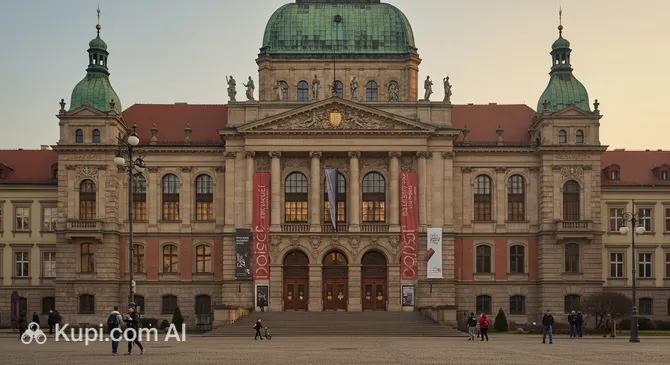
Art and history enthusiasts should not miss the National Museum in Wrocław. Housed in a stunning ivy-covered building on the banks of the Odra River, the museum holds an impressive collection of Silesian art dating back to the medieval period, as well as contemporary Polish works. The exhibits provide deep insight into the region's complex history and cultural evolution, making it a fascinating stop for anyone wanting to understand the artistic heritage of Lower Silesia.

National Museum in Wrocław. Source: Kupi.Binoculars

Local Cuisine

The culinary landscape of Wroclaw is a delightful reflection of its complex history, blending traditional Polish flavors with Silesian, German, and Eastern borderland influences. The city’s food scene is hearty and unpretentious, focusing on fresh, locally sourced ingredients and time-honored recipes that provide comfort in every bite. Whether you are dining in a historic cellar or a modern bistro, you will find that food here is treated with great passion and respect.

When exploring the local menu, you simply must try kluski śląskie (Silesian dumplings). These distinctive, round potato dumplings with a small depression in the center are a regional specialty, typically served with rich gravy and a side of meat, such as beef roulade (rolada). Another staple is żurek, a sour rye soup often served in a hollowed-out loaf of bread with sausage and a hard-boiled egg. Of course, no visit to Poland is complete without tasting pierogi, and in Wroclaw, you can find them filled with everything from savory meat and sauerkraut to sweet seasonal fruits.

To wash down these hearty meals, locals often turn to the city's brewing heritage. Wroclaw has a long tradition of beer production, and today it boasts a thriving craft beer scene with numerous local microbreweries offering unique brews. For a non-alcoholic option, kompot—a sweet beverage made from boiled fruit—is a refreshing choice often served with lunch. If you are looking for something stronger to finish the meal, a shot of chilled Polish vodka or a flavored herbal liqueur is customary.

The dining culture in Wroclaw caters to all budgets and preferences. For an authentic and affordable experience, visitors should seek out a "Bar Mleczny" (Milk Bar), where you can enjoy homemade-style meals alongside students and locals. On the other end of the spectrum, the area around the Market Square is lined with upscale eateries and charming garden terraces perfect for people-watching.

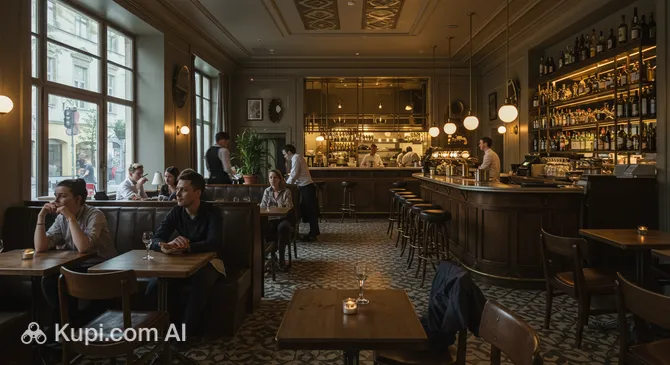
Konspira. Source: Kupi.Binoculars

For those interested in combining gastronomy with a history lesson, the restaurant Konspira is a unique venue worth visiting. The interior is designed to resemble a clandestine meeting spot from the Solidarity movement era, offering an immersive atmosphere alongside massive portions of traditional Polish cuisine. It is an excellent example of how Wroclaw’s food culture is deeply intertwined with its storytelling and identity.

Travel Tips

To ensure your visit to the capital of Lower Silesia is as smooth and enjoyable as possible, we have compiled a set of practical guidelines. Wroclaw is a welcoming and tourist-friendly city, but knowing a few local nuances regarding transport, customs, and daily life will help you navigate the streets with the confidence of a local.

  1. Clothing and Gear: The weather can be changeable, so the best strategy is to dress in layers, especially if you are visiting in spring or autumn. Winters can be quite cold, requiring a warm coat, hat, and gloves. Most importantly, bring comfortable walking shoes. The Old Town and Ostrów Tumski are paved with historic cobblestones which, while beautiful, can be unforgiving on high heels or thin soles.
  2. Transportation: The city boasts an excellent public transport network consisting of trams and buses managed by MPK Wrocław. It is the most efficient way to get around; car rentals are generally unnecessary and parking in the center is difficult. You can buy tickets at vending machines at stops or directly on the vehicle (usually via contactless card payment). Remember to always validate your paper ticket immediately upon boarding, or you risk a hefty fine. Ride-hailing apps like Uber and Bolt are also widely available.
  3. Finances: Poland uses the Polish Złoty (PLN), not the Euro. While exchange offices (kantor) are easy to find, cashless payments are extremely widespread. You can pay with a credit or debit card (Visa and Mastercard) almost everywhere, including small kiosks and cafes. It is still useful to carry a small amount of cash for tips or public toilets, but you likely won't need large sums. Tipping around 10% in restaurants is customary if you are satisfied with the service.
  4. Health and Safety: Wroclaw is generally a very safe city for tourists. In case of an emergency, dial 112. Pharmacies are marked with a green cross and the word "Apteka"; many basic medicines are available over the counter, and there are designated 24-hour pharmacies in the city center. Tap water is generally safe to drink, but many locals still prefer filtered or bottled water.
  5. Communication: The official language is Polish, but English is widely spoken, especially by younger people and in the service industry. However, learning a few basic phrases like "Dzień dobry" (Good morning) and "Dziękuję" (Thank you) goes a long way and is appreciated by locals. For internet access, you can buy a prepaid SIM card at convenience stores like Żabka, but be aware that you must present your passport to register it on the spot.
  6. Local Etiquette: Polish people value politeness. It is polite to say "Dzień dobry" when entering a small shop or elevator and "Do widzenia" when leaving. On public transport, it is expected that you give up your seat to elderly people, pregnant women, or those with small children. Also, avoid being overly loud in public spaces, as locals generally prefer a moderate volume of conversation.
  7. What to Avoid: Be very careful about jaywalking. Crossing the street at a red light or in a non-designated area is strictly enforced by the police and can result in a fine, even if the road is empty. Additionally, drinking alcohol in public places (streets, parks, squares) is illegal and prohibited, except in specifically designated summer beer garden zones.
  8. Shopping Hours: Keep in mind that there is a Sunday trading ban in Poland. Most large supermarkets, shopping malls, and retail chains are closed on Sundays (except for a few specific Sundays throughout the year). However, restaurants, cafes, cultural institutions, and small convenience stores where the owner is behind the counter usually remain open.

Armed with these tips, you are ready to explore the charming corners of Wroclaw without any stress. The city's friendly atmosphere and well-organized infrastructure make it a delight to visit, so relax, stay curious, and enjoy the unique "dwarf-hunting" vibe of this beautiful Polish metropolis.

Entertainment & Nightlife

Wroclaw boasts one of the most vibrant nightlife scenes in Poland, largely fueled by its massive student population and cosmopolitan energy. As the sun sets, the city transforms into a bustling hub of entertainment where historic architecture meets modern leisure. The epicenter of the action is undoubtedly the area around the Market Square, which remains lively well into the early morning hours. Just a stone's throw away is the infamous Pasaż Niepolda, a courtyard packed with dance clubs and discos that attracts party-goers looking for loud music and energetic crowds.

For a slightly more sophisticated but equally lively atmosphere, head to the Four Denominations District (Dzielnica Czterech Wyznań), particularly along św. Antoniego and Włodkowica streets. This area is known for its hip cocktail bars, craft beer pubs, and eclectic restaurants set amidst neon-lit courtyards. Another unique nightlife corridor is located on Wojciecha Bogusławskiego Street, often called "the embankment" (Nasyp). Here, a long row of pubs and pizzerias is built directly under the historic railway tracks, creating a distinct industrial-bohemian vibe popular with locals.

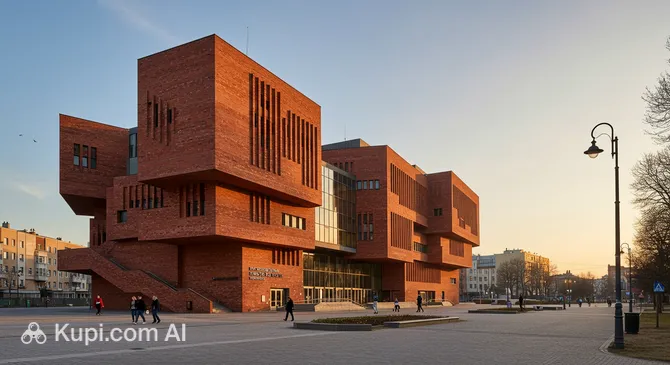
If you are looking for entertainment that goes beyond a standard drink, the city offers several unique venues. Zagrywki is a fantastic modern spot that combines a night out with interactive activities like crazy golf and beer pong, making it perfect for groups. For fans of fantasy and magic, the Three Broomsticks Pub offers a themed experience with creative potions and decor that transports you to a wizarding world. Meanwhile, those seeking high culture and world-class acoustics should check the schedule at the National Forum of Music, which hosts prestigious concerts in a stunning architectural setting.

National Forum of Music. Source: Kupi.Binoculars

When planning your night out, keep in mind that the atmosphere in Wroclaw is generally relaxed and casual. Most bars and clubs do not have a strict dress code, though "smart casual" is a safe bet for the more upscale venues near the Market Square. Prices are reasonable compared to Western Europe; a pint of beer typically costs between 15 and 20 PLN. Public transport is efficient, with a network of night buses (lines numbered 200 and up) running frequently. However, for convenience and safety late at night, ride-hailing apps like Uber, Bolt, and FreeNow are widely used and affordable.

Wroclaw is considered very safe for night walks, even in the city center. Standard precautions apply: keep an eye on your belongings and avoid unlit parks after dark. If you need a break from the nightlife, the city also excels in daytime entertainment. You can relax at the extensive Wroclaw Aquapark, which features slides and saunas, or catch an independent film at the New Horizons Cinema, a cultural hub famous for hosting major film festivals.

Parks & Museums

Wroclaw is a city that breathes through its abundant green spaces and preserves its soul within the walls of its diverse museums. Beyond the bustling streets and river bridges, visitors can find tranquility in lush gardens or dive deep into history and culture through an impressive array of exhibitions that range from the classical to the quirky.

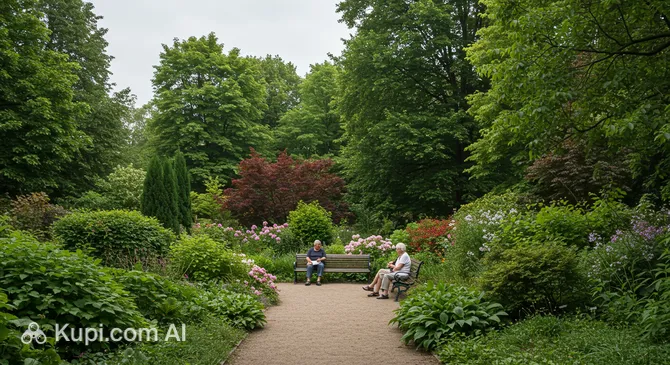
One of the most enchanting places for a nature walk is the Botanical Garden of the University of Wrocław. Located near the historic Cathedral Island, this oasis of calm was established in 1811 and remains a favorite escape for locals. It features a stunning collection of alpine plants, an arboretum, and fossilized plant remains, all arranged around scenic ponds and rustic bridges.

Botanical Garden of the University of Wrocław. Source: Kupi.Binoculars

Another gem is Southern Park (Park Południowy), widely regarded as one of the finest examples of landscape architecture in the city. Designed in the English style, it offers wide avenues, a large pond with a viewing terrace, and a monument to Frédéric Chopin. It is the perfect spot for a leisurely Sunday stroll or a picnic. For those seeking vast open spaces, Szczytnicki Park is the largest in the city, encompassing the famous Japanese Garden and offering miles of wooded paths.

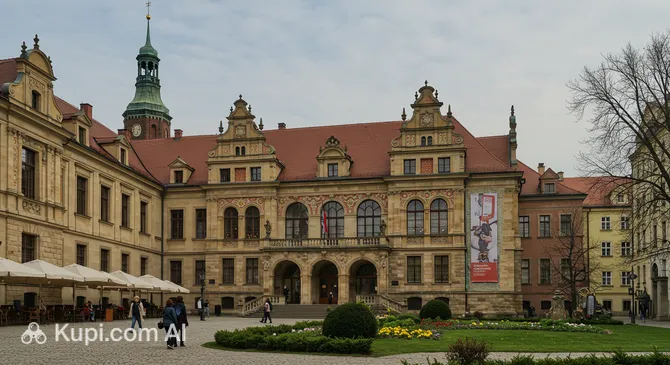
When it comes to museums, the city offers fascinating insights into its past. A visit to the Wroclaw Old Town Hall is essential, not just for its Gothic exterior but for the Museum of Bourgeois Art housed within. The museum showcases the lavish interiors where city councilors once met, along with exhibits detailing the everyday life and craftsmanship of Wroclaw's former residents.

Museum of Bourgeois Art. Source: Kupi.Binoculars

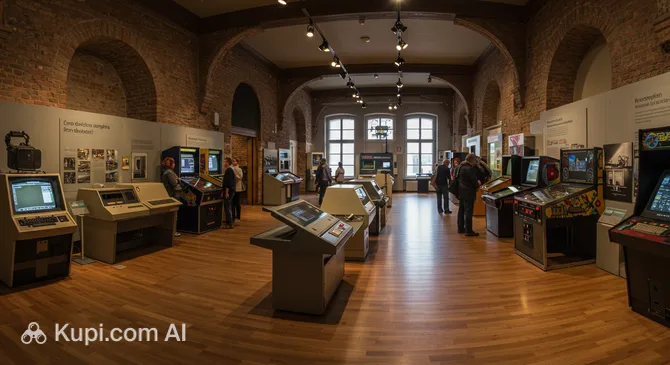
For a completely different cultural experience, the Museum of Games and Computers of the Past offers a nostalgic journey through the history of digital entertainment. Visitors can play on vintage consoles and arcade machines, making it an interactive delight for both adults who grew up in the 80s and younger generations curious about tech history.

Museum of Games and Computers of the Past. Source: Kupi.Binoculars

Wroclaw's architecture tells stories at every turn. The romantic Tumski Bridge, leading to the oldest part of the city, is a steel landmark often adorned with padlocks left by couples. Nearby, the majestic Wrocław Opera stands as a testament to the city's rich musical heritage, hosting world-class performances in a beautifully restored 19th-century building.

For a memorable evening, catch a show at the Wroclaw Multimedia Fountain near Centennial Hall. It is one of the largest fountains in Europe, dazzling spectators with synchronized water, light, and music shows. For a truly unique insider tip, visit Kolejkowo Wroclaw, a massive miniature world located in the Sky Tower, depicting life in Lower Silesia with incredible detail and humor.

Getting Around

Navigating Wroclaw is remarkably easy and efficient thanks to its well-integrated public transport network managed by MPK. The backbone of the system consists of an extensive web of tram lines that crisscross the city, connecting major districts with the historic center. These are complemented by a dense network of bus routes, which reach areas not covered by rails. It is important to note that the city does not have a metro (subway) system; however, the trams are frequent and reliable, effectively serving as the primary mode of rapid transit for locals and visitors alike.

The ticketing system is unified for both trams and buses, operating primarily on a time-based model. Travelers can choose between tickets valid for specific durations—commonly 15, 30, 60, or 90 minutes—or opt for long-term passes such as 24-hour, 48-hour, or 72-hour tickets, which are excellent value for tourists. Fares are affordable, with a standard single-ride or 30-minute ticket costing just a few Złoty. For convenience, you can plan your journey and purchase digital tickets using popular mobile apps like Jakdojade, SkyCash, or Urbancard, which provide real-time schedules and route options.

A unique and highly convenient feature of Wroclaw's transport is the modern ticket vending system onboard all vehicles. Every tram and bus is equipped with machines that allow you to buy tickets using a contactless bank card. Crucially, these machines do not print paper tickets; instead, the proof of purchase is stored digitally on your payment card. If a ticket inspector approaches you, simply present the card you used to pay. If you prefer traditional paper tickets, they can be purchased at stationary kiosks or ticket machines at major stops, but remember that these must be validated immediately upon boarding by inserting them into the small stamping machines.

Public transport typically operates from early morning until around midnight. For late-night travel, the city offers a network of night bus lines (numbered 240 to 259) that run approximately every 30 to 60 minutes, converging at the main bus station near the Wroclaw Glowny railway station. Aside from buses and trams, the city is very bike-friendly, with the Wrocław City Bike (WRM) system offering rental stations throughout the area during the warmer months. Electric scooters and car-sharing services like Trafficar and Panek are also widely available and can be unlocked via their respective smartphone apps.

For a truly unique travel experience, consider taking a ride on the "Polinka." This cable car crosses above the Odra River, connecting the main campus of the University of Science and Technology with the Geocentrum complex on the opposite bank. While originally designed for students to move quickly between classes, it has become a popular tourist attraction offering scenic views of the river and the cityscape. A separate ticket is usually required for this crossing, but it is a quick and memorable way to see the city from a different perspective.

Accommodation

Finding the perfect place to stay in Wroclaw is a straightforward experience, thanks to the city's diverse range of accommodation options. Whether you are looking for five-star luxury in a restored palace, a modern business hotel, or a budget-friendly hostel, the capital of Lower Silesia has something to suit every preference and budget. The hospitality sector here is well-developed, offering high standards of service at prices that are often more affordable than in many Western European cities.

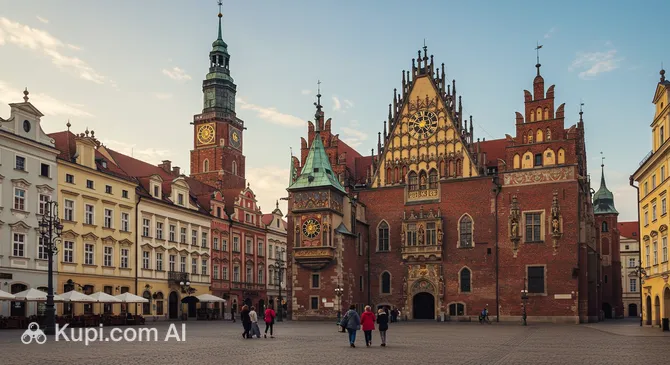
For visitors who want to be at the center of the action, the Old Town (Stare Miasto) is the most popular choice. Staying in this district places you within walking distance of the main historical sights, vibrant restaurants, and cultural venues. Many hotels here are located in beautifully renovated tenement houses that blend historical charm with modern amenities. You will be just steps away from the magnificent Wroclaw Old Town Hall and the lively atmosphere of the market square, making it easy to explore the city on foot.

Wroclaw Old Town Hall. Source: Kupi.Binoculars

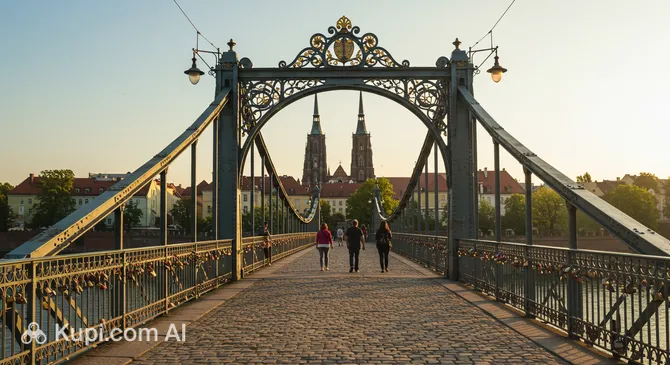
Travelers seeking a quieter and more romantic atmosphere should consider the area around Ostrów Tumski (Cathedral Island) and the banks of the Odra River. This is the oldest part of the city, characterized by cobblestone streets, historic churches, and gas-lit lamps that create a magical ambiance in the evenings. It is an ideal location for couples or those who appreciate serenity while remaining close to the center. A stroll across the famous Tumski Bridge connects you directly to scenic riverside walking paths.

Tumski Bridge. Source: Kupi.Binoculars

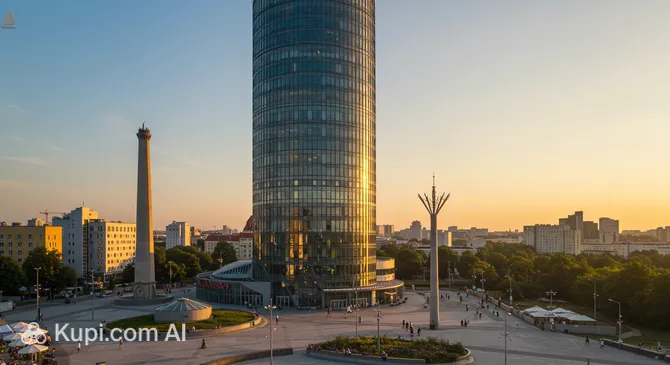
Business travelers and fans of contemporary architecture might prefer the districts south of the Old Town, particularly around the Sky Tower and the main railway station. This area features modern hotels equipped with extensive conference facilities and convenient transport links. The Sky Tower itself is a major landmark, housing luxury apartments and offering panoramic views of the skyline, symbolizing the modern face of the city.

Sky Tower. Source: Kupi.Binoculars

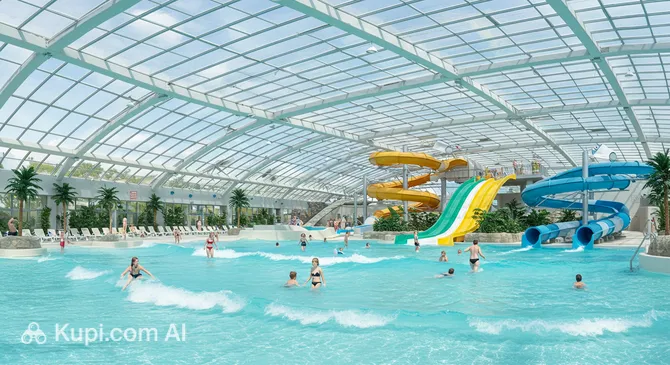
Families and active travelers may enjoy staying in the southern part of the city, which offers easy access to recreational facilities. This area is home to the Wroclaw Aquapark, one of the best water parks in Poland, providing a fun-filled escape for children and adults alike. Accommodation in this district often provides a more relaxed environment away from the tourist crowds, with plenty of green spaces nearby.

Wroclaw Aquapark. Source: Kupi.Binoculars

In addition to traditional hotels, Wroclaw has a thriving market for short-term apartment rentals. These are widely available throughout the city and often offer kitchen facilities and extra living space, making them a perfect alternative for longer stays or groups. For those traveling on a tighter budget, the city boasts numerous well-maintained hostels, particularly near the university district, known for their friendly social atmosphere and competitive rates.

Nearby Cities

For those looking to explore the surroundings, Wroclaw serves as an excellent base for day trips to several interesting nearby locations:

City Population Distance (km)
Swidnica 57,761 49
Brzeg 35,890 41
Olesnica 35,856 27
Olawa 33,268 25
Dzierzoniow 33,137 50

One of the most highly recommended destinations for a day trip is Swidnica. This historic town is world-renowned for its Church of Peace, a UNESCO World Heritage Site that stands as the largest timber-framed religious building in Europe. Its intricate wooden interior is truly breathtaking. Beyond the church, visitors can enjoy a pleasant walk through the town's well-preserved market square and admire the towering Cathedral of St. Stanislaus and St. Wenceslaus.

Another fascinating stop is Brzeg, a town steeped in royal history. It is best known for the Castle of the Silesian Piasts, often referred to as the "Silesian Wawel" due to its stunning Renaissance courtyard that rivals the famous castle in Krakow. The on-site museum offers a captivating look into the lineage of the Piast dynasty and the artistic heritage of the region.

For a quick and easy getaway, Olesnica offers a charming mix of architecture and history just a short distance from the capital of Lower Silesia. The town features a massive castle complex that was once a residence for local dukes, as well as the Basilica of St. John the Apostle, which holds significant historical value. It is a perfect spot for travelers seeking a quieter atmosphere away from the bustle of the big city.

These nearby destinations offer a glimpse into the diverse culture and landscapes of the region.

Shopping & Souvenirs

Shopping:

Shopping in Wroclaw offers a delightful mix of modern convenience and traditional charm, making it a satisfying experience for any visitor. The city is a major commercial hub in Lower Silesia, providing everything from high-end international fashion brands to unique local handicrafts. Whether you prefer browsing through sprawling shopping centers or wandering along historic cobblestone streets in search of hidden gems, you will find plenty of opportunities to indulge in some retail therapy.

The heart of the city's shopping scene beats around the Wroclaw Market Square and its adjacent arteries. Streets such as Świdnicka and Oławska serve as the primary pedestrian promenades, lined with popular chain stores, boutiques, and cafes. For those looking for something more artistic, the historic lane of Stare Jatki is a must-visit. Once a medieval meat market, it has been transformed into a picturesque alley housing art galleries and shops selling handmade goods, painting supplies, and unique souvenirs.

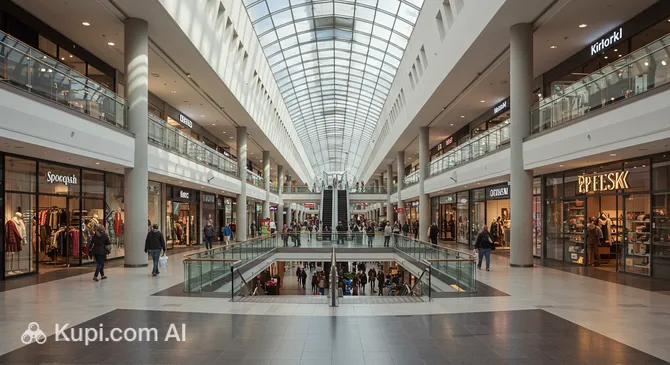
For a more concentrated shopping experience, the city boasts several impressive modern malls. One of the most popular is Wroclavia, conveniently located next to the main railway and bus stations. This stylish complex features over 180 shops, a cinema, and numerous dining options, all wrapped in contemporary architecture.

Wroclavia. Source: Kupi.Binoculars

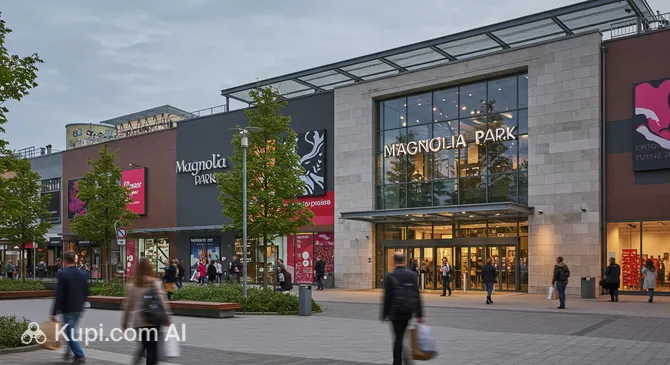
Another key destination is Magnolia Park, the largest shopping center in the Lower Silesia region. Situated a short tram ride from the center, it offers a vast selection of brands, a large recreation area, and an outdoor amphitheater, making it a favorite spot for families.

Magnolia Park. Source: Kupi.Binoculars

To experience the local flavor, visitors should head to the historic Market Hall (Hala Targowa) on Piaskowa Street. Housed in a magnificent early 20th-century concrete building, this bustling market is where locals buy fresh produce, flowers, and regional delicacies. It is an excellent place to soak up the authentic atmosphere and perhaps pick up some fresh fruit or traditional Polish snacks.

When it comes to souvenirs, Wroclaw has several distinct specialties. The most iconic keepsake is a figurine of a Wroclaw Dwarf; you can buy miniature replicas of the famous statues found all over the city. Another excellent choice is Bolesławiec pottery. This world-renowned, hand-painted ceramic ware with distinctive blue patterns comes from a town in Lower Silesia and is widely available in local shops. Amber jewelry and traditional gingerbread are also popular gifts to bring back home.

Most shopping malls and large retail chains are generally open from 9:00 AM to 9:00 PM, Monday through Saturday. It is important to remember that a Sunday trading ban is in effect in Poland, meaning most large shops are closed on Sundays, with few exceptions before major holidays. Payment is very convenient, with credit and debit cards (Visa, Mastercard) being accepted almost everywhere, including small souvenir stalls. For travelers from outside the European Union, many stores offer Tax-Free shopping, allowing you to claim a refund on VAT for purchases exceeding a certain amount.

Reached the end of the page?

That means the route is fully explored