Support

Dresden

About

Dresden, the capital of the Free State of Saxony, is often referred to as the "Florence on the Elbe" due to its stunning Baroque architecture and picturesque location along the riverbanks. Situated in the eastern part of Germany, near the border with the Czech Republic, this vibrant metropolis is home to over 560,000 residents and serves as one of the country's most significant cultural centers.

The city is a testament to resilience and artistic grandeur. The history of Dresden is famously marked by its destruction during World War II and the meticulous reconstruction that followed, restoring the city to its former glory. Today, it stands as a fascinating blend of regal tradition and modern urban life.

Dresden. Source: Kupi.Binoculars

Travelers are captivated by the city's iconic landmarks, particularly the magnificent Frauenkirche, which dominates the skyline, and the palatial Zwinger complex with its ornate pavilions and galleries. The city is also home to the renowned Semperoper opera house and the Green Vault, which houses one of the largest collections of treasures in Europe.

Beyond its architectural wonders, the city offers lush green spaces and scenic boat trips on the Elbe River. Whether you are an art enthusiast or simply looking for a beautiful European destination, Dresden invites you to explore its unique atmosphere and rich heritage.

Weather Overview

The city experiences a temperate climate with four distinct seasons, transitioning from cold winters to pleasantly warm summers. For a detailed forecast and monthly breakdowns to help plan your trip, you can consult the guide on the weather in Dresden.

Travelers visiting in the summer months of June through August can expect comfortable conditions, with average maximum temperatures reaching around 24°C. Winters are generally cold, with January seeing lows dipping to -0.3°C and daily averages hovering near freezing. Precipitation is fairly consistent throughout the year, with 10 to 16 wet days per month, so it is advisable to pack a raincoat or umbrella regardless of when you choose to visit.

Interesting Facts

Beyond the main attractions, Dresden holds many fascinating secrets and contributions to global culture that often surprise visitors. From world-famous inventions to architectural oddities, the city's history is woven with unique details waiting to be discovered.

  • Dresden is the birthplace of the modern coffee filter. In 1908, a local housewife named Melitta Bentz, tired of bitter coffee grounds, punched holes in a brass pot and lined it with blotting paper from her son's school notebook, forever changing how the world brews its morning cup.

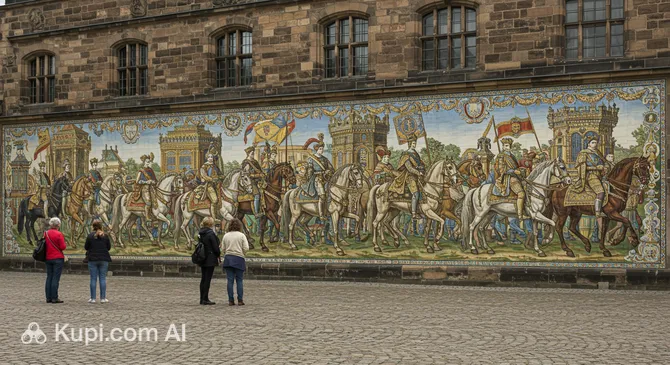
  • The Procession of Princes is not just a mural; it is the largest porcelain artwork in the world. Composed of around 23,000 Meissen porcelain tiles, this 102-meter-long image miraculously survived the devastating events of 1945 almost entirely unscathed.

  • Did you know that the "most beautiful dairy shop in the world" is located here? Pfunds Dairy earned this title from the Guinness Book of Records thanks to its interior, which is completely covered in hand-painted Villeroy & Boch ceramic tiles.

  • Daily dental hygiene has roots in this city, as the famous mouthwash "Odol" was invented here by Karl August Lingner. The entrepreneur used his fortune to establish the unique German Hygiene Museum, which is famous for its "Transparent Man" exhibit.

  • The Loschwitz Bridge, affectionately known as the "Blue Wonder," is the subject of a heroic local legend. It is said that two brave citizens cut the detonator cables just moments before the bridge was set to be destroyed during the final days of the war, preserving the landmark for future generations.

Procession of Princes. Source: Kupi.Binoculars

How to Get There

Reaching the capital of Saxony is convenient thanks to its central location in Europe and excellent transport connections. Whether you prefer flying or taking the train, there are several options available. You can find detailed information and compare all routes on the page dedicated to how to get to Dresden.

For travelers preferring air travel, the most direct entry point is Dresden International Airport (DRS). Located just 9.4 km from the city center, it is a convenient regional hub. A taxi or bus ride to the heart of the city typically takes around 35 minutes. While it handles a small volume of traffic compared to major hubs, it offers quick and easy access to the city.

For a wider range of international connections, many visitors choose to fly into Berlin Brandenburg (BER). The city of Dresden does not have its own major intercontinental hub, so this airport in Berlin serves as a primary gateway. It is situated approximately 147 km away, and the transfer to Dresden typically takes about 2 hours. Another significant option is Vaclav Havel Airport Prague (PRG). Located in Prague, roughly 112 km from Dresden, it is a large international airport with a travel time of approximately 1.5 hours.

For clarity, here is a summary of the main airports:

Airport Name City Passenger Traffic Km from City
Berlin Brandenburg Berlin Large 146.8
Vaclav Havel Airport Prague Prague Large 111.9
Leipzig/Halle Airport Leipzig Medium 113.6
Dresden International Airport Dresden Small 9.4
Pardubice Airport Pardubice Small 182.9

Traveling by train is another excellent way to arrive, offering scenic views of the Elbe Valley. The city's main hub is Dresden Hauptbahnhof (XIR). It is a major railway station located directly in Dresden, just about 9 km from the geographic center point, but effectively serving the downtown area. With a high volume of annual passengers, it connects the city efficiently to destinations across Germany and Europe.

If you are coming from the west, you might pass through Leipzig Hauptbahnhof (XIT). Located in Leipzig, approximately 114 km from Dresden, it is one of the largest railway stations in Europe. The most convenient way to continue your journey from there is by train; frequent high-speed connections link the two cities, making the trip fast and comfortable.

Below is a list of relevant railway stations in the region:

Station City Passenger Traffic Km to Center
Prague Main Railway Station Prague Large 118.4
Leipzig Hauptbahnhof Leipzig Large 113.6
Berlin Ostbahnhof Station Berlin Large 163.9
Dresden Hauptbahnhof Dresden Large 9.1
Holesovice Railway Station Prague 115.8

Main Attractions

Dresden is a city defined by its spectacular architecture and rich cultural heritage. From restored baroque masterpieces to scenic river promenades, the city offers a wealth of sights that captivate visitors from around the globe. Here are some of the most significant places to explore during your visit.

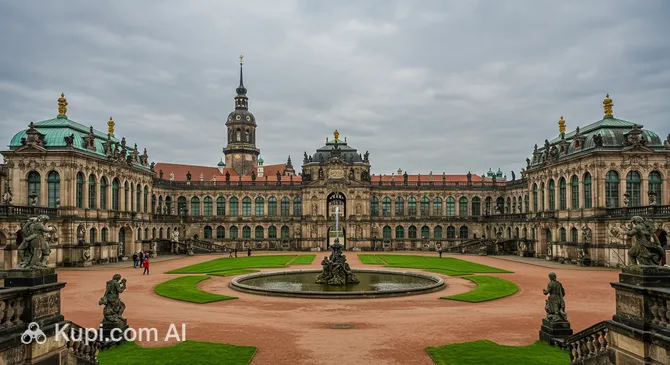
One of the most impressive examples of Baroque architecture in Germany is the Zwinger Palace. Originally built as an orangery and festival arena for the Saxon royal court, this sprawling complex now houses world-class museums, including the Porcelain Collection and the Old Masters Picture Gallery. Visitors are enchanted by its ornate pavilions, the majestic Crown Gate, and the beautiful inner courtyard filled with fountains, making it a perfect spot for both art lovers and architecture enthusiasts.

Zwinger Palace. Source: Kupi.Binoculars

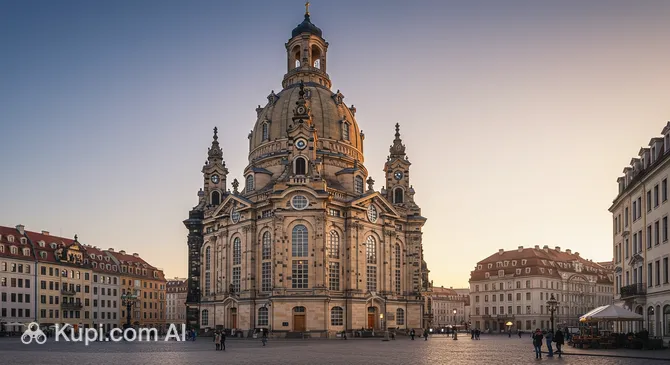
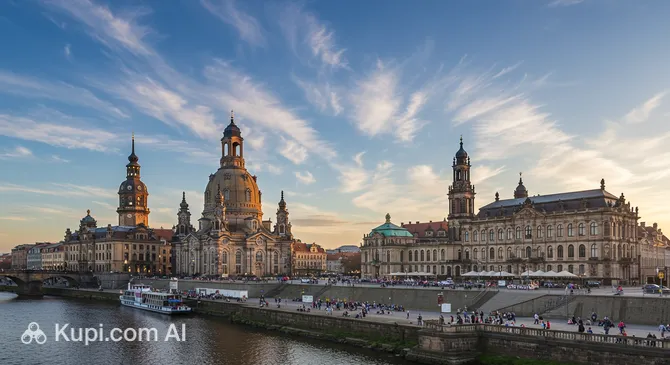
Dominating the city's skyline, the Church of Our Lady Dresden (Frauenkirche) is a powerful symbol of peace and reconciliation. After being destroyed in World War II, it remained a ruin for decades before being meticulously reconstructed using original stones found in the rubble. Tourists flock here to admire its stunning interior and to climb the dome for a breathtaking panoramic view of the city and the Elbe River.

Church of Our Lady Dresden. Source: Kupi.Binoculars

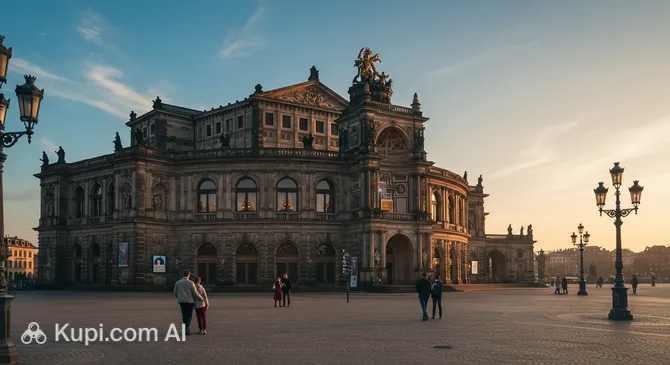
For admirers of music and grand design, the Semper Opera House is an essential stop. Located on Theaterplatz, this magnificent building is widely regarded as one of the most beautiful opera houses in the world, blending Renaissance and Baroque elements. Even if you cannot catch a performance by the famous Saxon State Orchestra, guided tours offer a fascinating glimpse into its opulent architecture and rich history.

Semper Opera House. Source: Kupi.Binoculars

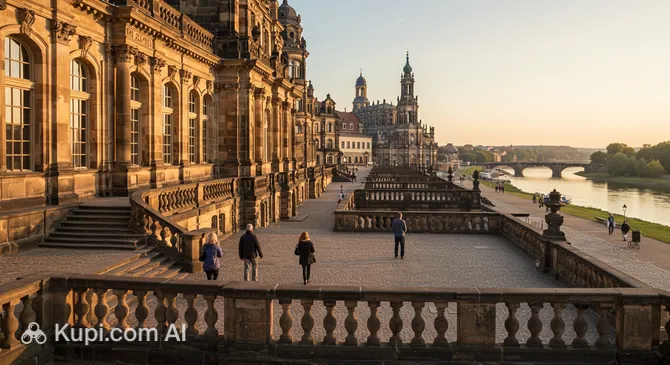
Often referred to as the "Balcony of Europe," Brühl's Terrace offers a delightful promenade high above the Elbe River. This historic architectural ensemble was once part of the city's fortifications but now serves as a favorite gathering place for locals and tourists alike. Walking along this terrace provides scenic views of the river, the cathedral, and the bustling river traffic, making it an ideal location for a relaxing afternoon stroll.

Brühl's Terrace. Source: Kupi.Binoculars

Another treasure trove for history buffs is the Green Vault, located within the Residenzschloss. As one of the oldest museums in Europe, it houses an unparalleled collection of treasures, ranging from jewelry to amber and ivory carvings. The museum is divided into the Historic Green Vault, which immerses you in the splendor of the past, and the New Green Vault, which showcases individual masterpieces in modern lighting, offering a dazzling experience of royal wealth.

Local Cuisine

The culinary scene in Dresden is a delightful reflection of Saxon tradition, characterized by hearty, savory dishes and world-renowned pastries. The local cuisine is deeply rooted in comfort food, often featuring rich sauces, potatoes, and meats, making it perfect for satisfying a traveler's appetite after a day of sightseeing. The dining culture here balances rustic charm with elegance, ranging from quick bites at bustling market squares to cozy dinners in historic vaulted cellars.

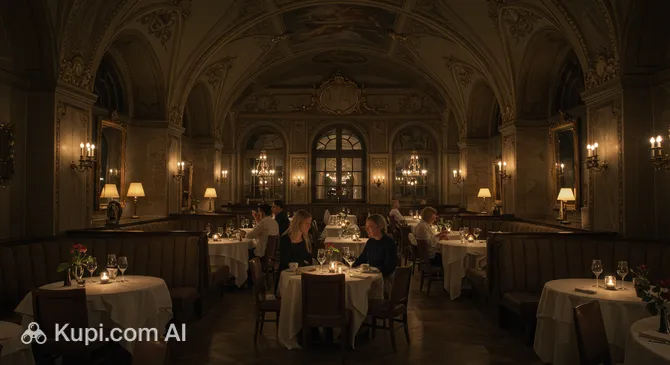
One of the must-try savory classics is the Dresdner Sauerbraten, a pot roast marinated for several days to achieve a tender texture and unique sweet-and-sour flavor, often served with red cabbage and potato dumplings. Another local favorite is Quarkkeulchen, delicious patties made from quark cheese, mashed potatoes, and flour, dusted with sugar and cinnamon. For a truly atmospheric dining experience where you can taste these traditional recipes, a visit to the historic Sophienkeller at Taschenbergpalais is highly recommended.

Sophienkeller at Taschenbergpalais. Source: Kupi.Binoculars

No culinary tour of the city is complete without indulging in its famous sweets. The Dresdner Eierschecke is a legendary three-layer cake consisting of a yeast dough base, a quark cheesecake layer, and a creamy custard topping. During the winter season, the city becomes the capital of Christstollen, a rich fruit bread packed with dried fruits, nuts, and spices, which carries a protected geographical indication ensuring its authenticity and quality.

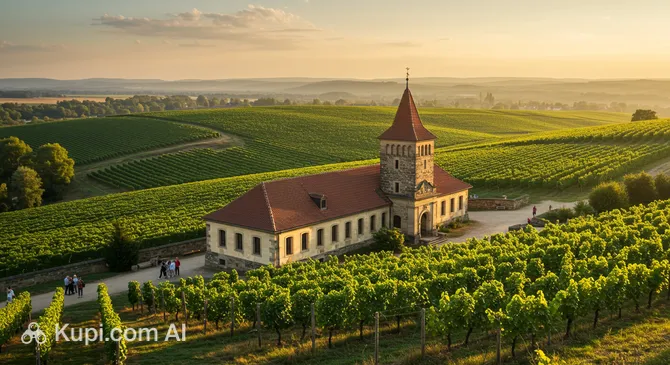
The region is also unique for its beverages. Unlike much of Germany which is famous primarily for beer, the Elbe Valley surrounding the city is one of the smallest and northernmost wine-growing regions in Europe. Visitors should sample local white wines, particularly the rare Goldriesling, which is grown almost exclusively here. To explore the history of Saxon viticulture, you can visit Hoflößnitz, a historic wine estate and museum that offers insights into the area's long-standing winemaking traditions.

Hoflößnitz. Source: Kupi.Binoculars

Travel Tips

Planning a trip to Dresden promises an immersion into history and culture, but a few practical insights can make your journey even more enjoyable. Here is a curated list of essential tips to help you navigate the Saxon capital like a local and avoid common tourist pitfalls.

  1. Clothing and Gear: The weather in Saxony can be changeable, so packing layers is the best strategy regardless of the season. Winters require warm coats, scarves, and gloves, while summers are generally pleasant but can have sudden showers. Comfortable walking shoes are a must, as the historic center is paved with cobblestones that can be tough on heels or thin soles. If you plan to attend a performance at the Semperoper, bring a smart-casual outfit, though formal evening wear is not strictly mandatory.
  2. Transportation: The city boasts an excellent public transport network operated by DVB, recognizable by its yellow trams and buses. A car is generally unnecessary and can be a hindrance due to parking costs. Instead, rely on the trams, which cover the entire city efficiently. Remember to purchase tickets at yellow vending machines at stops or via the "DVB mobil" app, and always validate your paper ticket upon boarding to avoid fines.
  3. Finances: While credit cards (Visa, Mastercard) are increasingly accepted in hotels and larger restaurants, Germany is still very much a cash-based society. Many small cafes, bakeries (Bäckerei), and souvenir stalls may only accept cash or the local "Girocard." It is wise to carry a moderate amount of Euros for daily expenses. When tipping, it is customary to round up the bill or leave about 5-10%, telling the server the total amount you want to pay ("Stimmt so") rather than leaving money on the table.
  4. Health and Safety: Dresden is generally a very safe city for travelers. However, standard precautions against pickpocketing should be taken in crowded areas like the Christmas markets or around the Zwinger. Pharmacies are marked with a large red "A" (Apotheke); they are plentiful, and there is always one in every neighborhood on 24-hour emergency duty (Notdienst). For serious medical emergencies, dial 112.
  5. Communication: The official language is German. While staff in major hotels, museums, and tourist restaurants usually speak English well, it is less common among the older generation or in suburban shops. Learning a few basic phrases like "Guten Tag" (Good day) and "Danke" (Thank you) is highly appreciated by locals. Free Wi-Fi is available in many public squares in the Altstadt, but for constant connectivity, you can buy prepaid SIM cards at supermarkets or drugstores like dm and Rossmann.
  6. Local Etiquette: Germans value order and punctuality. If you have a reservation, arrive on time. Sundays are traditionally quiet days; most shops and supermarkets are closed, so plan your shopping for Saturday and reserve Sunday for museums, parks, or dining out. When entering a shop or elevator, a polite greeting is the norm.
  7. What to Avoid: Do not walk in the bicycle lanes. These are often marked in red or located on the sidewalk, and local cyclists ride fast and expect the path to be clear. Walking in the bike lane is considered rude and can be dangerous. Additionally, avoid crossing the street at a red light ("jaywalking"), especially if children are present; locals take traffic rules seriously and may verbally reprimand you.
  8. Additional Tip: Consider purchasing the Dresden City Card or the Museums Card if you plan to do a lot of sightseeing. These cards often include free use of public transport and admission to major state art collections, saving you both money and the hassle of buying individual tickets.

By keeping these practicalities in mind, you can focus on soaking up the beauty and atmosphere of this magnificent city. Dresden is a welcoming destination, and a little local know-how ensures your visit will be as smooth as it is memorable.

Entertainment & Nightlife

Entertainment:

Dresden offers much more than just baroque splendor; it is a city with a youthful pulse and diverse leisure options. For those seeking a vibrant atmosphere, the district of Äußere Neustadt is the place to be. This bohemian quarter is a maze of narrow streets filled with street art, independent boutiques, and a high density of pubs and clubs. A visual highlight here is the Kunsthofpassage, a series of interconnected courtyards designed with artistic themes, including the famous "Courtyard of Elements" where drainpipes turn into musical instruments when it rains.

When the sun goes down, Neustadt transforms into the center of the city's nightlife. Music lovers can head to Altes Wettbüro, a venue known for its eclectic mix of concerts and dining in a historic setting. For those who prefer electronic beats and dancing until dawn, Sektor Evolution offers an industrial clubbing experience located in a former factory building.

Shoppers will find plenty to explore in the city center, particularly along the Prager Straße shopping mile. Here, modern malls like the Altmarkt Gallery Dresden and the Centrum Gallery Dresden provide a wide range of international brands and fashion stores. These centers are perfect for a leisurely afternoon of browsing or picking up souvenirs.

For families and nature enthusiasts, the city offers expansive green spaces. The Grand Garden of Dresden is the city's largest park, ideal for picnics, jogging, or a ride on the park railway. Located within this green oasis is the Dresden Zoo, one of the oldest in Germany, home to over 1,500 animals and a newly built orangutan house that delights visitors of all ages.

Those looking for unique modern experiences should not miss the Transparent Factory, where visitors can watch Volkswagen electric cars being assembled through glass walls. Alternatively, for a 360-degree journey into the past, the Dresden Panometer displays massive panoramic paintings by artist Yadegar Asisi inside a former gasometer. If relaxation is the goal, the Georg Arnhold Bath offers indoor and outdoor pools, slides, and saunas right near the city center.

Parks & Museums

Dresden is a city that breathes through its expansive green spaces and preserves its soul within world-class museums. Beyond the baroque facades, visitors will find a landscape where nature and art coexist harmoniously, offering a perfect balance between relaxation and cultural enrichment.

The city's green heart is undoubtedly The Grand Garden of Dresden. This vast baroque park, stretching over two square kilometers, is a masterpiece of landscape architecture featuring symmetrical avenues, ornate sculptures, and the Palais, an early baroque palace at its center. It is a favorite retreat for locals who come here to skate, jog, or simply enjoy a quiet picnic away from the urban bustle. The park also houses a botanical garden, making it a delightful spot for nature lovers to explore diverse plant species.

Another defining natural feature is the Elbe Meadows (Elbwiesen). Unlike many other European cities that built embankments right up to the river, Dresden has kept its riverbanks natural and open. These lush grassy slopes extend for kilometers through the city, offering uninterrupted views of the historic skyline. It is the perfect place for a sunset walk, a bike ride along the Elbe Cycle Route, or simply watching the steamships paddle by.

For art enthusiasts, the Old Masters Picture Gallery is an absolute must-see. Located within the Zwinger complex, this gallery holds one of the most significant collections of European art in the world. Its crown jewel is Raphael’s Sistine Madonna, but the collection also includes masterpieces by Vermeer, Rembrandt, and Titian. The gallery’s recently renovated interiors allow these timeless works to shine in a new light, providing a deeply moving experience for visitors.

A stark contrast to the classical art is the Military History Museum of the Bundeswehr. The building itself is an architectural provocation, with a sharp silver wedge designed by Daniel Libeskind slicing through the historic arsenal building. Inside, the museum takes a modern, anthropological approach to military history, focusing not just on technology and battles, but on the human experience of violence and the societal impact of war. It is a thought-provoking venue that challenges visitors to reflect on history from different perspectives.

Technology and history buffs will also appreciate the Dresden Transport Museum, located in the Johanneum on Neumarkt. This museum offers a fascinating journey through the history of mobile travel, featuring vintage trams, steam locomotives, historic cars, and even aviation exhibits. It is particularly engaging for families, as it showcases the engineering ingenuity that has kept the world moving for centuries.

Insider Tip: For a unique mix of nature and history, take a trip to the Elbe Castles (Elbschlösser) on the Loschwitz hillside. The park surrounding the Lingner Palace is open to the public and offers one of the best panoramic views of the river valley. In the summer, the terraced vineyards here are a wonderful spot to relax with a glass of local Saxon wine.
Getting Around

Public transport in Dresden is efficient, extensive, and remarkably punctual, making it the preferred way for many visitors to navigate the city. The system is operated primarily by the Dresdner Verkehrsbetriebe (DVB) and is integrated into the larger Upper Elbe Transport Association (VVO). The backbone of the network consists of yellow trams and buses that cover virtually every corner of the city. While there is no underground metro system, the tram network is dense and operates with high frequency, often running every 10 minutes during the day on main lines.

For covering longer distances or reaching the outer suburbs, the S-Bahn (suburban train) is a fast alternative. These trains connect the main railway station with the airport and nearby towns like Meissen and Pirna. Additionally, the city utilizes the Elbe River as a transport corridor; small passenger ferries operate at several crossing points, allowing pedestrians and cyclists to switch banks easily. These ferries are fully integrated into the public transport system, meaning standard tickets are valid for the crossing.

The ticketing system is based on zones, but for most tourist activities, you will only need a ticket for Zone 10 (Dresden city area). Options include single rides, which are valid for one hour, and day tickets, which offer unlimited travel until 4:00 AM the following day. For families or small groups, a group day ticket is often the most economical choice. Tickets can be purchased at yellow vending machines located at most stops, inside trams (often coin-only), or directly from bus drivers. However, the most convenient method is using the official DVB mobil app, which allows you to buy cashless tickets instantly.

A crucial rule for physical tickets is validation. If you buy a paper ticket from a machine or a service center, you must stamp it immediately upon entering the tram or bus in the orange validation boxes. Failure to do so is considered fare evasion and can result in a hefty on-the-spot fine. If you purchase a ticket via the app, it is usually valid immediately or from the selected start time, so no physical stamping is required.

One of the city's unique transport highlights is its historic hillside railways located in the district of Loschwitz, near the famous "Blue Wonder" bridge. The Standseilbahn is a funicular railway that has been operating since 1895, while the Schwebebahn is the oldest suspension railway of its kind in the world, in service since 1901. Both offer a charming ride up the Elbe slopes and provide spectacular panoramic views of the valley, making them a tourist attraction in their own right.

The network operates virtually around the clock. At night, the "GuteNachtLinien" (Good Night Lines) ensure that you can get home safely even after late-night events. Major tram and bus lines run every 15 to 30 minutes throughout the night, converging at central hubs like Postplatz to facilitate transfers.

If you prefer individual transport, the city is very bike-friendly. The MOBIbike system allows you to rent yellow bicycles found all over the city via a smartphone app, offering a flexible way to explore the riverbanks and parks. Taxis are also readily available at designated stands or can be hailed via apps, though they are significantly more expensive than public transit. Car-sharing services are present but are generally unnecessary for tourists staying within the city limits due to the excellent public infrastructure.

Accommodation

Where to Stay:

Dresden offers a diverse range of accommodation options that cater to every type of traveler, from backpackers seeking budget-friendly hostels to luxury seekers looking for five-star elegance. The city's hospitality landscape is well-developed, blending historic charm with modern comfort. Whether you prefer a room with a view of the Elbe River or a cozy apartment in a lively neighborhood, finding the right place to stay is relatively easy.

For first-time visitors and those who want to be in the center of the action, the Altstadt (Old Town) is the most convenient area. Staying here puts you within walking distance of the city's most famous landmarks, such as the Church of Our Lady Dresden and the Royal Palace. This area is home to many high-end international hotel chains and premium establishments, offering luxurious amenities and immediate access to the historic sights.

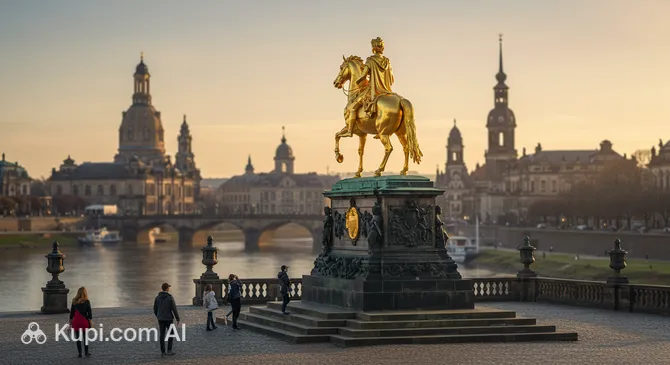
If you prefer a more bohemian and youthful atmosphere, the Äußere Neustadt across the river is an excellent choice. This district is known for its vibrant nightlife, street art, and independent cafes. Here, you will find a good selection of boutique hotels, guesthouses, and hostels. It is a great base for exploring the alternative side of the city while still being just a short tram ride or a walk across the bridge from the historic center. A notable landmark marking the entry to this district is the Golden Rider, a gilded statue of Augustus the Strong.

Golden Rider. Source: Kupi.Binoculars

Booking Tip: Dresden is a year-round destination, but accommodation can fill up extremely fast during the Christmas season. The city hosts the Striezelmarkt, one of Germany's oldest and most famous Christmas markets, attracting millions of visitors in December. If you plan to visit during this magical time, it is highly recommended to book your hotel several months in advance to secure a room at a reasonable rate.

The price range for accommodation varies significantly depending on the season and location. Budget travelers can find hostel beds or simple rooms for competitive prices, particularly in the Neustadt area. Mid-range hotels are plentiful and offer good value, often including breakfast. For a luxury experience in the Altstadt, expect to pay premium rates, especially for rooms with river views. Booking is most commonly done through major online platforms, though booking directly with smaller guesthouses can sometimes yield better deals.

Nearby Cities

For those looking to explore the surroundings, Dresden serves as an excellent base for day trips to several interesting nearby locations:

Just a short distance down the Elbe River lies Meissen, a town world-renowned as the cradle of European porcelain. Visitors can tour the famous manufactory to see exquisite craftsmanship in action or climb the hill to explore the Albrechtsburg castle and the gothic cathedral, which offer a medieval atmosphere and stunning views over the valley.

Radebeul is another delightful destination, often referred to as the heart of the Saxon wine route. Nestled along the riverbanks and hillsides, it is famous for its terraced vineyards and historic wine estates. The town is also known for the Karl May Museum and the nostalgic "Lößnitzgrundbahn" steam train, making it a favorite for both culture lovers and families.

Acting as the gateway to the dramatic landscapes of Saxon Switzerland, Pirna boasts a beautifully restored historic town center that famously inspired the painter Canaletto. With its winding streets and Renaissance architecture, it is the perfect starting point for hikers heading to the spectacular sandstone rock formations of the nearby national park.

City Population Distance (km)
Freiberg 40461 31
Freital 39577 8
Pirna 39027 17
Radebeul 34151 9
Meissen 28964 21

These nearby destinations offer a glimpse into the diverse culture and landscapes of the region.

Shopping & Souvenirs

Shopping:

Shopping in Dresden is a delightful journey that ranges from bustling modern boulevards to quaint historic lanes filled with traditional craftsmanship. The city's primary retail spine is Prager Straße, a wide pedestrian zone that stretches from the main railway station towards the historic center. This area is home to major international brands and large department stores. It is also where you will find the city's premier shopping centers, such as the Altmarkt Gallery Dresden and the Centrum Gallery Dresden, which provide a comprehensive shopping experience with hundreds of stores, cafes, and services.

For those seeking luxury goods and authentic souvenirs, the area around the Neumarkt and the baroque quarter is the ideal destination. Here, amidst the reconstructed historic facades, elegant boutiques offer high-end fashion, jewelry, and fine art. A distinct landmark in this area is the Palace of Culture, located at the edge of the Altmarkt. Nearby, visitors can purchase world-renowned Meissen porcelain, famous for its crossed-swords logo, or exquisite watches from the Glashütte region, both of which represent the pinnacle of Saxon precision and artistry.

A truly unique shopping venue is Pfunds Dairy in the Neustadt district. While it is a functioning shop selling cheese, milk, and regional delicacies, it is also a major attraction due to its stunning interior completely covered in hand-painted neo-Renaissance tiles. It is the perfect place to buy edible souvenirs like milk schnapps or their signature milk soap.

Beyond the mainstream, the Äußere Neustadt district offers a bohemian alternative. This vibrant neighborhood is packed with second-hand shops, record stores, and independent designers. The artistic courtyards of the Kunsthofpassage are particularly recommended for finding one-of-a-kind gifts, handmade jewelry, and creative home decor in a whimsical setting.

The region is also famous for its traditional wooden folk art from the nearby Ore Mountains (Erzgebirge). Intricate nutcrackers, "smoking men" incense burners, and candle arches are popular purchases available year-round in specialized shops. However, the shopping atmosphere peaks during the holiday season. The famous Striezelmarkt takes over the Altmarkt, while the Stallhof hosts a medieval Christmas market where craftsmen sell their wares in a historic courtyard setting.

Reached the end of the page?

That means the route is fully explored