Support

Vaclav Havel Airport Prague

About the Airport

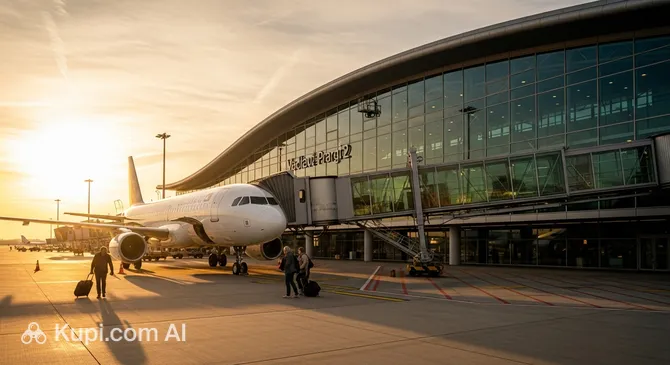
Vaclav Havel Airport Prague. Source: Kupi.com Binoculars

Vaclav Havel Airport is not just a transport hub, but an elegant air gateway welcoming guests of Prague with true Czech hospitality. The former Ruzyně Airport is today a modern and intuitive complex where aviation history blends harmoniously with 21st-century comfort. Here, the journey through the "City of a Hundred Spires" begins even before stepping out into the city: thoughtful navigation and a cosy atmosphere make you feel at home from the very first minutes after landing.

IATA Code PRG
ICAO Code LKPR
City Prague
Distance to Centre ~17 km
Status International
Passengers per Year ~13.8 million (2023)
Schedule 24-hour online flight board

Features and Advantages of the Airport:

Vaclav Havel Airport is renowned for its logic and passenger convenience. The complex is divided into two main terminals: Terminal 1 handles flights from non-Schengen countries, while Terminal 2 is designated for intra-Schengen flights. This separation significantly speeds up formalities.

Among the main advantages of this air harbour are:

  • Transport Accessibility: You can reach the city quickly and affordably. The popular bus No. 119 takes passengers to Metro Line A in just 15–20 minutes. The Airport Express (AE) buses also run directly to the main railway station.
  • Observation Terrace: For aviation enthusiasts, a special viewing deck is open, offering a breathtaking view of the runway and aircraft preparation for flights.
  • Rest Zones: The transit area of Terminal 2 features a "Rest & Fun" space and free relaxation zones with comfortable chairs for sleeping.
  • Shopping and Gastronomy: While waiting for your flight, you can purchase famous Bohemian glass, Czech garnets, or souvenirs, as well as visit a supermarket with standard city prices, which is a rarity for airports.

Contact Information

For your convenience, we have compiled the main contact information for Vaclav Havel Airport in Prague. We recommend checking the currency of the data on official resources before your trip.

  • Official Website: www.prg.aero. The website provides the most complete and up-to-date information on flights, services, and airport regulations in several languages.
  • Information Service Phone: +420 220 111 888 (24-hour information line).
  • Address: K Letišti 1019/6, 160 08 Praha 6, Czech Republic.
  • Email: For most inquiries, it is recommended to use the contact forms available on the airport's official website in the relevant sections.
  • Social Media: The airport is present on platforms such as Facebook, X (formerly Twitter), and Instagram, where news and operational updates are published.
  • Lost Luggage Information: If your luggage was lost or damaged during the flight, you should contact the Lost & Found service of the airline you flew with. If you lost personal items within the terminal areas, contact the Airport Lost Property service.
  • Passenger Support Service: For assistance regarding passengers with reduced mobility, please contact your airline directly at least 48 hours before departure. Information desks are also located in the terminals to assist travellers.

How to Get to the Airport

Getting to the main airport of Prague, named after Vaclav Havel (PRG), is easy thanks to an excellently developed transport system. Depending on your budget, time, and preferences, you can choose one of several convenient methods. The trip from the city centre usually takes 30 to 50 minutes.

Public Transport is the most economical option. There is no direct metro to the airport, but special buses run from the terminal stations.

  • Bus No. 119: runs from the metro station Nádraží Veleslavín (Green Line A). This is the most popular and fastest route from the centre.
  • Bus No. 100: runs from the metro station Zličín (Yellow Line B). Convenient if you are travelling from the western districts of the city.
  • Airport Express (AE): a special bus connecting the airport with Prague's main railway station (Hlavní nádraží). It requires a separate, slightly more expensive ticket, but provides a direct connection without transfers.
For travel on city buses (No. 119 and No. 100), standard Prague public transport tickets apply, which can be bought at machines, newsstands, or via a mobile app.

Taxi and Transfers are the ideal choice for those who value comfort, travel with heavy luggage, or arrive at night. In the Czech Republic, ride-hailing apps like Bolt or Uber are popular, offering fixed and transparent fares. You can also book a private transfer in advance — the driver will meet you at the designated location and take you directly to the terminal. The cost of a trip from the city centre typically varies depending on demand and time of day.

Car Rental and Private Transport. If you plan to travel by car, the airport provides convenient parking complexes. For short stops (picking up or dropping off), there are express parking lots where the first 15 minutes are free. For long-term parking, it is better to book a space in one of the long-term car parks in advance — this will help save money. The drive from the city centre by car without traffic will take about 25-30 minutes.

Terminals and Map

Vaclav Havel Airport in Prague (PRG) has a simple and clear structure consisting of two main passenger terminals — Terminal 1 and Terminal 2. They are located in the same building and connected by a convenient walkway, which significantly simplifies navigation for passengers. The main difference between them lies in the geography of the flights.

Terminal 1 (T1) handles flights to countries outside the Schengen zone. This includes flights to the UK, Ireland, USA, Canada, as well as countries in Asia, Africa, and the Middle East. If you are flying from Prague outside of Schengen or arriving from these countries, you will need to pass passport control in this terminal. Departure and arrival zones here are clearly separated and equipped with everything necessary.

Terminal 2 (T2), in turn, is designed for flights within the Schengen zone. Since there is no border control between these countries, procedures here are significantly faster. Passengers do not need to pass passport control, making the journey more comfortable. This terminal is more modern and is often perceived as more spacious.

Navigation in the airport is intuitive. Signs in Czech and English help you easily find the right terminal, check-in counters, or boarding gates. The walk between Terminal 1 and Terminal 2 takes just a few minutes through an internal corridor. There is no need to use shuttles or buses, which is very convenient for transfers.

For check-in and security control, it is recommended to arrive at the airport well in advance. For flights from Terminal 2 (Schengen), 2 hours before departure is usually sufficient. For flights from Terminal 1 (Non-Schengen), it is better to allow 2.5-3 hours due to the need to pass passport control, where queues may occur. The main advice is to always check in advance which terminal your flight departs from; this information is always indicated on your ticket.

Airport History

The history of the airport in Prague is a reflection of the turbulent history of the Czech Republic itself. The official opening took place on 5 April 1937, and at that time, it was named Prague-Ruzyně after the district where it was located. In the very year of its opening, the airport received international recognition: its architectural design was awarded a gold medal at the International Exposition of Art and Technology in Paris for its modern and functional concept.

Post-war development and the advent of the jet age required significant expansion. An important stage was the construction of a new complex, today known as Terminal 1. It was inaugurated in 1968, allowing for a significant increase in capacity and the handling of large passenger aircraft of that time. This step laid the foundation for the airport's future transformation into a major international hub.

A new phase of development began after 1989. The growth of tourism and business activity led to the need for another large-scale modernization. In the 1990s, new hangars, runways, and taxiways were built. The culmination of this process was the opening of Terminal 2 in 2006, designed to serve flights within the Schengen zone. This allowed for the separation of passenger flows and made travel even more comfortable.

One of the most significant events in the airport's recent history occurred in 2012. Following a public and government initiative, it was renamed Vaclav Havel Airport Prague. This was done in memory of the first president of the post-communist Czech Republic, a prominent playwright and human rights activist who became a symbol of democratic change in the country.

Over the years, the airport has set numerous passenger traffic records, becoming one of the busiest in Central and Eastern Europe. An interesting fact: the original airport design was so well thought out that its basic layout for traffic organization and terminal location allowed for efficient expansion over decades while maintaining logic and convenience for passengers.

Services and Amenities

Vaclav Havel Airport in Prague offers passengers a full range of services to make their stay as comfortable and productive as possible. Before departure or during a transfer, you can find something to enjoy, handle work matters, or simply relax.

For gourmets and shopping enthusiasts, this is a true paradise. The terminals host numerous restaurants, cafes, and coffee shops to suit every taste — from establishments serving traditional Czech cuisine to fast-food outlets. Duty Free shops offer a wide assortment of perfumes, cosmetics, confectionery, and souvenirs, while boutiques feature products from famous global brands.

Staying connected is easy: free Wi-Fi is available throughout the airport, and numerous charging stations are equipped for electronic devices. For those who value comfort and privacy, several VIP and business lounges are available, where you can work, have a snack, and rest from the hustle and bustle in a quiet environment.

Practical matters are also easily resolved at the airport. Passengers have access to bank branches, 24-hour ATMs, and currency exchange points. In case of feeling unwell, you can visit the medical centre for first aid, and necessary medicines can be purchased at pharmacies located in both terminals.

For passengers with children, there are well-equipped mother and child rooms and play corners where little travellers can have fun. Passengers with reduced mobility are provided with special assistance and escort services, which are recommended to be booked in advance through the airline.

If you have a long layover or an early flight, you can stay at one of the hotels located right at the terminals or in the immediate vicinity. For business people, conference halls and meeting rooms are available, allowing effective use of waiting time for work and meetings.

Where to Eat

At Vaclav Havel Airport in Prague, travellers will find a wide selection of establishments to suit every taste and budget. Whether you are looking for a quick snack before departure or want to enjoy a full meal, you will easily find a suitable option here. Most cafes and restaurants are concentrated in the areas after security control (airside), but there are also places to eat in the public zone (landside).

Terminal 1 (Flights outside the Schengen zone)
In the public zone (before control), you can find popular chain cafes, such as Costa Coffee, and fast-food restaurants like KFC. After passing passport control, the choice becomes significantly wider. Here you will find restaurants serving Czech and European cuisine, such as The Globe, where you can order hearty meals. For a quick bite, the local chain Bageterie Boulevard is excellent, offering fresh baguettes with various fillings. There are also sushi bars and pizzerias.

Terminal 2 (Flights within the Schengen zone)
This terminal also features a rich selection. Before security control, you can have a coffee or a snack at several cafes. The main gastronomic variety awaits passengers in the departure zone. Here you will find both world-famous chains like Starbucks and McDonald's, as well as establishments with local flair. Of particular note is the Pilsner Urquell Original Restaurant, where you can order traditional dishes such as goulash or svíčková (marinated beef sirloin).

What to Try and Dietary Requirements
Once at Prague Airport, take the opportunity to get acquainted with Czech cuisine. Look for trdelník (chimney cake) at one of the outlets or try classic meat dishes with dumplings in one of the restaurants. Almost every establishment has vegetarian options, such as salads, soups, or cheese-based dishes. Regarding Halal options, while specific certification varies, many seafood and vegetarian choices are available; however, it is advisable to check with staff at individual restaurants.

Prices and Opening Hours
The price range varies from budget fast food (around 10-15 EUR for lunch) to more expensive restaurants, where a full dinner will cost 25-40 EUR and above. Most establishments open early in the morning and work until late evening, adjusting to the flight schedule. Several vending machines with snacks and drinks, as well as some coffee shops, usually operate around the clock.

Tips for Travellers

To ensure your journey through Vaclav Havel Airport is as comfortable as possible, we recommend arriving in advance. For flights within the Schengen zone, allow 2-2.5 hours, and for international flights — at least 3 hours. This will allow you to check in luggage, pass security control without rushing, and walk calmly to your boarding gate.

Online check-in, available with most airlines, helps significantly speed up the process. With an electronic boarding pass, you can go straight to security if you are travelling without luggage. When passing security control, be prepared to place laptops, tablets, and liquids packed according to regulations into trays in advance.

Choosing a seat on the plane is a matter of taste: by the window for those who love gazing at clouds, or by the aisle for those who value the freedom to stand up and stretch. Pay close attention to the contents of your hand luggage. Remember the liquids rule: all containers must be no more than 100 ml and packed in a single transparent bag. Sharp objects and other prohibited items are best left in checked luggage.

The airport in Prague is convenient for transit passengers thanks to clear navigation. Simply follow the signs for "Transit"/"Transfer". If your next flight departs from a different terminal, allow extra time for movement. Important point: check in advance if you need a transit visa to cross the border, if required by your itinerary.

Customs control procedures upon entering the Czech Republic are standard. If you are arriving from a country outside the EU and carrying goods exceeding established limits (e.g., tobacco products) or large sums of cash, they must be declared in the "Red Channel". Travellers from EU countries generally suffice with passing through the "Green Channel".

A few tips on how to save: bring an empty bottle and fill it with drinking water at special fountains after security. Prices for food and drinks in the secure area are higher, so you can bring a light snack from home. Also, booking a transfer to the city or parking online often costs less than paying on the spot.

If your flight is delayed, do not panic. First, watch the information on electronic boards and listen to announcements. Find the counter or representative of your airline for up-to-date information. Depending on the length of the delay, you are legally entitled to drinks, meals, and in some cases — accommodation at the carrier's expense.

Reached the end of the page?

That means the route is fully explored