Support

Nuremberg Airport

About the Airport

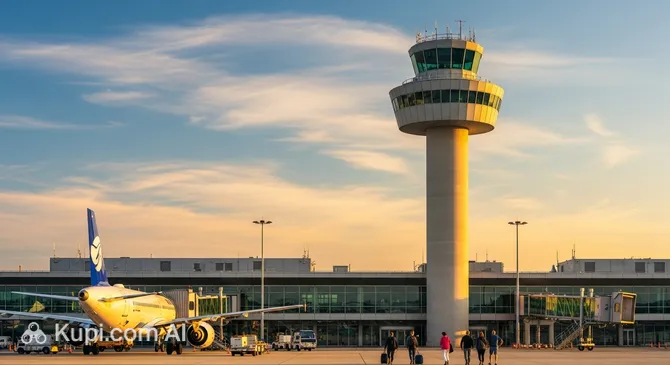
Nuremberg Airport. Source: Kupi.com Binoculars

Nuremberg Airport (Flughafen Nürnberg "Albrecht Dürer") is not merely a transport hub, but a true aerial gateway to picturesque Franconia. Named after the famous artist Albrecht Dürer, this airport is renowned for its incredible compactness and convenience: it is practically impossible to get lost here, and the journey from the check-in counter to the boarding gate takes just a few minutes. Travellers often note its cosy atmosphere and the absence of the hustle and bustle typical of giant hubs, making the start or end of a trip as comfortable as possible.

IATA Code NUE
ICAO Code EDDN
City Nuremberg
Distance to centre ~5-7 km
Status International
Passengers per year ~3.9 million (2023)
Schedule Available on the official website

The main feature of the Nuremberg air harbour is its unique transport accessibility. It is one of the few airports in Germany that can be reached by metro (line U2) in just 12–15 minutes directly from the city centre, without overpaying for taxis or express trains. The station is located literally a step away from the terminal. Additionally, the airport offers an excellent observation deck with a breathtaking view of the runway, which is particularly enjoyed by children and aviation enthusiasts.

Contact Information

For your convenience, we have compiled the essential contact information for Nuremberg Airport. We recommend always checking the official website for the most up-to-date data before your trip.

  • Official website: www.airport-nuernberg.de
  • Information desk phone: +49 911 937 00
  • Airport address: Flughafenstraße 100, 90411 Nürnberg, Germany
  • Email: For general enquiries, you can use the contact form on the official website or the address information@airport-nuernberg.de.
  • Social media: Current news and updates can be found on the airport's official pages on Facebook, Instagram, and other popular social networks.
  • Lost luggage information: For issues regarding lost or damaged luggage, you should primarily contact your airline's representative. There is also a lost and found office (Fundbüro) at the airport; contact details are available on the website.
  • Passenger support service: For assistance and consultations, you can use the information desk phone or send a request via the online form on the airport website.

How to get to the airport

Getting to Nuremberg Airport (NUE) from the city centre and back is possible in several ways, each convenient in its own right. The transport system in Germany is excellently developed, and Nuremberg is no exception. The choice depends on your budget, time, and amount of luggage.

Public Transport: The most popular, fastest, and economical method is the metro (U-Bahn). Line U2 directly connects the airport with the city's main railway station (Hauptbahnhof). Trains run every 10-15 minutes, and the entire journey from the station to the terminal takes only about 12-15 minutes. This is the ideal option to avoid traffic jams. A standard single ticket (Einzelfahrschein) for Zone A is sufficient for the trip. Day and group tickets are also available, which may be better value if you plan other travel around the city. At night, when the metro is not operating, the airport can be reached by night buses.

Taxi and Transfer: A taxi ride offers more comfort and is a good choice if you have a lot of luggage or are travelling with family. Taxi ranks are located right at the terminal exit. The journey to the city centre will take approximately 15-20 minutes depending on traffic conditions. The cost will be significantly higher than public transport, typically around 20-25 Euros. Alternatively, you can consider booking a transfer in advance via online services, which is particularly convenient for large groups.

Car Rental and Parking: If you plan to actively travel around Bavaria, renting a car can be an excellent solution. Offices of all major international rental companies are present at Nuremberg Airport. However, for travel exclusively within the city, a car may not be very convenient due to narrow streets in the historic centre and parking difficulties. For those arriving at the airport in their own vehicle, several parking zones are provided: from short-term parking for pick-ups and drop-offs to multi-level long-term car parks. It is recommended to book a parking space online in advance to secure a more favourable rate.

Terminals and Map

Nuremberg Airport (NUE) is distinguished by a well-thought-out and compact structure, making it very convenient for travellers. In fact, there is only one main passenger terminal here, which serves both domestic and international flights. The absence of several scattered buildings significantly simplifies navigation and reduces time spent moving within the airport.

The terminal layout is intuitive and logical. The building is divided into several levels:

  • Ground Floor: Located here are two check-in areas (Hall 1 and Hall 2), airline counters, as well as the arrivals area with baggage claim belts and customs control. After exiting into the public zone, passengers have access to car rental desks, tourist information, and exits to taxis and buses.
  • First Floor: This is the departure level. After passing through security control, passengers enter a spacious transit zone with Duty Free shops, restaurants, cafes, and boarding gates.

Since there is only one terminal, transitions between different zones take place within the building. All gates are within walking distance of each other after passing security. Navigation is extremely simple thanks to clear signs in German and English, as well as numerous information boards with flight schedules. It is practically impossible to get lost here.

Check-in and screening procedures at Nuremberg Airport usually proceed quite quickly due to its efficiency and moderate passenger flow. Nevertheless, it is recommended to adhere to standard rules: arrive at the airport 2 hours before departure for flights within the Schengen zone and 2.5-3 hours before international flights outside Schengen. During peak periods, such as summer holidays or Christmas breaks, it is worth allowing extra time.

History of the Airport

The history of Nuremberg Airport (NUE) dates back to 1933, when the first airfield was opened in the Marienberg district. However, it was completely destroyed during the Second World War, and after its conclusion, a decision was made to build a new, more modern air harbour in a different location.

The rebirth of the airport took place on 6 May 1955 at its current site. This event was an important step in the economic recovery of the city and the entire region. By 1960, the airport celebrated serving its one-millionth passenger, testifying to the rapid growth of air travel in post-war Germany.

A key stage of development was the modernization to accommodate jet aircraft. In 1961, the runway was extended to 2,300 metres, and in 1968 to its current 2,700 metres. In 1981, a spacious new passenger terminal with jet bridges was opened, significantly increasing the level of comfort for travellers and the airport's capacity.

A real breakthrough and significant achievement was the opening in 1999 of the metro station (line U2) directly beneath the terminal building. Nuremberg Airport became the first in the country to receive a direct and transfer-free connection to the city metro network, which still makes it one of the most convenient in terms of transport accessibility.

In the 21st century, modernization continued: in 2006, a new control tower was built, one of the most modern in Europe, and departure halls were expanded. In 2014, the airport was named after the great Nuremberg artist — Albrecht Dürer Airport Nürnberg. Today, it is an important international transport hub that has repeatedly received awards for high-quality passenger service.

Services and Amenities

Nuremberg Airport (NUE) offers passengers a full range of services to make waiting for a flight as comfortable and productive as possible. Regardless of the purpose of your trip, you will find everything you need here, from places to rest and work to various shops and restaurants.

The terminal houses numerous cafes, bars, and restaurants where you can have a quick snack or a full meal. Travellers can enjoy both local Franconian cuisine and international delicacies. For shopping enthusiasts, there is a Duty Free zone with a wide selection of perfumes, cosmetics, beverages, and confectionery, as well as other shops offering souvenirs, books, and travel essentials.

For comfortable waiting, passengers can use business lounges, such as the Dürer Lounge. Access is open to business class passengers of many airlines, as well as to anyone wishing to enter for a fee. Free Wi-Fi is available throughout the airport, and numerous charging stations for gadgets allow you to stay connected at all times.

Financial services are represented by bank branches, ATMs, and currency exchange points located in convenient areas of the terminal. If any questions arise, you can contact the information desk, where staff are ready to assist in several languages.

The airport is well-equipped for passengers with children: there are play areas and mother-and-child rooms with changing tables. For travellers with reduced mobility, all conditions are provided: ramps, lifts, specially equipped toilets, and an assistance service, which is recommended to be booked in advance through your airline.

In case of necessity, first aid is available at the airport. For business travellers, modern conference rooms and a business centre are available at the Mövenpick Hotel, which is connected to the terminal. If you have an early departure or a long layover, you can stay at one of the hotels located in the immediate vicinity of the airport.

Where to eat

Nuremberg Airport (NUE) offers travellers various opportunities for a snack or a full meal to comfortably pass the time while waiting for a flight. Here you will find establishments to suit any taste and budget — from cosy coffee shops with fresh pastries to à la carte restaurants where you can discover local cuisine.

In the public area (before security control), there are cafes and bistros, ideal for meeting and seeing off guests. Here you can leisurely drink coffee or have a sandwich. This is a great place to try classic Bavarian snacks, for example, the famous pretzel (Brezel).

After passing security, in the secure departure zone, the choice of establishments becomes wider. Passengers have access to several bars where they can enjoy local beverages, as well as restaurants and cafes. For those in a hurry, there are takeaway food points. Most establishments are open from early morning until the last evening flights depart, but it is best to check exact hours on the airport website.

Even if you are in Nuremberg only for transit, it is worth trying the city's culinary symbol — small spiced sausages called Nürnberger Rostbratwürste, which are often served in local restaurants. For passengers with specific dietary needs, vegetarian and gluten-free dishes can be found in most establishments — simply check the menu or ask the staff. The price range is standard for airports: from reasonable prices in coffee shops to average checks in restaurants.

If time is limited, the best choice would be one of the bakeries or sandwich cafes. If you have an hour or so to spare, you can comfortably settle in one of the restaurants and enjoy a full lunch with Franconian or international cuisine, bidding farewell to the hospitable land of Germany.

Travel Tips

Planning a trip through Nuremberg Airport will go smoothly if you consider a few tips. This airport is sufficiently compact and modern, making it convenient for passengers.

Arrival time at the airport: It is recommended to arrive 2-2.5 hours before international flights and 1.5-2 hours before flights within Germany and Schengen zone countries. This time will be sufficient to check in luggage without rushing, pass security control, and reach the boarding gate.

Check-in and Security: The fastest way is to complete online check-in on the airline's website. This will allow you to avoid queues at the counters. When passing security control, prepare all liquids (in containers up to 100 ml) in a separate transparent bag in advance and be ready to remove laptops and other large electronics from your hand luggage.

Choosing a seat on the plane: If you want to enjoy the views, choose a window seat. For those who value the ability to stand up freely and stretch their legs, an aisle seat is more suitable. Seats in the front of the cabin usually allow for a quicker exit from the aircraft upon arrival.

Hand luggage: Standard rules prohibit carrying liquids in containers larger than 100 ml. All liquids must be packed in a single transparent bag with a volume of no more than 1 litre. Sharp objects, weapons, and flammable substances are also prohibited. Be sure to check the weight and size limits for hand luggage on your airline's website, as they may vary.

Transfer passengers: Nuremberg Airport is convenient for transit passengers thanks to clear navigation. Follow the "Transfer" signs. If you are flying from a non-Schengen country to a Schengen country (or vice versa), you will need to pass passport control. Ensure you have enough time between flights.

Customs control: Upon arrival from non-EU countries, you will need to pass through customs. If you have no goods to declare, use the "Green Channel". If you are carrying goods whose value or quantity exceeds duty-free limits, you must go through the "Red Channel". For flights within the EU, customs inspection of personal belongings is usually not conducted.

Saving time and money: To get to the city centre quickly and inexpensively, use the metro (line U2), which runs directly from the terminal. The trip to the main railway station takes just 13-15 minutes. To save on food and drinks, bring an empty water bottle with you (it can be filled after security) and light snacks.

In case of flight delay: If your flight is delayed, contact your airline's counter for information and possible assistance (vouchers for food, drinks). According to EU legislation (Regulation 261/2004), passengers are entitled to certain compensation and support during long delays. While waiting for your flight, you can visit shops, cafes, or use the Wi-Fi available within the terminal.
Reached the end of the page?

That means the route is fully explored