Support

Katowice International Airport

About the Airport

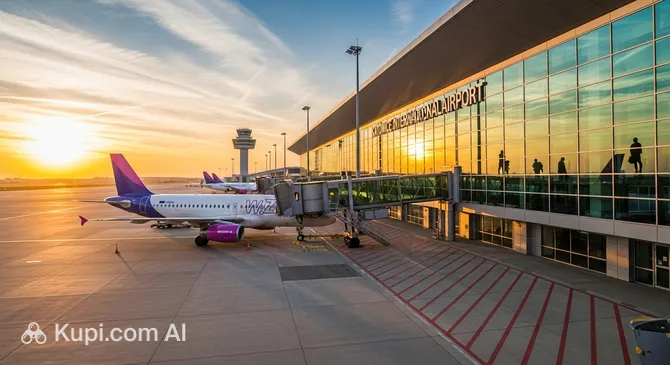
Katowice International Airport. Source: Kupi.com Binoculars

Katowice International Airport (KTW) is not just a transit point, but the main aerial gateway to the industrial heart of Poland, Silesia. Located amidst forests in the town of Pyrzowice, this aviation hub firmly holds the title of the country's leader in charter flights, opening pathways for tourists to both historic mines and popular holiday resorts. Modern infrastructure here blends harmoniously with a compact layout, making the start or end of your journey as comfortable and hassle-free as possible.

IATA Code KTW
ICAO Code EPKT
City Katowice
Distance to Centre ~30 km
Status International
Annual Passengers Over 5.6 million (2023)
Schedule Regular and Charter

Airport Features and Advantages

Katowice Airport is renowned for its well-thought-out logistics and passenger convenience. Terminals A and B (departures) are connected to Terminal C (arrivals), forming a single functional complex.

  • Charter Leader: The airport serves as the national base for the majority of charter flights, offering a vast selection of holiday destinations, from the Mediterranean to exotic countries.
  • Observation Deck: One of the airport's highlights is the open terrace for plane spotting—an ideal spot for aviation enthusiasts and families with children.
  • Transport Accessibility: You can reach the city centre not only by taxi but also via convenient express buses that operate around the clock, as well as through the recently opened railway connection.
  • Waiting Comfort: Passengers have access to business lounges, duty-free shopping zones, and a large car park featuring a "Kiss & Fly" zone for quick drop-offs.

Contact Information

For your convenience, we have compiled the essential contact information for Katowice International Airport (KTW). You can contact airport representatives in several ways.

  • Official Website: www.katowice-airport.com — here you will find the most up-to-date information on flights, services, and airport regulations.
  • Information Service Phone: +48 32 39 27 200 (24-hour line) and +48 801 011 752 (for calls within Poland).
  • Airport Address: Wolności 90, 42-625 Ożarowice, Polska.
  • Email: The airport recommends using the contact form on the official website for written enquiries.
  • Lost Luggage Information (Biuro Bagażu Zgubionego): If your luggage has been lost or damaged, you should first contact your airline's Lost & Found office. The general telephone number for the airport's lost property office is: +48 32 39 27 327.
  • Social Media: You can follow airport news on its official pages on Facebook, X (Twitter), and YouTube.

How to Get to the Airport

Getting to Katowice International Airport (KTW), located approximately 30 kilometres north of the city centre of Katowice, is possible via several convenient methods. Choosing the best option depends on your budget, time, and comfort preferences, allowing you to easily plan your trip to this important transport hub in southern Poland.

Public Transport is the most economical way to reach the airport. Direct bus connections are provided by express routes. The main one, the AP bus, operates 24/7 and runs from the Katowice central railway station (Katowice Dworzec) to the airport terminals. The journey takes about 50-60 minutes. Additionally, there are direct bus lines connecting the airport with other cities in the region, such as Krakow. This is an excellent option for budget-conscious travellers who value punctuality.

Taxi and Private Transfer offer significantly greater comfort and speed. A taxi ride from the centre of Katowice will take approximately 30-40 minutes, depending on traffic conditions. This is the ideal choice for passengers with bulky luggage, families with children, or those travelling at night. Besides official airport taxi services, you can use popular mobile apps (e.g., Uber, Bolt) or pre-book a private transfer, which often allows for some savings.

Car Rental is a perfect solution for those planning to actively travel around the Silesian Voivodeship and beyond. Offices of many major international and local rental companies are present at Katowice Airport. You can book a car online in advance and collect it upon arrival or, conversely, return the car right before departure, providing maximum flexibility in route planning.

If you are travelling to the airport by private car, several parking zones are at your disposal. For quick passenger drop-off and pick-up, the P1 (Premium) car park, located directly in front of the terminals, is ideal. For longer stays, long-term car parks (P2, P3, and others) are available, offering more favourable rates. It is recommended to book a parking space in advance online—this not only guarantees a spot but often allows you to receive a discount.

Terminals and Map

The airport in Katowice has a simple and clear structure consisting of three passenger terminals: A, B, and C. All are located in one elongated building and are interconnected, making movement between them quick and convenient—you will not need shuttles or buses; a few minutes' walk is sufficient.

Terminals A and B — Departure Halls

The main thing a passenger departing from Katowice needs to know is the division of flows by destination:

  • Terminal A serves departures to countries outside the Schengen Area (e.g., United Kingdom, Egypt, Turkey). This is where passengers go through passport control after security screening.
  • Terminal B is designated for departures to countries within the Schengen Area (e.g., Germany, Italy, Spain). There is no passport control in this terminal.

Check-in counters and baggage drop-off zones are available in both terminals. To avoid confusion, always check your flight information on the departure boards or your ticket.

Terminal C — Arrival Zone

This is the most modern of the terminals, dedicated entirely to handling arriving flights. Regardless of where you have flown from—whether from the Schengen Area or not—you will arrive at Terminal C. Here you will find passport control zones for passengers from non-Schengen countries, baggage reclaim belts, and the main hall for greeters.

Procedures and Navigation

Katowice International Airport is fairly compact and logically arranged. Navigation is intuitive thanks to numerous signs. Passing through registration and security control usually takes 30-60 minutes, but queues may occur during peak hours (early morning, weekends, holiday seasons). It is recommended to arrive at the airport at least 2–2.5 hours before an international flight. The main tip: check your departure terminal (A or B) in advance and follow the signs—it is practically impossible to get lost here.

Airport History

The history of Katowice International Airport (KTW), located in Pyrzowice, began long before it became one of the key transport hubs of modern Poland. Its roots go back to 1940, when a military airstrip was built on this site for the needs of the Luftwaffe. After the end of World War II, the airfield came under the control first of the Soviet and then the Polish Air Force, serving exclusively military functions for two decades.

A turning point in the airport's history occurred on 6 October 1966, when the first civil flight to Warsaw took place. This event marked the beginning of passenger transport development. However, the infrastructure remained modest for a long time: a small, adapted post-war building served as the first terminal. Real development only began in the 90s.

A key stage was the large-scale modernisation in the 1990s. In 1994, the first full-fledged passenger terminal (today's Terminal A) was opened, which significantly increased passenger traffic and launched the first international charter flights. In parallel, work was carried out to improve airfield infrastructure, including the construction of a new control tower.

The beginning of the 21st century was marked by rapid growth, largely due to the emergence of budget airlines. To meet growing demand, Terminal B was opened in 2007, and Terminal C, designed to handle arriving passengers, in 2015. A major achievement was the commissioning in 2015 of a new 3,200-metre runway capable of accommodating the largest long-haul aircraft. This transformed Katowice into not only a major passenger hub but also one of the country's most important cargo airports.

Services and Amenities

Katowice International Airport (KTW) provides passengers with all necessary services for a comfortable wait. The terminals feature numerous cafes and restaurants where you can grab a quick snack or have a full meal. For shopping enthusiasts, stores are open, including a Duty Free zone, offering a wide assortment of cosmetics, perfumes, beverages, confectionery, and souvenirs to remind you of your trip to Poland.

For those wishing to spend time in a quieter environment or catch up on work, the airport offers business lounges. They provide an enhanced level of comfort, complimentary beverages and snacks, fresh press, and workspaces. Free Wi-Fi is available throughout the airport, and waiting areas are equipped with numerous charging stations for mobile devices and laptops. Conference rooms are also available for business travellers.

Practical matters are easily resolved at the airport: bank branches, ATMs, and currency exchange points are available. In case of need, passengers can seek first aid at the 24-hour medical point. Families with small children will appreciate the specially equipped mother-and-child rooms, as well as small play areas to help pass the time before departure.

The airport is fully adapted for passengers with reduced mobility. It features ramps, lifts, and specially equipped restrooms. Passengers can request assistance in advance by contacting their airline. If you have an early departure or late arrival, several hotels offering comfortable accommodation are located in the immediate vicinity of the terminals.

Dining

At Katowice International Airport (KTW), passengers will find various options for a snack or a full meal. Dining venues are located in both the public area and the departure zones after security control, offering menus to suit every taste and budget.

In the public area (landside), accessible to all visitors before security, there are several cafes. This is a great place to have coffee with fresh pastries or grab a sandwich while seeing off or meeting travellers. Prices here are generally slightly lower than in the departure zone.

The majority of restaurants and dining outlets are concentrated in the departure zone (airside), after passing through screening. Here the choice is significantly wider: from table-service restaurants to fast-food outlets and cafes. Establishments are distributed between terminals serving Schengen and non-Schengen flights. For those in a hurry, coffee shops offering takeaway food and drinks for the flight are ideal.

The menus at Katowice Airport combine popular international dishes with elements of Polish cuisine. Travellers can find traditional Polish sandwiches (kanapki), hearty soups, or even dumplings (pierogi) in some restaurants. Of course, classic options like pizza, salads, and burgers are always available.

For passengers with special dietary needs, vegetarian options, such as salads or vegetable sandwiches, are generally available. Information regarding vegan, gluten-free, or halal dishes is best verified directly at the establishments by reviewing the menu. Regarding prices, they correspond to the standard level for airports. A light snack with a drink will cost less than a full three-course meal in a restaurant.

If you have little time before departure, look for the numerous coffee shops and kiosks with ready-made food in the airside zone. For a leisurely lunch or dinner while waiting for your flight, it is better to choose one of the restaurants with seating. Most establishments operate according to the flight schedule, opening early in the morning and closing after the departure of the last flights.

Travel Tips

To ensure your journey through Katowice International Airport goes as smoothly as possible, it is worth familiarising yourself with a few useful tips in advance. As with most European airports, to comfortably complete all procedures, it is recommended to arrive 2 hours before flights within the Schengen Area and 3 hours before international flights outside Schengen. This time is usually sufficient to check in luggage without rushing, pass through security control, and find your boarding gate.

To save time, use online check-in, which is offered by almost all airlines. This allows you to go straight to baggage drop-off (if you have any) or security control. When passing through screening, be prepared to remove all electronic devices, such as laptops and tablets, as well as your bag of liquids from your hand luggage. Following these simple rules will significantly speed up the process.

When choosing a seat on the plane, be guided by your preferences: a window seat offers beautiful views during take-off and landing, while an aisle seat provides more legroom and the ability to stand up freely without disturbing neighbours. Seats by emergency exits often offer extra space, but certain restrictions may apply to them.

Pay special attention to hand luggage regulations. All liquids, gels, and aerosols must be in containers of no more than 100 ml and packed in a single transparent resealable bag with a capacity of up to 1 litre. Sharp objects are prohibited in the cabin. Power banks and other lithium-ion batteries are generally permitted only in hand luggage. Upon arrival in Poland from a non-EU country, follow the "Green Channel" if you have no goods to declare, or the "Red Channel" if you do.

If you have a transfer at Katowice Airport, first find your next flight number and boarding gate on the information screens—information may change. Ensure you do not require a transit visa if you plan to leave the transit zone. In the event of a flight delay or cancellation, immediately contact your airline representative. Under EU regulations, passengers are entitled to care (drinks, meals), and in cases of long delays, hotel accommodation.

To save money, book parking, transfers, or taxis online in advance—this is often cheaper than paying on the spot. You can also bring light snacks to avoid spending on food at the airport, but remember the liquid restrictions. Keep copies of important documents (passport, tickets, bookings) in digital format on your phone or cloud storage—this can be very useful in unforeseen situations.

Reached the end of the page?

That means the route is fully explored