Support

Prague

About

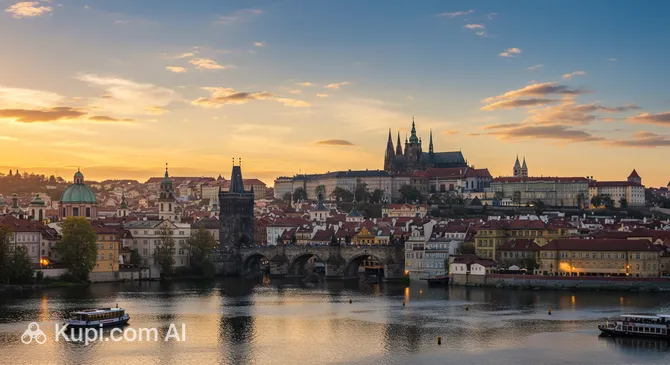
Prague, the capital and largest city of the Czech Republic, is often described as one of the most magical destinations in Europe. Known as the "City of a Hundred Spires," it captivates visitors with its stunning architecture, winding cobblestone streets, and a romantic atmosphere that feels like stepping into a fairy tale.

Prague. Source: Kupi.Binoculars

Located in the heart of Central Europe on the banks of the Vltava River, the city is home to approximately 1.3 million people. Its geographical position has made it a political, cultural, and economic centre for centuries, enjoying a temperate climate with distinct seasons that each offer a unique perspective on the cityscape.

The rich history of Prague is evident in every corner, from the medieval grandeur of the Old Town Square to the imposing silhouette of Prague Castle overlooking the city. Visitors flock to walk across the iconic Charles Bridge, lined with baroque statues, which connects the historic districts and offers breathtaking views of the river and skyline.

Whether you are an architecture enthusiast, a history buff, or simply looking for a charming European getaway, Prague offers an unforgettable experience. Its blend of gothic grace and renaissance beauty makes it a perfect destination for your next travel adventure.

Weather Overview

Prague experiences a continental climate characterized by four distinct seasons, each bringing a different atmosphere to the city's historic streets. To help you decide the best time for your visit, it is worth looking at the detailed forecast for the weather in Prague before you travel.

Summers are generally warm and pleasant, with average temperatures in July and August hovering around 20°C and daytime highs often reaching 25°C. However, it is wise to carry an umbrella, as this season sees about 12 to 13 wet days per month. Winters, on the other hand, are cold with temperatures frequently dropping near or below freezing; expect averages between 1.5°C and 2.7°C from December to February.

Spring and autumn offer milder transition periods that are perfect for sightseeing without the extremes. In May, temperatures warm up to a comfortable 18.5°C, while September retains some summer warmth with highs around 20°C before cooling down. Throughout the year, precipitation is fairly consistent, so being prepared for occasional rain is recommended regardless of when you visit.

Interesting Facts

Beyond its famous spires and historic squares, the Czech capital holds many fascinating secrets that often escape the casual observer. Discover a side of the city defined by unique records, curious legends, and architectural oddities.
Prague's Narrowest Street. Source: Kupi.Binoculars
  • One of the city's most quirky features is Prague's Narrowest Street, located in the Mala Strana district. The passage is so tight that two people cannot pass each other, so a traffic light was installed at both ends to regulate the flow of pedestrians and prevent jams.

  • According to a popular urban legend, the construction of the iconic Charles Bridge involved mixing raw eggs into the mortar to strengthen the structure. While modern scientific analysis has yielded mixed results on the presence of egg proteins, the story remains a beloved part of local folklore.

  • The majestic Prague Castle is not just a stunning landmark but also a global record-holder. It is recognized by the Guinness Book of World Records as the largest ancient castle complex in the world, covering an impressive area of almost 70,000 square metres.

  • Overlooking the city, the Petrin Tower bears a striking resemblance to the Eiffel Tower in Paris. Although it is significantly shorter than the French icon, its location on the summit of Petřín Hill means its peak actually sits at a higher altitude than that of the Eiffel Tower.

How to Get There

Reaching the Czech capital is convenient thanks to its central location in Europe and excellent transport connections. Whether you prefer flying or taking a scenic train ride, there are multiple options available to suit your itinerary. You can read more about how to get to Prague to plan your journey in detail.

The primary gateway for air travelers is Vaclav Havel Airport Prague (PRG). Located just 13 km from the city center, this large international airport welcomes millions of visitors annually. A trip to the downtown area by taxi or bus typically takes around 40 minutes. For those looking for alternative routes, you might consider flying into Dresden International Airport (DRS) in the city of Dresden, which is about 127 km from Prague. The transfer by road from there generally takes around 2 hours. Another regional option is Pardubice Airport (PED) in the city of Pardubice, roughly 93 km away, with a travel time of approximately 1 hour.

For clarity, here is a summary of the main airports:

Airport Name City Passenger Traffic Km from City
Vaclav Havel Airport Prague Prague Large 13.0
Dresden International Airport Dresden Medium 126.8
Turany Airport Brno Medium 192.8
Pardubice Airport Pardubice Small 93.4
Ceske Budejovice Airport Ceske Budejovice Small 125.6

Traveling by train is another popular and efficient way to arrive. The city's central hub is Prague Main Railway Station (XYG), conveniently located in the heart of Prague, less than 1 km from the center. This major station handles a vast volume of passengers and connects the capital to numerous European destinations. Additionally, Holesovice Railway Station (XYJ) serves as another key point within the city, situated about 3.9 km from the center, offering further connectivity for travelers.

Below is a list of relevant railway stations:

Station City Passenger Traffic Km to Center
Prague Main Railway Station Prague Large 0.9
Dresden Hauptbahnhof Dresden Large 126.5
Linz Hauptbahnhof Linz Large 198.8
Pardubice Main Railway Station Pardubice Unknown 94.1
Holesovice Railway Station Prague Unknown 3.9

Main Attractions

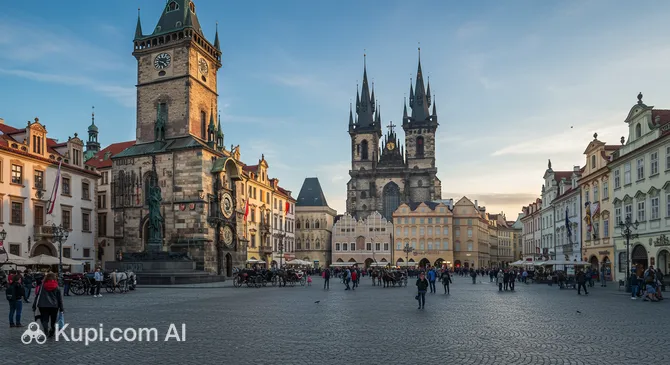
Prague is a treasure trove of architectural wonders and historical landmarks, offering visitors an endless array of sights to explore. A great place to start is the Old Town Square, the vibrant heart of the city's historic centre. Surrounded by magnificent Baroque churches and colorful buildings, this bustling plaza has been the focal point of public life since the 10th century. It is the perfect spot to enjoy a coffee, watch street performers, and admire the stunning Týn Church that towers over the square.

Old Town Square. Source: Kupi.Binoculars

Located on the southern wall of the Old Town Hall is the legendary Prague Astronomical Clock. Installed in 1410, it is the oldest astronomical clock in the world that is still operating. Every hour, crowds gather to witness the "Walk of the Apostles," a mechanical procession of figures that appears in the windows above the clock face. The intricate dial displays not only the time but also the position of the sun and moon, making it a masterpiece of medieval engineering.

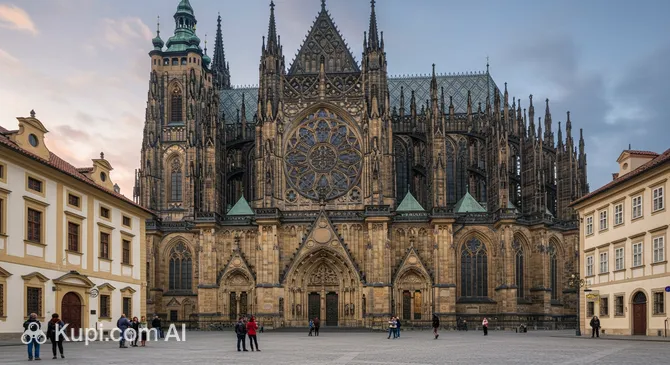
For those who appreciate Gothic grandeur, St. Vitus Cathedral is an absolute must-see. Dominating the skyline from within the castle complex, this is the largest and most important church in the country. Its construction spanned nearly 600 years, resulting in a fascinating blend of styles. Visitors are particularly drawn to the breathtaking stained glass windows, including works by the famous Art Nouveau artist Alfons Mucha, and the royal crypt where Czech kings are buried.

St. Vitus Cathedral. Source: Kupi.Binoculars

Offering a striking contrast to the city's historic backdrop is the Dancing House. This modern architectural gem, designed by Vlado Milunić and Frank Gehry, was inspired by the famous dance duo Fred Astaire and Ginger Rogers. Its deconstructivist style, featuring "dancing" towers of glass and concrete, stands out boldly on the riverfront. It is a favorite subject for photographers and also houses a rooftop bar with panoramic views of the Vltava River.

Finally, immerse yourself in the region's rich heritage at the National Museum. Majestically situated at the top of Wenceslas Square, this neo-Renaissance building is a landmark in its own right. Inside, you will find extensive collections ranging from natural history and mineralogy to the history of the Czech lands. The recently renovated interior is as impressive as the exhibits, featuring a stunning pantheon and grand staircases that reflect the nation's cultural pride.

Local Cuisine

The local cuisine in Prague is the definition of comfort food: hearty, rich, and perfect for fueling long days of exploration. Traditional Czech cooking revolves around high-quality meats, thick sauces, and the ubiquitous dumpling (*knedlík*), which serves as the perfect vessel for soaking up savory flavors. Dining here is not just about sustenance; it is a cultural experience that often takes place in centuries-old taverns or bustling modern bistros.

No visit to the capital is complete without trying the national dish, *svíčková na smetaně*. This masterpiece consists of tender beef sirloin served in a creamy vegetable sauce, typically garnished with cranberries, a slice of lemon, and a dollop of whipped cream. Another staple is *vepřo-knedlo-zelo*, a satisfying combination of roast pork, bread dumplings, and stewed sauerkraut that perfectly balances savory and sour notes.

For those with a serious appetite, the roasted pork knuckle (*pečené vepřové koleno*) is a legendary choice. Often marinated in beer and served with mustard and horseradish, the meat is incredibly tender while the skin remains crispy. A popular spot to indulge in this massive feast is Pork's, a restaurant located near the Charles Bridge that specializes in this specific delicacy.

Prague is also world-famous for its beer culture. The Czech Republic has the highest beer consumption per capita in the world, and in Prague, a pint of Pilsner is often cheaper than water. Locals typically enjoy their "liquid bread" in traditional pubs known as *hospoda*. If you prefer something non-alcoholic, try *Kofola*, a local herbal cola that rivals global brands in popularity, or enjoy a refreshing raspberry lemonade.

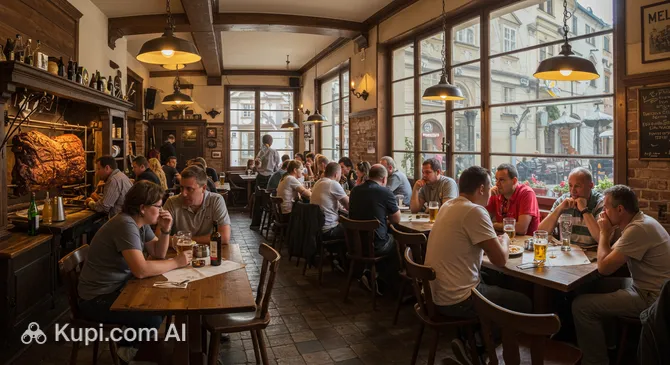
Naše maso. Source: Kupi.Binoculars

The city's food scene has evolved to include high-quality fast dining. A prime example of this trend is Naše maso, a celebrated butcher shop in the Old Town that doubles as a bistro. Here, you can watch the butchers at work while enjoying some of the freshest meatloaf, sausages, or tartare in the city. It is a favorite among both locals and tourists seeking a quick but premium culinary experience.

Street food is another integral part of the Prague experience. As you wander through the city, you will encounter stalls selling *klobása* (grilled spicy sausage) and the sweet treat *trdelník*, a rolled pastry grilled on a spit and topped with sugar and nuts. For a more traditional market atmosphere, visit Havel's Market, where you can find fresh produce, local honey, and traditional wafers known as *oplatky*.

When the sun goes down, the dining culture seamlessly blends with the nightlife. Unique venues like Vzorkovna, often referred to as the "Dog Bar," offer a distinct underground vibe. This labyrinthine ruin-pub is a place where locals gather to drink beer from jars, listen to live jam sessions, and soak up an alternative side of the city's vibrant social life.

Travel Tips

To ensure your trip to Prague is as smooth as it is memorable, we have compiled a list of essential practical advice. These tips will help you navigate the "City of a Hundred Spires" like a local, saving you time, money, and unnecessary stress.

  1. Clothing and Gear: The most important item in your suitcase should be a pair of sturdy, comfortable walking shoes. Prague is famous for its extensive cobblestone streets, which can be unforgiving on heels or thin soles. Since the weather can be unpredictable, dressing in layers is the best strategy. Also, remember that while the city is generally casual, you should dress modestly (covering shoulders and knees) when entering religious sites like St. Vitus Cathedral.
  2. Transportation: The public transport system in Prague is one of the best in Europe, consisting of an integrated network of metro lines, trams, and buses. It is reliable, cheap, and runs 24/7 (with night trams). There is absolutely no need to rent a car; parking is expensive and traffic can be tricky. For late-night trips, ride-hailing apps like Bolt or Uber are safer and more transparent than hailing a taxi on the street.
  3. Finances: Although the Czech Republic is in the EU, the local currency is the Czech Koruna (CZK), not the Euro. While many places accept cards, it is wise to carry some cash for small shops, public toilets, or markets. Avoid "Euronet" ATMs with high fees and instead use ATMs attached to major banks. When exchanging money, never do it on the street, and always check the "Net" rate at exchange offices to avoid hidden commission fees. Tipping is appreciated; rounding up the bill or leaving about 10% is standard practice.
  4. Health and Safety: Prague is generally a very safe city, but like any major tourist hub, you should be vigilant against pickpockets, especially in crowded areas like the Old Town Square, on Charles Bridge, and on tram line 22. Pharmacies are marked with a green cross and called "Lékárna"; many in the city center have English-speaking staff. For emergencies, the universal number is 112.
  5. Communication: The official language is Czech, but English is widely spoken in the tourism and service sectors. However, learning a few basic phrases goes a long way in showing respect. A simple "Dobrý den" (Good day) and "Děkuji" (Thank you) will be warmly received. Free Wi-Fi is available in many cafes and new trams, but buying a local SIM card (O2, Vodafone, or T-Mobile) is affordable and easy if you need constant connectivity.
  6. Local Etiquette: Czechs value politeness and order. It is customary to say "Dobrý den" when entering a small shop, elevator, or waiting room, and "Na shledanou" (Goodbye) when leaving. On escalators, particularly in the metro, the strict rule is to stand on the right and walk on the left. blocking the left side is considered very rude.
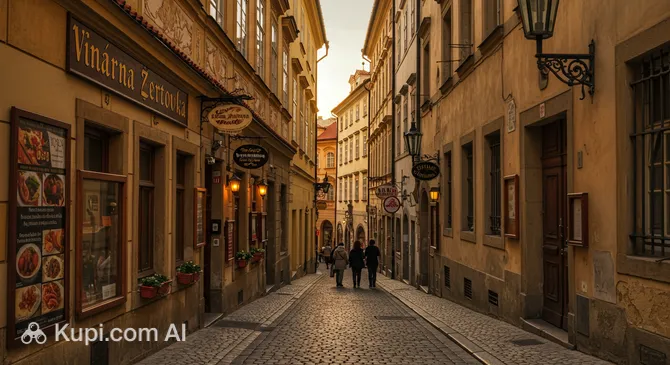
  7. What to Avoid: Do not hail taxis directly off the street, as tourists are frequently overcharged; stick to apps or reputable dispatch services. Additionally, avoid eating at restaurants located directly on the main tourist paths with "photos" of food outside; walking just one or two blocks away will usually result in much better quality and lower prices.
  8. Additional Tip: If you want to experience the magic of the Charles Bridge without the crushing crowds, try to visit at sunrise. The soft morning light and the mist over the Vltava River create an unforgettable atmosphere that is impossible to find later in the day. Also, don't forget to validate your paper transport ticket in the yellow machines upon entering the metro or boarding a tram—inspectors are frequent and strict!

Armed with these tips, you are ready to explore the winding alleys and historic grandeur of the Czech capital with confidence. Enjoy the unique charm, delicious food, and breathtaking views that make this city a favorite destination for travelers from around the world.

Entertainment & Nightlife

Prague comes alive with a diverse array of entertainment options that cater to every taste, from high culture to high-energy nightlife. Whether you are looking for a sophisticated evening at the opera, a family-friendly adventure, or a night out dancing, the Czech capital has something to offer.

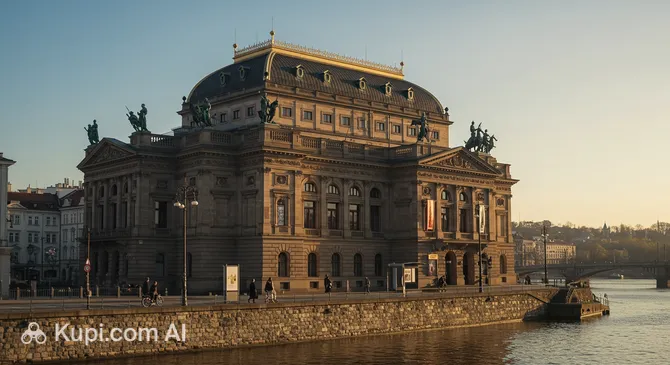
For lovers of the arts, the city is a premier cultural destination. The golden-roofed National Theatre is a stunning neo-Renaissance landmark situated by the river, hosting top-tier opera, ballet, and drama performances. It is a symbol of Czech national identity and a must-visit for its lavish interiors. Meanwhile, the modern O2 Arena attracts major international music acts and large-scale sporting events, serving as one of the most advanced multipurpose venues in Europe.

National Theatre. Source: Kupi.Binoculars

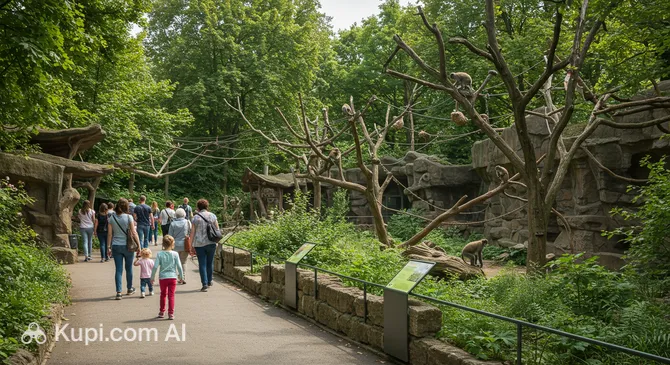
Families traveling with children will find an abundance of activities. The Prague Zoo is frequently ranked among the best zoological gardens in the world. Located in the rugged terrain of the Troja basin, it offers spacious enclosures and unique exhibits like the Elephant Valley. For a fascinating underwater experience, visit the World of Jellyfish, which features the largest spherical aquarium in Europe. If you prefer active fun, Šutka Aquapark provides thrilling water slides and a 50-metre swimming pool open all year round.

Prague Zoo. Source: Kupi.Binoculars

The city also boasts a thriving nightlife scene. Duplex is a famous rooftop club on Wenceslas Square that offers panoramic views of the city centre while hosting world-class DJs. For those seeking something more unconventional, Thrill Park Prague offers immersive horror-themed experiences and escape games that are sure to get your adrenaline pumping.

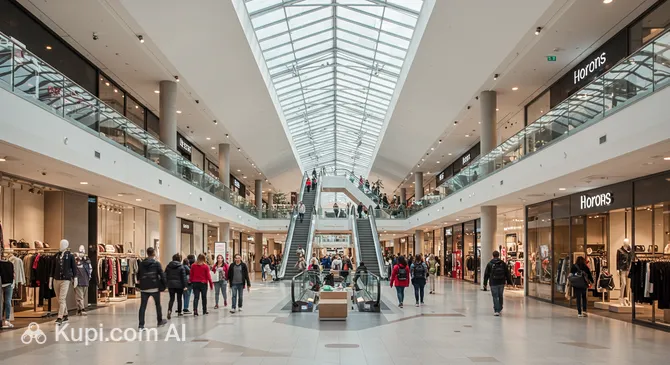
Shopping enthusiasts should not miss Chodov Shopping Centre. As the largest mall in the Czech Republic, it features a vast selection of fashion brands, a multiplex cinema, and numerous dining options, making it a perfect destination for a full day of leisure.

Parks & Museums

Parks and Museums:

Beyond its bustling squares and medieval streets, Prague offers a perfect balance of rich cultural heritage and refreshing green spaces. The city is dotted with expansive parks and world-class museums that provide a deeper understanding of its history and a welcome escape into nature.

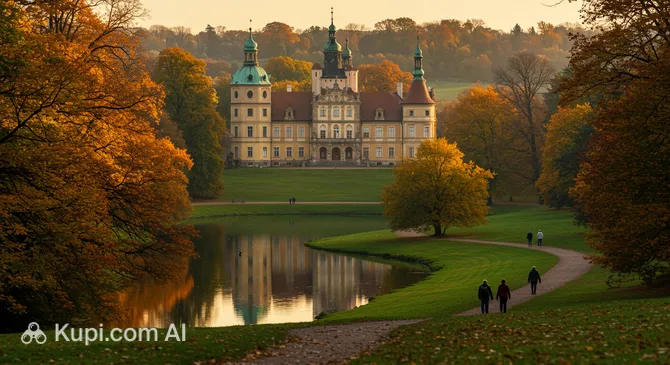
For a peaceful retreat, head to Průhonice Park, located on the southeastern outskirts of the city. This UNESCO World Heritage site is a masterpiece of landscape architecture, featuring a fairy-tale castle, vast meadows, and one of the largest collections of rhododendrons in the world. It is an ideal spot for a romantic walk or a family picnic away from the city noise.

Průhonice Park. Source: Kupi.Binoculars

Nature lovers staying closer to the centre should explore the Kunratice Brook Valley. This protected natural area serves as a green lung for the city, offering dense forests and scenic hiking trails. It is a favorite among locals for jogging and cycling, and if you are lucky, you might even spot a herd of wild mouflons roaming freely through the woods.

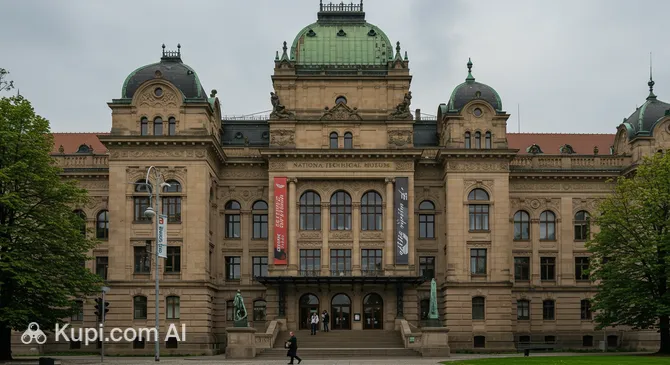
Prague's museum scene is equally impressive. The National Technical Museum is a paradise for technology enthusiasts. Its massive transportation hall is packed with vintage cars, steam locomotives, and early aircraft suspended from the ceiling. The exhibits cover a wide range of topics, from astronomy and printing to architecture, showcasing the industrial ingenuity of the Czech nation.

National Technical Museum. Source: Kupi.Binoculars

Another cultural highlight is the Jewish Quarter (Josefov). While not a single building, this district functions as an open-air museum preserving the legacy of Prague's Jewish community. Visitors can explore historic synagogues and the hauntingly beautiful Old Jewish Cemetery, offering a poignant look into centuries of history.

For architectural splendor, the Klementinum is a must-see. This vast complex, formerly a Jesuit college, houses one of the most beautiful Baroque libraries in the world. Visitors can also climb the Astronomical Tower for stunning 360-degree views of the Old Town. Nearby, the Strahov Monastery impresses with its grand philosophical and theological halls, filled with ancient manuscripts and globes.

History buffs will appreciate a visit to Vyšehrad, a historic fort perched on a hill above the Vltava River. Often less crowded than Prague Castle, it offers breathtaking views, a neo-Gothic basilica, and a cemetery where famous Czech figures like Antonín Dvořák are buried. In the city center, the Lennon Wall stands as a colorful symbol of freedom and resistance, covered in graffiti inspired by John Lennon and the Beatles.

For a unique modern art experience, check out the Franz Kafka Rotating Head. This mesmerizing kinetic sculpture by David Černý consists of 42 moving layers of stainless steel that constantly realign to form the face of the famous writer. Another hidden gem is the "Idiom" book tower inside the Prague Municipal Library, where mirrors create an illusion of an infinite tunnel of books.

Getting Around

Navigating Prague is remarkably easy thanks to its highly efficient and integrated public transport system, known locally as PID (Prague Integrated Transport). The network covers the entire city and its outskirts, combining the metro, trams, buses, funiculars, and even ferries into a single cohesive system. For tourists, this means that one ticket is valid across all these modes of transport, allowing for seamless transfers and flexible travel planning.

The backbone of the system is the Metro, which consists of three lines distinguished by colour: Line A (Green), Line B (Yellow), and Line C (Red). It is one of the busiest underground systems in Europe, known for its punctuality and cleanliness. The metro is the fastest way to travel between major districts, with trains running every 2 to 4 minutes during peak hours. Many stations, especially on Line A, are architectural attractions in themselves, featuring distinctive concave aluminium tiles in various colours.

Trams are perhaps the most scenic way to explore the city. The extensive network weaves through the historic centre, offering wonderful views of landmarks without the fatigue of walking. Trams are reliable and frequent, serving areas that the metro does not reach. A unique feature of the city's transport is the Petřín Funicular, a cable car that takes passengers up Petřín Hill. While it is part of the integrated system, it may require a special fare or a 24-hour pass depending on current regulations, so it is best to check before boarding.

For areas further from the centre, buses provide essential connections to metro stations and residential zones. They are also the primary mode of public transport for reaching the airport. Additionally, the city operates a network of river ferries across the Vltava, which can be a pleasant shortcut and are also included in the standard transport tariff.

The ticketing system is based on time validity rather than distance. Options typically include tickets for 30 minutes, 90 minutes, 24 hours, or 72 hours. You can purchase paper tickets at yellow vending machines located at metro stations and some tram stops, or at newsstands. A more convenient modern alternative is the PID Lítačka mobile app, which allows you to buy and activate tickets instantly on your phone. Contactless card payment terminals are also available inside all trams and buses, making it easy to pay as you go.

It is crucial to validate your paper ticket immediately upon entering the metro station (at the yellow pillars before the escalators) or as soon as you board a tram or bus. Failure to do so is considered travelling without a valid ticket and can result in a hefty fine from inspectors who frequently check passengers. Once validated, the ticket is good for unlimited transfers within the purchased time limit.

Public transport generally operates from around 5:00 AM until midnight. However, the city is famous for its excellent night operation. After the metro closes, a special network of night trams (numbered in the 90s) and night buses takes over, ensuring you can get home safely at any hour. These lines converge at the central transfer hub, Lazarská, allowing for easy connections across the city even in the early morning hours.

While public transport is usually the best choice, alternatives exist. Taxi apps like Uber and Bolt are widely available, reliable, and offer transparent pricing compared to hailing a cab on the street. For shorter distances, you might consider using shared pink bikes (Rekola) or electric scooters, which can be rented via their respective apps. These are particularly popular in the flatter areas along the river and offer a fun, active way to see the sights.
Accommodation

Prague offers a diverse array of accommodation options that cater to every budget and travel style. From charming historic pensions and lively backpacker hostels to international luxury chains and stylish apartments, the city is well-equipped to host its millions of annual visitors. Whether you prefer the romance of a centuries-old building or the sleek comfort of modern design, you will find a suitable place to rest after a day of sightseeing.

The most popular area for tourists is undoubtedly Prague 1, which encompasses the Old Town (Staré Město) and the Lesser Town (Malá Strana). Staying here places you within walking distance of the main attractions, such as the Astronomical Clock and Charles Bridge, allowing you to experience the city's magical atmosphere right on your doorstep. For those seeking a quieter, more local vibe with trendy cafes and green spaces, the districts of Vinohrady and Letná are excellent alternatives that are just a short tram ride from the centre.

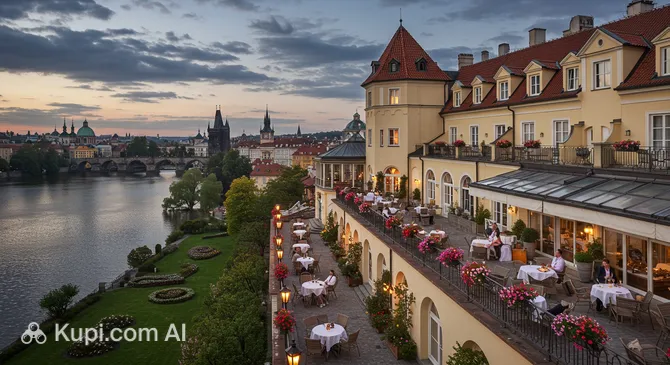
For travelers looking for a truly luxurious experience, the city boasts several high-end establishments. A prime example is the Four Seasons Hotel Prague, located right on the banks of the Vltava River. It combines Renaissance and Baroque architecture with world-class service, offering stunning views of the castle and the river. Another available option for a comfortable stay is Resort Prague, providing excellent amenities for its guests.

Four Seasons Hotel Prague. Source: Kupi.Binoculars

Prices in the Czech capital are generally considered reasonable compared to other Western European destinations. Budget travelers can find dormitory beds or simple rooms at very affordable rates, while mid-range boutique hotels offer great value for money. Luxury stays are priced higher but often deliver exceptional quality. Most accommodation can be easily booked via major online platforms, though booking directly with the hotel can sometimes yield special offers or better cancellation terms.

Booking Tip: Prague is a very popular year-round destination, but it gets particularly busy during the summer months and the festive Christmas market season in December. To secure the best rates and your preferred location, it is highly recommended to book your accommodation at least a few months in advance.

Nearby Cities

For those looking to explore the surroundings, Prague serves as an excellent base for day trips to several interesting nearby locations. The region offers a mix of historic towns, royal castles, and scenic landscapes that provide a refreshing contrast to the bustling capital.

One popular destination is Melnik, located approximately 30 km north of the city. Situated at the confluence of the Vltava and Elbe rivers, this charming town is renowned for its splendid château and historic vineyards. Visitors can enjoy wine tastings in the castle cellars and take in breathtaking views of the meeting rivers from the château terrace.

Another excellent option is Beroun, found to the southwest. This royal town serves as a gateway to the Křivoklátsko Protected Landscape Area and the Czech Karst. Beyond its historic square and medieval fortifications, Beroun is famous for its "Beararium," a small enclosure on the town hill that is home to brown bears.

History enthusiasts might also appreciate Brandýs nad Labem-Stará Boleslav. This twin-town complex holds significant importance in Czech history; Stará Boleslav is the site of the martyrdom of St. Wenceslas and a major pilgrimage destination, while Brandýs boasts a Renaissance castle that was a favorite residence of Habsburg emperors.

City Population Distance (km)
Kladno 68,896 24
Brevnov 26,275 5
Beroun 19,988 28
Melnik 19,579 31
Brandýs nad Labem-Stará Boleslav 19,420 20

These nearby destinations offer a glimpse into the diverse culture and landscapes of the region, making them perfect for short excursions.

Shopping & Souvenirs

Shopping in Prague offers a delightful mix of high-end luxury, popular international brands, and unique local craftsmanship. The city is not just a place to admire architecture; it is also a fantastic destination for finding distinct treasures. From shimmering Bohemian crystal to intricate wooden toys, visitors can find a wide array of goods that reflect the rich cultural heritage of the Czech capital.

For those seeking luxury fashion and prestigious global brands, Pařížská Street is the place to be. Located in the Jewish Quarter, this elegant tree-lined avenue is home to top-tier boutiques and designer houses. If you prefer high-street fashion, the pedestrian-friendly Na Příkopě street and the bustling Wenceslas Square offer a high concentration of popular retail chains and department stores, making them the busiest shopping arteries in the city.

Prague also boasts several modern shopping complexes that provide a comprehensive retail experience. The Chodov Shopping Centre is one of the largest and most popular malls in the country, featuring hundreds of shops, a cinema, and diverse dining options. Another significant destination is the Černý Most Shopping Centre, which offers a vast selection of stores and entertainment facilities on the outskirts of the city, easily accessible by public transport.

Chodov Shopping Centre. Source: Kupi.Binoculars

For a more traditional atmosphere, markets are an essential part of the local shopping scene. Havel's Market, situated in the city centre, is a historic market dating back to 1232. While it sells fresh produce, it is also a prime spot for tourists to find handmade crafts, leather goods, and ceramics. During the festive season, the city transforms with magical Christmas markets in the major squares, selling ornaments and local treats.

When it comes to souvenirs, there are several iconic items to look out for. Bohemian crystal and glass are world-renowned for their quality and artistry. The deep red Czech garnet is another semi-precious stone unique to the region, often set in beautiful gold or silver jewelry. Other popular keepsakes include handmade marionettes, wooden toys, and natural cosmetics made from beer or wine. Spa wafers, thin crisp cookies filled with cocoa or hazelnut, are a delicious edible gift to bring home.

Most shops in the city centre are open from 9:00 AM or 10:00 AM until 7:00 PM or 9:00 PM, with larger shopping malls often staying open later and operating on weekends. Major credit and debit cards are widely accepted, but it is always useful to have some Czech Koruna (CZK) cash for smaller market stalls or independent vendors.

Tourists from outside the European Union may be eligible for a VAT refund on purchases exceeding a certain amount, typically around 2,001 CZK in a single receipt. Look for the "Tax Free Shopping" signage in store windows and ask for a refund form at the checkout to claim your tax back at the airport or designated refund points.

Reached the end of the page?

That means the route is fully explored