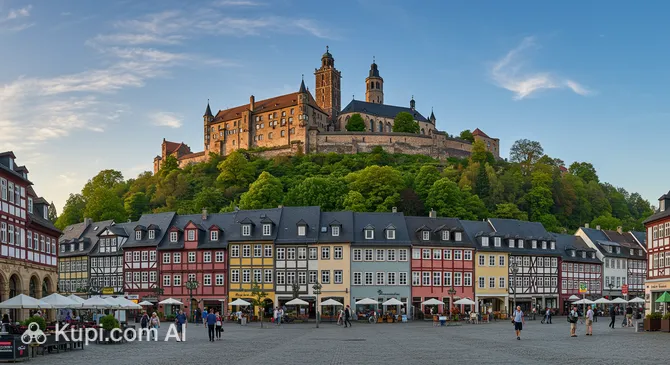
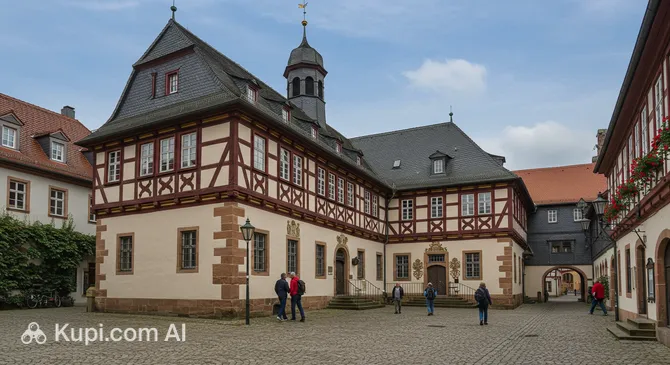
Eisenach is a captivating city located in the western part of the federal state of Thuringia, right in the heart of Germany. Known for its rich cultural heritage and historical significance, this charming town serves as a gateway to the scenic Thuringian Forest. With a population of approximately 42,000 residents, Eisenach offers a welcoming atmosphere that perfectly blends small-town tranquility with world-class historical sites.
Eisenach. Illustration.
Source: Kupi.com AI
The city is perhaps best known for its deep connections to some of the most influential figures in European history. Exploring the history of Eisenach reveals its pivotal role as the place where Martin Luther translated the New Testament and as the birthplace of the renowned composer Johann Sebastian Bach. This legacy is preserved in well-curated museums and historic buildings that dot the city center.
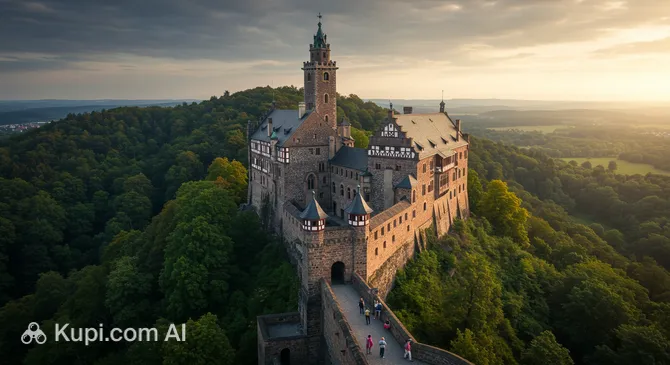
One of the main highlights for any visitor is the majestic Wartburg Castle, a UNESCO World Heritage site that towers over the town and offers breathtaking views of the surrounding landscape. Beyond its architectural marvels, Eisenach is also a fantastic destination for nature lovers, offering numerous hiking trails and outdoor activities in the nearby forest. Whether you are a history buff or an outdoor enthusiast, Eisenach invites you to discover its unique stories and beautiful scenery.
Weather Overview
Eisenach experiences a moderate climate with four distinct seasons, offering a variety of atmospheric conditions depending on when you visit. The city generally enjoys warm, pleasant summers and cold winters, with precipitation distributed relatively evenly throughout the year. Whether you are planning to hike in the Thuringian Forest or tour the city's historic sites, knowing what to expect can help you pack accordingly.
During the warmest months of June, July, and August, the weather is typically mild and comfortable for outdoor activities. Average temperatures hover around 17°C to 19°C, with daily highs reaching up to 23.4°C in August. While this is the best time for sightseeing, it is wise to carry an umbrella or light rain jacket, as there are typically between 12 and 13 wet days per month during this period.
In contrast, the winter season from December to February brings much colder conditions. Average temperatures drop significantly, often ranging from 1.7°C to 2.8°C, with minimums occasionally falling below freezing. To get the most accurate and up-to-date information for your specific travel dates, be sure to consult the weather in Eisenach page. Visitors in the colder months should come prepared with warm layers, as damp days are common with up to 16 wet days in January.
Average monthly temperature
Average monthly precipitation
Interesting Facts
Beyond the main attractions, Eisenach holds many fascinating secrets that reveal its depth as a city of innovation and unique stories. From its unexpected industrial roots to curious architectural feats, there are plenty of surprises waiting to be discovered by observant visitors.
Although famous for its medieval history, the city is also a significant cradle of the German automotive industry. The factory here produced the very first BMW cars, known as the Dixi, and later the iconic Wartburg models, a legacy preserved at Automobile World Eisenach.
When Martin Luther sought refuge at Wartburg Castle, he lived under the alias "Junker Jörg" (Knight George) to avoid persecution. He grew a beard and hair to complete the disguise while translating the New Testament into German in just ten weeks.
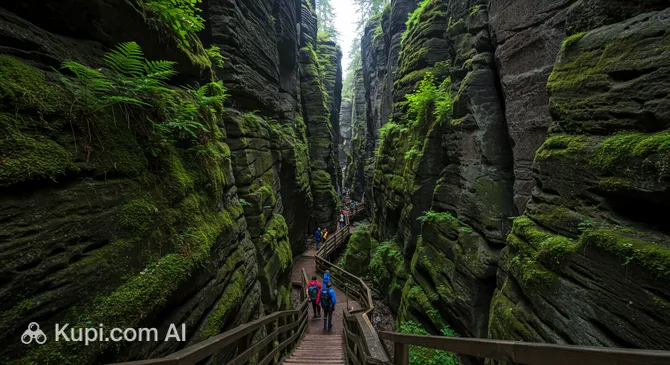
Nature enthusiasts can experience a geological wonder at the Dragon Gorge, where the moss-covered rock walls stand so close together that the hiking path narrows to a mere 68 centimeters at its tightest point.
Eisenach is home to one of the narrowest inhabited half-timbered houses in Germany. Located on Johannisplatz, this quirky building is only about 2.05 meters wide, yet it offers fully functional living space across two stories.
Dragon Gorge. Illustration.
Source: Kupi.com AI
Traveler photos:
How to Get There
Reaching Eisenach is quite convenient thanks to its central location in Germany and excellent transport connections. Whether you are arriving by plane or train, there are multiple routes to choose from. For a comprehensive guide on all available travel options, you can read more about how to get to Eisenach and plan your journey accordingly.
The city of Eisenach does not have its own airport, but international travelers can easily fly into Frankfurt Airport (FRA) in Frankfurt am Main. It is one of the busiest aviation hubs in Europe and is located approximately 163 km from Eisenach. By taxi or car, the drive typically takes about 2 hours via the Autobahn. For those looking for a closer option, Erfurt Airport (ERF) in the nearby city of Erfurt is only about 45 km away. Although it serves fewer passengers, it offers a much shorter transfer time, taking roughly 45 minutes to reach Eisenach by road. Additionally, Leipzig/Halle Airport (LEJ) in Leipzig is another viable entry point, situated about 142 km to the east.
For clarity, here is a summary of the main airports:
Traveling by train is often the most popular method for reaching the city. Eisenach Hauptbahnhof is the main railway station and is conveniently located just 1.3 km from the city center, making it easy to start exploring immediately upon arrival. It is well-connected to major German cities, including frequent services from Frankfurt (Main) Hauptbahnhof and Erfurt Hauptbahnhof. If you are coming from further afield, you might connect through the major hub at Leipzig Hauptbahnhof before catching a regional or InterCity train directly to Eisenach.
Below is an overview of the key railway stations relevant to your trip:
Eisenach is packed with historical treasures and cultural landmarks that draw visitors from around the world. High above the town sits the magnificent Wartburg Castle, a UNESCO World Heritage site and one of the most significant castles in German history. It offers breathtaking panoramic views of the Thuringian Forest and is famous for being the place where Martin Luther translated the New Testament while in hiding. Visitors can explore the well-preserved medieval architecture, the legendary Luther Room, and the impressive art collections that narrate centuries of the region's past.
Wartburg Castle. Illustration.
Source: Kupi.com AI
Traveler photos:
For music enthusiasts, the Bach House Eisenach is an essential stop. As the first museum in the world dedicated to the life and work of Johann Sebastian Bach, it stands near the composer's birthplace. The museum boasts an extensive collection of historical musical instruments, documents, and personal artifacts. Guests are often treated to live musical performances on period instruments, creating an immersive experience that transports them back to the Baroque era.
Bach House Eisenach. Illustration.
Source: Kupi.com AI
Traveler photos:
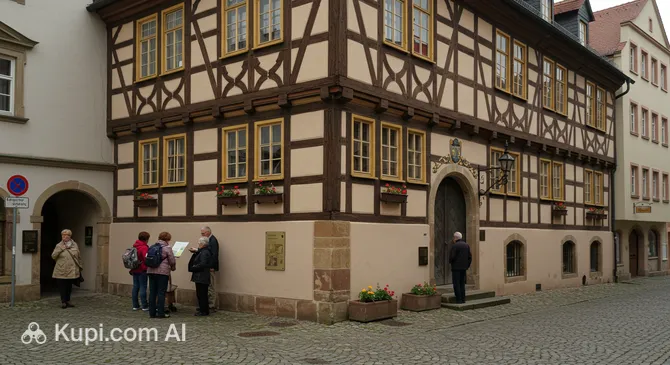
Another highlight of the city's rich heritage is the Luther House Eisenach. This striking half-timbered building is one of the oldest and most beautiful in the city. It was here that Martin Luther lived as a schoolboy with the Cotta family. Today, the house serves as a modern museum with interactive exhibits that delve into Luther's formative years and the profound impact of his theology and Bible translation on German culture and language.
Luther House Eisenach. Illustration.
Source: Kupi.com AI
Traveler photos:
Beyond its classical history, Eisenach has a proud industrial legacy showcased at Automobile World Eisenach. The city has been a hub for car manufacturing for over a century, producing famous vehicles like the Dixi, early BMWs, and the iconic Wartburg. This museum displays a fascinating array of vintage cars, prototypes, and production machinery, offering a compelling journey through the evolution of automotive engineering in Thuringia.
Local Cuisine
Thuringian cuisine is legendary in Germany for its hearty, rustic flavors and generous portions, and Eisenach is the perfect place to experience it. The local food culture revolves around traditional recipes passed down through generations, often featuring locally sourced meats and root vegetables. Visitors can expect a warm, welcoming atmosphere in the city's numerous "Gaststätten" (inns), where the focus is on comfort food that satisfies the soul.
No visit to Eisenach would be complete without trying the world-famous Thüringer Rostbratwurst. This spicy, grilled sausage has a protected geographical status and is typically cooked over charcoal to give it a distinct smoky flavor. It is traditionally served in a fresh bread roll with local mustard, making it the ultimate street food. Another culinary staple is the Thüringer Klöße, large potato dumplings that are soft, distinctive in texture, and usually accompany rich meat dishes like Sauerbraten (marinated pot roast) or Rouladen (rolled beef braised in gravy).
Alte Schule. Illustration.
Source: Kupi.com AI
Traveler photos:
For those with a sweet tooth, the region is renowned for its Blechkuchen, a variety of fruit or crumble cakes baked on large baking sheets. It is a common afternoon tradition to enjoy a slice of this cake with a cup of coffee. As for beverages, the region has a strong brewing heritage, so sampling a local pilsner or the famous black beer (Schwarzbier) from nearby breweries is highly recommended for beer lovers.
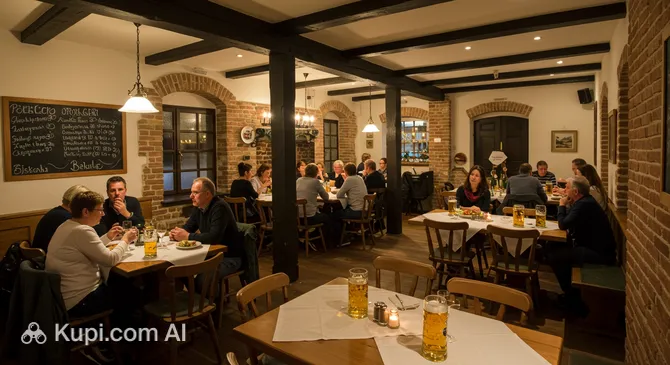
The dining scene in Eisenach often blends history with gastronomy. Many restaurants are housed in beautifully preserved historic buildings, adding a unique charm to your meal. For instance, you might enjoy a dinner at the Alte Schule, a restaurant that captures the essence of the city's architectural and culinary traditions. Whether you are grabbing a quick snack at a market stall or sitting down for a three-course Sunday lunch, the food in Eisenach offers a delicious taste of authentic German culture.
Travel Tips
Visiting Eisenach is a delightful journey into the heart of German history and culture, but a little preparation goes a long way in ensuring a smooth trip. As a smaller city with a mix of medieval charm and hilly terrain, it operates at a slightly different pace than major metropolises like Berlin or Munich. Here are some practical tips to help you navigate the city like a pro and make the most of your stay in Thuringia.
Dress for Cobblestones and Climbs. Eisenach is best explored on foot, but the historic center is paved with cobblestones, and the path to Wartburg Castle is steep. Bring sturdy, comfortable walking shoes with good grip. Since the weather in the Thuringian Forest can be unpredictable, packing layers and a compact umbrella or rain jacket is essential, regardless of the season.
Getting Around. The city center is compact and very walkable; you likely won't need a car for sightseeing within the town. To reach Wartburg Castle without the steep hike, look for the Lioba Shuttle or public bus line 10, which runs regularly from the city center and train station. Taxis are available at designated stands or by phone, but ride-hailing apps are not as prevalent here as in larger cities.
Cash is Essential. While major hotels and larger restaurants accept credit cards (Visa and Mastercard), many smaller cafés, bakeries, and souvenir shops in Eisenach still prefer or only accept cash (Euros). Always carry a moderate amount of cash for small purchases. ATMs (Geldautomaten) are widely available throughout the town center for withdrawals.
Health and Safety. Eisenach is generally a very safe city for tourists. Pharmacies are identified by a large red "A" (for Apotheke); they operate during normal business hours, with a rotating schedule for emergency night services displayed on their doors. For serious medical emergencies, dial 112, which is the universal European emergency number for ambulance and fire services.
Communication Basics. The primary language is German. While staff at major museums like the Bach House and Wartburg Castle speak excellent English, older locals and staff in smaller shops may not. Learning a few basic phrases like "Guten Tag" (Good day) and "Danke" (Thank you) is greatly appreciated. Free Wi-Fi is often available in hotels and some public spots, but having a SIM card with data is recommended for maps and translation apps.
Local Etiquette. Germans value politeness and order. When entering a small shop or waiting room, it is polite to greet everyone with a general "Hallo" or "Guten Tag." On Sundays and public holidays, shops are closed, and noise levels should be kept down to respect the local "Ruhetag" (rest day) culture. In restaurants, tipping is customary; simply round up the bill or add about 5-10% and tell the server the total amount you want to pay.
What to Avoid. Do not walk in the designated bicycle lanes, which are often marked on the sidewalks; cyclists can be fast and expect the path to be clear. Additionally, avoid crossing the street when the pedestrian light is red (the Ampelmann), even if there are no cars coming, as this is frowned upon and can result in a fine.
Wartburg Tip. If you are visiting with children during the warmer months, look for the traditional donkey station (Eselstation) at the foot of the castle hill. Riding a donkey up the last steep stretch to the castle is a beloved local tradition that has existed for over a century and makes the climb fun for little ones.
By keeping these practicalities in mind, you will be well-equipped to enjoy everything Eisenach has to offer, from its musical heritage to its stunning forest trails. The city is incredibly welcoming, so don't hesitate to ask locals for help if you need it—they are often proud to share their town's unique history with visitors.
Entertainment & Nightlife
Eisenach offers a relaxed and culturally rich nightlife scene that perfectly reflects the city's charming, small-town atmosphere. Unlike the bustling club scenes of larger German metropolises, the evening entertainment here centers around "Gemütlichkeit"—a sense of coziness and conviviality. Visitors will find a variety of welcoming pubs, wine bars, and traditional "Kneipen" (taverns) scattered throughout the historic center, particularly around the Market Square (Markt) and along Karlstraße. It is the ideal destination for those who enjoy lingering over a good drink, engaging in conversation, and soaking in the historic ambiance.
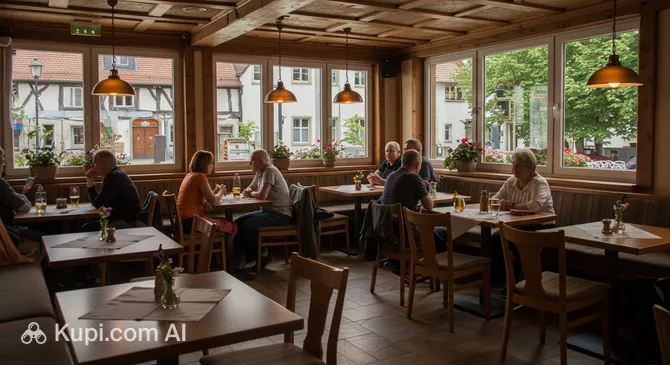
A great evening in Eisenach often begins with a hearty meal. The city boasts a diverse culinary landscape where you can enjoy long, leisurely dinners. For those craving Mediterranean flavors, Restaurant Delphi is a popular choice among locals and visitors alike. Known for its warm hospitality and generous portions of Greek specialties, it provides a lively setting to kick off your night before heading out to explore the local bars. In the warmer months, many venues offer outdoor seating, allowing you to enjoy the mild Thuringian evenings under the stars.
Restaurant Delphi. Illustration.
Source: Kupi.com AI
Traveler photos:
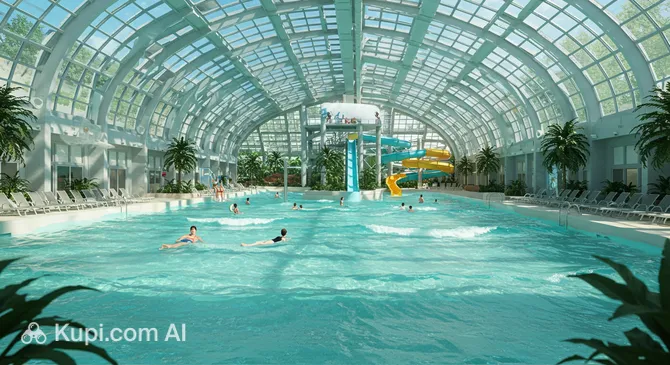
For a different kind of evening relaxation, you might consider visiting the Aquaplex. This modern sports and leisure pool complex features a comprehensive sauna world that is often open into the late evening. It is a fantastic way to unwind after a day of hiking or sightseeing, offering themed sauna nights and a calm atmosphere that contrasts with the lively chatter of the downtown pubs.
Aquaplex. Illustration.
Source: Kupi.com AI
Traveler photos:
Practicality is key when planning a night out in Eisenach. The dress code is generally casual and unpretentious; jeans and a nice top are perfectly acceptable in almost all bars and restaurants. Most venues close earlier than in big cities, with restaurants typically taking last orders around 10:00 PM and bars winding down by 1:00 AM or 2:00 AM on weekends. Prices are reasonable and generally lower than in major tourist hubs. While some places accept cards, it is highly advisable to carry cash, as many smaller traditional pubs do not accept digital payments.
Safety is one of Eisenach's strong suits. The city center is compact, well-lit, and safe for walking at night. You can easily stroll from the train station to the market square without concern. If you need to travel further or prefer not to walk, taxis are readily available. You can usually find them waiting at the main train station or the central bus station, but keeping a local taxi number on hand is a good idea if you are staying on the outskirts of town.
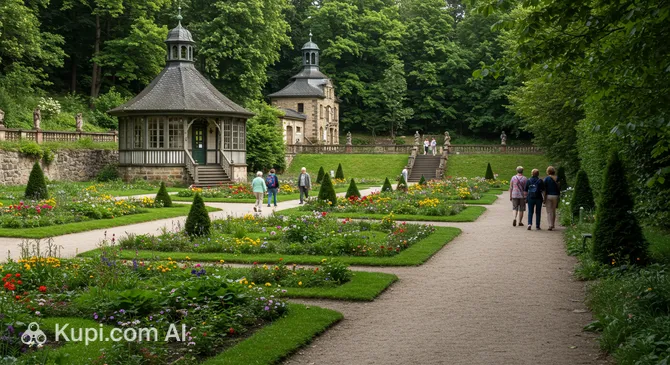
Regarding daytime entertainment, the city balances its historical weight with pleasant leisure options. Beyond the famous museums, visitors can enjoy performances at the Landestheater Eisenach, which offers a robust schedule of plays, concerts, and ballets. For nature lovers, a stroll through the Kartausgarten is a delightful way to spend an afternoon. This expansive park features a covered walkway (Wandelhalle) and beautifully manicured grounds, providing a serene backdrop for relaxation before the evening festivities begin.
Kartausgarten. Illustration.
Source: Kupi.com AI
Traveler photos:
Parks & Museums
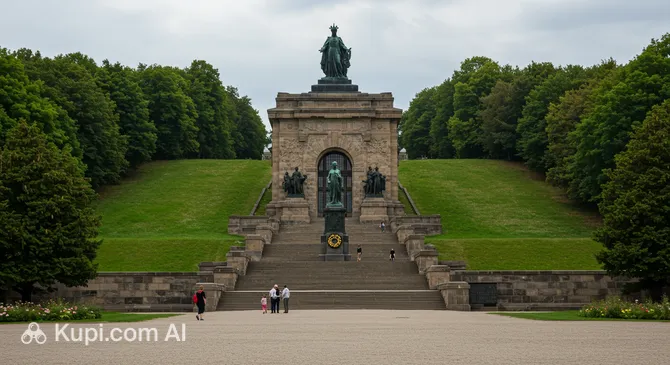
While the city's most famous museums are dedicated to its musical and automotive giants, Eisenach offers other significant landmarks that blend history with scenic beauty. Perched atop the Göpelskuppe hill, the Burschenschaft Memorial is a monumental structure dedicated to the German student fraternities and their role in the 19th-century movement for national unity. Completed in 1902, this imposing monument not only houses an exhibition on the history of the fraternities but also provides a stunning panoramic view of the Wartburg Castle across the valley.
Burschenschaft Memorial. Illustration.
Source: Kupi.com AI
Traveler photos:
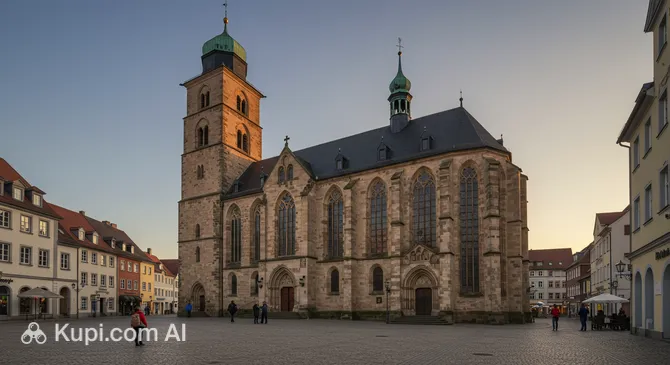
In the center of the town, St George's Church stands as a vital piece of Eisenach’s cultural mosaic. This Gothic hall church is steeped in history; it is where Saint Elisabeth was married, Martin Luther preached during the Reformation, and Johann Sebastian Bach was baptized. Visitors can admire the ornate interior, the historic baptismal font from 1503, and the towering steeple that has defined the city's skyline for centuries.
St George's Church. Illustration.
Source: Kupi.com AI
Traveler photos:
For those seeking immersion in nature, Eisenach is the premier gateway to the Thuringian Forest Nature Park. The city marks the beginning of the Rennsteig, Germany’s oldest and most renowned long-distance hiking trail. Beyond the famous gorges, the surrounding woodlands offer a network of tranquil paths, such as the route to the "Hohe Sonne," a popular viewpoint and rest stop. These green spaces provide a perfect counterpoint to the city's urban attractions, allowing visitors to step directly from medieval streets into dense, refreshing forests.
Getting Around
Public transport in Eisenach is primarily reliant on a well-organized bus network, as the city does not have a metro, tram, or trolleybus system. The local buses are part of the VMT (Verkehrsverbund Mittelthüringen) association, ensuring a unified tariff structure that integrates Eisenach with the surrounding region. The network is efficient and covers all major residential areas, the historic city center, and key outlying districts. For most tourists, the central bus station (Busbahnhof) located near the main railway station serves as the primary hub for transfers and information.
The payment system is straightforward and tourist-friendly. You can purchase tickets for single journeys, but if you plan to use the bus multiple times, a day ticket (Tageskarte) or a group day ticket offers significantly better value. Tickets can usually be bought directly from the bus driver, where cash is often the preferred method, or through ticket machines at the train station. For a more digital approach, visitors can use the VMT mobile app or the DB Navigator app to purchase tickets cashless on their smartphones. Prices are reasonable, with a standard single trip costing a few euros.
When using the bus, it is important to remember that if you purchase a physical ticket from a machine or a shop, you must validate it immediately upon boarding by inserting it into the stamping machine, usually located near the entrance. Boarding is typically done through the front door so you can show your ticket to the driver. Buses generally operate from early morning until late evening, but service frequency drops significantly on weekends and public holidays. It is advisable to check the timetables posted at bus stops, especially if you are planning a trip later in the evening.
A special feature of the local transport that is particularly relevant for visitors is the dedicated bus connection to the major landmark, Wartburg Castle. Bus Line 10 acts as a shuttle, ferrying passengers from the train station and the city center up the steep hill to the castle gates. This saves a strenuous climb and is accessible with regular public transport tickets. While there are no cable cars or historic trams, this specialized route offers a scenic and convenient way to reach the city's most famous site.
For alternatives to the bus, taxis are readily available and can be found waiting at designated stands at the railway station and the market square (Markt). They are a reliable option for late-night travel when bus services may be limited. Although Eisenach is hilly, bike rentals are available and popular among those wishing to explore the nearby forest trails, with e-bikes becoming increasingly common to tackle the inclines. However, for the historic center itself, walking remains the most practical and enjoyable way to get around, as most attractions are located within a short distance of each other.
Accommodation
Where to Stay:
Finding the perfect place to stay in Eisenach is relatively easy, as the city offers a welcoming mix of accommodation options that cater to various tastes and budgets. The selection ranges from charming, family-run guesthouses (Pensionen) and traditional inns to modern business hotels and well-appointed holiday apartments. Because Eisenach is a historic town with a strong connection to nature, many accommodations are housed in beautiful, restored buildings that reflect the local architectural style, offering a cozy and authentic Thuringian experience.
For most visitors, the historic city center (Altstadt) is the most convenient area to base yourself. Staying here puts you within walking distance of major attractions like the Bach House, the Luther House, and the Market Square, as well as a variety of restaurants and cafes. If you prefer easy access to public transport or are planning day trips to nearby cities like Erfurt or Weimar, the area around the Main Train Station (Bahnhof) offers several practical and modern hotel options. Alternatively, for those seeking tranquility and scenic views, there are accommodations located on the hillsides leading up to the Wartburg Castle or on the edge of the Thuringian Forest, providing a peaceful retreat surrounded by greenery.
Travelers looking for a unique stay will find that Eisenach excels in offering "historic hotels." These establishments often feature timber-framed facades and traditional interiors, allowing guests to immerse themselves in the region's culture. On the other hand, budget-conscious travelers and backpackers can find affordable hostels and simple private rooms that offer clean and comfortable lodging without a high price tag. Holiday apartments are also widely available and are a popular choice for families or those planning a longer stay.
Regarding costs, Eisenach is generally more affordable than major German tourist hubs. Budget travelers can find beds or simple rooms for reasonable rates, while mid-range hotels offer excellent value with standard amenities. Luxury or boutique options are available for those willing to spend more for superior comfort and location. While it is possible to find a room upon arrival in the off-season, it is highly recommended to book in advance, especially if you are visiting during the summer months, the Christmas market season, or around major holidays like Reformation Day, when the city fills up with visitors.
Nearby Cities
For those looking to explore the surroundings, Eisenach serves as an excellent base for day trips to several interesting nearby locations:
City
Population
Distance
Gerstungen
9 165
17 km
Waltershausen
12 973
19 km
Bad Salzungen
22 976
19 km
Lahstedt
10 262
23 km
Bad Langensalza
17 441
27 km
Among the highlights in the region, Gotha is a must-visit for history enthusiasts. Located just a short distance away, it is dominated by the imposing Friedenstein Castle, one of the largest early Baroque palaces in Germany, which houses extensive art collections and museums. Another fascinating destination is Mühlhausen, known for its well-preserved medieval city walls and numerous Gothic churches. It offers a deep dive into the era of the Reformation. For music lovers, Arnstadt holds special significance as the oldest town in Thuringia and the place where a young Johann Sebastian Bach held his first position as an organist. These nearby destinations offer a glimpse into the diverse culture and landscapes of the region.
Shopping & Souvenirs
Shopping in Eisenach offers a relaxed and pleasant experience, characterized by short distances and a mix of historic charm and modern retail. The city center is compact and pedestrian-friendly, making it easy to combine a shopping spree with a sightseeing tour. Instead of sprawling mega-malls, visitors will find a curated selection of owner-operated boutiques, traditional specialty shops, and well-known fashion chains.
The main shopping artery is Karlstraße, a lively pedestrian zone that runs through the heart of the town. Here, you can browse for clothing, shoes, books, and electronics while admiring the surrounding architecture. For those looking for a more concentrated retail experience, the Tor zur Stadt shopping center offers a variety of stores and services under one roof, conveniently located near the city center.
If you are hunting for unique souvenirs, Eisenach’s rich cultural history provides plenty of options. The museum shops at the Bach House Eisenach and the Luther House Eisenach are treasure troves for high-quality gifts. You can find everything from classical music CDs and sheet music to literature on the Reformation and handcrafted items that celebrate the city's most famous residents.
For a taste of the region, be sure to explore the local culinary offerings. Thuringia is famous for its food, and edible souvenirs are always a hit. Look for local pottery, herbal liqueurs, or the iconic Thuringian mustard. The Weekly Market on the market square is the perfect place to buy fresh regional produce and local specialties directly from producers, typically held on designated weekdays.
Travelers should be aware of the standard opening hours in Germany. Most shops in Eisenach are open from Monday to Saturday, usually closing between 6:00 PM and 8:00 PM. On Sundays and public holidays, nearly all retail stores, including supermarkets, are closed, so it is wise to plan your shopping needs in advance.