Support

Hamburg Airport

Airports in the city

About the Airport

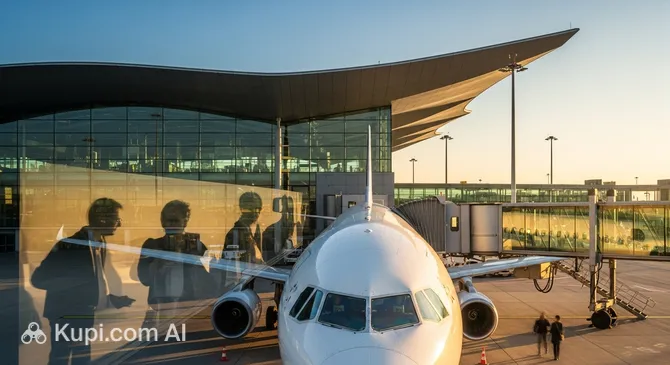
Hamburg Airport. Source: Kupi.com Binoculars

Hamburg Airport (HAM), officially named after Helmut Schmidt, is not just a vital transport hub, but the oldest operating airport in Germany, with a history dating back to 1911 with airship flights. Today, it confidently ranks among the country's top five busiest airports, harmoniously blending century-old heritage with cutting-edge technology. Located just 8.5 km from the center of Hamburg, the airport is a model of German efficiency and offers travelers comfort from their very first minutes on German soil.

IATA Code HAM
ICAO Code EDDH
City Hamburg, Germany
Distance to center 8.5 km
Status International
Annual passengers approx. 13.6 million (2023)
Popular Airlines Eurowings, Lufthansa, Condor.
Schedule "Hamburg Airport" online flight board

Hamburg Airport is distinguished by its superbly organized infrastructure. Its two terminals are connected by the modern Airport Plaza building, where numerous shops, restaurants, and service centers are concentrated, making the wait for a flight pleasant and convenient. For passenger comfort, there are lounges, children's play areas, and Tax-Free counters. One of the unique features of the airport is that this is where the giant Airbus A380s receive their final livery painting before being handed over to customers. Transport accessibility is another strong advantage: the direct S-Bahn city train line (S1) will take you to Hamburg Central Station in just 25 minutes, ensuring a quick and easy start to your exploration of the city.

Contact Information

  • Official website: www.hamburg-airport.de
  • Information desk phone: +49 (40) 50 75-0
  • Address: Flughafenstrasse 1-3, 22335 Hamburg, Germany
  • Email: For general inquiries, you can use the address info@hamburg-airport.de or the feedback form on the official website.
  • Social Media: The airport actively maintains pages on popular social networks where you can follow news and updates.
  • Lost Luggage Information: For inquiries regarding checked baggage, please contact your airline representative directly. If you have lost personal items within the terminal building or parking area, please use the airport's Lost and Found office (Fundbüro).
  • Passenger Support Contacts: The primary channel for communication is the information desk phone. Additionally, a Frequently Asked Questions (FAQ) section is available on the airport website, which may help resolve your issue without a call.

How to get to the airport

Hamburg Airport has excellent transport connections to the city center and its surroundings, offering travelers several convenient options to suit any budget. The choice of method depends on your priorities: speed, cost, or comfort.

Public Transport is the most popular and economical method. An S-Bahn city train station is located directly beneath the terminals. Line S1 directly connects the airport to Hamburg Central Station (Hamburg Hauptbahnhof). Trains run every 10 minutes, and the travel time is only about 25 minutes. This is undoubtedly the fastest and most reliable way to avoid city traffic. Additionally, several city buses run to the airport, connecting it with various districts of the city.

Taxis and Transfers offer maximum comfort, especially if you are traveling with bulky luggage or family. Taxi stands are located directly at the terminal exits. A trip to the city center will take between 20 to 40 minutes depending on traffic, and the cost will be approximately 30-45 Euros. Alternatively, you can use ride-hailing apps, which can sometimes be slightly cheaper.

Car Rental is an excellent option for those planning to explore not only Hamburg but also the picturesque surroundings of Northern Germany. Offices of all leading international and local rental companies are located at the airport. If you are arriving at the airport in your own vehicle, several multi-level parking garages are at your service. We advise booking a parking space online in advance, especially for long-term parking, to secure a more favorable rate.

When planning your route, you can also consider other nearby airports. For example, Hamburg is easily accessible by train from Bremen Airport or Hannover Airport. For travel along the Baltic coast, Lübeck-Blankensee Airport, located less than an hour's drive away, may be convenient.

Terminals and Map

Hamburg Airport features a modern and well-thought-out structure consisting of two passenger terminals — Terminal 1 (T1) and Terminal 2 (T2). These two buildings do not stand in isolation but are connected by a central building — Airport Plaza. This layout makes the airport very convenient for passengers, as all key areas are within walking distance, and moving between terminals does not require the use of shuttles or buses.

The terminals have a nominal division by airlines. Generally, Terminal 2 handles flights for Lufthansa and its Star Alliance partners. Terminal 1 is the base for Oneworld and SkyTeam alliance airlines, as well as several other carriers. However, this division is not strict, so always check your flight information on the departure boards or the airport website. Walking between T1 and T2 via the Airport Plaza takes just a few minutes.

Passenger flow within the airport is intuitive. Arrival Zones are located on the ground floor (Level 0) of both terminals, where baggage claim areas and exits to the city are also found. Check-in counters for flights are located on the first floor (Level 1). After check-in, passengers from both terminals proceed to the central security check area located in the Airport Plaza. This helps optimize flows and reduce waiting times.

To complete all procedures comfortably, it is recommended to arrive at the airport well in advance. For international flights, it is best to allow about 2.5-3 hours, and for domestic flights within Germany and the Schengen zone — 1.5-2 hours. Although Hamburg Airport is famous for its efficiency, there can be queues at security control during peak hours and the tourist season, so a buffer of time is always helpful.

Overall, navigating the airport will not cause difficulties even for inexperienced travelers. Signs are in German and English and are highly visible. Thanks to the compact structure and logical arrangement of all services, you will easily find your boarding gate, a cafe, or the necessary shop. The S-Bahn city train station (S1) is located directly under the Airport Plaza, making the journey from the airport to the city center and back quick and convenient.

Airport History

The history of Hamburg Airport is a chronicle of aviation development in Germany and around the world. Its opening took place in 1911, making it one of the oldest commercial airports on the planet still operating at its original location. In its early years, the airfield in the Fuhlsbüttel district was used mainly for Zeppelin airships, but shortly after World War I, it began servicing airplane flights as well.

A significant stage in the airport's history was the post-war period. During the Berlin Blockade of 1948–1949, Hamburg Airport played a key role as one of the most important bases for the "Berlin Airlift," through which the Allies supplied West Berlin. This event forever inscribed it in the history of the Cold War. In subsequent decades, with the advent of the jet age, the airport constantly expanded: runways were lengthened, and new terminals were built to handle the growing passenger traffic.

Another large-scale modernization took place in the 1990s and 2000s under the HAM21 project. During this reconstruction, the modern Terminal 1 and Terminal 2 were built, connected by the central Airport Plaza zone with shops and restaurants. This transformed the airport into a modern and convenient transport hub meeting all international standards. The old terminal was demolished to make way for new infrastructure.

Among the interesting facts from the airport's history, it is worth noting that it was here in 1960 that the members of The Beatles arrived to begin their career in Hamburg's clubs. In 2016, as a sign of respect for the former German Chancellor and native of the city, the airport was named after Helmut Schmidt. Today, Hamburg Airport not only continues its glorious history but is also one of the busiest in the country, constantly implementing innovations for passenger comfort.

Services and Amenities

Hamburg Airport (HAM) offers passengers a full range of services for a comfortable wait for their flight. The premises feature numerous restaurants, cafes, and dining spots to suit every taste — from fast food outlets to fine dining restaurants. Shopping enthusiasts will appreciate the variety of stores, including large Duty Free zones where you can purchase perfumes, cosmetics, souvenirs, and goods from famous brands.

For passengers who value enhanced comfort, there are business lounges and VIP lounges offering a private atmosphere, snacks, beverages, and work areas. Free Wi-Fi is available throughout the airport, and numerous charging stations for gadgets allow you to stay connected at all times. Financial matters are easily resolved at bank branches, currency exchange points, and ATMs located in both terminals.

The airport is well-equipped for travelers with children: there are play areas and nursing rooms where you can feed and change your baby in a quiet environment. Passengers with reduced mobility are provided with all necessary assistance, including escorts, special restrooms, and ramps. A medical center is available if needed. For business travelers, a modern conference center with meeting rooms is available. If you need a rest between flights, several hotels are located directly on the airport grounds and in the immediate vicinity.

Where to Eat

At Hamburg Airport (HAM), travelers will find a wide selection of establishments to suit any taste and budget. Whether you are looking for a quick coffee before departure or want to have a leisurely lunch, you will easily find a suitable place. Cafes and restaurants are located both in the public area (landside) and in the secure area after passing security control (airside) in both terminals.

For those short on time, numerous coffee shops, bakeries, and fast-food establishments are ideal. Here you can grab freshly brewed coffee, sandwiches, salads, and traditional German pastries to go. This is a great opportunity to have a quick and delicious snack without being distracted from waiting for your flight.

If you have time for a full lunch or dinner, pay attention to restaurants offering international cuisine and local specialties. We highly recommend trying something from the local cuisine — for example, the famous fish sandwich (Fischbrötchen) or the classic Currywurst. This is a wonderful way to get acquainted with the culinary traditions of Hamburg.

The airport strives to accommodate the needs of all passengers. In many menus, you will find vegetarian and vegan options. It is best to check for the availability of gluten-free or Halal dishes directly at the chosen establishment, but the staff is generally ready to help and provide information about the ingredients of the dishes.

Most establishments open early in the morning and work until late in the evening, aligning with the flight schedule. The price range is quite wide: from democratic prices in cafes and bistros to a higher average check in full-service restaurants. Thus, every passenger will be able to find an option that suits their preferences and budget.

Travel Tips

When planning a trip through Hamburg Airport, it is worth arriving well in advance. For international flights, it is recommended to be at the airport 2.5-3 hours before departure, and for flights within Germany and the Schengen zone — 1.5-2 hours. To save time, use online check-in on your airline's website. This will allow you to go straight to the baggage drop-off counter or, if you are traveling light, directly to security.

The security screening procedure at Hamburg Airport is standard for Europe. Prepare in advance: remove all metal objects from your pockets, take off your outer clothing, belts, and watches. Laptops, tablets, and other large gadgets must be removed from bags and placed in a separate tray. Remember the rules for carrying liquids in hand luggage: all containers must be no more than 100 ml in volume and packed in a single transparent bag with a capacity of up to 1 liter.

The choice of seat on the plane depends on your preferences. A window seat (A, F) will provide beautiful views during takeoff and landing. An aisle seat (C, D) allows you to stand up freely without disturbing your neighbors. If legroom is important to you, consider seats at emergency exits — there is usually more space there, but airlines often charge an extra fee for selecting them.

For passengers with connecting flights, Hamburg Airport offers convenient navigation. Carefully study your boarding pass — it indicates the boarding gate number for your next flight. Follow the "Connecting Flights" or "Transfer" signs. If you arrived from a country outside the Schengen zone and your next flight is within Schengen, you will need to pass passport control.

Customs control is relevant for passengers arriving from outside the European Union. There are "Green" and "Red" channels. If you have no goods to declare, feel free to go through the Green Channel. If you are carrying goods exceeding established limits (e.g., controlled items, tobacco products) or large sums of cash, you must go through the Red Channel and fill out a declaration.

To save time and money, use public transport. The suburban train S-Bahn (Line S1) directly connects the airport with Hamburg Central Station in just 25 minutes — this is faster and cheaper than a taxi. You can also bring an empty water bottle and fill it at drinking fountains after passing security control to avoid spending money on expensive drinks.

In case of a flight delay, first contact your airline representative for information. According to EU regulations, for long delays, passengers are entitled to drinks, meals, and sometimes hotel accommodation at the carrier's expense. Hamburg Airport has many shops, cafes, and free Wi-Fi to help pass the waiting time.

Reached the end of the page?

That means the route is fully explored