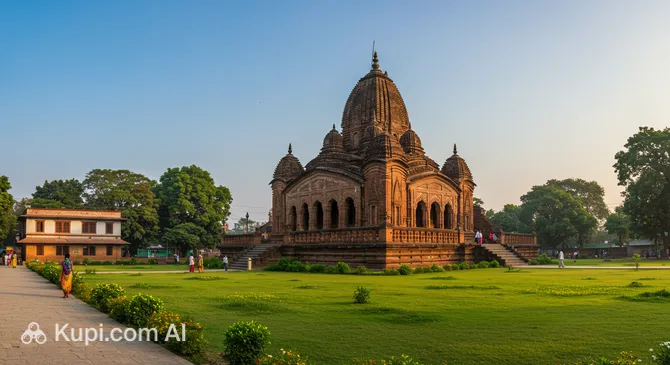
Dinajpur is a distinctive administrative center in the northwest of Bangladesh, which captivates with its peaceful atmosphere and agrarian charm. Founded back in 1786, the city has come a long way, becoming the largest hub of the country's northern region. With a population of over 276,000, it remains an important trading point where life flows steadily, and social harmony and tolerance are the hallmarks of the local residents.
Dinajpur. Illustration.
Source: Kupi.com AI
Geographically, the city stretches across a flat alluvial plain crossed by winding rivers. Getting to know the rich history of the region allows for a better understanding of its significance as the "granary of Bengal"—this is where a significant portion of the country's agricultural products is produced. Dinajpur does not strive to become a bustling metropolis, maintaining a cozy rural charm combined with developing urban infrastructure.
For the traveler, this city will be a discovery of authentic everyday life. Here you can see endless rice fields and the famous lychee orchards, which are considered the best in the nation. If you are looking for a place to feel the true spirit of Bengal away from the hustle and bustle of Dhaka, Dinajpur invites you to visit, promising a warm welcome and unique ethnographic experiences.
Weather Overview
The climate in Dinajpur has a pronounced subtropical monsoon character, which is typical for the northern regions of the country. The city is located on a plain, so weather conditions here directly affect the agricultural cycle. Travelers should consider seasonality when planning their trip to avoid extreme humidity or severe heat.
Winter in the region (November–February) is dry and relatively cool, with average temperatures around 17–20°C. January is considered the coldest month, when the thermometer can drop to 11°C at night. Summer brings heat and heavy rains: between May and September, the average temperature stays around 29°C, and monsoon downpours can be quite intense. It is best to check detailed information about the current city weather just before departure.
Thanks to the abundance of rainfall in the summer period, Dinajpur is lush with greenery, which creates ideal conditions for growing rice and fruit. The air quality here is noticeably better than in industrial metropolises, as the lack of large factories and the abundance of vegetation make the atmosphere fresher and more pleasant for walking.
Average monthly temperature
Average monthly precipitation
Interesting Facts
Dinajpur is the country's main agricultural hub; it is here that the famous "Katharibhog" rice variety is grown, recognized as one of the best and most fragrant in Bangladesh.
The region is famous for its fruit: it is believed that the most delicious lychees in the country grow in Dinajpur, and local mangoes are strong competitors to the harvests from Rajshahi.
The city was officially established in 1786, though the area was previously known as Ghoraghat.
Despite the high population density (over 900 people per km²), the vast majority of the district's residents—about 80%—live in rural areas, emphasizing the agrarian nature of the region.
Geographically, Dinajpur is located in close proximity to the border with the Indian state of Sikkim, which leaves its mark on local trade and atmosphere.
How to Get There
Dinajpur is located in the northwestern part of the country, about 413 kilometers from Dhaka, and is an important transport hub for the entire northern region. Travelers should plan how to get there in advance, taking into account local traffic patterns and seasonal weather conditions. The main flow of passengers is provided by bus services and railways.
Buses remain the most popular way to travel. Trips from the capital to Dinajpur take on average 8 to 10 hours. The road passes through picturesque agricultural areas, but during the monsoon rains, travel time can increase significantly. Within the city itself, it is best to use motorized rickshaws or taxis for getting around.
The railway connection is another reliable, though slower, option. Trains from Dhaka take about 12–14 hours to reach Dinajpur. This is an excellent choice for those who want to save money and observe the rural landscapes of Bengal from the carriage window. The city's main railway station serves both interregional and local trains.
Station
Passenger traffic
Distance
Parbatipur railway station
5
28 km
Jalpaiguri Road railway station
5
104 km
New Cooch Behar Junction railway station
7
116 km
Adhikari railway station
4
116 km
New Jalpaiguri Junction railway station
17
119 km
Main Attractions
Although Dinajpur is primarily an agricultural center, a curious tourist will find several interesting locations here. One of the notable spots on the city map is Sukh Sagar—a place that attracts visitors with its atmosphere and allows them to briefly escape the daily hustle. This space provides insight into how locals spend their free time enjoying the tranquility.
The nature of the region is of particular interest to travelers. The Punarbhaba River, flowing to the west of the city, is a natural attraction. Walks along its banks allow visitors to see the traditional way of life of fishermen and peasants, making such outings a real ethnographic adventure.
The main charm of Dinajpur lies in its markets and agricultural lands. A visit to the local trading rows, where mountains of rice sit alongside bright seasonal fruits, allows you to feel the rhythm of life in the "granary of Bengal." While there isn't an abundance of classical museums, the architecture of the administrative buildings and the authenticity of rural life create a unique character for this region.
Local Cuisine
The gastronomic face of Dinajpur is inextricably linked to its agrarian status. Rice is the basis of the diet here, and it is the local elite varieties, such as "Katharibhog," that give dishes a unique aroma. Be sure to try traditional Bengali fish or meat curry, complemented by thick dal (lentil soup) and freshly baked roti flatbreads.
The city is rightfully proud of its fruit. If your visit falls during the season, do not miss the chance to taste the juicy lychees and mangoes, which are considered the gold standard throughout Bangladesh. These fruits often become the basis for local desserts and refreshing drinks that help cope with the subtropical heat.
The food culture in the city is represented mainly by local eateries. For those who want to grab a bite in a proven place, Berar Hotel is suitable, offering classic Bengali lunches. If you want some variety, Martin Chinese Restaurant offers popular regional adaptations of Asian dishes in a more modern setting.
Travel Tips
A trip to Dinajpur will give you a unique experience of immersion into the real life of Bangladesh. To make your journey comfortable and safe, use these practical tips.
Clothing and Dress Code: Choose light clothing made from natural fabrics, as the region can be very humid. Considering local traditions, it is recommended to dress modestly: cover shoulders and knees, especially when visiting religious and rural sites.
In-city Transport: The main way to get around is motorized rickshaws. Always have small change with you for payment and agree on the price before starting the trip.
Finance: In Dinajpur, you will definitely need cash (Bangladeshi Taka). Cards are rarely accepted, only in large hotels or banks. ATMs can be found in the city center, but it is better to have a reserve of currency.
Health: Drink only bottled water and avoid ice in drinks at street cafes. Basic medicines can be found in pharmacies, but it is better to bring specific medications with you.
Communication: English is moderately common, mainly among the youth and administration. It is recommended to buy a local SIM card (e.g., Grameenphone) for internet access, as Wi-Fi in hotels can be unstable.
Etiquette: Bengalis are very hospitable. Greet people with your right hand; using the left hand to pass money or food is considered impolite.
What to Avoid: Do not take photos of people without their permission, especially women. Also avoid discussing political topics or criticizing local customs.
Seasonal Tip: If you want to try the world's best lychees, plan your trip for May or June—this is the peak of the harvest season.
May your acquaintance with this hospitable region be filled with bright colors and only pleasant discoveries!
Entertainment & Nightlife
Nightlife in Dinajpur is practically non-existent in the form city dwellers are used to. There are no noisy clubs or bars, and after sunset, the city quickly sinks into tranquility. Evening activity is mainly centered around family dinners and leisurely socializing in small tea stalls and local establishments, such as Berar Hotel, where you can find locals discussing the latest news.
For those looking for cultural leisure during the day, it is worth visiting iconic historical sites. Dinajpur Rajbari, despite being in ruins, preserves the greatness of the past and is a popular site for sightseeing. Another important point of interest is Balubari Shahid Minar square, where public events and celebrations take place on national holidays.
Outdoor entertainment includes walks along the scenic Punarbhaba River or a visit to the Sukh Sagar reservoir. On weekends, locals often head out of town to enjoy the silence of the agricultural lands. For a more sophisticated dinner, you can visit the Martin Chinese Restaurant, which offers an alternative to traditional Bengali dishes in a cozy setting.
Parks & Museums
There are no large state museums in Dinajpur in the classical sense, but historical roles are played by architectural monuments. The main site of this kind is Dinajpur Rajbari—an ancient palace complex. Although time has not spared many of the structures, the ruins of the palace are still impressive with their terracotta carvings and allow you to touch the era of powerful Maharajas.
For walks and memorable photos, Balubari Shahid Minar square is ideal. This important memorial site dedicated to the heroes of the Language Movement serves as the center of the city's social life and is surrounded by a small space where you can relax from the street noise.
The city's natural zones are represented by the banks of the Punarbhaba River and the abundance of fruit orchards in the surroundings. One of the popular locations for relaxing by the water is Sukh Sagar. Although there are not many well-maintained parks within the municipality itself, the abundance of greenery along the roads and the proximity of agricultural lands create a feeling of constant presence in nature.
Getting Around
The public transport system in Dinajpur is simple and oriented toward practicality. The main means of getting around the city streets are motorized rickshaws—three-wheeled vehicles that easily maneuver through traffic. This is the cheapest and most accessible way to get from one point of the city to another, though it is better to agree on the price of the trip with the driver in advance.
Buses mainly serve suburban and intercity routes, connecting Dinajpur with surrounding villages and major regional centers. Within the city itself, the bus network is poorly developed, and tourists may find it inconvenient due to the lack of clear schedules in English and overcrowding during peak hours.
For more comfortable trips, you can order a taxi, although their number here is small compared to Dhaka. Walking is possible in the central part, but keep in mind that the condition of sidewalks can vary, and road traffic can be chaotic due to the abundance of agricultural machinery—tractors and carts—which are full participants in the traffic in this agrarian region.
Accommodation
The choice of accommodation in Dinajpur is primarily oriented toward business travelers and trade representatives, so luxury five-star hotels should not be expected here. Most accommodation options are budget hotels and guesthouses offering a standard set of services: a bed, air conditioning (which is important in the local climate), and basic Wi-Fi.
For those who want to be in the center of events, it is best to choose hotels near the central market or the administrative quarter. One of the well-known places in the city is Berar Hotel, which combines the functions of an eatery and a place to stay. Booking in such locations allows you to be within walking distance of the city's main transport arteries.
Accommodation prices in Dinajpur are significantly lower than in the capital, making it accessible for budget tourists. It is recommended to book places in advance, especially if your trip coincides with the lychee harvest season or major agricultural fairs, when the influx of traders to the city increases significantly.
Nearby Cities
Dinajpur serves as an excellent starting point for exploring the northern territories and neighboring regions. Thanks to its proximity to the border and a developed road network, several interesting settlements can be easily reached from here, each with its own unique character.
Thirty kilometers away is Saidpur—an important commercial center with its own airport, making it a convenient transit point. It is also worth noting the Indian direction: the cities of Gangarampur and Balurghat are located very nearby; a trip there allows you to feel the change in the cultural landscape, though a relevant visa will be required to cross the border.
Traveling around the outskirts of Dinajpur is primarily about getting to know the endless agricultural landscapes and authentic villages. Exploring this region will help you see Bangladesh without embellishment, in all its natural and industrious greatness.
Shopping & Souvenirs
Shopping in Dinajpur is primarily a visit to traditional markets where the life of the agrarian center pulses. There are no glittering shopping malls with global brands here, but there is an abundance of natural products and locally made goods. The main city bazaar is a magnet for everyone who wants to buy the freshest fruit, spices, and, of course, the famous local rice.
If you are looking for something special as a gift, pay attention to handicrafts and textiles. Local shops offer quality fabrics and clothing in Bengali style. For larger-scale purchases of electronics or branded items, residents usually head to neighboring Rangpur, but for purchasing authentic souvenirs and local delicacies, Dinajpur is perfect.
Most retail outlets are concentrated along the main streets and in the area of the square where Balubari Shahid Minar square is located. Remember that it is customary to use cash in local markets—taka banknotes will be necessary for most transactions. Shops usually operate from early morning until late evening, closing only during the midday heat or for prayers.