Support

Gin Museum Hasselt

About

Imagine a place where time stood still in the 19th century amidst the aromas of juniper and malt. The National Jenever Museum is not just an exhibition space, but a fully restored working distillery located in the heart of Hasselt.

This unique institution, proudly presented by Belgium, is dedicated to the history and culture of jenever — a traditional spirit that became the ancestor of world-famous gin. The museum occupies the site of the former "White Nuns" farm, including an authentic barn, mill, and malthouse.
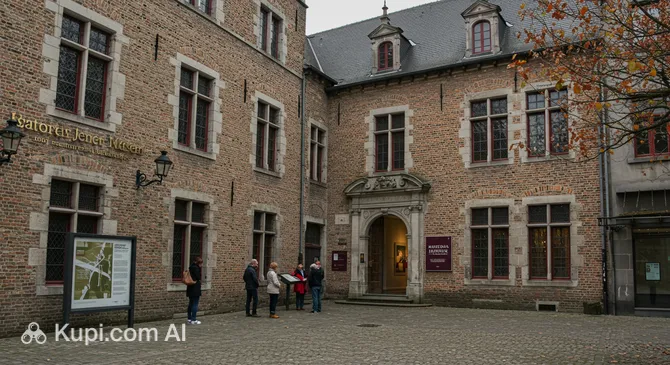
National Jenever Museum
National Jenever Museum. Иллюстрация. Источник: Kupi.com AI

Strolling through the renovated rooms, visitors can see original equipment and learn how the transformation of grain into a noble spirit shaped the region's economy and traditions for centuries. This is a must-see for those who appreciate industrial architecture and gastronomic history.

Contacts

To plan your visit and check details, you can use the official contact information for the institution. The museum actively maintains communication with guests through its website and by phone.

How to contactContact
AddressWitte Nonnenstraat 19, 3500, Belgium
Phone+32 11 23 98 60
Websitewww.jenevermuseum.be

What to Do

Your journey begins in an unusual place — a former ox barn, which now houses the ticket office. From here, the path leads through halls filled with historical equipment, including an impressive 19th-century steam system covered in the patina of time. One of the most interesting zones is the "Jenever Academy", where you can test your sense of smell by inhaling the aromas of natural additives through special interactive devices.

In the living rooms of the house built in 1829, you will learn how the drink was advertised, transported, and consumed in different eras. A rich collection of vintage bottles, ceramic jugs, and colorful posters is on display, reflecting the evolution of the jenever brand from a medicinal remedy to a national symbol.

The highlight of the visit is a stop at the tasting bar, which features over 140 types of the drink. One sample is already included in the ticket price. Professional staff will not only offer you a taste of the unique museum jenever, brewed according to an 1800s recipe, but will also explain the proper way to drink it, pairing each variety with special Belgian chocolate.

Getting There

The museum is conveniently located in the very center of Hasselt, making it easily accessible for walking. From the main Hasselt railway station, the museum entrance is just a 10–15 minute walk through picturesque city streets.

If you are traveling from other regions, Belgium offers an excellent railway network: trains run regularly from Brussels, Antwerp, and neighboring Maastricht. For those who prefer buses, routes are available from various cities across the province of Limburg.

Travelers arriving by car should keep in mind that the city center is quite compact. There is paid parking in the vicinity; however, Hasselt is known as a bicycle city, so many tourists prefer to leave their cars at park-and-ride lots and get around by bike or taxi.

Ближайший город: Hasselt

History & Facts

The history of this location is inextricably linked to the spirit itself. Jenever, the precursor to modern gin, has been produced in the region since the 13th century. Interestingly, this drink gave rise to the expression "Dutch courage" — English soldiers noticed that their allies took a shot of jenever before battle to boost their spirits.

By the end of the 19th century, the city had become a true capital of production, with about 30 distilleries operating here. The building that houses the exhibition today once served as the farm of the "White Nuns" monastery, and later became a working factory for the Stelingwerff and Teunissen families.

In 1975, the complex was recognized as the country's first industrial-archaeological monument, which saved it from demolition. Following a large-scale restoration supported by EU grants, the national museum officially opened here on September 16, 1987. Today, it holds the status of not just a local, but an international cultural site.

Time Needed

To fully explore the exhibition, engage with the interactive modules, and enjoy the mandatory tasting at the end, it is recommended to set aside 1.5 to 2 hours. This is enough time to walk through all the halls at a leisurely pace and delve into the intricacies of production.

If you plan to study the history of every label in detail or linger in the cozy tasting bar to sample rare varieties, your visit could easily last half a day. The museum is centrally located, so a visit can easily be combined with lunch at nearby cafes.

Working Hours

The museum welcomes visitors from Tuesday to Sunday. Please note that the doors are closed to the public on Mondays.

Standard operating hours: from 10:00 to 17:00. It is important to remember that the last entry is at 16:00, ensuring guests have enough time for the tour and tasting. The museum is also closed on holidays: December 24, 25, 31, and January 1.

DayWorking hours
ПонедельникЗакрыто
Вторник10:00 – 17:00
Среда10:00 – 17:00
Четверг10:00 – 17:00
Пятница10:00 – 17:00
Суббота10:00 – 17:00
Воскресенье10:00 – 17:00

Nearby

A stroll around the museum allows you to dive deeper into the city's atmosphere and see other historical layers of the region. Many interesting sites are concentrated nearby — from quiet beguinage courtyards to modern entertainment centers.

NameDistance
Z33 House for Contemporary Art, Design & Architecture0.1 km
Bocca Nera0.1 km
Maison Dix0.1 km
Fashion Museum Hasselt0.2 km
Koks & Tales0.3 km
Dito0.3 km
St. Quentin's Cathedral0.3 km

Reached the end of the page?

That means the route is fully explored