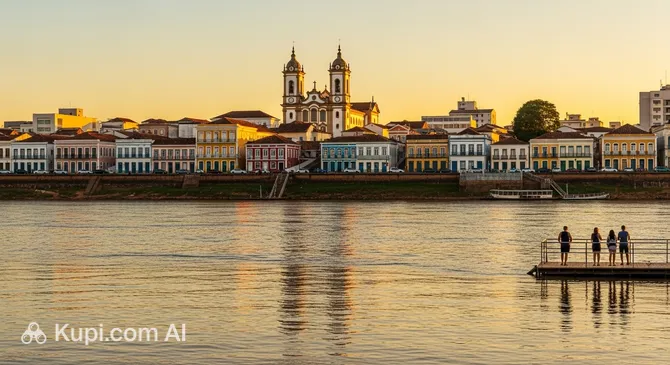
Cáceres is a city where the boundaries between the urban environment and the wilderness are blurred. As the "Gateway to the Pantanal," it offers tourists not classic, refined parks, but living green spaces closely tied to the river and history, as well as museums that preserve the memory of centuries of colonization and ancient cultures.
Parks and Natural Areas
The heart of social life and the main "green oasis" in the city center is Baron of Rio Branco Square (Praça Barão do Rio Branco). This is not just a square, but a real open-air historical complex. Here, in the shade of sprawling trees, locals escape the midday heat, and tourists can enjoy the view of the majestic cathedral. The square flows seamlessly into the waterfront, creating a unified space for walks where the fresh river breeze mixes with the scents of tropical flowers.
For those seeking communion with nature, the Paraguay River Waterfront (Orla do Rio Paraguai) is a must-visit. This is a picturesque promenade that serves as an ideal viewpoint. From here, you can observe the rich life of the river: passing boats, birds, and the famous Pantanal sunsets that paint the sky in incredible shades of red and orange. In the evening, this place comes alive, becoming a magnet for those who enjoy leisurely strolls.
A bit further from the center, about 25 km away, lies a unique natural site—the Dolina da Água Milagrosa. While not a city park in the traditional sense, it is the most important recreational area in the region. The massive karst sinkhole with its azure-colored lake is surrounded by dense vegetation, creating the feeling of a lost world. This place is perfect for eco-tourism and observing local flora and fauna in their natural environment.
Museums and Cultural Centers
The main guardian of the region's memory is the Cáceres Historical Museum (Museu Histórico de Cáceres). The museum is housed in a beautiful 19th-century building, which is an architectural monument in its own right. The exhibition immerses visitors in the city's rich past: from archaeological finds evidencing the lives of indigenous peoples to household items from the colonial era. Here you can see old photographs, documents, and even burial urns of Indian tribes that inhabited these lands long before the Europeans arrived.
The city's cultural palette is complemented by the House of the Artisan (Casa do Artesão). Although it is more of a gallery-shop than a classic museum, the place plays an important role in preserving local traditions. It exhibits the work of regional masters: ceramics, woodwork, and woven baskets that reflect the soul of the Pantanal. A visit here allows you not only to see the art of local craftsmen but also to understand how nature inspires their creativity.
Historical Monuments
Strolling through Baron of Rio Branco Square, it is impossible to miss the Marco do Jauru. This stone monument is a true witness to history, originally installed by the Portuguese to mark the boundary between their possessions and Spanish territories in South America. It symbolizes the geopolitical importance of Cáceres in past centuries.
Nearby stands the Cathedral of São Luiz (Catedral de São Luiz)—the city's architectural dominant. Its austere but elegant Neo-Gothic facade catches the eye of tourists and serves as a beautiful backdrop for photos.
Insider Tip: Try to get to Baron of Rio Branco Square closer to sunset. At this time, the heat subsides, the lights on historical buildings come on, and local musicians gather on the waterfront, creating a unique atmosphere of coziness and celebration.