Support

Memorial Apolônio de Carvalho Culture

About

In the heart of the state of Mato Grosso do Sul lies the Apolônio de Carvalho Memorial of Culture—a key cultural institution that carefully preserves and promotes the heritage of this remarkable region. Located in the city of Campo Grande, the memorial represents a harmonious blend of historical memory and contemporary art.
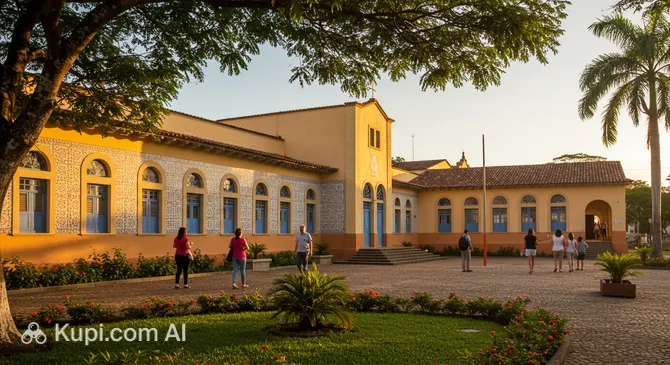
Apolônio de Carvalho Memorial of Culture
Apolônio de Carvalho Memorial of Culture. Иллюстрация. Источник: Kupi.com AI

Visitors to this site in Brazil will experience a deep dive into local identity. It houses rich collections of artifacts: from everyday items and traditional clothing to antique tools, each telling its own story about life in the Central-West region.

The memorial is considered one of the most welcoming spots in the city, a fact confirmed by high traveler ratings. It is not just a museum, but a living space where the spirit of history meets the creativity of modern masters, making it a must-visit for anyone wishing to understand the true soul of the state.

Contacts

To find the latest information on events or to book group tours, you can use the institution's official contact details.

How to contactContact
AddressAv. Fernando Corrêa da Costa, 559 - Vila Carvalho, Campo Grande - MS, 79004-311, Бразилия
Phone+55 67 3316-9174
Websitewww.fundacaodecultura.ms.gov.br

What to Do

Visiting the memorial allows you to take a real journey through time as you explore the permanent exhibitions. Of particular interest are the folk craft collections: featuring delicate ceramics and unique works by indigenous artisans that allow you to touch the roots of local culture.

One of the site's most striking features is its temporary exhibitions. For instance, it often hosts the "Labirinto Cultural" project, where visitors wander among hundreds of banners dedicated to the state's great artists. This unusual presentation makes exploring art feel like an exciting quest.

Beyond viewing household items and clothing, guests can enjoy the atmosphere of the majestic historic building itself. As you walk through the halls, you won’t just see rare artifacts; you'll also sense how the art of Mato Grosso do Sul has evolved and transformed over the decades.

Getting There

The memorial is conveniently located in the city center at Avenida Fernando Corrêa da Costa, 559, in the Vila Carvalho district. Thanks to its central location and proximity to wide avenues, the building is easy to find by rental car or taxi.

For those who prefer public transport, Campo Grande has an extensive bus network. Several stops are within walking distance of the memorial, making it easy to reach from various parts of the city. We recommend using mobile maps for real-time routing.

If you are planning a full day, a visit to the memorial can be combined with a walk to other landmarks in the center, as many interesting sites are within a short drive or walk.

Ближайший город: Campo Grande

History & Facts

The memorial is named after Apolônio de Carvalho (1912–2005)—a prominent Brazilian socialist and military officer. A native of Mato Grosso, he became a significant figure in the country's history, and the opening of a cultural center in his name underscores the importance of his legacy to the region.

The building that houses the exhibitions today has its own history: it previously served as the city courthouse. Repurposing the administrative building into a cultural space allowed for the preservation of its architectural character while filling the old walls with new meaning, turning them into a repository of memory and tradition.

An important part of the memorial's work is its collaboration with educational institutions, particularly the UCDB university. Joint projects allow young researchers and artists to present their work to the public, turning the historic building into a living, constantly evolving platform.

Today, the memorial serves not just as a museum, but as a key link between the past and future of Mato Grosso do Sul, helping locals and visitors alike trace the evolution of local culture through unique artifacts and themed exhibitions.

Time Needed

To explore all the halls at a leisurely pace and delve into the details of the exhibits, most visitors need 1 to 2 hours. This is sufficient time to see the permanent collection and pay attention to the temporary exhibitions.

If you plan to study the information boards in detail or happen upon a large-scale cultural project, your visit may last longer. However, for a general introduction to the region's cultural code, a couple of hours is perfect.

Working Hours

When planning your visit, keep in mind that the memorial is open on weekdays: from Monday to Friday, doors are open from 08:00 to 11:30 and, after a lunch break, from 13:30 to 17:30.

Please note that the institution is closed to visitors on Saturdays and Sundays. Before your trip, we recommend checking the official website to ensure there are no schedule changes due to holidays or special events.

DayWorking hours
понедельник08:00–11:30, 13:30–17:30
вторник08:00–11:30, 13:30–17:30
среда08:00–11:30, 13:30–17:30
четверг08:00–11:30, 13:30–17:30
пятница08:00–11:30, 13:30–17:30
субботаЗакрыто
воскресеньеЗакрыто

Nearby

The memorial's location in the heart of the city offers great opportunities for further exploration of local culture and architecture. A stroll through the neighborhood will allow you to see both historical monuments and modern art installations.

Many interesting spots are just a few minutes' walk or a short drive away, making this area ideal for walking tours.

NameDistance
Ary Coelho Square0.4 km
Morada dos Baís0.5 km
Thomaz Lanches0.5 km
Horto Florestal Park0.6 km
Bar Mercearia0.9 km
Praça do Rádio Clube0.9 km
St. Joseph Parish1 km

Reached the end of the page?

That means the route is fully explored