Support

Cascavel Airport

About the Airport

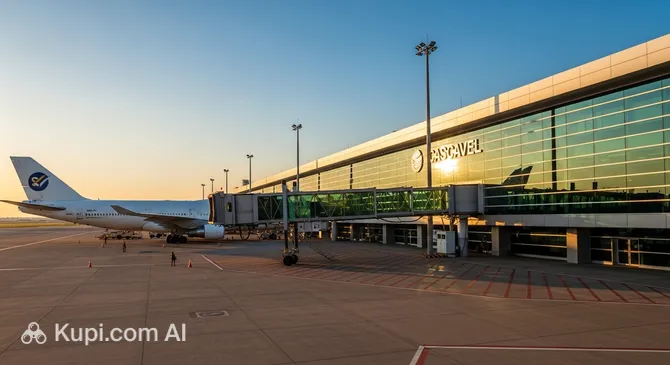
Cascavel Airport. Source: Kupi.com Binoculars

Welcome to Cascavel Airport (IATA: CAC), also known as the Regional Airport of the West (Aeroporto Regional do Oeste). Opened on November 12, 1977, this air gateway is a key transport hub for the western part of the Brazilian state of Paraná. The airport does not merely connect Cascavel with the country's major cities, but also serves as an important base for the region's development, ensuring a comfortable start and end to journeys for both tourists and locals. Its modern infrastructure and convenient location make it the gateway to this dynamic Brazilian region.

IATA Code CAC
ICAO Code SBCA
City Cascavel
Distance to centre 8 km
Status Regional
Annual Passengers Over 200,000
Popular Airlines Azul, GOL, LATAM.
Schedule Online Board "Cascavel Airport"

Cascavel Airport offers passengers all the necessary amenities for a comfortable wait for their flight. The single terminal houses cafes, shops, and ATMs. In recent years, the airport's infrastructure has been significantly improved, including the renovation of the runway, which allows for the accommodation of larger aircraft. You can reach the city centre by taxi or bus.

One of the unique features of the airport is its role as a hub for general aviation and flight schools, making it an important venue for aviation education in the region. This highlights the multifunctionality and strategic importance of the airport, not only for passenger transport but for the development of the aviation industry as a whole.

Contact Information

  • Official Website: Current information on flights, services, and airport regulations can be found on the official page managed by Transitar: https://www.transitar.pr.gov.br/aeroporto/.
  • Help Desk Phone: For information and general enquiries, you can call: +55 (45) 3321-1200.
  • Airport Address: Rodovia BR-277, Km 574, Cascavel, State of Paraná, Brazil.
  • Email: A direct email address for general enquiries is not provided. It is recommended to use the contact form on the official website or call via telephone.
  • Social Media: The airport does not maintain active official pages on social media. News can be followed through the official channels of the Municipality of Cascavel.
  • Lost Luggage Information: If you have lost personal items within the airport terminal, please contact the administration at +55 (45) 3321-1200 (ask for "Achados e Perdidos" - Lost and Found). For issues regarding lost or damaged checked baggage, please contact your airline's representative directly.
  • Passenger Support Contacts: The primary contact for passenger support regarding terminal operations is the main airport telephone number: +55 (45) 3321-1200.

How to Get to the Airport

Getting to Cascavel Airport (CAC) from the city centre is quite simple, and travellers have several convenient options to choose from, depending on their budget and comfort preferences. The airport is located relatively close to the city, so the journey does not take much time, usually no more than 25 minutes.

Public Transport is the most economical method. City buses typically run to the airport, connecting it with key points in Cascavel. This is an excellent option for travellers without large luggage. The fare is generally very low, costing just a few Brazilian Reals. We recommend checking the current schedule and route number on local transport websites in advance to plan your trip.

Taxis and Transfers are the fastest and most comfortable way. A trip from the city centre to the airport by taxi or via ride-hailing services (such as Uber) will take approximately 15-25 minutes. The cost of such a trip usually varies between 30 and 50 Brazilian Reals depending on traffic conditions and the time of day. This is an ideal option if you are travelling with family, a large amount of luggage, or simply value your time. You can also book a private transfer in advance.

Car Rental is a wonderful choice for those planning to actively explore this region of Brazil. Most major rental companies have offices both in the city and at the airport itself, allowing you to conveniently pick up or return the car right before your flight. The road to the airport is well-signposted, and navigation should not cause difficulties, especially when using GPS.

For travellers with their own vehicles, parking is provided on the airport grounds. There are zones for both short-term and long-term parking. This is a convenient solution if you wish to leave your car for the duration of your trip. Parking fees depend on the length of stay, so it is worth checking the rates on the airport website beforehand.

Terminals and Map

Cascavel Airport (CAC) is a modern and compact air hub that was completely rebuilt and opened in 2020. Its structure is designed for the maximum convenience of passengers travelling on domestic flights within Brazil.

The key feature of the airport is the presence of a single passenger terminal, which serves both departing and arriving flights. Thanks to this, there is no need for complex transfers or the use of shuttles — everything is located within one building. The terminal layout is intuitive: after entering, you immediately find yourself in the main hall, where airline check-in counters and essential services are located.

Departure and arrival zones are clearly separated but are within walking distance of each other. After checking in for a flight, passengers proceed to the security screening area, which leads to a small but comfortable waiting lounge with several boarding gates. The arrival zone is located in another part of the building and includes baggage reclaim belts and an exit to the public area, where you can order a taxi or rent a car.

Completing all pre-flight formalities at Cascavel airport usually does not take much time. Thanks to its compactness and efficient organisation, check-in and security screening take on average from 15 to 30 minutes, although during peak hours this time may increase. Nevertheless, it is recommended to arrive at the airport 1.5-2 hours before departure to complete all procedures without rushing.

The main advice for navigation is simply to follow the signs. All key areas — from check-in counters to boarding gates and baggage claim — are within a few minutes' walk of each other. This simplicity makes travelling through Cascavel Airport especially convenient, even if you are here for the first time.

Airport History

The history of Cascavel Airport (CAC) is inextricably linked with the rapid development of the western part of the state of Paraná in Brazil. Although the first steps in aviation here were taken back in the 1950s with the founding of an aeroclub, the official opening date of the modern airport at its current location is considered to be November 12, 1977. This event was pivotal for the city, ensuring reliable air connections with other regions of the country.

For decades, the airport served as an important regional hub, handling primarily domestic flights. It bears the name of Colonel Adalberto Mendes da Silva, one of the pioneers of aviation in the region. By the beginning of the 21st century, it became clear that the old terminal could no longer cope with the increased passenger flow, and radical modernisation was required for further development.

The most significant stage in the airport's history occurred between 2017 and 2020, when a complete reconstruction was carried out. The old building was demolished, and a new modern passenger terminal was erected in its place. One of the main achievements was the installation of two jet bridges, which significantly increased comfort for passengers. The capacity of the air harbour grew several times over — to more than 1 million people per year.

The opening of the new terminal at the end of 2020 was a true record and achievement for regional aviation in Brazil, turning Cascavel Airport into one of the most modern and functional in its category. This transformation not only improved the infrastructure but also gave a powerful impetus to the economic and tourism development of the entire region.

Services and Amenities

Cascavel Airport (CAC) offers passengers a basic set of services and amenities to make waiting for a flight comfortable. Although the airport is regional, it has everything necessary for travellers heading to Cascavel or other corners of Brazil.

Dining and Shopping. In the terminal, you will find several cafes and snack bars where you can drink coffee, have a sandwich, or purchase refreshments. There are also small shops offering travel essentials, press, and souvenirs to remember your trip by.

Waiting Lounges and Internet. General waiting halls are available for all passengers. While there may not be specialised VIP lounges, comfortable seating is provided in the terminal. Passengers can utilise free Wi-Fi to stay connected, as well as find charging stations for mobile devices.

Financial and Other Services. ATMs are installed in the airport building for cash withdrawals. Currency exchange points are generally not found in regional airports, so it is better to arrange this in advance at banks in the city. For emergencies, there is a medical point ready to provide first aid.

Facilities for Special Categories of Passengers. The airport is equipped to serve passengers with reduced mobility: there are ramps and specially equipped toilets. It is recommended to notify the airline in advance regarding the need for special assistance. For travellers with small children, nursing rooms (mother and child rooms) are available, where you can care for your baby in a quiet environment.

Accommodation and Business Services. There are no hotels within the airport territory itself, however, many accommodation options can be found in the immediate vicinity of the airport and in the city of Cascavel itself. Specialised conference rooms or business centres are not provided in the airport, but the presence of Wi-Fi allows for work tasks to be managed in the waiting areas.

Where to Eat

When planning a flight through Cascavel Airport (CAC), it is worth noting that this is a regional terminal, and the choice of establishments will be more modest than in major international hubs. Nevertheless, passengers have the opportunity to have a snack before departure or upon arrival. The main dining points are typically cafes and snack bars located in the main hall of the terminal.

While waiting for your flight, you can get acquainted with classic Brazilian snacks. Be sure to try the famous cheese bread, `pão de queijo`, which pairs perfectly with a cup of aromatic local coffee. Also, local cafe menus often feature `coxinhas` (chicken croquettes in a crispy breading), sandwiches, and various pastries. This is an excellent option for a quick and satisfying snack.

The main cafe is usually located in the public area (landside), before passing security control, which is convenient for both departing passengers and those meeting them. In the departure zone (airside), a small kiosk with drinks and packaged snacks may operate. Opening hours are generally tied to the flight schedule, but for late or early flights, it is better to check information in advance or carry a small supply of food.

If you are looking for a full meal, the best solution would be to eat at one of the restaurants in the city of Cascavel before travelling to the airport. Local cafes are more suitable for a light snack. Passengers with strict dietary requirements (such as Halal, vegan, or gluten-free diets) should be prepared for the fact that finding suitable dishes may be difficult. It is recommended to bring food with you to avoid inconvenience. Vegetarians will likely be able to find options with cheese or vegetables.

Regarding prices, as in most airports around the world, the cost of food and drinks at Cascavel Airport will be slightly higher than the average in the city. However, this is compensated by the convenience and the ability to refresh yourself without leaving the terminal building.

Travel Tips

To ensure your journey through the airport of Cascavel goes smoothly and without unnecessary stress, make use of our practical tips. Cascavel Airport (CAC) serves primarily domestic flights, so the atmosphere here is generally calmer than in the major international hubs of Brazil.

Arrival Time and Check-in. We recommend arriving at the airport approximately 1.5–2 hours before the departure of a domestic flight. This time is sufficient to drop off luggage and pass through security without rushing. To save time, complete online check-in on the airline's website. This way, you can either go straight to security control (if travelling without luggage) or use the dedicated baggage drop-off counter.

Seat Selection and Hand Luggage. If you want to enjoy views of the Brazilian landscapes from above, choose a window seat. For greater comfort and the ability to leave the aircraft quickly upon arrival, an aisle seat is more suitable. Be sure to pack all valuables in your hand luggage: documents, money, gadgets, and necessary medication. Remember standard restrictions: liquids in containers of no more than 100 ml, packed in a transparent bag, and a ban on carrying sharp and flammable items.

Transfers and Customs. If you have a connecting flight in another city, clarify at check-in whether you will need to collect and re-check your luggage. Study the map of the connecting airport in advance to avoid wasting time searching for the correct terminal. Customs control is only passed when entering the country. If you are flying to Cascavel from abroad via another Brazilian airport, you will complete all customs formalities at the first point of arrival.

Saving Time and Money. Book flight tickets and transfers to/from the airport in advance — this is almost always more cost-effective. To avoid overpaying for drinks, bring an empty bottle with you and fill it with water from a drinking fountain after passing security control. A light snack that does not violate carriage rules will also help save money.

In Case of Flight Delay. In the event of a schedule change, first contact your airline representative for current information. Depending on the duration of the delay, you may be provided with drinks, meals, or even hotel accommodation. Having travel insurance will help compensate for unforeseen expenses, so do not forget to arrange it before your trip.

Reached the end of the page?

That means the route is fully explored