Support

Colatina Airport

About the Airport

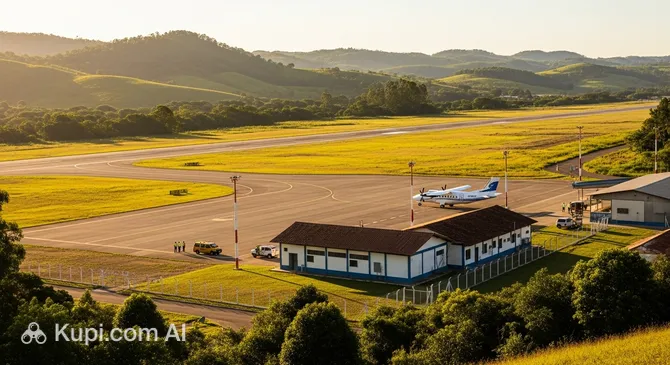
Colatina Airport. Source: Kupi.com Binoculars

Colatina Airport is a small yet significant air gateway located in the picturesque region of Espírito Santo, often referred to as the "gateway" to the northwest of the state. While you will not find the hustle and bustle of major international hubs here, the airport plays a vital role for business aviation and private flights, connecting the city with other parts of Brazil. It is surrounded by the beautiful landscapes of the Doce River valley, offering travellers quick and convenient access to the "Princess of the North," as Colatina is affectionately called by locals.

AirportColatina Airport
IATAQCH
ICAOSNCX
CityColatina
TimezoneAmerica/Sao_Paulo
ScheduleOnline board

Despite its modest size, the airport possesses several features that make it an important transport node in the region:

  • Convenient Location: The airport is located just a 15–20 minute drive from the city centre, accessible via the paved ES-248 road, which saves transfer time.
  • Focus on Business Aviation: Currently, the air gateway specialises in receiving air taxis, private jets, and medical flights, ensuring mobility for businesses and emergency services.
  • Night Operations: The aerodrome is equipped with a night lighting system, allowing take-offs and landings after dark (upon prior request), increasing flight planning flexibility.
  • Scenic Views: Upon approach, an impressive panorama of the winding Doce River channel and the green hills surrounding the city opens up.

Contact Information

As Colatina Airport (Aeroporto Municipal de Colatina) is a small regional node serving mainly private aviation without a regular commercial schedule, it is managed directly by the municipal authorities. Below are the main contact details for planning your visit:

  • Official Website: The airport does not have a separate website. Current information and news are published on the official portal of Colatina City Hall: www.colatina.es.gov.br.
  • Information Desk Phone: +55 (27) 3177-7000 (General phone number of the municipal administration managing the infrastructure).
  • Airport Address: Aeroporto Municipal de Colatina, Rodovia ES-248 (Rodovia do Café), s/n, Bairro Aeroporto, Colatina - ES, 29700-000, Brazil.
  • Email: There is no direct public e-mail for the terminal. Official enquiries are recommended to be sent via the feedback form on the City Hall website (Fale Conosco).
  • Social Media: News about transport infrastructure development can be found on the official Colatina City Hall accounts on Instagram and Facebook (@prefeituradecolatina).
  • Lost Luggage Information: Due to the absence of major network airlines, there is no centralised baggage tracing service. In case of lost items, you must contact the private carrier or the operator of your flight directly.
  • Passenger Support Contacts: Operational support is provided by the aerodrome administration on-site during terminal operating hours or by representatives of the receiving party (for private flights).

How to Get to the Airport

Since Colatina Airport primarily serves private and business aviation and does not have a regular commercial flight schedule, the transport infrastructure here is less saturated than in major hubs. Getting to the terminal is simple: it is located near the city limits, and the journey does not take much time.

Here are the main ways to get to or from the airport:

  • Taxis and Mobile Apps: This is the most convenient and common method. Popular ride-hailing services (such as Uber or 99) operate in Colatina, as well as local taxi services. A trip from the city centre (Centro) usually takes 15–20 minutes depending on traffic. The cost of the trip is reasonable and varies between 20–35 Brazilian Reals (BRL).
  • Transfer: If you are arriving by private flight, a transfer is often organised by the hosting party or flight operator. It is recommended to coordinate the meeting in advance so that the driver awaits you directly at the airfield exit.
  • Car Rental: Car rental offices (such as Localiza or Unidas) are located in Colatina city centre. There are no rental desks within the terminal itself. If you plan to drive yourself, take the Rodovia ES-248 (Rodovia do Café) highway. The road is paved and in good condition.
  • Public Transport: There are no direct express buses or metro lines to the airport. There are municipal bus routes that travel along the ES-248 highway towards the Bairro Aeroporto district. However, the stop is on the highway, and you will have to walk to the terminal, which can be inconvenient with luggage. This option is suitable only for travellers with light baggage.

Parking:

A small parking area for vehicles is provided on the airport grounds. Since traffic here is low, finding a space is usually not a problem. Parking is generally free and located in immediate proximity to the airfield building, allowing for quick transfer of belongings.

Important Recommendation for Tourists:

If you plan to travel to this region via regular commercial airlines, you will likely need to fly to the nearest major transport hub — Eurico de Aguiar Salles Airport in the city of Vitória. It is located approximately 90–100 km from Colatina. From Vitória, you can reach Colatina by intercity bus (travel time about 2–2.5 hours), train (the famous Vitória-Minas railway), or rental car.

Terminals and Map

The infrastructure of Colatina Airport (QCH) reflects its status as a regional aerodrome focused on small and private aviation. There are no confusing mazes of corridors or multi-level walkways here — everything is arranged compactly, functionally, and intuitively for any traveller.

Number of Terminals and Their Purpose

The airport features one small passenger terminal. This is a single-storey building that combines all necessary services for passengers and crew. Since the airport does not receive large mainline airliners, there is no division into international and domestic sectors. The terminal is used both for rare regional flights (if any are operating) and as a small FBO (terminal for private aviation) for business jets and air taxis.

Layout and Airport Zones

Navigation inside the building is extremely simple, as the entire space is visible literally from the entrance. The general layout of the terminal includes the following zones:

  • Check-in and Arrival Zone: Located immediately at the entrance. There is a counter for document processing (used by airline representatives or handling agents). Due to the low passenger flow, there is no separate baggage carousel here — luggage is handed out manually by ground staff immediately after unloading the aircraft.
  • Waiting Hall: A small space with seats for passengers awaiting departure. The atmosphere here is calm, distinct from the noise of major stations.
  • Restrooms: The terminal is equipped with basic washroom facilities.
  • Boarding Gate: There is a direct exit from the waiting hall to the apron (airfield). Boarding the aircraft is done on foot; shuttle buses or jet bridges are not used at this airport, as aircraft parking stands are in immediate proximity to the building.

Features and Service

Travellers should note that the terminal's service infrastructure is minimal. You will not find Duty Free shops, large cafes, ATMs, or VIP lounges here. A water dispenser or a snack machine may be available in the building, but for a full meal, it is recommended to use establishments in the city of Colatina before heading to the airport. An air conditioning system ensures a comfortable temperature on hot days.

Processing Time

One of the main advantages of Colatina Airport is the speed of service. The absence of queues allows formalities to be completed in a matter of minutes:

  • Check-in and Security: Usually takes from 5 to 15 minutes. Screening is conducted by security staff using handheld metal detectors and scanners (if there are flights requiring strict control).
  • Arrival Time Recommendations: For private flights, arriving 20–30 minutes before departure is sufficient. If a flight via a regional airline is planned (for example, on Cessna Grand Caravan type aircraft), it is recommended to arrive 40–60 minutes early to check in luggage calmly.

Navigation and Transfers

Since there is only one terminal, transfers between buildings are non-existent. The entire path from the car park to the aircraft steps is no more than 50–100 metres, making this airport extremely convenient for passengers with limited mobility or heavy luggage. It is impossible to get lost here: airport staff are always within sight and ready to assist with directions.

Airport History

The history of aviation in Colatina runs much deeper than the age of the modern terminal. The development of air transport here has always reflected the city's ambitions as the "Princess of the North" and the economic engine of the northwestern part of Espírito Santo state. From the first propeller planes on dirt strips to modern business aviation infrastructure, this journey has been full of significant milestones.

The Era of Pioneers and Official Opening

Air connections in the region existed long before the current airport complex appeared. Back in the mid-20th century, in the 1940s and 1950s, legendary Brazilian airlines such as Real Transportes Aéreos and Cruzeiro do Sul operated flights to Colatina, linking it with the country's major centres. In those times, landings were often made on simpler airfields, but this laid the foundation for the local residents' habit of flying.

The modern phase of history began at the turn of the millennium. The current Colatina Airport was officially inaugurated in 2000. This event marked a transition to more professional flight management and the creation of stationary infrastructure compliant with new safety requirements.

The Period of Regular Aviation

One of the brightest moments in the airport's recent history was the collaboration with the airline TEAM Transportes Aéreos. In the early 2000s, this carrier established regular air service between Colatina and the state capital, Vitória. The flights were popular with business people who needed to reach the administrative centre quickly. Although regular flights were eventually suspended due to the development of road networks and economic conditions, this period remains in the city's history as proof of the potential of local aviation.

Modernisation and Improved Accessibility

The airport is constantly evolving, adapting to the needs of private and air ambulance aviation. Important changes have occurred in recent years:

  • Night Lighting System: The installation of modern lighting equipment (balizamento noturno) was a critically important step. This allowed the airport to receive flights 24 hours a day, which is especially vital for emergency medical evacuation.
  • Reconstruction of 2021–2022: During this period, the state government implemented a major infrastructure project. Unlike work on the runway itself, the main focus was on paving the access road (acesso ao aeroporto). Previously, the path to the terminal could be difficult, especially during the rainy season, but the new surfacing ensured a reliable and comfortable link between the airport, the city road network, and the Bairro Aeroporto district.

Interesting Historical Facts

  • "Fashion Industry" Traffic: The historical peak of private flights at the airport often coincided with the boom of the garment industry in Colatina. Buyers and clothing brand owners actively used business jets to visit local factories, turning the airport into an unofficial centre of business fashion in the region.
  • Flood Rescue: The airport played a strategic role during major floods on the Doce River, particularly during historic high waters. When land routes and railway tracks were washed away or flooded, the aerodrome became the only "window" for delivering humanitarian aid and evacuating people, confirming its significance for the safety of the entire region.

Services and Amenities

Passengers planning to depart from Colatina Airport (QCH) should consider the specifics of this transport hub in advance. Since the airport is a small regional facility focused primarily on private and business aviation, the range of services here is minimal and differs significantly from what travellers are accustomed to in major international hubs. The terminal is designed for the quickest possible processing, so the concept of long waits with entertainment is not provided for here.

Restaurants, Cafes, and Shops

There are no full-service food outlets, restaurants, or cafeterias in the terminal building. There are also no Duty Free shops or kiosks with newspapers and souvenirs. A beverage machine or water dispenser may occasionally be available in the waiting hall, but one should not rely on this. Tourists are strongly advised to eat in the city before heading to the airport and to bring a bottle of water and necessary snacks, especially if travelling with children.

Waiting Halls and VIP Services

There are no specialised business lounges or VIP lounges (such as Priority Pass) at the airport. However, given the low passenger flow and absence of crowds, the entire general waiting hall can be considered a zone of enhanced comfort. There is ample seating, and it is quiet and calm, allowing you to spend time before departure in a relaxed atmosphere.

Connectivity and Electronics

  • Wi-Fi: Public Wi-Fi in the terminal may be absent or unstable. It is recommended to rely on your mobile operator's internet (cellular coverage in this area is usually good).
  • Charging Stations: There are no dedicated stands for charging gadgets. Standard wall sockets can be found in the waiting hall, so if you need to charge your phone or laptop, it is worth having a charger with the appropriate adapter (Brazil uses type N and sometimes C sockets).

Financial Services

There are no ATMs, currency exchange points, or bank branches on the airport premises. If you require cash in Brazilian Reals for taxis or small expenses, please ensure you withdraw it in advance in Colatina centre.

Services for Passengers with Reduced Mobility

Thanks to its compactness and single-storey layout, the airport is convenient for citizens with limited mobility. There are no stairs, escalators, or long walkways. The path from the terminal entrance to the aircraft is short and level. Airport staff are always ready to provide personal assistance with boarding and disembarking, however, it is better to notify the air carrier in advance about the need for special assistance.

Services for Passengers with Children

There are no separate mother and child rooms or play areas in the terminal. The washrooms are equipped with basic amenities. It is recommended to bring everything necessary for child care (food, nappies, entertainment) with you, as it will be impossible to buy these on-site.

Hotels Nearby

There are no hotels directly on the airport grounds. Since the airport is only a 15–20 minute drive from the city, passengers usually stay in hotels in Colatina. This is convenient for both business travellers and tourists.

Popular accommodation options in the city:

  • Ibis Colatina: A modern chain-format hotel offering standardised service and comfort. Located within easy reach of main roads.
  • Plaza Hotel Colatina: Located in the city centre, suitable for those who want to be closer to shops and restaurants.
  • Hotels in the Centro district: The central part of the city hosts many small hotels (pousadas) offering budget accommodation.

Business Services

There are no conference rooms or business centres with printers and fax machines in the terminal. If you need to hold a meeting or work with documents before departure, it is better to use the infrastructure of your hotel in the city. Colatina Airport is intended solely for transit, not for conducting business activity on-site.
Where to Eat

Given the specific nature of Colatina Airport (QCH) as a small regional hub serving primarily private aviation, the gastronomic infrastructure here differs significantly from the usual standards of large international hubs. Passengers should plan their meals in advance, as choices directly on-site are extremely limited.

Restaurants and Cafes in the Terminal

Inside the single passenger terminal, there are no full-service restaurants or chain coffee shops. There is no separation into "airside" and "landside" zones in terms of food outlets. The infrastructure is limited to a minimal set for short-term waiting:

  • Vending Machines: Machines selling snacks (crisps, chocolate, biscuits) and soft drinks (water, soda) are periodically available in the waiting hall. However, their availability and assortment may vary.
  • Coffee and Water: A dispenser with drinking water and a self-service coffee machine (or a thermos with coffee) may be available for passengers and crew, provided by the airport administration or flight operator, but this cannot be guaranteed.

Opening Hours

Since there are no stationary catering establishments, the concept of opening hours does not apply to them. Access to machines (if installed and functioning) is open during the entire operating time of the terminal, which is tied to the schedule of planned departures and arrivals.

Special Dietary Requirements (Vegetarian, Halal, Gluten-Free)

Due to the absence of food preparation facilities, finding specialised dishes for vegetarians, vegans, or those observing Halal or gluten-free diets at the airport itself is impossible.

Important Recommendation: If you have specific dietary needs, please ensure you bring the necessary food items with you in your carry-on luggage. Security staff are usually lenient regarding small amounts of food for personal consumption, considering the lack of service in the sterile zone.

Recommendations: Where to Eat Before Departure

The best strategy for travellers departing from Colatina is to have a full lunch or dinner in the city before heading to the airport. The city centre (Centro) is just a 15-minute drive away and offers an excellent selection of establishments.

  • For a quick snack: In Brazilian bakeries (padarias) in the city centre, it is worth trying traditional pão de queijo (cheese buns) or coxinha (chicken croquettes). It is filling, inexpensive, and quick.
  • For a full meal: The Espírito Santo region is famous for its cuisine. It is recommended to visit "self-service" restaurants (pay-by-weight) or establishments serving Moqueca Capixaba — the famous fish stew in a clay pot, which is the state's signature dish. Unlike the version from Bahia, palm oil (dendê) is not added to the local Moqueca, making the taste lighter. As a seafood dish, it is generally a suitable option for those seeking Halal-friendly meals.

Summary

Colatina Airport is designed for quick boarding and departure. Consider it solely as a transit point, not a place for relaxation or gastronomic discoveries. Take care of food and drinks in advance to ensure your journey is comfortable.

Tips for Travellers

Travelling through Colatina Airport is a significantly different experience from flying through major international hubs. A cosy atmosphere reigns here, and processes are organised simply and quickly. However, the specifics of small aviation and the regional status of the aerodrome dictate their own rules. To ensure your trip goes smoothly, use the following expert recommendations.

Optimal Arrival Time

Forget the rule of "arriving 3 hours early". In Colatina, this will only lead to a tedious wait in an empty hall.

  • For private flights and air taxis: Arriving 20–30 minutes before the scheduled departure is sufficient. This time is enough to meet the pilot, load luggage, and complete the necessary formalities.
  • For charter or rare regional flights: It is recommended to arrive 45–60 minutes early. Although queues are rare here, a small time buffer will allow you to calmly resolve any document issues without rushing.

Check-in and Security Features

Procedures here take place in a maximally relaxed yet professional mode. Check-in is often performed manually by a carrier representative right at the entrance or in the main hall.

  • Documents at Hand: Keep your passport or ID card in an easily accessible place. In small airports, document checks may be carried out directly before boarding the aircraft.
  • Screening: Despite the size of the airport, safety rules are strictly observed here. Be prepared for a check with a handheld metal detector. Liquids and sharp objects are better packed in luggage in advance, as carry-on rules remain standard for Brazilian civil aviation (ANAC).

Seat Selection and Views

In small aircraft (such as the Cessna Caravan or light business jets), seating is often determined by the pilot for proper aircraft balance (weight distribution). However, if you are offered a choice:

  • Sit by the window: The flight over the state of Espírito Santo is very picturesque. During take-off and landing, stunning views of the winding Doce River and green mountain landscapes open up.
  • Right side of the aircraft: Often provides a better view of the city of Colatina during a standard landing approach, allowing you to see the panorama of the "Princess of the North".

Carry-on and Luggage: Small Aircraft Specifics

This is perhaps the most important point for passengers departing from Colatina. Luggage compartments of small aircraft have limited volume and non-standard shapes.

  • Soft bags are better than suitcases: Instead of rigid plastic suitcases, use soft travel bags or backpacks. They are easier to fit into the luggage compartment of a light aircraft.
  • Strict weight control: Every kilogram matters. Check the allowable limits with the flight operator in advance; they may be lower than the standard 23 kg.
  • Carry-on luggage: Space in the cabin is minimal. Take only the bare essentials (documents, phone, wallet) with you; the rest is better checked in. Overhead bins may be absent entirely.

Tips for Transit Passengers

Colatina Airport is not designed for "flight-to-flight" connections within a single ticket. If you are flying with a transfer:

  • Plan with a buffer: If you have a subsequent departure from a major airport (for example, in Vitória), allow a minimum of 3–4 hours between flights. Small aviation is more sensitive to weather conditions, and a one-hour delay in departure from Colatina could cost you missing a mainline flight.
  • Transfer: Treat the flight to Colatina as the final point of the route. Connections here are always the independent responsibility of the passenger.

Customs Control

The airport is exclusively domestic. There are no customs or passport control zones for international flights here. If you arrived in Brazil from abroad and are travelling to Colatina, you must have completed all customs procedures at the first point of entry into the country (for example, in São Paulo or Rio de Janeiro).

How to Save Time and Money

  • Bring food with you: Due to the lack of cafes, buying food at the airport is impossible. Save your nerves and money by buying water and a snack at a supermarket in the city before leaving.
  • Transport: Do not rely on taxis waiting at the exit as in major cities. Calling a car via an app (Uber/99) may take time due to the distance from the centre. Order a car in advance or arrange with the driver who brought you to the airport to wait if the flight is delayed.

Actions in Case of Flight Delay

Delays in Colatina are most often related to weather conditions (fog over the river or heavy rain), as small aviation often flies under Visual Flight Rules (VFR).

  • Stay in touch: There are no information boards in the terminal. All information comes personally from the pilot or ground staff. Do not wander far from the exit zone.
  • Entertainment: Wi-Fi may not work. Be sure to download films, music, or bring a paper book to pass the time.
  • Plan "B": If the weather is unflyable, you can reach Vitória (the nearest major airport) by car in 2–2.5 hours. Have taxi service contacts or car rental details at hand in case of flight cancellation.

Reached the end of the page?

That means the route is fully explored