Support

Correia (Reg do Planalto Serano)

About the Airport

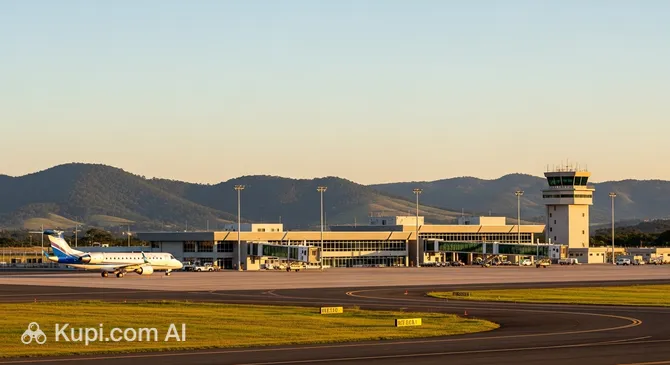
Correia Pinto Regional Airport. Source: Kupi.com Binoculars

Correia Pinto Regional Airport, also known as Planalto Serrano Airport (Aeroporto Regional do Planalto Serrano), is not just a transport hub, but a true gateway to the world of the Brazilian highlands. Located in the picturesque state of Santa Catarina, it serves as the ideal starting point for those wishing to discover the charm of the "Brazilian Switzerland" with its vineyards, canyons, and cool climate. Thanks to a modern terminal and the absence of the hustle and bustle typical of metropolises, travellers can begin their acquaintance with the Serra Catarinense region in a maximally comfortable and peaceful environment.

IATA Code EEA
ICAO Code SNCP
City Correia Pinto
Distance to centre ~6 km
Status Domestic
Annual Passengers About 25,000 (based on 2023 data)
Schedule Online board

Airport Features and Advantages:

Correia Pinto Airport stands out for its strategic location next to the important BR-116 highway, ensuring convenient transfers not only to the centre of the eponymous city but also to the major neighbouring centre — Lages (about 25-30 km away). This makes it a key hub for tourists heading to the popular towns of Urubici and São Joaquim, known for their natural beauty and the opportunity to see snow, which is a rarity for tropical Brazil.

Other advantages include:

  • Modern Infrastructure: The terminal was recently modernised to enhance passenger comfort and flight service efficiency.
  • No Queues: Due to low passenger traffic, check-in and security procedures are much faster here than in major airports.
  • Proximity to Nature: Even upon landing, a magnificent view of the Araucaria coniferous forests, for which this region is famous, opens up.

Contact Information

To contact the airport administration, clarify flight information, or resolve issues related to your stay in the terminal, you can use the following contact details:

  • Official Website: Up-to-date information is posted on the website of the management company Infracea (section "Aeroportos").
  • Address: Rodovia BR-116, s/n - Km 214, Correia Pinto - SC, 88535-000, Brazil.
  • Administration Phone: +55 (49) 3243-1389.
  • Email: eea@infracea.com.br (for general inquiries to the administration).
  • Social Media: News and announcements are published on the Infracea Aeroportos social media pages (Instagram, Facebook).
  • Lost Luggage: For issues regarding forgotten items or delayed baggage, please contact your airline's counter (e.g., Azul Linhas Aéreas) or the airport administration during terminal operating hours.
  • Customer Support: Inquiries are accepted via the feedback form on the operator Infracea's website or via the phone number listed above.

How to Get to the Airport

Getting to Correia Pinto Regional Airport is quite simple, thanks to its convenient location directly off the federal highway BR-116. Since the airport serves not only the city of Correia Pinto itself but also the larger neighbouring city of Lages, transport connections here are oriented towards car travel.

Taxi and Transfer

This is the most reliable and common way to get to the terminal. Local taxi services operate in the region, which can be called by phone or found at stands in the centres of Lages and Correia Pinto.

  • Apps: Popular aggregators operate in the region (e.g., Uber or 99); however, the number of available cars may be limited, especially at night or early in the morning. It is recommended to book a car in advance.
  • Cost: A trip from the centre of Correia Pinto will take about 10–15 minutes and cost approximately 20–30 Brazilian Reals. The journey from the centre of Lages (about 25–30 km) will take 25–35 minutes, and the cost will range from 70 to 100 Reals depending on the tariff and time of day.

Car Rental

For travelling around the Serra Catarinense region, personal transport is a necessity, not a luxury. Car rental can be arranged in the arrivals area of the airport or by pre-booking. This will give you the freedom to move along picturesque winding roads and visit vineyards and canyons at a comfortable pace.

Public Transport

There is no direct metro or train connection to the airport. Specialised shuttle buses run rarely and are most often organised by specific airlines to match flight schedules (this information is worth clarifying when purchasing a ticket). Ordinary intercity buses travelling along the BR-116 highway may stop at the turnoff to the airport, but from there you would have to walk to the terminal or hitch a ride, which is extremely inconvenient with luggage.

Parking

An open car park for private vehicles is equipped in front of the terminal. Typically, in regional airports of this type, parking is either free or significantly cheaper than in major hubs. Spaces are located within walking distance of the check-in area entrance.

Alternative Airports Nearby

If you were unable to find a convenient flight directly to Correia Pinto, you can consider flying into neighbouring cities and subsequently transferring by car or bus. Distances in Brazil are significant, but the roads in the state of Santa Catarina are quite scenic.

  • Humberto Ghizzo Bortoluzzi (Jaguaruna) — located approximately 172 km away. This is a good option for those planning to visit the state's southern coast before heading to the mountains.
  • Hercílio Luz International Airport (Florianópolis) — the state's main aviation hub, located 178 km away. Most flights arrive here, including international ones, and it is convenient to rent a car here for a trip inland.
  • Navegantes Airport (Navegantes) — located 188 km away, convenient for those who want to combine the trip with a visit to the Beto Carrero World theme park or the Balneário Camboriú resort.
  • Hugo Cantergiani Regional Airport (Caxias do Sul) — located in the neighbouring state of Rio Grande do Sul, approximately 192 km away, serving as a gateway to another mountain region — Serra Gaúcha.
  • Passo Fundo Airport — another regional airport in the south, 206 km away.

Terminals and Map

The infrastructure of Correia Pinto Regional Airport (EEA) is characterised by compactness and functionality, which is typical for small regional aviation hubs in Brazil. Everything here is designed so that passengers can complete necessary formalities as quickly as possible and without unnecessary stress.

Terminal Structure

The airport complex consists of one passenger terminal. It is a modern single-story building serving domestic flights. Thanks to the simple layout, there is no complex system of passages or shuttles here — everything is located in one building, within a short walking distance.

The airport layout is intuitive even for those here for the first time:

  • Main Hall: Upon entering the terminal, you find yourself in the central hall, where airline check-in counters and car rental offices are located.
  • Departure Zone: Located immediately behind the check-in counters. It includes the security checkpoint and the boarding lounge (sterile area). The waiting hall is equipped with comfortable seats and basic amenities.
  • Arrival Zone: Located in the same building but has a separate entrance for passengers from the airfield. The baggage claim area with a conveyor belt is located here. The exit from the arrival zone leads to the main hall and directly outside to the car park.

Features and Services

The terminal is designed taking into account accessibility for passengers with reduced mobility: there are no high thresholds, and ramps and adapted restrooms are available. Given the status of a regional airport, the range of services here is basic. While waiting for a flight, passengers can use free Wi-Fi and vending machines.

Check-in and Security

One of the main advantages of Correia Pinto Airport is the absence of long queues. Check-in and pre-flight security procedures are conducted very promptly.

  • Arrival Time: Unlike large international hubs, there is no need to arrive 3 hours in advance. Usually, it is sufficient to arrive at the airport 1–1.5 hours before departure. This time is enough to calmly check in luggage and pass through security control.
  • Procedure Duration: The path from the terminal entrance to a seat in the boarding lounge usually takes no more than 15–20 minutes; if you already have a boarding pass or are travelling without luggage, this time may be even shorter.

Navigation Recommendations

It is practically impossible to get lost in the airport, as the passenger route is linear: entrance — check-in — security — boarding. Nevertheless, pay attention to information boards and signs. Airport staff usually speak Portuguese, but gestures and universal pictograms will help understand the direction of movement. Boarding the aircraft is typically done by walking across the apron, allowing you to enjoy the fresh air of the mountain region one last time before departure.

Airport History

The history of Correia Pinto Regional Airport is a story of long anticipation and successful revival. A facility that locals considered a monument to wasted investment for decades has today turned into a key infrastructure hub, opening access to the beauties of mountainous Brazil for tourists.

Design and "False Start"

The need for a new air harbour arose in the mid-1990s. The old airport in the neighbouring city of Lages suffered from frequent fogs and difficult terrain, which limited its development. A plateau in the municipality of Correia Pinto was chosen for the construction of the new site, where weather conditions and wind patterns were much more favourable for aviation.

Construction began in 1997, and by 2002, the runway and terminal building were practically ready. A grand opening ceremony was held, but regular flights were never launched. The airport faced a lack of necessary navigation equipment, firefighting vehicles, and certification from ANAC (National Civil Aviation Agency of Brazil). For almost 20 years, the complex was used only sporadically by private aviation, earning the nickname "white elephant" among the people.

Modernisation and Preparation for Opening

Real steps to revive the airport began only in the second half of the 2010s, when the government of the state of Santa Catarina allocated funds for large-scale reconstruction. Major works included:

  • Runway Renewal: Between 2017 and 2020, the asphalt surface was restored, and new markings were applied.
  • Navigation and Safety: A PAPI lighting system was installed for precision landing approaches, and modern fire trucks were purchased, which became a mandatory condition for obtaining a license for commercial transport.
  • Terminal: The terminal building was renovated, equipped with X-ray scanners, and a comfortable waiting area.

Launch of Commercial Flights

The long-awaited era of regular flights arrived at the end of 2021. The pioneer was the airline Aerosul, which began operating flights on small aircraft (such as the Cessna Grand Caravan), connecting Correia Pinto with the state capital, Florianópolis, and other regional centres.

The next major milestone was April 4, 2022. On this day, the airport received the first flight of a major national carrier — Azul Linhas Aéreas. The arrival of the aircraft from Campinas (Viracopos) marked the integration of the region into the federal route network and the beginning of the operation of larger aircraft, which gave a powerful impetus to tourism development.

Facts and Technical Features:

  • Runway Characteristics: The runway is 1800 metres long and 30 metres wide, allowing it to accommodate popular regional liners, such as the ATR-72, as well as business jets.
  • Dual Name: Officially, the airport is in Correia Pinto, but for tourism positioning, the name Aeroporto Regional do Planalto Serrano is often used, emphasising its role as a gateway to the mountain region ("Serra").
  • Impact on Viticulture: The opening of regular connections significantly simplified logistics for wine connoisseurs wishing to visit the famous high-altitude vineyards of São Joaquim and Urubici.

Services and Amenities

Since Correia Pinto Regional Airport (EEA) is a small domestic hub with a recent history of regular operation, the range of services here differs significantly from major international hubs. The terminal infrastructure is designed on the principle of "necessary minimum," ensuring passengers a comfortable but short-term stay before departure or after arrival.

Dining and Shopping

There is a small café area (snack bar) in the terminal where you can drink coffee, order soft drinks, and snack on traditional Brazilian appetisers, such as pão de queijo (cheese bread). There are no full-service restaurants with hot meals here. The shopping area is limited to a minimal set of travel goods; Duty Free zones are absent, as the airport does not serve international flights.

Connectivity and Work

The airport is equipped with basic communications for business travellers:

  • Wi-Fi: A free wireless network is available throughout the terminal. The connection speed is sufficient for checking email and messaging apps.
  • Charging Stations: In the waiting hall, you can find sockets for charging mobile devices and laptops; however, their number is limited, so it is recommended to charge gadgets in advance.
  • Conference Rooms: Specialised business centres or meeting rooms are absent within the airport building itself.

Financial Services

Currency exchange points are absent at the airport, as it receives only domestic flights. It is recommended to have a small amount of cash (Brazilian Reals) for minor expenses, although bank cards are usually accepted in the café. ATMs may be available in the public area, but their presence and functionality should be checked in advance; it is more reliable to withdraw cash in the city of Lages or Correia Pinto.

Comfort and VIP Services

Due to the compactness of the terminal, there are no separate business lounges (VIP Lounges) or airline lounges here. All passengers wait for departure in the general hall, which, however, is rarely overcrowded, ensuring a sufficiently calm atmosphere.

Services for Passengers with Children

The atmosphere of a small airport is favourable for family travel — there is no hustle and noise. Restrooms are equipped with changing tables for infants. There are no playrooms in the terminal, so parents should take care of entertainment for children in advance.

Accessible Environment

The airport meets modern Brazilian accessibility standards. The terminal building is single-story, eliminating the need for elevators and facilitating movement in wheelchairs. Adapted toilets and ramps are available. Since there are no jet bridges, boarding for passengers with reduced mobility is carried out using special equipment (ambulifts) or with the assistance of airline staff.

Medical Assistance

There is no full-fledged medical centre or pharmacy on the airport grounds. For first aid in emergency situations, security staff and airport personnel with appropriate training are on duty. The nearest pharmacies and hospitals are located in the city of Correia Pinto.

Hotels and Accommodation

There are no hotels directly on the airport grounds or within walking distance. The nearest accommodation options are located in the settlements:

  • Correia Pinto (6-8 km): Here you can find small guest houses (pousadas) and budget hotels for an overnight stay.
  • Lages (about 25-30 km): This large city offers a wide selection of hotels of various comfort levels, including chain hotels and colourful fazendas (farm stays) that welcome tourists.
Where to Eat

The gastronomic possibilities of Correia Pinto Regional Airport (EEA) fully correspond to its status as a small regional hub. Here you will not find a wide selection of fine dining restaurants or fast-food chains typical of international hubs. The catering infrastructure is organised simply and functionally, with an emphasis on a quick snack before departure.

Cafés and Coffee Shops

A cafeteria area (snack bar) operates in the single passenger terminal. The establishment is located in the general area (Landside), before passing security control, making it accessible to both departing passengers and those seeing them off. In the "sterile" departure zone (Airside), choices may be limited to vending machines or a small beverage kiosk, so it is recommended to have a snack before passing through security.

What to Try: Local Flavour

Despite the modest selection, even here you can touch upon Brazilian gastronomic traditions. The main recommendation for any tourist in this region is pão de queijo. These are famous Brazilian cheese buns made from cassava flour, which pair perfectly with a cup of hot coffee. In the state of Santa Catarina, where the climate is cooler than in the north of the country, the coffee consumption culture is particularly developed, so the drink here is usually strong and aromatic.

Menu and Dietary Options

The café assortment is oriented towards the basic needs of travellers:

  • For Vegetarians: Traditional cheese buns and cheese sandwiches (queijo quente) are an excellent option. Muffins and pastries are also often available.
  • Vegans and Gluten-Free Diet: The selection is extremely limited. Pão de queijo usually does not contain gluten (as it is made from cassava) but contains eggs and milk. Strict vegans or people with serious gluten intolerance (celiac disease) are strongly advised to bring food with them, as specialised labelled products may not be available.
  • Halal: Certified Halal food is not available at the airport.

Prices and Opening Hours

The pricing policy at the airport is moderate, although slightly higher than in ordinary city bakeries.
Average Check: Coffee and a bun will cost approximately 15–25 Brazilian Reals. A sandwich and a drink may cost about 30–40 Reals.
Operating Hours: The café does not operate 24/7. The schedule is tied to the flight schedule: the point opens about an hour and a half before the first departure and closes after the departure of the last flight.

Recommendations for Passengers

For a quick snack, the local cafeteria is ideal: service is fast, and the coffee is hot. However, if you require a full lunch before a long journey, it is better to visit restaurants in the cities of Correia Pinto or Lages before arriving at the airport. Hot dishes (soups, steaks, pasta) are not served in the terminal itself.

Travel Tips

Travelling through a regional airport like Correia Pinto has its specifics. There is no hustle of giant hubs here, but there are nuances related to aircraft types and geographical location. To ensure your flight goes as smoothly as possible, we have collected useful tips to help you prepare for your journey to the "Brazilian Switzerland".

Optimal Arrival Time

Unlike metropolises like São Paulo or Rio, time flows differently here. Since the airport is compact and there are few flights, arriving 3–4 hours in advance makes no sense — you will simply get tired of waiting in the small hall.

  • With Luggage: It is recommended to arrive 1 hour 30 minutes before departure. This time is ample to calmly check in suitcases and pass security, even if there is a small queue ahead of you.
  • Without Luggage: If you are travelling light and have checked in online, arriving 1 hour in advance will be quite sufficient.

Check-in and Seat Selection

The main carrier at the airport is Azul, often using ATR-72 turboprop aircraft. This influences the seat selection process.

  • Online Check-in: We strongly recommend checking in via the airline's mobile app in advance. There may be only 1–2 counters operating at the airport, and with a full flight load, a queue may form there.
  • Best Seats: Be sure to choose a window seat (Janela). During takeoff and landing, stunning views of the green hills, canyons, and Araucaria forests of Santa Catarina state open up.
  • Aircraft Features: In ATR aircraft, boarding is often done through the rear section. If you want to disembark first upon arrival, choose seats in the rear rows. If silence is important to you, seats in the front of the cabin are preferable (further from the engines).

Hand Luggage: What is Important to Know

This is a critically important point for regional flights. Overhead bins in ATR and Cessna aircraft are significantly smaller than standard ones.

  • Dimensions: A standard "carry-on" suitcase may not fit in the bin. Be prepared for a procedure called "Check-in no portão" (gate check). Staff will ask you to leave your bag on a cart before entering the aircraft and will return it immediately after landing.
  • Valuables: Always keep documents, money, electronics, and power banks in a small personal bag or backpack that fits under the seat. Checking batteries into the cargo hold is prohibited.
  • Liquids: On domestic flights in Brazil, rules are more lenient than on international ones (you can carry liquids with a total volume of up to 2 litres, rather than 100 ml each), but aerosols and flammable substances remain prohibited.

Customs Control and Connections

Correia Pinto Airport serves only domestic flights, so there is no customs or passport control here. You only undergo security screening (baggage check and metal detector).

  • Connecting Flights: If you are flying with a connection in a major hub (e.g., in Campinas/Viracopos), consider weather risks. The weather in the mountains is changeable, and morning fogs may delay departure.
  • Time Buffer: Try to choose connections with a buffer of at least 2–3 hours so as not to worry in case of a slight delay of the first segment.

Tips for Savings and Comfort

To avoid unnecessary expenses and inconveniences in the small terminal, use the following recommendations:

  • Food and Water: Prices in the airport café may be higher than in the city. Bring an empty reusable bottle (you can fill it with water at drinking fountains after security) and a light snack, especially if travelling with children.
  • Cash: Be sure to have small bills (Reals) with you. If the card terminal in a taxi or café fails (which happens in remote areas), cash will save you. There may not be an ATM in the "clean" zone.
  • Clothing: Correia Pinto and the surroundings of Lages are one of the coldest regions in Brazil. Even if you are flying from hot Rio, take a jacket or sweater with you. Boarding the plane takes place outdoors, and a piercing wind on the apron is common even in summer.

What to Do in Case of Flight Delay

The mountain climate sometimes makes adjustments to the schedule. Fog or strong wind can cause delays.

  • Entertainment: There is Wi-Fi at the airport, but its speed may drop with a large crowd of people. Download movies, books, or music to your devices in advance.
  • Passenger Rights: Strict ANAC rules apply in Brazil. For a delay of more than 1 hour, the airline is obliged to provide communication (internet/call), more than 2 hours — meals (vouchers), more than 4 hours — accommodation or alternative transport. Do not hesitate to politely remind staff of your rights.

Reached the end of the page?

That means the route is fully explored