Support

Curitibanos Airport

About the Airport

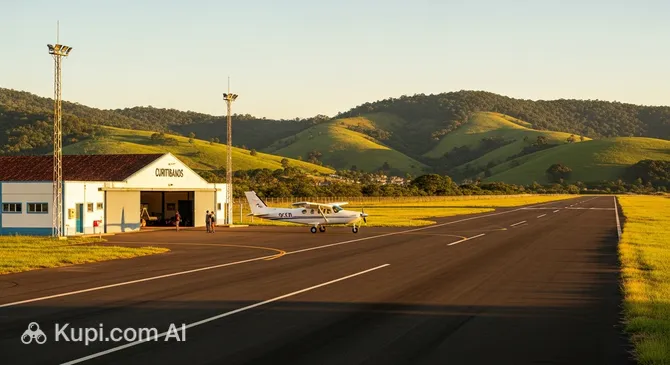
Curitibanos Airport. Source: Kupi.com Binoculars

Curitibanos Airport, officially named Aeroporto Lauro Antônio da Costa, is an important regional node located in the heart of the state of Santa Catarina, on a picturesque plateau. This air harbour serves as a key access point for travellers and business people heading to the central part of the Planalto Serrano region. The airfield is renowned for its tranquillity and the absence of queues typical of major hubs, offering guests a cosy atmosphere and fresh mountain air immediately upon arrival.

AirportCuritibanos Airport
IATAQCR
ICAOSSKU
CityCuritibanos
TimezoneAmerica/Sao_Paulo
ScheduleOnline board

Despite its modest size, Lauro Antônio da Costa Airport plays a strategic role in the state's logistics and offers a number of significant advantages for pilots and passengers:

  • High Reliability: The airport is considered one of the most "weather-resistant" in the region. Thanks to its favourable location at an altitude of approximately 980 metres, more than 300 days of good visibility are recorded here annually, minimizing the risk of flight cancellations due to fog.
  • 24/7 Availability: The runway is equipped with modern night lighting (beaconing), allowing for the safe arrival and departure of aircraft during hours of darkness.
  • Convenient Logistics: The terminal is just a few minutes' drive from the city centre via the SC-451 highway, ensuring a quick transfer to the municipality's main business and tourist facilities.
  • Infrastructure: For the convenience of aviators, a refuelling station is available on-site (Avgas and kerosene are available), and the apron and passenger terminal have been updated.

Contact Information

  • Official Airport Website: www.curitibanos.sc.gov.br (managed by the city prefecture)
  • Help Desk Phone: +55 (49) 3245-7200 (Municipal Administration) or +55 (49) 99921-5011 (Aerodrome Administration)
  • Airport Address: Rodovia SC-451, Km 4, Curitibanos - SC, 89520-000, Brazil
  • Email: prefeitura@curitibanos.sc.gov.br
  • Airport Social Media: News is published on the municipality's official accounts — Instagram and Facebook
  • Lost Luggage Information: Resolved through the aerodrome administration by phone +55 (49) 99921-5011
  • Passenger Support Contacts: Support is provided through the Secretariat of Industry and Commerce (Secretaria de Indústria e Comércio) via the general city hall phone number

How to Get to the Airport

Thanks to the fact that the airport is located just 4 kilometres from the centre of Curitibanos, the journey there takes minimal time and requires no complex logistical solutions. Since the air harbour primarily serves private and business aviation, there is no heavy traffic typical of major international hubs, and transport accessibility remains at a high level.

Below are the main ways to reach the terminal located on the SC-451 highway.

Taxi and Transfer

The most convenient and fastest way to get to the airport is to use a taxi service. Local services (Radio Taxi) operate in the city, with ranks found at central squares and near the bus station. Mobile driver-hailing apps are also beginning to gain popularity in the region, but traditional taxis remain the more reliable option.

  • Travel Time: The trip from the city centre takes just 5–10 minutes.
  • Cost: The estimated price of the trip is between 20 and 35 Brazilian Reals (BRL), depending on the time of day and the specific service's tariffs.
  • Tip: If you have a flight scheduled for early morning or late at night, it is recommended to arrange a car with a driver in advance, as 24-hour vehicles may be scarce in a small city.

Car Rental

Travelling by rental car is an excellent choice for those planning to explore the mountain region of Santa Catarina. There are several rental agencies in the centre of Curitibanos. You can reach the airport via the main regional highway SC-451 (Rodovia Caçador - Curitibanos). The road is paved and in good condition.

Airport Parking

A parking zone for vehicles is provided on the grounds of Lauro Antônio da Costa Airport. Given the regional status of the airfield, parking is located in the immediate vicinity of the terminal entrance.

  • Availability: Spaces are usually available; prior booking is not required.
  • Conditions: Generally, short-term parking is free or has a nominal cost (it is recommended to check current rates with the aerodrome administration before travel).

Public Transport

There are no specialised express trains or "Aeroexpress" shuttles in Curitibanos. Municipal buses run through the city and surroundings, but direct routes with a stop immediately at the terminal may be absent or infrequent. This option is not recommended for tourists with luggage due to the need to walk from the highway to the terminal building. If you still decide to use the bus, look for routes heading towards the industrial zone along highway SC-451.

Neighbouring Airports

Since Curitibanos Airport focuses on small aviation, most tourists arrive in the region via larger neighbouring air hubs and then reach their destination by ground transport. The nearest alternative for commercial flights is Correia Pinto Regional Airport, located approximately 46 km away. This is a convenient option for domestic flights.

For international flights or a broader range of destinations, travellers often choose Hercílio Luz International Airport in Florianópolis (about 208 km) or Navegantes Airport (199 km). Also within a 200 km radius are Passo Fundo Airport and a major regional hub — Chapecó Airport, which receives a large volume of passengers.

Terminals and Map

Curitibanos Airport is distinguished by extreme compactness and functionality, which is typical for small regional airfields oriented primarily towards small and business aviation. Unlike large busy hubs, passengers here do not encounter complex transfer schemes or multi-level navigation systems, making the journey as comfortable and fast as possible.

Number of Terminals and Structure

The airport complex is served by one passenger terminal (TPS). It is a small single-storey building housing all the services necessary for flight operations and short-term guest stays. Due to the absence of a regular flow of large commercial airlines, the terminal functions in a quiet mode, resembling a business lounge with direct access to aircraft.

Navigation inside the facility is intuitive: all zones are within direct line of sight. There is no need for terminal maps or digital signs, as it is simply impossible to get lost here.

Passenger Service Zones

The interior space of the terminal is organised rationally, combining departure and arrival flows into a single functional space.

  • Departure Zone: Includes a small check-in counter (used if there are charter flights or for pilots to file flight documentation) and a cosy waiting hall. The distance from the building entrance to the exit onto the apron is only a few dozen metres.
  • Arrival Zone: Arriving passengers enter the terminal building on foot directly from the airfield. There are generally no separate baggage belts here: luggage is handed from the aircraft to passengers personally or delivered by ground crew directly to the terminal entrance.
  • Transfers: As the airport consists of one compact building, there are no transfers between terminals.

Features and Processing Times

The main feature of Terminal QCR is the absence of queues and bureaucratic delays. The infrastructure is tuned for an individual approach to each flight.

  • Speed: The full cycle of pre-flight procedures takes minimal time. For private aviation passengers, completing formalities and boarding usually requires between 10 to 20 minutes.
  • Security Screening: The screening procedure (if required by the regulations of a specific flight) is quick and conducted in a calm environment, without the need to remove shoes or take out liquids, as is common in international airports.
  • Comfort: The building is equipped with basic amenities, including restrooms and a rest area where one can wait comfortably for the crew or transfer.

Navigation Recommendations

To make the most convenient use of the airport infrastructure, follow these simple tips:

  1. Upon arrival by car, park in the lot directly in front of the terminal facade — the entrance to the building is just steps away.
  2. If you are flying by private jet, there is no need to arrive 2–3 hours early. Arriving 30–40 minutes before the planned take-off is sufficient to settle formalities without rushing and speak with the pilot.
  3. Those meeting passengers are recommended to wait for guests either in the parking lot or in the general hall of the terminal, as the exit from the airfield leads through a common zone.

Airport History

History of Curitibanos Airport

The development of aviation in the municipality of Curitibanos is a story of the gradual transformation of a modest site for small aviation into a strategically important infrastructure facility for the state of Santa Catarina. The official starting point for the modern phase of the airport's existence is considered to be May 8, 2009. It was on this day that the grand opening of the new airport complex took place, named in honour of Lauro Antônio da Costa — a prominent local figure who did much for the prosperity of the region.

From Dirt Strip to Asphalt

Prior to the large-scale modernisation in 2009, air connections in this part of the mountain plateau (Planalto Serrano) were episodic. The local airfield consisted of a simple dirt strip serving mainly light farmers' planes and postal aircraft. The opening of a paved runway and a basic terminal was a breakthrough, allowing the region to become more accessible to investors and tourists, bypassing long journeys on winding mountain roads.

2020s Modernisation: A Course for Safety

The newest chapter in the history of the air harbour is linked to a comprehensive reconstruction carried out in the early 2020s with the support of the state government and the National Secretariat of Civil Aviation. The main goal of the works was to bring the infrastructure into full compliance with strict ANAC safety standards.

Key changes included:

  • Runway Renewal: The asphalt surface was restored and modern markings applied, allowing for the reception of heavier business-class turboprop aircraft.
  • Lighting Equipment: The installation of a night lighting system (beaconing) was a critically important step. This removed restrictions on operations during hours of darkness, turning the airport into a 24-hour facility.
  • Terminal Improvement: The terminal building was renovated to create more comfortable waiting conditions for crews and business aviation passengers.

Strategic Role: Medicine and Safety

Although regular commercial flights by major airlines remain a prospect for the future, the airport has occupied a unique niche in the life of the region. Thanks to its reliability and technical equipment, it has become a key node for air ambulance and rescue services.

The airport's history is rich with examples of saving lives: it is from here that flights are regularly launched for the emergency transport of patients to major state hospitals and the transport of organs for transplantation. Furthermore, the base is actively used by firefighting aviation to combat forest fires in hard-to-reach mountain areas.

Interesting Facts

  • High-Altitude Status: Located at an altitude of about 980 metres above sea level, this airfield is one of the highest in southern Brazil.
  • Weather Phenomenon: Pilots historically value Curitibanos for its unique microclimate. Often, when neighbouring valleys are closed in by dense fog, a "window" of good visibility remains here, making the airport a reliable alternate airfield.
  • Investment Record: Investments in the 2020s reconstruction became one of the largest one-time investments in the municipality's transport infrastructure in recent decades, highlighting the importance of the air gateway for the city's economy.

Services and Facilities

Since Curitibanos Airport (QCR) is oriented primarily towards serving private aviation, medical flights, and business travel, its service infrastructure differs significantly from large commercial hubs. There is no customary bustle, huge duty-free zones, or noisy food courts here. Services and amenities are adapted to ensure maximum speed of processing and comfort for pilots and passengers who spend minimal time in the terminal.

Restaurants, Cafes, and Shops

Inside the compact passenger terminal, full-service restaurants or chain cafes are absent. The infrastructure is designed for short stays:

  • Dining: Passengers and crews can use vending machines with snacks and drinks or a small cafeteria (availability depends on the current service operator), offering coffee and light snacks.
  • Shops: Retail outlets and Duty Free are not provided on the airport grounds. Travellers are advised to purchase everything necessary in advance in the city of Curitibanos, which is just a few minutes' drive away.

Lounges and VIP Service

The main advantage of Lauro Antônio da Costa Airport is the exclusivity of the atmosphere. In fact, the entire terminal functions as a single VIP lounge. Due to the lack of regular passenger traffic, guests can wait for their flight in silence and comfort, settling into comfortable seats in the general hall. Airport staff provide a personalised approach to each flight, assisting with luggage and document processing without queues.

Communication and Electronics

For business travellers for whom staying connected is important, basic communication amenities are provided at the airport:

  • Wi-Fi: A wireless internet network is usually available within the terminal. The access password can be obtained from administration staff or at the check-in counter.
  • Charging Stations: There are sufficient power outlets in the waiting hall to charge mobile devices and laptops before the flight.

Financial Services

There are no ATMs or currency exchange points in the terminal building. As the airport is not an international entry point, all financial operations must be planned in advance. The nearest bank branches (Banco do Brasil, Caixa, Bradesco) and ATMs are located in the centre of the Curitibanos municipality (about 4-5 km from the airport).

Medical Services and Safety

The airport is an important base for emergency response services, so safety issues here are at a high level. In case of necessity, first aid can be provided by security staff or aerodrome fire protection personnel. For serious medical cases, the Hospital Hélio Anjos Ortiz operates in the city, reachable in 10–15 minutes.

Facilities for Special Categories of Passengers

  • Passengers with Children: There are no specialised mother-and-child rooms in the terminal, but clean and spacious restrooms are available. The calm environment of the airport allows for comfortable waiting with children of any age.
  • Passengers with Reduced Mobility: The single-storey design of the terminal makes it maximally convenient for citizens with limited mobility. The absence of stairs, lifts, and long walkways allows for easy movement from the building entrance to the aircraft. Restrooms are equipped accordingly.

Hotels and Accommodation

There are no hotels directly on the airport grounds, which is typical for regional airfields of this type. However, thanks to the proximity to the city, finding accommodation is not a problem. The main hotels are located along the BR-470 highway and in the centre of Curitibanos:

  • City Centre (4–5 km): Popular hotels such as Gabardo Hotel and Hotel Tortatto are located here, offering comfortable rooms, breakfast, and Wi-Fi. A taxi ride from the airport to the hotel reception will take no more than 10 minutes.
  • Budget Accommodation: Small guest houses (pousadas) with a home-like atmosphere can also be found within the city limits.

Business Services

Special conference rooms or business centres with office equipment are not equipped in the terminal. Business meetings are usually held either directly in the city or, in the case of short-term private aviation visits, discussed in the waiting hall, which provides a sufficient level of privacy.
Dining

The gastronomic infrastructure of Curitibanos Airport (QCR) fully corresponds to its status as a small regional airfield serving primarily private and business aviation. Travellers should note that there are no familiar food courts, chain coffee shops, or fine dining restaurants here typical of major international hubs.

Cafes and Food Points in the Terminal

In the sole passenger terminal, the choice of dining places is extremely limited. The organisation of the space assumes that passengers spend minimal time here before departure.

  • Snack Bars and Vending: The main way to have a snack on the airport grounds is via vending machines. Here you can purchase bottled water, carbonated drinks, juices, chocolate, chips, and biscuits.
  • Coffee Zone: Depending on the current operating mode and operator, a small buffet or self-service counter with a coffee machine may function in the waiting hall. Espresso, cappuccino, and a minimal selection of pastries (for example, pão de queijo — traditional Brazilian cheese bread) are offered here.
  • Location: All food and drink points are located in the general zone of the terminal (landside/airside are combined into a single waiting space), accessible immediately after entering the building.
  • Opening Hours: Service points (if a buffet is operating) open situationally, based on the schedule of declared flights. Vending machines are available during terminal operating hours.

Specialised Nutrition and Dietary Options

Due to the lack of a full kitchen in the terminal, opportunities to observe special diets (vegetarian, vegan, Halal, gluten-free) are practically non-existent here.

  • For Vegetarians and Vegans: Nuts or crackers can be found in machines, but there are no substantial meals.
  • Recommendation: If you require specialised or hot meals, it is strongly recommended to arrange this in advance by buying food in the city, or to dine before arriving at the airport.

Local Cuisine: What to Try in the Region

Since the road from the centre of Curitibanos to the airport takes only about 10 minutes, the best solution for gastronomic tourism is to visit restaurants in the city itself. The region is famous for the hearty cuisine of the Serra Catarinense plateau.

  • Pinhão: The main gastronomic symbol of the region. These are seeds of the Brazilian Araucaria, which are boiled or used as an ingredient in meat dishes. Be sure to try Paçoca de Pinhão (a dish made from meat, cassava flour, and crushed pinhão).
  • Entrevero: A traditional dish made from various types of meat and vegetables, often served with pinhão. Ideal for a hearty lunch before a flight.
  • Churrasco: Classic Brazilian barbecue, widely represented in local steakhouses (churrascarias).

Recommendations and Price Range

For a Quick Snack: If you are already at the airport, calculate a budget of 10–20 BRL (Brazilian Reals) for water and snacks from a machine.

For a Full Lunch: It is recommended to visit establishments in the city centre or along the SC-451 highway before leaving for the airport. The average bill for lunch in a good restaurant in Curitibanos will be 40–80 BRL per person.

Summary: Curitibanos Airport is a place for a quick start to a journey, not for long meals. Plan your gastronomic route outside the terminal to enjoy the richness of flavours of the state of Santa Catarina.

Travel Tips

Travelling through a regional airport oriented towards private and business aviation differs significantly from flying through major international hubs. Curitibanos Airport (QCR) offers a unique experience: there is no bustle here, but there are specific features worth considering for the most comfortable trip.

Optimal Arrival Time

The main advantage of Lauro Antônio da Costa Airport is the absence of queues. You do not need to arrive 2–3 hours before departure, as is customary in large terminals.

  • For Private and Charter Flights: It is recommended to arrive at the airport 30–40 minutes before the agreed take-off time. This is sufficient to meet with the pilot, load luggage, and complete necessary formalities.
  • Punctuality: Despite the flexibility of private aviation, try not to be late, as pilots may have strict time slots (ATC slots) for departure, especially if the route passes through busy zones.

Check-in and Security

Procedures in Curitibanos are simplified as much as possible, but security requirements remain strict.

  • Documents: Always have your original identification document (passport or ID) with you. Even for domestic private flights, the pilot is obliged to check the documents of all passengers before admission on board.
  • Screening: There are no body scanners or requirements to remove belts and shoes here, unless provided for by the specifics of a particular flight. However, the aircraft captain has the right to personally inspect luggage for flight safety purposes.

Seat Selection

Since flights from Curitibanos are operated primarily on light aircraft or turboprop planes, the concept of "seat selection" is specific here.

  • Balancing: Often, passenger seating is determined by the pilot based on the centre of gravity (weight distribution) of the aircraft. Follow the crew's instructions — this is a matter of your safety.
  • Best Views: If there is a choice, sit by the window. Flying over the Santa Catarina plateau (Planalto Serrano) offers stunning views of mountain landscapes, Araucaria forests, and farmland.

Hand Luggage and Baggage

Small aviation has its own limitations on baggage compartment capacity.

  • Type of Bags: Instead of rigid plastic suitcases, it is better to use soft travel bags. They are easier to stow in the limited space of a small aircraft.
  • Prohibited Items: Rules for carrying dangerous substances (flammable liquids, gases, weapons) apply just as strictly as on commercial airlines.
  • Weight: Agree on the baggage weight with the flight operator in advance. Overloading is critical for a light aircraft.

Recommendations for Transit Passengers

Curitibanos Airport is not a transit hub, and there is no possibility to check luggage through to the final destination point here.

  • Connections: If you are flying to Curitibanos to then transfer to a commercial flight at a major airport (for example, in Florianópolis or Navegantes), allow a large time margin for ground transfer or flight. Remember that mountain weather can make adjustments to the schedule.

Customs Control

The airport operates with domestic status. There is no customs or border service here.

  • If your route involves flying abroad, you will have to make an intermediate stop at an international airport in Brazil (for example, Guarulhos in São Paulo or Hercílio Luz in Florianópolis) to pass passport control and customs.

How to Save Time and Money

  • Transfer: Do not rely on a taxi waiting at the exit. The city is small, and free cars may not be available. Book a taxi in advance by phone or arrange a transfer with your hotel — this will save you time and stress.
  • Dining: There are no restaurants at the airport, and prices in vending machines may be higher than in a supermarket. Buy water and a snack in the city before leaving.
  • Cash: Be sure to withdraw cash Reals (BRL) in the city. There are no ATMs at the airport, and taxi drivers do not always accept cards.

What to Do in Case of Flight Delay

Fog is a frequent phenomenon in the mountainous regions of Brazil, although Curitibanos is famous for good weather.

  • Communication: Keep the direct phone number of your pilot or airline manager at hand. In a small airport, there are no electronic boards, and information is conveyed personally.
  • Leisure: Take a book with you or download films onto a tablet. There is Wi-Fi in the terminal, but the speed may be unstable, and there is practically no entertainment inside.
  • Plan "B": If the flight is cancelled, return to the city. The centre is only 4 km away, where you can comfortably wait out the bad weather in a hotel or restaurant.

Reached the end of the page?

That means the route is fully explored