Support

Diamantina

About

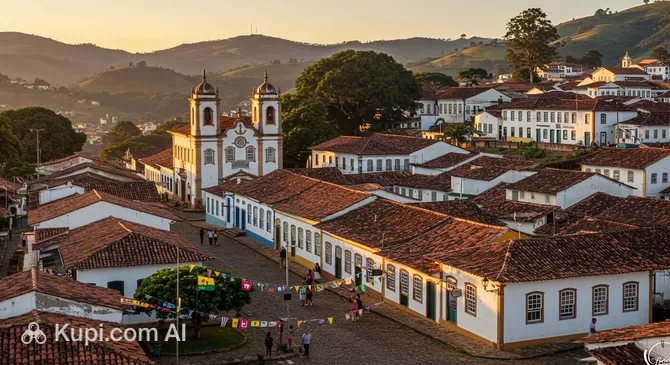
Diamantina is a true gem of the state of Minas Gerais, tucked away among rocky mountains and preserving the atmosphere of long-gone eras. This city seems frozen in time, offering travelers a unique opportunity to witness the colonial grandeur for which Brazil is famous. Perched at a high altitude far from bustling metropolises, Diamantina enchants with its cobblestone streets, colorful facades, and picturesque panoramas of mountain ranges.

Diamantina. Illustration.
Source: Kupi.com AI

The city is located about 350 kilometers from Belo Horizonte, allowing it to remain slightly off the beaten path of mass tourism and maintain its special charm. Today, about 48,000 people live here, and the pace of life remains steady and calm. The fascinating history of Diamantina is inextricably linked to the 18th-century diamond rush: founded in 1713, the city quickly became a gemstone mining center, which defined its architectural appearance and wealth of cultural heritage.

The historical center has been preserved almost in its original form, allowing guests to literally touch the past. Beyond architectural walks, the city is famous for its hospitality and musical traditions. The annual carnival and evenings with live music in local cafes attract connoisseurs of authentic culture. Diamantina is an ideal destination for those seeking inspiration, wishing to immerse themselves in the romance of the treasure-hunters' era, and enjoy the cozy atmosphere of an old Brazilian town.

Weather Overview

The climate in this region is largely determined by its high-altitude location, which saves it from the grueling tropical heat. Typical weather in Diamantina is characterized by a clear division into wet and dry seasons. The warmest period lasts from October to March, when the average temperature stays around 21–22°C, and daytime highs reach a comfortable 26–27°C.

Summer months (especially December and January) bring the rainy season: precipitation occurs frequently, up to 18–21 days per month, so an umbrella will be a necessary accessory. Winter, from June to August, on the contrary, is characterized by dryness and clear days. During this time, the air becomes cooler, with average values around 17–18°C, and nights can be quite bracing—the temperature sometimes drops to 12°C.

Expect a warm summer with occasional rain and cool, dry winters, which are excellent for active tourism. Transitional months, such as May or September, often delight travelers with moderate warmth and low precipitation.

Average monthly temperature

Average monthly precipitation

Interesting Facts

Beyond its main attractions, Diamantina holds many fascinating secrets and stories that make a walk through the city a true journey back in time. Here are a few facts to help you get to know this unique corner better:

  • Architectural symbol of an era. The city's hallmark is an unusual complex of two mansions connected by an elegant covered gallery soaring directly over the street. In the past, this housed a strict office for overseeing diamond mining, but today this "air bridge" is a favorite spot for tourist photos.

  • Birthplace of the capital's creator. Diamantina is proud to be the birthplace of Juscelino Kubitschek, the famous president of Brazil who built the city of Brasília. His connection to his home region adds historical weight to the town, and the house where he grew up is an important point on the map for history buffs.

  • City of legends and treasures. The 18th-century "diamond rush" era left behind not only rich facades but also many myths. Local folklore is full of stories about the ghosts of gold prospectors and hidden treasures that are rumored to still lie in the caches of old buildings or abandoned mines.

  • Carnival traditions. Despite its quiet and patriarchal appearance, the city transforms beyond recognition once a year. The local carnival is considered one of the most authentic and fun in the country: historic streets become a stage for an endless celebration where the past meets the present to the rhythm of samba.

How to Get There

When planning a trip to this historic corner, keep in mind that the city is located in a mountainous area, far from bustling metropolises. You can explore all ways to get to the city in our detailed guide, but tourists most often travel through major transport hubs of neighboring cities with a transfer to a bus or a rented car.

There is no airport in Diamantina itself, so travelers usually choose to fly to the state capital or other regional centers. The most popular and convenient option is Tancredo Neves International Airport (IATA: CNF), also known as Confins. It is located near the city of Belo Horizonte, about 158 km from Diamantina. This is a major international hub with excellent connections. A taxi or transfer from here will take approximately 4 hours 20 minutes, and the road passes through very scenic areas.

Another possible point of entry is Montes Claros Airport (IATA: MOC), located in the city of Montes Claros. It is slightly further away, at a distance of about 172 km from the center of Diamantina. This is a regional airport with moderate passenger traffic, which may be convenient if you are flying on domestic routes. Travel time by car is approximately 4 hours 40 minutes.

For clarity, here is a summary of the main airports used to reach the region:

AirportPassenger trafficDistance
Tancredo Neves International Airport12.3 mln158 km
Montes Claros Airport355 203172 km
Usiminas Airport191 000179 km
Governador Valadares Airport84 638186 km
Divinopolis17 000252 km

Regarding rail connections, there are currently no direct passenger trains to Diamantina. Although the region is famous for its history linked to railroads, the city's old station is now more of an architectural monument. Tourists are recommended to use regular intercity buses that depart from the bus stations in Belo Horizonte and other large cities in the state of Minas Gerais. The roads here are paved and in good condition, making bus travel quite comfortable.

Main Attractions

Attractions:

Diamantina is an open-air museum-city where every cobblestone breathes history. The city's historical center, listed as a UNESCO World Heritage site, is so well-preserved that a walk through it feels like a journey back to the 18th century. Here, Baroque architecture intertwines harmoniously with the rugged beauty of the mountain landscape, creating a unique backdrop for your journey.

One of the most recognizable landmarks is the Passadiço da Casa da Glória. This architectural complex consists of two mansions located on opposite sides of the street, connected by a picturesque blue wooden bridge at the second-floor level. Built in the 19th century, it has become a true symbol of the city. Originally, the buildings belonged to diamond superintendents and later served as an orphanage and a school for girls. Today, it houses the Institute of Geology, and tourists come here to take the iconic photo against the backdrop of the famous "air bridge."

To better understand the region's history, it's worth visiting the Diamond Museum (Museu do Diamante). It is located in the former home of Father Rolim, one of the participants in the conspiracy for Brazil's independence. The museum's exhibition immerses you in the "diamond rush" era: miners' tools, scales for precious stones, antique weapons, and everyday objects from that time are on display. This place allows you to realize the price at which the riches that made this city world-famous were extracted.

Fans of sacred architecture will be interested in the Church of Our Lady of Carmel (Igreja de Nossa Senhora do Carmo). This temple stands out due to an unusual detail: its bell tower is located at the back of the building rather than on the facade. Legend has it that this was done at the whim of an influential patron so that the ringing of the bells would not disturb his beloved, who lived nearby. The church's interior is richly decorated with gilded Rococo carvings and Portuguese azulejo tiles.

If you feel like taking a break from urban architecture, head to Biribiri State Park (Parque Estadual do Biribiri), located just a few kilometers from the center. This place is striking in its combination of natural beauty and industrial history. Here you can swim in crystal-clear waterfalls like Sentinela and Cristais, and visit an abandoned 19th-century textile village that looks like a movie set. The park is ideal for picnics and light hiking among the Serra do Espinhaço mountains.

Local Cuisine

The cuisine of Diamantina is a true gastronomic journey into the heart of the traditions of the state of Minas Gerais, which many Brazilians consider the "tastiest" region in the country. The basis of the local menu is hearty and warming dishes, perfect for the mountain climate. Be sure to try "tutu de feijão"—a thick bean puree mixed with cassava flour and served with fried sausages or bacon. On weekends, feijoada culture reigns in restaurants: this rich stew of black beans and various types of meat is the main dish for family lunches.

For a quick snack or breakfast, there is nothing better than fresh "pão de queijo"—the famous cheese buns that are prepared here with exceptional fluffiness and aroma. Fans of street food should look for "pastel"—crispy fried pies with a hundred different fillings, from minced meat to cheese with herbs. A unique sweet symbol of the city is "queixada"—a traditional pie with nuts and coconut, the recipe for which is passed down through generations.

Among drinks, coffee remains the king of the table. Minas Gerais is one of the world's leading coffee regions, and in Diamantina, this drink is prepared with special care, often served in enamel mugs with a piece of corn cake. Among alcoholic beverages, cachaça—a strong distillate made from sugarcane—is a standout. Many craft varieties of cachaça are produced in the vicinity of the city, aged in wooden barrels and boasting a complex, rich bouquet of flavors.

Dining culture in Diamantina is closely linked to socializing and the slow enjoyment of life. Locals prefer to dine in cozy family restaurants located in old mansions or visit farmers' markets. The market is not just a place for trade, but a center of social life where you can buy homemade goat cheese, guava sweets, and fresh tropical fruits. A special atmosphere is created by gastronomic festivals dedicated to cheese or coffee, which regularly take place in city squares, bringing tourists and townspeople together at a common table.

Travel Tips

Preparing for a trip to Diamantina requires special attention to detail, as this city, located among the mountains of the state of Minas Gerais, is distinguished by its unique terrain and climate. To make your acquaintance with the historical heritage as comfortable as possible and leave only pleasant memories, we have compiled a list of the most important practical recommendations.

  1. The right shoes and wardrobe. This is the most critical point for Diamantina. The historical center is paved with large, untreated stones (known as pé-de-moleque), and streets often go steeply up or down. Categorically forget about heels and unstable shoes—bring only broken-in sneakers or trekking boots with thick soles. Also, remember the temperature changes: even if it's hot during the day, it gets cool in the mountains in the evening, so be sure to bring a warm sweater or a light jacket.
  2. Transport nuances. It is best to move around the historical center on foot—it's the only way to see all the architectural details, and many streets are too narrow for transport. Public transport is represented by buses, but they are rarely needed by tourists within the city. For trips to remote attractions (for example, Biribiri Park), it is better to arrange with a local taxi driver or use a rented car. Taxi hailing apps can be unstable or have long wait times.
  3. Money and payment. The official currency is the Brazilian Real. Most restaurants and hotels accept cards, but Brazil is a country of contrasts, and in small souvenir shops or when buying street food, you will need cash. There are ATMs in the city center (Banco do Brasil, Bradesco), but it is recommended to withdraw a small amount in advance in a large city or at the airport, as ATMs may run out of money on weekends.
  4. Health and safety. Diamantina is a quiet and safe city where you can walk even in the evening; however, basic precautions (not leaving things unattended) should be observed. The main health tip concerns sun protection: due to the altitude, the sun here is very active, so cream with high SPF and a hat are mandatory even in cloudy weather. Pharmacies (Farmácias) are concentrated in the center, but few are open 24 hours, so it's better to have a personal first-aid kit with you.
  5. Language barrier and connectivity. The main language is Portuguese. Few people here know English, mainly the staff of good hotels. Locals try very hard to understand tourists, but for comfortable communication, download an offline translator and maps. Wi-Fi is available in almost all cafes and hotels. If you plan to buy a local SIM card, choose the operator Vivo; it usually has the best coverage in this region of Minas Gerais.
  6. Local etiquette and pace of life. Residents of the state of Minas Gerais are famous for their hospitality and slow pace. It is customary to say hello ("Bom dia" or "Boa tarde") when entering a shop or elevator. Don't be surprised if a waiter or shopkeeper wants to chat with you a little—it's part of the culture. Showing impatience or haste can be perceived as rudeness.
  7. What to avoid. Don't try to see the city in a "dash" of a couple of hours—the steep climbs will quickly exhaust you physically. Avoid loud conversations and noise in churches and museums—religious heritage is treated with great reverence here. Also, do not photograph locals without their permission, especially during religious processions.
  8. Planning the Vesperata. If your trip falls during the period of the famous "Vesperata" (open-air music concerts), book tables in street cafes several months in advance. This is the city's main event, and seats are sold out instantly. If you couldn't book a table, arrive early to take a comfortable standing spot with a good view.

By following these simple tips, you can avoid everyday inconveniences and fully focus on the magic of Diamantina. This city opens up to those who are ready to slow down their pace, breathe deeply, and enjoy the moment among the centuries-old mountains and music.

Entertainment & Nightlife

Nightlife in Diamantina isn't about noisy mega-clubs with neon signs, but a unique blend of bohemian romance, live music, and historic charm. Evenings here are soaked in the atmosphere of "serestas" (street serenades), as the city is famous nationwide for its musical traditions. The main action unfolds in the historical center, where ancient pavements become dance floors and mansion balconies serve as stages.

The epicenter of evening leisure is the famous Rua da Quitanda, which locals often simply call "Quitanda." It is here, in the alleys around the old market, that life buzzes after sunset. The street is closed to traffic, and bar tables take up all the available space. The atmosphere is incredibly democratic and friendly: local university students mix with tourists, and rock and samba echo from every doorway. There is no dress code—the main thing is to be comfortable, so forget about evening dresses and heels in favor of a comfortable casual style.

If you are lucky enough to be in town during the Vesperata, you will witness an unforgettable show. On these days, musicians take over the balconies of historical buildings on Rua da Quitanda, while a conductor leads the orchestra right from the middle of the crowd. This event turns an ordinary dinner into a cultural phenomenon unique to this region, of which Brazil is so proud. On regular days, it's simply pleasant to sit here with a glass of beer or cachaça, enjoying the cool mountain evening.

Among specific venues worth visiting, Catedral Pub stands out. This place is popular for its excellent craft beer list and live performances by local rock bands. The interior, combining ancient masonry and modern decor, creates a cozy atmosphere for long conversations. For a quieter and more intellectual evening, Livraria e Café Espaço B is ideal. This is a hybrid bookstore, café, and bar where literary evenings are often held and acoustic music is played. Here you can try exquisite local snacks surrounded by books and paintings.

Practical Tips and Safety:

Life in the bars starts closer to 8:00 PM, with the peak of fun between 10:00 PM and 11:00 PM. Prices in Diamantina's establishments are noticeably lower than in Rio or São Paulo: the average check for dinner with drinks will be quite reasonable. The historical center is considered a safe zone for night walks, with many police and tourists around. However, when returning to your hotel late at night, it's better to call a taxi through the bar's reception, as streets outside the "party square" can be deserted and poorly lit.

While the nightlife is captivating, don't forget about daytime activities. After a wild night, a quiet stroll through museums, such as a visit to the Juscelino Kubitschek House, or a trip to the natural beauties and waterfalls in the surrounding area, which look particularly picturesque in the morning light, will help you recharge.
Parks & Museums

The cultural and natural landscape of Diamantina extends far beyond its famous historical center. The city, surrounded by the rugged Serra do Espinhaço mountains, offers tourists a wonderful combination of green spaces for relaxation and museums that preserve the memory of legendary figures in Brazil.

The nature around the city is breathtaking in its monumentality. One of the main natural attractions is the Salitre Grotto (Gruta do Salitre). This place resembles a majestic Gothic cathedral created by the elements: huge rock walls form whimsical arches and halls with stunning acoustics. The grotto is often used as a natural setting for concerts, and travelers come here for incredible photos against the backdrop of the stone giants.

Another important green zone is Biribiri Park (Parque Estadual do Biribiri). Since its main water cascades and historic village are often part of main sightseeing tours, it's worth paying attention to the ecosystem itself here. Walking the park's trails allows you to see the unique flora of the cerrado region and enjoy the silence away from the city pavements. It's the perfect place to trade architectural impressions for the contemplation of wildlife and mountain landscapes.

The city's museum map allows you to look at history through the lives of specific people. Be sure to visit the House of Chica da Silva (Casa de Chica da Silva). This was the residence of one of the most famous women in the country's colonial history—a freed slave who became an influential lady of high society. The house's exhibition, with its cozy courtyard and wooden balconies, perfectly conveys 18th-century life and tells the romantic but complex story of her life with a diamond tycoon.

Equally interesting is the Juscelino House (Casa de Juscelino)—a museum dedicated to President Juscelino Kubitschek, the founder of the country's new capital. The modest building where he spent his childhood is filled with personal belongings, photographs, and musical instruments, as the politician was a passionate lover of serenades. This museum shows how a man who changed the face of an entire state grew up from a simple family in a provincial town.

Among the architectural monuments that serve as unofficial cultural museums, the Old Market (Mercado Velho) stands out. This beautiful building with wooden arches was once a center for diamond trading. Today, it hosts cultural fairs where you can buy products from local artisans, making it a living monument to the city's trading traditions.

If you are looking for something special and hidden from the eyes of most tourists, take a walk along the Caminho dos Escravos (Slave Path). This is an old paved road built in the 18th century for transporting precious stones. By walking even a small section of it at sunset, you will not only see an impressive mountain panorama but also physically feel the scale of the labor invested in creating this region.

Getting Around

Diamantina's transport system perfectly matches the spirit of this small historic town: it is simple, steady, and lacks the hustle and bustle of metropolises. You won't find a metro, trams, or trolleybuses here. Given the compactness of the historical center and a population of less than 50,000, the main way for tourists to get around remains walking and motor transport.

The only form of public transport is city buses. The route network connects residential areas on the outskirts with the historical center and the bus station. The buses look quite modern, but they run at fairly long intervals, especially on weekends and in the evening. For a tourist, they might only be useful if you are staying in a remote guesthouse or planning a budget trip to neighboring villages, such as the Mendanha district.

The fare payment system here is conservative. Electronic transport cards are used mainly by locals for regular trips. For tourists, it is simpler and more convenient to pay the fare in cash directly upon entry. Payment is made to the conductor or driver. The fare is fixed and low, but it is very important to have small bills and coins with you, as change for large banknotes may not be available.

A much more popular alternative for city guests is taxis. Official cars are usually white with appropriate markings. They can be found at special ranks (ponto de táxi) in the main squares, such as near the Old Market, or called by phone through the hotel reception. Popular ride-hailing apps (Uber and 99) also operate in the city, but the waiting time for a car may be longer than in large cities due to the small number of drivers online.

A specific feature of local transport, typical of many small towns in the region, are mototaxis. This is a fast and inexpensive way to get from point A to point B, especially if you need to overcome a steep uphill climb. Drivers in vests offer a helmet to the passenger and can drive through narrow spots where a car would be cramped. However, this option is only suitable for solo travelers without luggage and requires a certain amount of courage.

The main advice for navigating Diamantina: pace yourself during walking tours. Although distances seem small, the city is built on steep hills and the pavements are laid with uneven stone. Therefore, for short but tiring uphill climbs, it is wise to combine walking with short taxi rides. Bicycle rentals are not common in the city due to the difficult terrain, which requires significant athletic preparation.

Accommodation

Accommodation in Diamantina is not just a place to sleep, but a continuation of your cultural immersion in the colonial era atmosphere. There are virtually no large glass-and-concrete chain hotels in the city. The basis of the accommodation stock consists of cozy guest houses, called "pousadas" in Brazil. They are often located in restored 18th- and 19th-century mansions, where modern amenities coexist harmoniously with antique furniture, wooden floors, and high ceilings. The range of housing varies from simple, budget-friendly hostels for backpackers to exquisite boutique hotels offering a high level of service and historic charm.

When choosing an area to stay, most tourists prefer the Historical Center. This is a strategically sound decision, given the city's complex terrain. By staying in the center, you will be within walking distance of the main attractions, restaurants, and music venues. Living in the ancient alleys allows you to avoid tiring uphill climbs after dinner. If you are looking for peace and seclusion, you can consider options in areas a bit further from the central square, but be prepared for the need to use a taxi for getting around.

An important tip for trip planning concerns the events calendar. During the famous Vesperata (a season of music concerts, usually held twice a month from April to October) and during Carnival, the city experiences a real tourist boom. On these dates, the demand for housing far exceeds supply, and prices rise significantly. To guarantee comfortable accommodation, it is highly recommended to book a room several months before your trip.

Pricing in Diamantina generally remains democratic compared to major metropolises or coastal resorts. Tourists can find both economical options with basic amenities and more expensive luxury rooms with panoramic mountain views. Booking is available through popular international online platforms, but many small family-run pousadas also actively take orders through their websites or messengers, which can sometimes result in a better offer.

Nearby Cities

For those who want to explore the surroundings, Diamantina serves as an excellent starting point for day trips to several interesting nearby locations:

First and foremost, you should pay attention to the historic town of Serro, located about 90 km from Diamantina. This is another colonial treasure of the state of Minas Gerais, known for its steep streets and Baroque churches. However, the town's main pride is the famous "Queijo do Serro" (Serro Cheese), recognized as an intangible cultural heritage of Brazil. A trip here allows you not only to enjoy the architecture but also to visit old creameries to taste this delicacy straight from the farm.

For nature lovers and those seeking a quiet getaway, the village of Milho Verde, located halfway between Diamantina and Serro, is perfect. This small settlement attracts travelers with its crystal-clear waterfalls and natural pools, which are easily reached on foot. A relaxed, almost mystical atmosphere prevails here, and the local landscapes overlooking mountain ranges create ideal conditions for ecotourism and meditative relaxation far from civilization.

CityPopulationDistance
Pinheiro78 16218 km
Gouveia11 68128 km
Serro20 83546 km
Rio Vermelho12 73963 km
Sabinopolis15 41672 km

These nearby destinations provide an insight into the region's diverse culture and landscapes.

Shopping & Souvenirs

Shopping in Diamantina is not a chase for global brands or a visit to huge malls, but rather a fascinating immersion into local traditions and crafts. The city, where every stone breathes history, offers tourists unique goods created by the hands of local masters. Here, Brazil reveals itself through authentic souvenirs: from famous handmade carpets to precious stones reminiscent of the region's glorious past.

Main shopping districts and streets are concentrated in the city's historical center. The busiest artery can be called the area around Rua da Quitanda and the square near the Cathedral. Walking along these cobblestone alleys, you will find many small shops located on the ground floors of old colonial mansions. There are no display windows in the modern sense: shop doors are often wide open, inviting you to step inside and chat with the owners.

As for shopping centers, there are none in the traditional sense in Diamantina. The city's historical status and its architecture do not allow for the construction of modern glass complexes. Instead, small shopping galleries hidden inside historical buildings are popular here, where a clothing store, a souvenir shop, and a cozy coffee house might coexist under one roof.

The true heart of local trade are the markets, and the main one is undoubtedly the Old Market (Mercado Velho), also known as Mercado dos Tropeiros. This is an architectural gem of the city with characteristic wooden arches. It is most interesting to visit on Saturday morning, when a producers' fair takes place. At the market, you can buy farm products, handicrafts, and try local delicacies to the sound of live music.

When choosing souvenirs, pay special attention to Arraiolos carpets (tapetes Arraiolos). This is a unique craft brought from Portugal that took root in Diamantina: local craftswomen hand-embroider wool on canvas, creating incredibly beautiful patterns. Also, given the city's history, products made from semi-precious stones and crystals mined in the region remain popular gifts. Don't forget the gastronomy: you should take home a jar of local jam (doce de leite) or a bottle of craft cachaça.

Opening hours and payment in the city follow a steady pace of life. Shops are usually open from 9:00 AM to 6:00 PM on weekdays, with a lunch break that can be flexible. On Saturdays, many shops work only until noon, and on Sundays almost everything is closed except for souvenir shops in the most tourist-heavy spots. Credit cards are accepted in most stationary shops and restaurants, however, for purchases at the market or from street vendors, it is highly recommended to have cash Reais with you.

The Tax Free system (tax refund) in Diamantina, as in most small towns in the Brazilian interior, does not actually function. Tourists should not count on issuing VAT refund receipts, as local trade is oriented toward the domestic market and direct sales.

Nearby cities

Reached the end of the page?

That means the route is fully explored