Support

Iguatu

About the Airport

Iguatu Airport, officially bearing the name of Dr. Francisco de Assis de Aragão, is not merely a runway, but a key aerial artery providing access to the heart of the State of Ceará. For travellers seeking to explore the central regions of Brazil away from the bustling coastal metropolises, it serves as a starting point into the world of authentic Brazilian culture. This compact airport plays a vital role in regional connectivity, linking Iguatu with the country's major transport hubs.

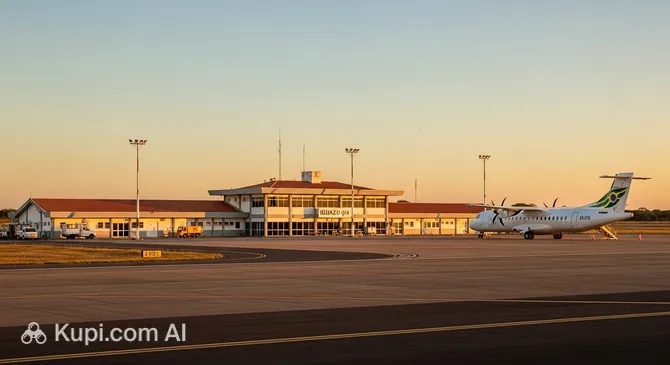
Iguatu. Illustration.
Source: Kupi.com AI
PropertyValue
IATA CodeQIG
ICAO CodeSNIG
CityIguatu
CountryBrazil
TimezoneAmerica/Fortaleza
ScheduleOnline Timetable

The main advantage of Iguatu Airport is its strategic location. It significantly reduces travel time for those heading to the central part of Ceará, eliminating the need for a long drive from the capital, Fortaleza. Thanks to its modest size, the airport offers passengers fast and comfortable service: there are no long queues for check-in or tiresome waits for luggage.

Although the airport primarily serves regional flights, it is an important link in the transport system of Brazil. Through it, travellers can easily reach major cities and then continue their journey across this amazing country. It is an ideal choice for those who value their time and prefer to begin their acquaintance with the region without unnecessary hassle.

Contact Information

Below is the contact information for Iguatu Airport (Dr. Francisco Tomé da Frota). Please note that this is a small regional airport, and some communication channels common to major international hubs may not be available.

  • Official Website: Generally, small municipal airports in Brazil do not have their own websites. It is best to check current information regarding airport status on aviation authority websites or through the airline.
  • Help Desk Phone: +55 (88) 3581-9311. Please consider that service will likely be conducted in Portuguese.
  • Address: Rodovia CE-282, s/n - Zona Rural, Iguatu - CE, 63500-000, Brazil.
  • Email: An official public e-mail for contacting the airport is not provided.
  • Social Media: The airport does not maintain official pages on social networks.
  • Lost Luggage Information: For all issues related to lost or damaged luggage, please contact the representative of the airline you flew with directly.
  • Passenger Support Service: To resolve flight-related issues, please speak to your airline's staff at the airport. For general enquiries, you may call the main airport phone number.

How to Get to the Airport

Getting to the airport in the city of Iguatu from the city centre is a simple and quick task, as the airport is located close to the main urban area. The journey usually takes no more than 15-20 minutes, depending on traffic conditions. The most convenient and popular method is taxi or ride-sharing apps (such as Uber or 99), which are widely used in Brazil. The cost of the trip is moderate, but it is always recommended to check the fare in advance or ensure the driver has switched on the meter. You can also book a private transfer in advance, which is particularly convenient for those travelling with heavy luggage.

For a more budget-friendly journey, you can use public transport. Although there are no specialised express buses to the airport in Iguatu, some city bus routes may pass in the immediate vicinity. This is the cheapest option, but it may require more time and a short walk from the stop to the terminal. It is recommended to check route numbers and the current schedule locally, as these are subject to change. Options such as a metro or commuter trains are not available in the city.

If you value independence and plan to explore the surroundings, renting a car is an excellent solution. In Iguatu, you can find offices of local and international rental companies. With a rental car, you can reach the airport with maximum comfort. For those arriving in their own or rented vehicle, parking is available within the airport grounds. It is suitable for both short stops to drop off or pick up passengers, and for longer stays while you are away.

Terminals and Map

Iguatu Airport (QIG) is a small regional airport serving domestic flights within Brazil. Its infrastructure is simple and straightforward, making it particularly convenient for passengers unaccustomed to the hustle and bustle of large aviation hubs.

Airport Structure

Iguatu Airport consists of one small terminal that handles both arriving and departing flights. Thanks to its compact size, navigating the building presents no difficulty whatsoever. All key areas—check-in counters, security screening, the departure lounge, and the baggage claim area—are located on a single floor within walking distance of each other. Since there is only one terminal, there is no need for transfers between buildings.

Departure and Arrival Zones

Upon entering the terminal building, you immediately find yourself in the general area with check-in counters. After receiving a boarding pass, passengers proceed to a small security screening area, which leads to the sole departure lounge. The arrival zone is organised just as simply: after disembarking the aircraft, passengers enter a hall with a baggage claim belt, located next to the main airport exit.

Procedures and Time

Due to the low passenger volume, completing all pre-flight formalities at Iguatu Airport usually does not take much time. Check-in and security screening rarely last longer than 20-30 minutes. Nevertheless, it is recommended to arrive at the airport approximately 1 to 1.5 hours before departure to go through all procedures without rushing.

Navigation Tips

Getting lost in Iguatu Airport is practically impossible. Its layout is intuitive, and signs clearly lead to all necessary zones. If you have any questions, airport staff are always ready to assist. The main advice is simply to follow the standard sequence: Check-in → Security → Departure Lounge.

Airport History

Iguatu Airport, officially known as Dr. Francisco Tomé da Frota Airport (Aeroporto Regional de Iguatu - Dr. Francisco Tomé da Frota), is an important air hub for the central-southern region of the State of Ceará. Its history reflects the stages of regional aviation development in Brazil and the drive towards better transport integration.

The airport was opened in 2002, initially possessing quite modest infrastructure with a dirt runway. In its early years, it primarily served light aviation, private aircraft, and agricultural needs. A key moment in its history was a large-scale modernisation completed in 2012. As part of this project, the state government invested funds in paving the 1,400-metre runway, opening up entirely new possibilities for the airport.

The most significant event in the airport's history occurred in 2014, when it received its first scheduled commercial flight. The airline Azul Linhas Aéreas launched a route connecting Iguatu with the state capital, Fortaleza. This was a true breakthrough for the entire region, which gained direct air connectivity with a major transport hub. Flights were operated on modern ATR 72-600 turboprop aircraft, marking an achievement for an airport that had progressed from a simple dirt strip to hosting commercial liners.

Although scheduled commercial flights were suspended over time, the airport continues to play an important role. It serves air ambulance flights, business jets, and charter transport, remaining a vital infrastructure facility. In recent years, Iguatu Airport has been included in federal and regional programmes for the development and modernisation of the airport network, offering hope for its further development and the potential resumption of passenger services in the future.

Services and Amenities

Iguatu Airport (QIG) is a small regional air hub providing passengers with a basic but necessary set of services for a comfortable wait before their flight. The airport's infrastructure is focused on meeting the essential needs of travellers arriving in or departing from this region of Brazil.

To satisfy hunger or wait over a cup of coffee, there is a small snack bar or café at the airport where you can purchase beverages, snacks, and light meals. Shopping opportunities are limited; however, you may find a kiosk selling essentials, newspapers, and souvenirs. VIP halls and premium lounges are not available in the terminal.

Passengers can make use of free Wi-Fi, although connection speed and stability may vary. Power outlets for charging electronic devices are provided in the waiting hall, but their number may be limited. ATMs from local banks are usually installed within the terminal area, but specialised currency exchange points are absent. It is recommended to exchange money in advance in larger cities.

To ensure the safety and health of passengers, a medical point is available at the airport, ready to provide first aid. Travellers with children can use the mother and child rooms, equipped with changing tables. The airport is also adapted for passengers with reduced mobility: ramps and specially equipped restrooms are available to facilitate free movement throughout the terminal.

There are no specialised business centres or conference rooms at Iguatu Airport. Hotels are not provided within the airport grounds; however, various accommodation options can easily be found in the city of Iguatu, which is just a few minutes' drive from the terminal.

Where to Eat

As a small regional air hub, Iguatu Airport (QIG) offers passengers basic but convenient options for a snack. It is important to understand that the selection here is not as extensive as in major international airports and is focused mainly on satisfying the basic needs of travellers before departure.

typically, a small café or "lanchonete"—a traditional type of establishment in Brazil—operates in the main and only terminal. Here you can have a quick and filling snack. The menu usually features popular Brazilian savoury bites:

  • Pão de queijo — famous cheese buns, ideal for a light breakfast or a snack with coffee.
  • Salgados — various savoury pastries, such as coxinha (tear-drop shaped chicken croquettes) or empada (small pies).
  • Simple sandwiches and toast.

For a full meal, choices may be limited. If you have time, it is better to eat at one of the restaurants in the city of Iguatu before travelling to the airport. Establishments at the airport are more oriented towards a quick-service format. Regarding special dietary requirements, finding vegetarian, vegan, or gluten-free dishes, aside from fruit or certain beverages, may be difficult. It is recommended to carry suitable snacks with you if you follow a strict diet.

All food outlets are located in the public zone (landside), accessible to both departing passengers and those seeing them off. Prices here are generally slightly higher than in the city but remain quite reasonable. Opening hours are usually tied to the flight schedule: the café opens a few hours before the first departure and closes after the last aircraft has left.

Tips for Travellers

To ensure your journey through the airport in the city of Iguatu goes smoothly and without unnecessary stress, please consider our advice. These recommendations will help you navigate the airport and avoid unpleasant surprises during your trip around Brazil.

Arrival time at the airport: For domestic flights, it is recommended to arrive at the airport 1.5–2 hours before departure. This time is usually sufficient to complete all pre-flight formalities without rushing. If your flight is international (which is less typical for small airports but possible via connections), arrive 2.5–3 hours in advance.

Check-in and security control: To save time, use online check-in if your airline provides this option. Have your passport and boarding pass ready at the airport. When passing through security, be prepared to remove laptops and other large electronics, as well as containers with liquids, from your hand luggage.

Choosing a seat on the plane: If you wish to admire the views from the window, choose a window seat. If you plan to stand up frequently or want more legroom, your choice is an aisle seat. Seats in the front part of the cabin usually allow for a quicker exit from the aircraft upon arrival.

Hand luggage: You may carry documents, money, gadgets, necessary medication, and a small set of personal items in your hand luggage. Liquids (gels, creams, aerosols) are permitted in containers with a volume of no more than 100 ml each, packed in a transparent bag. It is strictly prohibited to carry sharp objects, weapons, flammable substances, and other dangerous items in hand luggage.

Connecting passengers: If you have a connecting flight, check in advance whether you need to collect your luggage in Iguatu and check it in again. Upon arrival, immediately find the gate number and boarding time for your next flight on the information board to avoid rushing.

Customs control: When entering or leaving the country, pay attention to the "Green" and "Red" channel system. If you have no goods to declare, proceed confidently through the "Green Channel". If you are carrying goods exceeding established limits or large sums of cash, you must pass through the "Red Channel" and complete a declaration.

Saving time and money: Book flight tickets and airport transfers in advance to get the best prices. Use online check-in to avoid standing in queues. Bring an empty reusable water bottle with you—it can be filled at drinking fountains after passing security control.

Flight delays: In the event of a flight delay, stay calm. Firstly, monitor information on the departure boards and listen to announcements. Contact your airline representative for information regarding the reasons for the delay and your rights. Depending on the length of the wait, the airline may be obliged to provide you with drinks, meals, or even hotel accommodation. Having travel insurance can also help compensate for unforeseen expenses.
Reached the end of the page?

That means the route is fully explored