Support

Governador Aluízio Alves International Airport

About the Airport

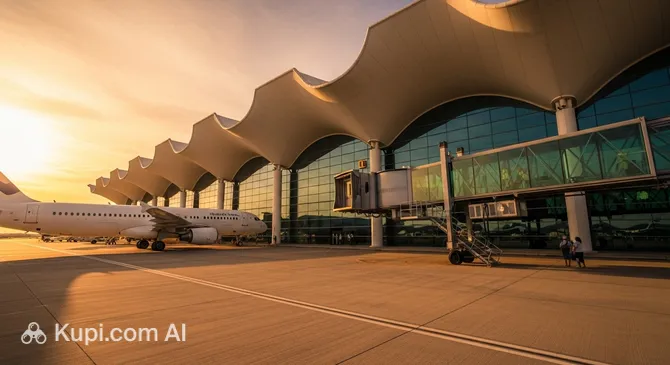
Governador Aluízio Alves International Airport. Source: Kupi.com Binoculars

Governador Aluízio Alves International Airport (NAT) serves as the modern and welcoming aerial gateway to sunny Natal and the entire state of Rio Grande do Norte. Opened in 2014, it became one of Brazil's newest airport complexes, designed for maximum passenger comfort. The spacious and bright halls immediately create a relaxing atmosphere, welcoming you to the "City of the Sun". Located in the municipality of São Gonçalo do Amarante, the airport is a key transport hub for tourists, handling both domestic and international flights.

IATA Code NAT
ICAO Code SBSG
City Natal
Distance to Centre approx. 18–26 km
Status International
Annual Passengers approx. 2.03 million (2023 data)
Popular Airlines Azul, GOL, LATAM
Schedule online flight board "Governador Aluízio Alves International Airport"

The airport operates 24 hours a day, which is very convenient for travellers arriving on late or overnight flights. Within the terminal, you will find numerous cafes and restaurants for a pleasant wait before your departure, as well as shops, including Duty Free. Free Wi-Fi is available for passengers. You can easily organise onward transfers right inside the terminal building: car rental counters, taxi services, and shuttles are located here to take you to hotels in Natal or to famous beaches, such as Ponta Negra. For those who prefer enhanced comfort, a VIP lounge is available at the airport.

Contact Information

For your convenience, we have compiled the main contact information for Natal International Airport (NAT).

  • Official Website: www.natal.aeroportos.aer.br
  • Information Desk Phone: +55 (84) 3343-6060
  • Address: Av. Ruy Pereira dos Santos, 3100, São Gonçalo do Amarante - RN, CEP 59290-000, Brasil
  • Email: The main contact form is available on the official website in the "Fale Conosco" (Contact Us) section.
  • Social Media: You can follow airport news on its official pages on Instagram (@natalairport) and Facebook.
  • Lost and Found (Achados e Perdidos): For lost items, please contact +55 (84) 3343-6060 or email achadoseperdidos.nat@zurichairportbrasil.com.
  • Passenger Support: For assistance and enquiries, use the main airport information phone number or the feedback form on the website.

How to Get to the Airport

Governador Aluízio Alves International Airport (NAT) is located in the municipality of São Gonçalo do Amarante, at a significant distance from the main tourist areas of Natal, such as Ponta Negra. Therefore, trips to the airport should be planned in advance. There are several ways to reach the terminal, each with its own advantages.

Public Transport is the most budget-friendly option. Regular buses run between the city centre and the airport. This is a good choice for economical travellers without a large amount of luggage. However, please note that the journey may take more time than by taxi and may require transfers depending on your location. It is best to check the schedule in advance, as it is subject to change.

Taxis and Ride-Hailing Services (such as Uber or 99) offer a faster and more comfortable way to get to the airport. This is particularly convenient if you are travelling with family, heavy suitcases, or flying at night. The journey from popular tourist zones, such as Ponta Negra, will take approximately 40-60 minutes depending on traffic conditions. The cost will be significantly higher than the bus but is justified by the level of comfort and speed.

Car Rental is an excellent choice for those who value independence and plan to explore the surroundings of Natal and the coast of Rio Grande do Norte. Many rental companies have counters both at the airport and in the city, allowing you to pick up a car in one place and return it in another. The road to the airport is well-signposted, and navigation systems can easily plot the route. For those arriving in their own or rented vehicle, paid parking is available at the airport, offering both short-term and long-term options.

Many hotels and travel companies also offer an organised transfer service. This option is worth considering as it can be booked in advance, and the driver will meet you at the appointed time. Often, this can be more cost-effective than a taxi, especially for large groups. We recommend checking the availability and cost of this service when booking your accommodation.

Terminals and Map

Natal's Governador Aluízio Alves International Airport (NAT) is a modern and well-organised transport hub. Its key feature is the presence of a single passenger terminal that serves both domestic and international flights. This structure significantly simplifies navigation for travellers, as there is no need to move between different buildings.

The terminal layout is logical and simple. The building is divided into several levels. The Upper Level is entirely dedicated to the departure zone. Here you will find airline check-in counters, baggage drop-off points, and the main security screening area. After passing through control, passengers enter the secure area with boarding gates, Duty-Free shops, cafes, and rest zones.

The Lower Level of the terminal is the arrival zone. Passengers arrive here after their flight lands. This area houses baggage reclaim belts, customs control counters for international flights, and the exit to the public hall. In the arrivals hall, you can find car rental offices, taxi counters, and meet those waiting for you.

Since all operations are concentrated in one building, transitions between zones are made on foot and take minimal time. Navigation is intuitive thanks to numerous signs in Portuguese and English. To orient yourself, simply follow the signs for "Departures" (Embarque) or "Arrivals" (Desembarque).

Processing times at Natal airport are usually short compared to larger hubs. Nevertheless, it is recommended to arrive early. For international flights, it is worth allowing about 2.5-3 hours before departure, and for domestic flights1.5-2 hours. During peak season or holidays, waiting times at check-in and security may increase, so it is better to have a buffer of time.

Airport History

The history of Governador Aluízio Alves International Airport (NAT) is essentially the story of a modern and ambitious project that marked a new era in the development of aviation infrastructure in Brazil. This airport replaced its predecessor, Augusto Severo Airport, which could no longer cope with the growing passenger traffic and modern requirements.

A key stimulus for the construction of the new terminal was Brazil hosting the FIFA World Cup in 2014. Natal was one of the host cities for the matches and needed a modern air harbour. Construction was carried out from scratch in the municipality of São Gonçalo do Amarante, and the airport was inaugurated in May 2014, just in time for the start of the world championship. It was a landmark project, as the Aluízio Alves Airport became the first in the country to be handed over to private management from the very beginning of its operation.

Although the terminal itself is brand new, the region's aviation history dates back to World War II. Its predecessor, Augusto Severo Airport, was located on the site of the former American airbase, Parnamirim Field. In those years, the base was of strategic importance to the Allies, serving as a crucial point for transatlantic flights. This historical fact earned Natal the nickname "Trampoline to Victory" (Trampolim da Vitória).

Since its opening, Aluízio Alves Airport has not undergone major renovations, as it was originally designed with a large capacity reserve and state-of-the-art technology. It is considered one of the most modern and comfortable airports in the Northeast region of Brazil. Its emergence has significantly increased the tourist appeal of the state of Rio Grande do Norte, ensuring convenient connections with other cities in the country and the world.

Services and Facilities

Natal's Governador Aluízio Alves International Airport offers passengers all necessary amenities for a comfortable wait for their flight. In the terminal, you will find diverse dining options: from cosy coffee shops where you can enjoy a cup of famous Brazilian coffee, to restaurants offering local and international cuisine. For those looking to buy souvenirs or gifts, shops are available, including a Duty Free zone where items can be purchased at attractive prices.

For a more comfortable rest, the airport features premium lounges (VIP lounges). Here, passengers can relax in a quiet environment and enjoy complimentary snacks and beverages. Free Wi-Fi is available throughout the terminal, and numerous charging stations for mobile devices are located in the boarding areas, ensuring you stay connected.

Financial matters are easily handled at the airport: ATMs and currency exchange bureaux are at your service, allowing you to exchange money upon arrival or before departure. To ensure the safety and health of passengers, a medical post is operational within the terminal, ready to provide first aid if necessary.

Travellers with children can use the nursing rooms, equipped with everything needed for baby care. The airport is also fully adapted for passengers with reduced mobility: there are ramps, accessible toilets, and elevators. If assistance is required, an escort service can be booked in advance through your airline.

Although there are no hotels directly inside the terminal building, several hotels are located in the immediate vicinity of the airport, which can be quickly reached by taxi or transfer. For business travellers, some VIP lounges offer basic business services, such as work zones and access to office equipment, allowing for efficient use of time before departure.

Where to Eat

At Governador Aluízio Alves International Airport (NAT), travellers will find a variety of options for a snack or a full meal to wait for their flight in comfort. Dining establishments are located both in the public area, accessible to all visitors, and in the secure area after passing security checks.

In the public zone (landside), before check-in and screening, you can find several cosy cafes. This is an ideal place to drink a cup of aromatic Brazilian coffee with traditional pastries, such as cheese buns known as pão de queijo, or have a quick sandwich. Prices here are generally slightly lower than in the departure zone.

The majority of restaurants and cafes are concentrated in the departure zone (airside). Here the choice is wider: from fast-food outlets offering burgers and fries to à la carte restaurants where you can order local and international dishes. This is a great opportunity to try some Brazilian gastronomy in a more relaxed setting. The opening hours of most establishments are adapted to the flight schedule; many are open from early morning until late at night.

Regarding special dietary needs, vegetarian options such as salads, vegetable sandwiches, or fresh fruit can be found in most cafes. Please note that strictly Vegan, Gluten-Free, or Halal options may be more difficult to find, so it is recommended to check the ingredients directly with the staff at the venue. The price range at the airport varies from moderate at fast-food points to higher at full-service restaurants.

Travel Tips

Travelling through Governador Aluízio Alves International Airport in the city of Natal can be easy and pleasant if you prepare in advance. To avoid unnecessary stress, we recommend arriving at the airport at least 2 hours before a domestic flight and 3 hours before an international one. This time will be sufficient to calmly complete all pre-flight formalities, especially during the high tourist season.

To save time, take advantage of online check-in, which is offered by most airlines. This will allow you to head straight to baggage drop-off or, if you are travelling light, to the security screening area. During the security check, be prepared to present your boarding pass and passport, as well as to remove laptops, tablets, and liquid containers up to 100 ml (packed in a transparent bag) from your hand luggage.

When choosing a seat on the plane, consider your preferences: a window seat will offer you magnificent views of the Brazil coastline during take-off and landing, while an aisle seat provides more legroom and the ability to stand up freely without disturbing neighbours. Seats in emergency exit rows often offer extra space but may be subject to an additional fee.

When packing hand luggage, remember the restrictions. You are permitted to carry documents, money, gadgets, necessary medication, and small amounts of liquids. It is strictly forbidden to carry sharp objects, weapons, flammable substances, and toxic materials in the cabin. To save money, bring an empty water bottle and fill it at a drinking fountain after passing security.

Passengers with connections in Natal should pay close attention to signs marked "Conexão" (Connection). If you are arriving on an international flight and transferring to a domestic one, you will likely need to pass passport control, collect your luggage, and check it in again for the next flight. For international arrivals, customs control is also mandatory, where you must declare goods exceeding the established duty-free import limits.

In the event of a flight delay, first contact your airline representative for the latest information. In Brazil, passenger rights are protected by the National Civil Aviation Agency (ANAC). Depending on the length of the delay, the airline is obliged to provide you with means of communication, meals, and for long waits, accommodation in a hotel. Keep all receipts for unforeseen expenses if you have travel insurance that covers such cases.

Reached the end of the page?

That means the route is fully explored