Support

Pato Branco

About the Airport

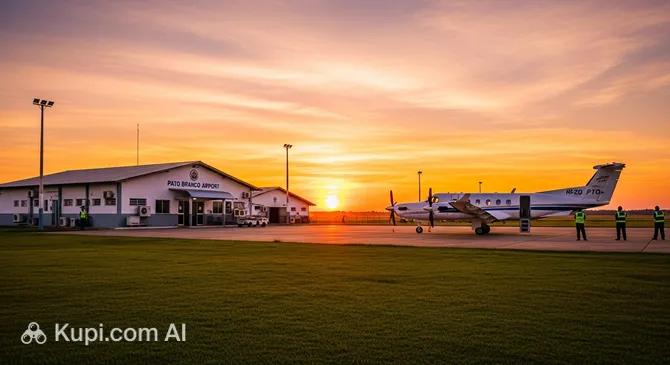
Pato Branco. Illustration.
Source: Kupi.com AI

Pato Branco Airport, officially known as Professor Juvenal Loureiro Cardoso Airport, is the key aerial gateway to the southwestern region of the Brazilian state of Paraná. Recently modernized and expanded, it serves as a vital transport hub connecting the city of Pato Branco with major economic centres in Brazil. This small yet modern airport offers passengers convenience and quick access to one of the country's dynamically developing areas, serving as a starting point for business trips and tourist itineraries.

PropertyValue
IATA CodePTO
ICAO CodeSSPB
CityPato Branco
CountryBrazil
TimezoneAmerica/Sao_Paulo
Top AirlinesAzul Linhas Aereas Brasileiras
ScheduleOnline Timetable

Features and Advantages

The main advantage of Pato Branco Airport is its strategic location and recent infrastructure updates. Following reconstruction, the runway was improved and the terminal modernized, allowing for the accommodation of larger aircraft, such as the ATR 72-600 operated by Azul. This has ensured stable air connectivity with major hubs, such as Viracopos Airport in Campinas, from where connecting flights are available across the country and the world. The airport is notable for its compact size, making check-in and boarding processes quick and comfortable for passengers. Due to its proximity to the city centre, the journey from the airport to a hotel or business meeting takes minimal time.

Contact Information

Below you will find contact information for Pato Branco Airport (Juvenal Loureiro Cardoso Airport), which will help you plan your trip and navigate upon arrival.

  • Official Website: The most up-to-date information regarding the airport, its services, and flight status is best tracked on the Voe Paraná portal: voeparana.pr.gov.br.
  • Information Desk Phone: For general enquiries, you can call +55 (46) 3225-2766. Please note that for calls from outside Brazil, the international dialling code is required.
  • Airport Address: Rodovia Estadual PR-493, km 3, Pato Branco, State of Paraná, Brazil, ZIP: 85503-340.
  • Email: A dedicated email address for passengers is generally not published. It is recommended to use the telephone or contact forms on official resources for communication.
  • Social Media: The airport does not have separate social media pages. News can be followed via the official channels of the Paraná state aviation network (Voe Paraná).
  • Lost and Found: If you have lost items within the terminal building, please contact the airport administration via the main telephone number. In case of lost checked luggage, you must immediately contact your airline's representative.
  • Passenger Support Service: For issues related to booking, ticket changes, flight check-in, and special assistance, please contact the airline you are flying with directly.

How to Get to the Airport

Pato Branco Airport (PTO) is located just a few kilometres from the city centre, making the journey there quick and convenient. Travellers are offered several transport options to reach the terminal according to their budget and preferences.

Taxi or Private Transfer is the most comfortable and fastest method. A trip from the centre of Pato Branco will take approximately 10–15 minutes. You can use local taxi services or book a car via mobile apps popular in Brazil. This option is particularly convenient for travellers with a lot of luggage or for families. Although the cost will be higher than public transport, it remains reasonable. For maximum convenience, it is recommended to book a transfer in advance.

Public Transport in the form of city buses is the most economical choice. It is worth noting that there may not be a direct express route to the airport, and stops might be located at some distance from the terminal entrance. This method is well-suited for tourists travelling light. We strongly advise checking current routes and schedules on local information portals in advance, as bus services can be irregular.

Car Rental provides maximum freedom of movement, which is especially valuable if you plan to explore not only the city but also its picturesque surroundings. Several rental companies operate in Pato Branco. There is parking near the airport where you can leave a car for both short and long periods. To save money and guarantee the availability of a suitable vehicle, it is better to book online in advance.

Thus, for most tourists, a taxi will be the optimal solution, combining speed, comfort, and an acceptable price. If independence and active exploration of the region are your priority, renting a car would be the best choice.

Terminals and Map

Pato Branco Airport (PTO) is a small regional air station, characterized by simplicity and convenience of service. It is designed to perform essential functions efficiently, making navigation intuitive even for first-time visitors.

The airport operates one passenger terminal, which handles all flights—both departures and arrivals. Thanks to its compact dimensions, all key zones are within walking distance of each other. You will not have to worry about long transfers or searching for the right gate: check-in counters, the security screening area, the waiting lounge, and the baggage claim area are all located in one building a short distance apart.

The terminal layout is extremely simple. Upon entry, you immediately find yourself in the public area where airline check-in counters are located. After checking in and dropping off luggage, you proceed to the security checkpoint, behind which lies a small departure lounge. The arrival area is separate but in the same building, consisting of a hall with a baggage carousel and an exit to the city.

Check-in and screening procedures at Pato Branco Airport usually proceed very quickly. Due to low passenger traffic and a limited number of flights, completing all formalities rarely takes more than 20-30 minutes. Nevertheless, it is recommended to arrive at the airport approximately 1-1.5 hours before departure to go through all stages without rushing.

Main Navigation Tip: It is practically impossible to get lost in this airport. Simply follow the signs that will guide you from the terminal entrance to boarding the aircraft. The entire path takes just a few minutes on foot.

Airport History

The history of Pato Branco Airport (PTO), officially known as Professor Juvenal Loureiro Cardoso Airport, is a vivid illustration of how persistence and a drive for development can revive a key infrastructure asset. Its journey began in the 1950s, when the first airfield was built to serve the growing city and region. In those years, it played an important role in connectivity, accepting small aircraft and primarily operating air taxi flights.

However, over time, due to various economic and logistical factors, the airport lost its significance for commercial transport. A long period ensued, lasting nearly 20 years, during which regular passenger flights to Pato Branco were not operated, and the airfield was used predominantly for private and agricultural aviation. This hiatus posed a serious challenge to the economic development of the entire southwestern region of the state of Paraná.

The turning point in the airport's history was the beginning of the 2010s, when local and regional authorities initiated a large-scale project for its revival. Thanks to the joint efforts of the municipality, the state government, and federal authorities, comprehensive modernization began. During the works, the runway was completely reconstructed, a new modern passenger terminal was built, and advanced navigation equipment was installed.

The triumphant return took place in 2019, when the renovated Pato Branco Airport was recertified to receive commercial flights and welcomed its first passenger aircraft after the long break. This event became a true celebration for the entire region, marking a new era of accessibility and economic growth. Today, the airport is not just a transport facility, but a symbol of rebirth and an important link connecting southwestern Paraná with the rest of Brazil.

Services and Amenities

Pato Branco Airport (PTO) is a modern regional aviation hub offering passengers all necessary services for a comfortable wait before their flight. Despite its compact size, the terminal is designed to ensure convenience and functionality.

Inside the airport, you will find a small café where you can order snacks, sandwiches, pastries, and beverages. It is an excellent place to have a bite before flying. Although the selection of shops is limited, you can purchase essential items and local souvenirs here. A main passenger hall is equipped for waiting for flights. There are no specialized VIP lounges at the airport, but the general area is sufficiently comfortable.

For those for whom staying connected is important, free Wi-Fi is available within the terminal. There are also power outlets for charging mobile phones and other gadgets. ATMs are installed in the terminal building; however, currency exchange points are absent as the airport focuses on domestic transport. In case of need, a medical post operates at the airport to provide first aid.

The airport is equipped for the needs of passengers with children—there is a mother and child room. For travellers with reduced mobility, a barrier-free environment has been created, including ramps and specially equipped toilets. To receive assistance, it is recommended to contact your airline in advance. There are no hotels or conference halls within the airport itself, but numerous hotels and business centres are located in the city of Pato Branco, a few minutes' drive away.

Where to Eat

When planning a flight via Pato Branco Airport (PTO), it is important to consider that this is a small regional airport, and the choice of dining establishments is appropriate to its size. Options are primarily oriented towards a quick snack before departure, rather than a full lunch or dinner in a restaurant.

Typically, in the main hall of the airport, in the area before security control (landside), there is one or more small cafés or snack bars (lanchonete). Here, passengers and those seeing them off can purchase drinks and light snacks. Since the terminal is very compact, finding these establishments will not be difficult. After passing through security (airside), selection will likely be unavailable.

In the menus of local cafés, you will find classic Brazilian street food, which is ideal for quickly satisfying hunger. Look out for:

  • Pão de queijo — famous cheese breads, best eaten fresh and warm.
  • Salgados — a general name for various savoury snacks, such as coxinha (teardrop-shaped chicken croquettes) or pastel (fried pastry with various fillings).
  • Simple sandwiches and pastries.
  • Regarding drinks — certainly Brazilian coffee (cafezinho), fresh juices, and soft drinks.
Prices at the airport are generally slightly higher than in the city but remain quite affordable.

Passengers with strict dietary restrictions (vegan, gluten-free, or Halal diets) should be prepared for the fact that specialized meals may likely not be available at Pato Branco Airport. The best solution would be to bring food with you or check the ingredients of available snacks on-site. Opening hours of establishments are usually tied to the flight schedule: they open a few hours before departure and may close in the intervals between them.

Thus, if you are looking for a quick snack, the airport café will be an excellent choice. If you are counting on a full meal, it is strongly recommended to eat at one of the restaurants in the city of Pato Branco before travelling to the airport.

Travel Tips

To ensure your journey through the airport of Pato Branco goes as smoothly as possible, take advantage of these useful tips. A little preparation will help save time, stress, and money, making your flight more comfortable.

Arrival Time at the Airport. For domestic flights within Brazil, it is recommended to arrive at the airport 1.5–2 hours before departure. This time is usually sufficient to check in, drop off luggage, and pass through security screening without rushing.

Check-in and Screening. If possible, use online check-in on your airline's website. This will allow you to select a seat and obtain a boarding pass in advance. If you are travelling only with hand luggage, you can proceed directly to the security zone. Security procedures are standard, but small queues may arise during peak hours.

Seat Selection on the Plane. To ensure a comfortable flight, try to select a seat in advance—during ticket purchase or online check-in. Window seats (A, F) offer beautiful views, especially during take-off and landing, while aisle seats (C, D) provide easy access to the lavatory and the ability to stretch your legs.

Hand Luggage Rules. It is prohibited to carry liquids in containers larger than 100 ml, sharp objects, weapons, and flammable substances in hand luggage. Be sure to keep all valuables with you: documents, money, electronics, as well as necessary medication and chargers.

Passengers with Connections. If your itinerary includes a transfer, clarify when booking tickets whether you will need to collect and re-check your luggage. Ensure there is enough time between flights—at least 1.5–2 hours, especially if the flights are operated by different airlines.

Customs Control. For domestic flights within the country, there is no customs control. It is only relevant for passengers arriving on international flights. In this case, be prepared to present your passport and, if necessary, complete a declaration for imported goods.

Saving Time and Money. Book flight tickets in advance to find the best prices. Travelling light, with only hand luggage, will save you money on baggage fees and time waiting for it upon arrival. You can also bring an empty water bottle to fill after security, along with light snacks.

In Case of Flight Delay. If your flight is delayed or cancelled, first contact your airline's counter for information. Depending on the length of the delay, the carrier may be obliged to provide you with drinks, meals, or even hotel accommodation. Keep all receipts for unforeseen expenses if you have travel insurance.

Reached the end of the page?

That means the route is fully explored