Support

Porto de Moz

About the Airport

Porto de Moz Airport is not a giant transport hub with thousands of flights, but rather a cozy aerial gateway to the heart of the Amazon, in amazing Brazil. Located in the state of Pará, it serves as a starting point for nature explorers, scientists, and travelers seeking to discover the authentic life of the region. For many local residents and visitors to the city of Porto de Moz, this airfield is a key link to the outside world, providing access to remote corners of the country and river basins.
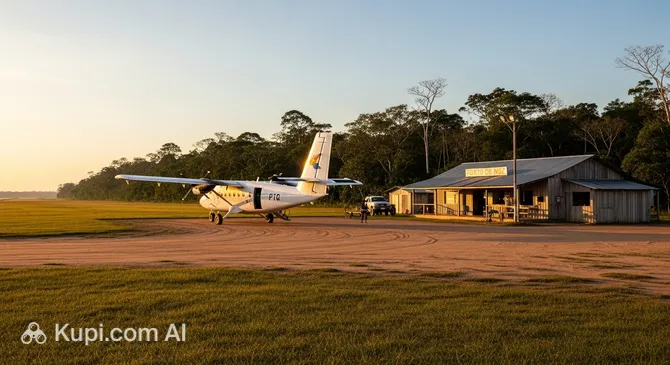
Porto de Moz. Illustration.
Source: Kupi.com AI
PropertyValue
IATA CodePTQ
ICAO CodeSNMZ
CityPorto de Moz
CountryBrazil
TimezoneAmerica/Belem
ScheduleOnline Timetable

The main advantage of Porto de Moz Airport is its intimacy and convenient location. It is situated in close proximity to the city, which saves travelers from having to spend a lot of time and money on transfers. There is no hustle and bustle or queues typical of large airports here, allowing you to start your adventure in a calm and relaxed atmosphere.

For tourists, this airfield is a true gateway to the world of wildlife. It is the starting point for expeditions along the Xingu River and exploration of national parks and nature reserves in the state of Pará. It is from here that many routes for ecotourism, birdwatching, and discovering the unique flora and fauna of the Amazon begin. Although the airport does not serve major commercial airlines, it plays an indispensable role in the region's transport system, providing a connection for those seeking authentic experiences far from the beaten tourist tracks.

Contact Information

  • Official Website: Porto de Moz Airport (PTQ) does not have an official website. It is recommended to check flight schedules and service information directly with the airlines operating flights to this airport.
  • Information Desk Phone: A public phone number for inquiries is not provided. For all questions, please contact your air carrier's representatives directly.
  • Airport Address: Aeroporto de Porto de Moz, municipality of Porto de Moz, state of Pará, Brazil.
  • Email: There is no official email address for general passenger inquiries.
  • Social Media: The airport does not maintain official pages on social networks.
  • Lost Luggage Information: Issues related to lost or damaged luggage are handled exclusively by representatives of the airline with which you travelled.
  • Passenger Support Contacts: Due to the small size of the airport, there is no separate passenger support service. Necessary assistance on-site is provided by airline staff.

How to Get to the Airport

Porto de Moz Airport is located in close proximity to the city, so getting there is not difficult. Although the choice of transport is not as extensive as in major metropolises, you can reach the terminal in several ways, depending on your budget and preferences.

Taxi and Transfer — the most convenient and fastest way to get to the airport. The trip from the centre of Porto de Moz will take just 10–15 minutes. You can use the services of local taxi or motorcycle taxi services, which are widespread in small cities in Brazil. For greater peace of mind, especially if you have a lot of luggage, it is recommended to pre-book a private transfer through your hotel or a local travel agency. This guarantees that the car will arrive on time.

Public Transport in Porto de Moz is mainly represented by local buses. Although this is the most budget-friendly option, there may not be specific routes directly to the airport. You will likely have to take a bus that passes nearby and then walk a short distance. It is best to check schedules and routes on-site, as they may be irregular. There are no trains or metro services in the city.

Car Rental and Parking. If you plan to travel actively around the region, renting a car might be a good solution. Check for the availability of rental agencies in Porto de Moz itself or in nearby larger cities. The airport usually has a small parking area where you can leave a car for both short and long terms. Given the modest size of the airport, finding a free space is usually not a problem.

Recommendation: For the trip to Porto de Moz Airport, we advise choosing a taxi or pre-booked transfer. This will save your time and reduce stress, allowing you to reach the terminal without unnecessary hassle. Always allow a small margin of time for the journey, even though the trip does not take long.

Terminals and Map

Porto de Moz Airport (PTQ) is a small regional airport serving the municipality of the same name and its surroundings. Due to its size and passenger volume, its infrastructure is quite simple and intuitive for any traveler.

The airport operates one passenger terminal, which handles both departing and arriving flights. There is no separation into domestic and international sectors, as the airport is mainly focused on local air transport. The entire structure of the terminal is very compact: check-in counters, the security screening area, a small waiting lounge, and the baggage claim point are all located in one building, a short distance from each other.

Navigation at Porto de Moz Airport is extremely simple. You won't have to worry about long walks or finding the right gate — everything is located within sight. The departure and arrival zones are effectively parts of one common hall. After check-in and security screening, passengers enter a small waiting area before boarding.

Check-in and security control procedures generally proceed very quickly thanks to the small number of flights. Nevertheless, it is recommended to arrive at the airport approximately 1-1.5 hours before departure to go through all formalities without rushing. For passengers arriving in Porto de Moz, the baggage claim process also does not take much time.

Airport History

The history of Porto de Moz Airport (PTQ) is not a chronicle of building giant terminals and passenger traffic records, but a story of a vital connection between a small city in the heart of the Amazon and the rest of the world. The exact founding date of this small airfield is not as widely known as that of major international hubs. Its emergence was driven by practical necessity: to ensure transport accessibility for a region where river transport was, for a long time, the primary but slow method of travel.

The development of the airport was gradual and consistent with the needs of the local population. Initially, it was likely a simple airstrip, which was improved over time to accommodate small aircraft. The main stages of its modernization were aimed at ensuring flight safety and minimal comfort for passengers. For such regional airports in Brazil, a "major renovation" might be considered paving the runway or building a small waiting hall, which is already a significant step forward.

The main "historical events" in the life of Porto de Moz Airport are not high-profile incidents, but thousands of completed flights delivering medicines, mail, essential goods, and, of course, the residents themselves. For remote settlements in the Amazon, aviation is often the only means for providing urgent medical assistance. Therefore, the history of the airport is primarily a history of saved lives and important meetings made possible by air travel.

Thus, Porto de Moz Airport, although it cannot boast impressive statistics, has a rich history of serving its community. It is a vivid example of how small aviation plays a key role in the development and maintenance of life in hard-to-reach corners of the planet, remaining an indispensable transport artery for its residents.

Services and Amenities

Porto de Moz Airport (PTQ) is a small regional air hub serving local flights. Given its size, the range of services here is basic and designed to provide the most necessary amenities for passengers before departure or upon arrival. When planning a trip through this airport, it is worth taking care of a few things in advance.

To satisfy hunger and thirst, the airport has a small cafe or snack bar where you can buy drinks and light snacks. The selection of shops is limited; typically, there is a small kiosk with essentials, press, and souvenirs. Regarding modern amenities, public Wi-Fi may be absent or work intermittently, and the number of power outlets for charging gadgets is limited. Passengers are advised to carry a portable power bank.

The airport does not have bank branches, ATMs, or currency exchange points. All financial transactions are best completed in advance in larger cities in Brazil. Specialized VIP lounges and business centres are also not provided here. Medical assistance is limited to a basic first aid point.

Passengers with children and travelers with disabilities are strongly advised to contact their airline in advance to organize necessary assistance and clarify available amenities. Airport staff will provide assistance within their capabilities, but specialized infrastructure, such as separate mother-and-child rooms or complex equipment, may be missing. There are no hotels directly on the airport territory, but accommodation options can be found in the city itself.

Where to Eat

Porto de Moz Airport (PTQ) is a small regional air hub, so dining options here are quite limited. Travelers should not expect a wide variety of restaurants and cafes typical of large international airports.

Typically, in the sole terminal building, you can find a small cafe or snack bar where passengers can have a bite before departure. The assortment usually includes basic snacks: sandwiches, pastries, chips, and sweets. Available beverages include coffee, tea, water, and soft drinks. This is a convenient option for a quick snack, but not for a full meal.

Specialized restaurants offering local cuisine or options for passengers with specific dietary needs (vegetarian, vegan, Halal, gluten-free) are likely absent here. If you require a full meal or have strict dietary restrictions, it is strongly recommended to eat before arriving at the airport. The operating hours of the local cafe are usually tied to the flight schedule.

Travel Tips

The airport of Porto de Moz city is a small regional air hub, so preparing for departure here has its own specificities. Unlike major hubs, there is no need to arrive many hours in advance. Generally, arriving at the airport 1–1.5 hours before flight departure will be quite sufficient to go through all formalities without rushing. Please note that many flights are operated by small airlines or air taxis, so the option of online check-in may be unavailable. It is better to clarify this point directly with your carrier.

Check-in and security screening procedures at the airport usually proceed quickly. However, basic security rules remain in force: do not carry sharp objects or flammable liquids in your hand luggage. The most important thing is to check the baggage and hand luggage allowances with your airline in advance. Small carriers operating on regional routes across Brazil may have strict weight and size restrictions that differ from the standards of major airlines.

Since this is a small airport, the selection of cafes and shops inside may be limited. It would be a good idea to bring light snacks and a bottle of water, which can be refilled after the security zone. This will help save money and make waiting for the flight more comfortable, especially if you are travelling with children.

Sometimes flights may be delayed, especially due to weather conditions, which is relevant for regional flights. If your flight is cancelled or delayed, the first thing to do is contact the airline representative. They will provide up-to-date information and explain your rights, such as entitlement to drinks or meals depending on the duration of the wait. Remain calm and pay attention to announcements.

Reached the end of the page?

That means the route is fully explored