Support

Quixada

About the Airport

Quixada. Source: Kupi.com Binoculars

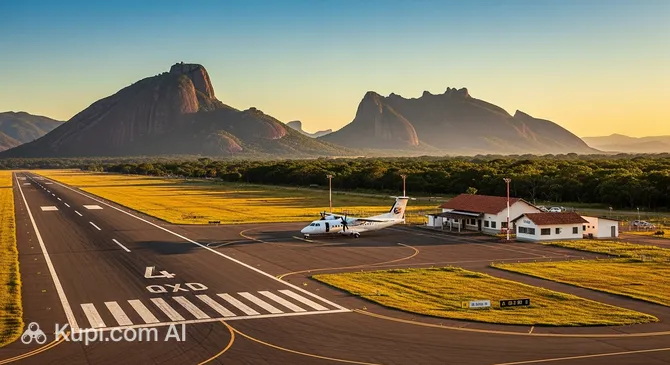
Quixadá Airport (Aeroporto de Quixadá) is not merely a regional transport hub, but a true aerial gateway to the unique world of the Brazilian Sertão (hinterland) and its famous monoliths. Situated amidst dramatic rocky landscapes, it was long known only to extreme sports enthusiasts, but today it opens up new opportunities for a wider range of tourists. Since 2024, the airport has reached a new level, offering travelers direct regular connections to the state capital, making the journey to the "stone giants" of Ceará much more comfortable.

AirportQuixada
IATAQXD
ICAOSNQX
CityQuixada
TimezoneAmerica/Fortaleza
ScheduleOnline board

Airport Features and Highlights:

Quixadá Airport possesses a unique atmosphere, combining the tranquility of a provincial airfield with modern service. The main event in its recent history was the launch of commercial flights by Azul Conecta, which are operated on comfortable Cessna Grand Caravan aircraft. This has not only simplified logistics but also turned the flight itself into an excursion.

Other advantages include:

  • Scenic Flight: Since flights are conducted at a lower altitude, passengers can enjoy breathtaking views of the valley of monoliths and the famous Pedra da Galinha Choca rock formation even before landing.
  • Connection to Extreme Sports: The airport remains an important base for gliders and paragliders who value the local thermal air currents, considered some of the best in the world.
  • Proximity to the City: The airport is located just a few minutes' drive from the centre of Quixadá, allowing travelers to reach hotels and main attractions almost instantly without long transfers.

Contact Information

  • Official Airport Website: Quixadá Airport does not have its own separate website. Up-to-date information on flights and tickets should be sought on the official website of Azul Linhas Aéreas, while administrative data can be found on the portal of the Superintendence of Public Works of Ceará (SOP).
  • Information Desk Phone: There is no public telephone number directly for the terminal, as the airport operates as a regional site with limited staff. For questions related to flights, check-in, or baggage, please contact the Azul call centre: 4003-1118 (for calls within Brazil) or via their online chat.
  • Airport Address: Aeroporto Regional de Quixadá, Rodovia CE-265 (Estrada do Algodão), Quixadá – Ceará, Brazil. (Located approximately 4 km from the city centre, towards Ibaretama).
  • Email: There is no direct email provided for passenger inquiries.
  • Airport Social Media: Official accounts are absent. It is recommended to track news via geotags or on Ceará aviation pages.
  • Lost & Found Information: Due to the small size of the terminal, the Lost & Found service is handled by Azul Conecta staff. If items are lost, please contact a representative of the carrier immediately after landing or submit a request on the airline's website.
  • Passenger Support Contacts: Support is provided by airline representatives at the check-in counter only during flight operation hours.

How to Get to the Airport

Quixadá Airport (QXD) is located just 4–5 kilometres from the city centre, making the trip there quick and tireless. Since the air terminal is small and serves a limited number of regional flights, there is no complex transport interchange system here, but you can reach the terminal in several convenient ways.

Taxi and Transfer

The most reliable and comfortable option is an official taxi. In Quixadá, both classic taxi services and private drivers operate. It is best to book a ride in advance through your hotel or by phoning local services, as cars are not always waiting at the terminal when small planes arrive.

  • Apps: Aggregators popular in Brazil (such as 99 or Uber) may work in the city, but the number of cars is limited. It is recommended to have a backup plan and cash.
  • Travel Time: The journey from the central square (Praça José de Barros) to the airport takes about 10–15 minutes.
  • Cost: The average taxi fare is between 20 and 30 Brazilian Reais (BRL), but the cost may vary depending on the time of day.

Public Transport and Moto-taxis

There is no metro or rail connection to the airport in Quixadá. Specialized shuttle buses are also not provided due to low passenger traffic.

  • Moto-taxi: This is the most popular and budget-friendly mode of transport in the region for solo travelers with light luggage (backpacks). Drivers in official moto-taxi vests will quickly deliver you to the aircraft steps. The cost of the trip is about 10–15 BRL.
  • Minibuses (Topiques): Vans running between districts may pass along the CE-265 highway (Estrada do Algodão) near the airport. However, from the stop on the highway to the terminal entrance, you will have to walk several hundred metres, which is not very convenient with suitcases under the scorching sun of Ceará.

Car Rental and Parking

If you plan to explore the surrounding cliffs and national parks on your own, a car is the best solution. However, please note that rental counters of international brands are located in the city centre, not at the airport itself. It is recommended to arrange with the rental agency to have the car delivered to your flight in advance.

  • Parking: An open parking area is equipped in front of the small terminal building. At the moment, parking is free and available to all visitors, but the spaces are unguarded, so leaving valuables inside the vehicle is not recommended.

Alternative Airports Nearby

Since direct flights to Quixadá do not operate every day and have small capacity, many tourists prefer to fly into major transport hubs in neighbouring cities and reach the "land of monoliths" by ground transport (bus or rented car).

Nearest alternatives:

  • Pinto Martins Airport (Fortaleza): The main international hub of the region, located approximately 142 km away. Most tourists arrive here, followed by a transfer to Quixadá (about 2.5 hours drive).
  • Dix-Sept Rosado (Mossoró): A regional airport in the neighbouring state of Rio Grande do Norte, located 181 km away.
  • São Benedito (Walfrido Salmito de Almeida): A small airfield 235 km from Quixadá.
  • Orlando Bezerra de Menezes Airport (Juazeiro do Norte): A major regional hub in the south of the state, the distance is about 250 km.
  • Jericoacoara: The airport of a popular resort, located 275 km away. Convenient if you want to combine a beach holiday with a trip to the mountains.

Terminals and Map

The terminal at Quixadá Airport (QXD) is a clear example of what small regional aviation looks like in Brazil. Here you will not find confusing corridors, endless escalators, or trains between gates. The entire airport complex consists of one small single-story building, designed for the fastest and simplest service of passengers arriving on light aircraft.

Number of Terminals and Layout

The airport has one passenger terminal. Its capacity fully corresponds to the current traffic — servicing flights on Cessna Grand Caravan type aircraft (seating up to 9 passengers). The interior space is organized on the principle of a single hall, zoned into service sectors.

Departure and Arrival Zones

Navigation at Quixadá Airport is intuitive and does not require maps or diagrams:

  • Check-in Zone: Located immediately at the entrance to the building. Since flights are generally operated by one airline (Azul Conecta), there are only one or two counters here. Queues are rare, and interaction with staff takes place in an almost homely atmosphere.
  • Security Screening: Located a few steps from the check-in counter. The procedure is simplified compared to international hubs but complies with all safety standards (ANAC).
  • Departure Lounge (Sterile Area): A small space with seats for passengers who have passed security. There is air conditioning here, which is critically important in the hot climate of the Brazilian hinterland, as well as restrooms.
  • Arrival Zone: There are no luggage carousels at the airport. Baggage claim is handled manually by ground staff either directly at the aircraft side or in a designated area of the terminal immediately after entering from the airfield.

Transfers and Boarding

There are no jet bridges (aerobridges) at Quixadá Airport. One of the main features of this airport is boarding on foot. Passengers exit the terminal and walk a few dozen metres across the apron to the aircraft. This is an excellent opportunity to see the aircraft up close and take some atmospheric photos against the backdrop of the surrounding cliffs (with staff permission).

Terminal Features

  • Minimalist Service: There are no Duty Free shops, VIP lounges, or large restaurants in the terminal. Travelers are advised to take care of water and light snacks in advance if they plan a long wait, although time spent in the terminal is usually kept to a minimum.
  • Speed of Service: Thanks to the small size of the building, the path from the street entrance to the aircraft seat takes mere minutes.
  • Accessibility: The single-story design makes the terminal convenient for passengers with reduced mobility, as there are no stairs or thresholds on the route.

Processing Times

Despite the compactness of the airport, airlines recommend adhering to standard rules:

  • Arrival: It is recommended to arrive at the airport 60 minutes before departure. Check-in usually closes 30–40 minutes before departure.
  • Security: The screening and document check process takes only 5–10 minutes, as only a few people register for the flight.

Navigation Recommendations

It is impossible to get lost in Quixadá Airport. The main advice for tourists is to follow the instructions of staff in airline uniforms. Since the building is small, voice announcements are often replaced by a personal invitation to board from an agent at the gate.

Airport History

The history of Quixadá Airport (QXD) is a chronicle of the transformation of a modest airstrip into a strategically important facility for regional aviation in the state of Ceará. Unlike capital city giants with century-long histories, this airport remained "in the shadows" for a long time, serving private aviation, emergency services, and sparse government flights.

Origins and Early Years

For most of the 20th century, the Quixadá airfield existed as basic infrastructure connecting the "Central Sertão" to the coast. In those years, it did not have commercial airport status and was used primarily by local farmers, politicians, and, crucially, medical professionals for the emergency transport of patients to Fortaleza. Its history is inextricably linked to the development of agriculture and mining in the region, when aviation was the only fast way to cover large distances across rough terrain.

World Capital of Free Flight

The airfield played a special role in establishing Quixadá as a world centre for hang gliding and paragliding. Starting in the 1980s and 90s, when pilots from around the world discovered the unique thermal currents of this region, the airport became an important logistical point. Although the athletes themselves launch from mountain peaks, the airfield was often used for basing support aircraft and hosting regional and international competitions.

Era of Modernization (2020s)

A turning point in the airport's recent history was the state program for the expansion of regional aviation, initiated by the government of Ceará. The aim of the project was to include remote tourist and economic centres into the country's unified air network.

  • Reconstruction: In the early 2020s, the airport underwent major modernization under the guidance of the Superintendence of Public Works (SOP). The runway was renovated, with its dimensions (1200 metres long and 30 metres wide) brought into compliance with standards for receiving commercial turboprop aircraft.
  • Night Flights: One of the key stages was equipping the airfield with a night lighting system and signalling equipment, which allowed the air harbour to operate around the clock — a critically important factor for air ambulance services and flexible flight schedules.
  • Terminal: The passenger terminal building was renovated, creating comfortable waiting conditions and security screening zones that meet the requirements of the National Civil Aviation Agency (ANAC).

Launch of Commercial Flights

A historic event for tourism occurred in 2024, when the airport officially began receiving regular commercial flights. The airline Azul Conecta launched the Fortaleza — Quixadá route, symbolically opening the "gateway to the Sertão" for the mass traveler. This event marked the airport's transition from the status of a technical site to a fully-fledged transport hub.

Interesting Facts and Achievements

  • Record Speed: Thanks to the launch of direct flights, travel time from the state capital to the valley of monoliths was reduced from 3–4 hours (by car) to a 30–40 minute flight.
  • Strategic Importance: Quixadá Airport is one of the key nodes in a network of 10 state-managed regional airports in Ceará and serves as an alternate airfield for the central part of the state.
  • Aerial View: The approach to land at QXD is considered one of the most scenic in Brazil thanks to the view of the Cedro Reservoir (Açude Cedro) and the famous chicken-shaped rock (Pedra da Galinha Choca), which are the city's landmarks.

Services and Facilities

Services and facilities at Quixadá Airport (QXD) fully reflect its status as a small regional hub. Passengers should note that the infrastructure typical of major international hubs is not found here. The air terminal is designed for the quickest possible boarding and disembarkation, so time spent in the terminal is usually kept to a minimum.

Restaurants, Cafes, and Shops

Inside the terminal, there are no full-service cafes, restaurants, or Duty Free zones. Gastronomic services here are extremely limited:

  • Food: Vending machines with water, soft drinks, and light snacks may be located in the waiting lounge, but their availability is not guaranteed. It is recommended to have a substantial meal in the city before leaving for the airport.
  • Shops: There are no souvenir shops or newsstands in the building. If you wish to take home a souvenir in the form of a miniature monolith or local ceramics, purchase it in advance at the markets in Quixadá.

Lounges and VIP Service

At Quixadá Airport, there is no separation into business lounges and economy class. The entire terminal is effectively a single space:

  • General Waiting Hall: This is a small air-conditioned area with seating. Considering that the planes accommodate only 9 passengers, it is never noisy or crowded here, creating an atmosphere close to private aviation service.
  • VIP Lounges: Separate lounges of enhanced comfort are not provided.

Connectivity and Electronics

  • Wi-Fi: Public Wi-Fi may be absent within the terminal premises. It is recommended to rely on mobile internet (4G coverage in this area is usually stable with major Brazilian operators).
  • Device Charging: There are no specialized charging stations (stands with multiple ports), but standard wall outlets can be found in the waiting hall. It is advisable to carry a fully charged power bank.

Financial Services

There are no ATMs or currency exchange points in the terminal building. You can only pay for taxi services or buy items upon arrival using cash (Reais), which should be withdrawn in advance, or via mobile apps (if internet is available). The nearest bank branches are located in the city centre, a 10–15 minute drive away.

Medical Services

There is no full medical centre with a doctor in the terminal. The airport is equipped with a first aid kit, and staff undergo appropriate training. In case of serious health issues, an ambulance is called from Quixadá city hospitals, which are located just a few kilometres away, ensuring a rapid response.

Passengers with Children

There are no specialized mother and child rooms or play areas at the airport due to its small area. However:

  • Airline staff are traditionally friendly to families and try to speed up the processing.
  • Since the wait for the flight is short, children usually do not have time to get tired.
  • It is recommended to have all necessities (baby food, diapers) with you, as there will be nowhere to buy them on site.

Passengers with Reduced Mobility

Quixadá Airport is convenient due to its single-story layout — there are no stairs, escalators, or lifts, which facilitates movement in a wheelchair. However, boarding the Cessna Grand Caravan aircraft has its specifics:

  • The aircraft is small, and standard ambulifts are not used here.
  • Boarding is carried out with the help of airline staff (special ramps or assistance with boarding are available).
  • Important: It is mandatory to notify Azul airline of assistance needs no later than 48 hours before departure so that the crew and ground services are ready to assist.

Hotels and Accommodation

There are no hotels directly on the airport territory or within walking distance. Thanks to the proximity to the city, this is not a problem. Travelers can stay in the centre of Quixadá, choosing one of the options:

  • Hotel Pedra dos Ventos: A popular resort hotel oriented towards flight and nature enthusiasts (located slightly further away, in the mountains).
  • Pousadas in the centre: In the city itself, there are many small guesthouses from where you can reach the airport by taxi in 10–15 minutes.

Business Services

The airport lacks business centres, conference rooms, or document printing/copying services. If you need to hold a meeting or work in silence, it is better to schedule this in the lobby of your hotel in the city.
Where to Eat

When it comes to dining at Quixadá Airport (QXD), it is important to manage expectations immediately. Since this is a small regional airfield serving light aviation flights, there is no infrastructure familiar to travelers such as food courts, coffee shops, or restaurants. The airport is designed as a transit point for quick boarding, so gastronomic opportunities on its premises are extremely limited.

Restaurants and Cafes in the Terminal

Inside the only passenger terminal, there are no stationary food outlets, juice bars, or cafeterias. You will not find chain coffee shops or fast-food restaurants here.

  • Vending Machines and Snacks: Vending machines with refreshing drinks, water, crisps, or chocolate may be installed in the waiting area. However, their availability and assortment may vary, so one should not rely on them entirely.
  • Coffee: There may be no opportunity to buy freshly brewed coffee in the terminal. If this is a mandatory ritual for you before a flight, it is better to bring the beverage with you in a thermal mug from the city.

Recommendations: Where to Eat Before Departure

Given that the airport is only a 10–15 minute drive from the centre of Quixadá, the best strategy is to have a full lunch or breakfast in the city before heading to the airport. The Sertão region is famous for its hearty and vibrant cuisine.

What to try in the city before your flight:

  • Carne de Sol com Macaxeira: The region's signature dish — sun-cured beef served with boiled or fried cassava (macaxeira). This hearty dish will keep hunger at bay for a long time.
  • Galinha Caipira: Traditional country-style stewed chicken, often served in local restaurants.
  • Queijo Coalho: Famous Brazilian cheese, served here grilled. An excellent option for a quick and tasty snack.
  • Tapioca: In the morning hours (flights are often in the morning), an ideal option would be local tapioca with cheese, coconut, or meat, sold in numerous snack bars (lanchonetes) in the city centre.

In-flight Catering

Flights from Quixadá are operated by Azul Conecta on Cessna Grand Caravan aircraft. Service on board corresponds to the format of short regional flights:

  • Menu: Full meals are not provided.
  • Snacks: Passengers are usually offered the airline's branded snacks (mini-packs of crackers, biscuits, plane-shaped gummies) and water.
  • Features: Service is conducted by the pilot or co-pilot (depending on the load), as there are no flight attendants on such small aircraft. Snacks are usually located in seat pockets or in an accessible area in the cabin.

Special Meals (Vegetarian, Vegan, Gluten-free)

There is no option to select special meals at the airport or on board the aircraft. Tourists with strict dietary restrictions are strongly advised to arrange a snack in advance by purchasing suitable products in Quixadá supermarkets.

Practical Tips

  • Water: Be sure to take a bottle of water with you. In the hot climate of Ceará state, dehydration occurs quickly, and there may be nowhere to buy water in the terminal if the machines are not working.
  • Time for Lunch: Do not arrive at the airport too early in the hope of having lunch there. It is better to spend an extra half hour in a restaurant in the city centre and arrive by the start of check-in (40–60 minutes before departure).

Tips for Travelers

Traveling through Quixadá Airport (QXD) is a unique experience that differs significantly from flying through major international hubs. There is no hustle, long queues, or impersonal corridors here. However, the specifics of light aviation and the regional location dictate their own rules, knowledge of which will make your trip as comfortable as possible.

Optimal Arrival Time

Although the airport is very compact, you should not arrive "just in time". The ideal arrival time is 1 hour before departure. Since flights are operated by Azul Conecta on small aircraft, check-in and baggage acceptance end strictly according to schedule so that pilots have time to calculate the aircraft's centre of gravity. Being late even by 5 minutes can be critical, as the crew cannot delay departure for the sake of one passenger.

Check-in and Security Control

Procedures in Quixadá take place in a relaxed, almost family-like atmosphere, but safety requirements remain strict:

  • Documents: Keep your identification (passport or Brazilian ID/RG) handy. Unlike large airports, there are no electronic turnstiles here — document verification is carried out personally by a staff member.
  • Digital Boarding Pass: It is recommended to check in online in advance and save the boarding pass on your phone. There may not be printers for printing passes in the terminal, and mobile internet sometimes works unstably inside the building.
  • Screening: The procedure is standard for Brazil (X-ray of hand luggage and metal detector frame), but it goes very quickly due to the small number of passengers (only up to 9 people per flight).

Seat Selection: Best Views and Balance

A flight on a Cessna Grand Caravan is a full-fledged aerial excursion. Since the plane flies lower than large liners, the views are stunning.

  • Windows: In this aircraft, every seat is a window seat (1+1 or 1+2 configuration). You will be able to see the famous monoliths and reservoirs from a unique angle.
  • Seat Allocation: Be prepared for the fact that you may not always be able to choose a seat yourself. On small aircraft, centre of gravity (weight balance) is critically important. The captain or ground staff may ask you to take a specific seat for even load distribution. Please treat this with understanding — it is a matter of your safety.

Hand Luggage: Specifics of Light Aviation

This is one of the most important points for passengers in Quixadá. Overhead bins in the Cessna Grand Caravan cabin are very small or non-existent.

  • Dimensions: A standard "cabin-size" suitcase (55x40x20 cm), which you are used to taking into the cabin of a Boeing or Airbus, will not fit here.
  • What to Take in the Cabin: You can only take a small personal bag, backpack, or laptop to your seat.
  • Gate Check: Your carry-on suitcase (up to 10 kg) will most likely be collected free of charge at the aircraft steps and placed in the luggage compartment in the "belly" of the plane. You will receive it immediately after landing, without entering the terminal building. Do not leave fragile items, documents, or valuable electronics in such a bag.

Transit and Connections

Most flights from Quixadá go to Fortaleza — a major hub from where you can fly to anywhere in Brazil or the world.

  • Connection Time: Allow at least 2–3 hours for a transfer in Fortaleza. Light aviation flights are sensitive to weather conditions, and a slight delay in departure from Quixadá could jeopardize a short connection.
  • Baggage: Clarify at the check-in counter whether your baggage will be checked through to the final destination. Usually, Azul provides through check-in, but it is better to double-check this when dropping off items.

Customs Control

Quixadá Airport serves domestic flights only. There are no customs or passport control zones for crossing the border here. If you are flying abroad, you will go through all formalities at the transfer airport (for example, in Fortaleza, São Paulo, or Rio de Janeiro).

How to Save Time and Money

  • Food and Water: Buy water and a snack in the city. At the airport, prices (if machines are working) may be higher, and the selection meagre.
  • Transport: If you are traveling light (with a backpack), use moto-taxi services. This is the cheapest and fastest way to get from the city centre to the aircraft steps, bypassing any possible traffic jams leaving the city.
  • Transfer: Do not overpay for waiting taxis at the airport. Agree with the driver who brought you to the hotel on a fixed price for the return journey.

In Case of Flight Delay or Cancellation

Light aviation depends on meteorological conditions (strong wind or thunderstorms can cause flight cancellation, even if it is sunny at the airport itself). Since there is no representative office with a large staff in the terminal:

  • App: Install the Azul airline app. Information there is updated faster than it will be announced by voice in the small hall.
  • Alternative: If the flight is cancelled for a long time, remember that Fortaleza is only about 170 km away. It is often faster and more reliable to reach the state capital by bus or taxi (about 2.5–3 hours journey) than to wait for the next flight, which might be only the next day. Contact airline support to coordinate such transport substitution.

Reached the end of the page?

That means the route is fully explored