Support

Salinas (Aeroporto Municipal de Salinas)

About the Airport

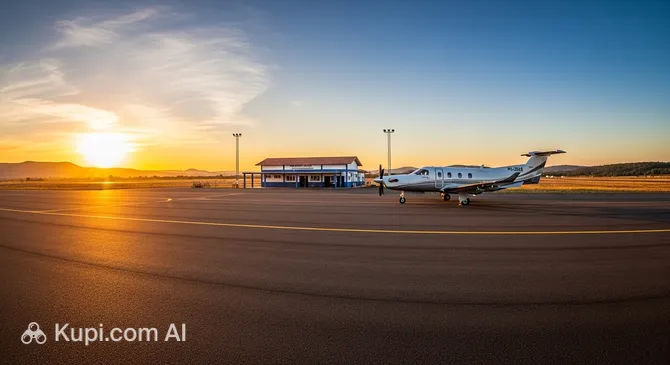
Salinas Municipal Airport. Source: Kupi.com Binoculars

Salinas Municipal Airport is a small yet significant air hub, opening the way to the heart of the colourful Brazilian state of Minas Gerais. This airport serves as the main gateway to the famous "World Capital of Cachaça", welcoming travellers wishing to explore the region's rich gastronomic traditions and culture. Here, you will not encounter the hustle and bustle of giant terminals: the atmosphere of the airport is imbued with the tranquillity and cosiness characteristic of the Brazilian hinterland.

IATA Code IAL
ICAO Code SNSS
City Salinas
Distance to Centre ~8 km
Status Domestic / Regional
Annual Passengers Serves primarily small and private aviation
Schedule Online board

Airport Features and Advantages:

  • Strategic Importance: The airport plays a key role in connecting the city of Salinas with major centres, particularly providing a link to the state capital, Belo Horizonte. This makes it an important hub for both business trips and tourism.
  • Access to Unique Attractions: For connoisseurs of agro-tourism, flying here is the fastest way to reach the famous fazendas (farms) and museums dedicated to the production of cachaça, for which this region is renowned.
  • Compactness and Speed: Thanks to the small size of the terminal, all pre-flight procedures are completed as quickly as possible. Passengers do not need to arrive several hours before departure, which significantly saves travel time.

Contact Information

As Salinas Municipal Airport is a small regional hub, its management is carried out directly by the city administration (Prefeitura Municipal). For most enquiries, it is recommended to contact the municipality's general communication channels or the air carriers directly.

  • Official Website: www.salinas.mg.gov.br (City Administration Portal, "Airport" section)
  • Airport Address: Rodovia BR-251, km 3, Zona Rural, Salinas - MG, 39560-000, Brasil (approximately 8-11 km from the city centre)
  • Help Desk Phone: +55 (38) 3841-1513 (General switchboard of the administration/airport) or +55 (38) 3841-3431
  • Email: gabinete@salinas.mg.gov.br (Municipal Administration)
  • Social Media: Airport news is published on the official pages of the Salinas administration on Instagram (@prefeiturasalinas) and Facebook.
  • Lost Luggage Information: There is no dedicated lost property office in the terminal. If items are lost, please contact an airline representative (e.g., Azul Conecta) immediately in the arrivals area.
  • Passenger Support: Questions regarding schedules and tickets are best clarified directly on the websites of the airlines operating the flights.

How to Get to the Airport

Getting to Salinas Municipal Airport is not difficult, as the air hub is located quite close to the city limits. The distance from the city centre to the terminal is about 8–11 kilometres, depending on your starting point. The journey usually takes 15–20 minutes, provided there is no traffic congestion.

Since Salinas is a small city, the transport system here has its own specific features. Below are the main ways to travel to or from the airport.

Taxi and Transfer

This is the most reliable and common method of transport for tourists with luggage. Local taxi services operate in the city, which can be called by phone or found at ranks in the centre (for example, near the Municipal Market).

  • Cost: A trip from the city centre to the airport usually costs between 40–60 Brazilian Reals (prices may vary; it is recommended to agree on the fare in advance or ensure the meter is used).
  • Apps: Popular aggregators (Uber or 99) may work unstably in the region or have a small number of active drivers. It is better to have the numbers of local taxi companies to hand.
  • Moto-taxis: Motorcycle taxis are very popular in Salinas. If you are travelling alone and with just one backpack, this is the fastest and most budget-friendly option (about 15–20 Reals), but it is not suitable for bad weather or bulky luggage.

Car Hire

Travelling by hire car is an excellent choice for those planning to visit cachaça production fazendas in the surrounding area. The airport is located next to the Rodovia BR-251 highway. The road is straight and generally in acceptable condition.

  • Where to Hire: Car hire counters within the terminal itself may operate on a limited schedule or by appointment only. It is recommended to book a car in advance with delivery to your flight or rent a car at rental offices in the city centre.
  • Parking: An open car park is equipped in front of the small terminal building. Typically, at regional airports of this type, parking is free or has a nominal cost, but spaces are not guarded, so do not leave valuables in the vehicle.

Public Transport

Public transport options for travelling directly to the airport are extremely limited. There is no metro or rail service in Salinas.

  • Buses: Urban and intercity buses run along the main highways, but they rarely enter the passenger terminal grounds directly. The stop may be located on the BR-251 highway, from where you would have to walk with luggage, which is inconvenient and unsafe. This option is not recommended for tourists.

Alternative Airports Nearby

As Salinas Airport receives a limited number of flights, many travellers prefer to fly into larger neighbouring cities and then travel to the "Capital of Cachaça" by intercity bus or hire car. Here is a list of the nearest alternatives:

  • Montes Claros Airport (MOC) — The nearest major hub, located approximately 169 km away. This is the most popular option for those travelling to Salinas, as there are many regular flights here from state capitals.
  • Vitória da Conquista Airport (VDC) — Located at a distance of about 216 km. Convenient for transit from the south of the state of Bahia.
  • Governador Valadares Airport (GVR) — Located 299 km from Salinas.
  • Porto Seguro Airport (BPS) — Distant by 347 km. This is a major tourist hub on the coast, convenient for combining a beach holiday with a trip inland.
  • Ilhéus Jorge Amado Airport (IOS) — Located 385 km away. Another coastal option for combined itineraries.

Terminals and Map

The infrastructure of Salinas Airport (IAL) fully corresponds to its status as a regional transport hub. Here you will not find confusing labyrinths of corridors and multiple levels. The entire terminal complex is designed to make travel as simple and stress-free as possible.

Number of Terminals and Layout

The airport has one passenger terminal. It is a compact single-storey building serving both departing and arriving domestic flights. The terminal building is divided into functional zones located in close proximity to each other, which eliminates the possibility of getting lost.

Passenger Service Zones

The interior space is organised logically and conveniently:

  • Check-in Zone: Located immediately at the entrance to the terminal. Here you will find airline check-in counters (most often these are small counters for regional carriers, such as Azul Conecta). Queues here are a rare phenomenon.
  • Departure Zone: After passing check-in and a quick security check, passengers enter a small waiting hall (Sala de Embarque). It is equipped with basic amenities: seats, restrooms, and typically vending machines or a small kiosk with drinks.
  • Arrival Zone: The arrivals hall (Desembarque) is in the same building. Due to the small volume of traffic, there are usually no luggage conveyor belts here; suitcases are often handed out by staff manually or through a special window, which takes mere minutes.

Navigation Features and Transfers

Since there is only one terminal, transfers between terminals are non-existent. Navigation is intuitive: all signs are duplicated in Portuguese and English, although thanks to the visual visibility of the hall, they are practically not required.

One of the distinctive features of Salinas Airport is the absence of jet bridges ("airbridges") and apron buses. Boarding and disembarking are carried out on foot across the airfield. This gives tourists a unique opportunity to see the aircraft up close and feel the warm climate of Minas Gerais from the first seconds after landing. Ensure you follow the marked paths under the guidance of ground staff.

Processing Times

The main advantage of Salinas Airport is saving time. There are no long queues characteristic of metropolises here.

  • Check-in and Security: Usually take from 5 to 15 minutes.
  • Arrival Time Recommendation: It is recommended to arrive at the airport 40–60 minutes before departure. This time is more than enough to calmly check in luggage and pass security control without rushing.

Tips for Travellers

The terminal is equipped with an air conditioning system, however, given its small size, the number of seats may be limited during peak times (for example, if a full flight is departing). If you arrive too early, it makes sense to spend time in the city, as entertainment infrastructure within the airport itself is minimal.

Airport History

The history of Salinas Municipal Airport is inextricably linked with the development of the city itself, known as the world capital of cachaça. Unlike major international hubs, this air haven was not built as a monumental project but developed organically, responding to the growing needs of the Northern Minas Gerais region.

Inception and Early Years

The airport was founded in the mid-20th century as a response to the need to connect this remote and rich agricultural region with the major centres of the state. Initially, it was a simple dirt runway serving exclusively private small aviation. Local producers of the famous cachaça and farmers used the airfield for business trips and transporting urgent cargo. For many years, the airport remained "exclusive", serving a narrow circle of individuals and having no regular passenger service.

Modernisation Stages and Development

A significant milestone in the airport's history was the beginning of the 21st century, when the government of the state of Minas Gerais launched programmes to develop regional aviation (such as Voe Minas). The goal was to integrate small towns into the national transport network.

  • Runway Reconstruction: A key stage was the paving and strengthening of the runway. This allowed for the accommodation of heavier turboprop aircraft, such as the Cessna Grand Caravan, which are the backbone of Brazil's regional fleet.
  • Infrastructure Update: The passenger terminal was renovated, modern navigation systems and perimeter fencing were installed, which significantly increased the level of flight safety.
  • Arrival of Commercial Aviation: A truly historic event for the city was the launch of regular flights. Partnership with major carriers (through their regional subsidiaries, for example, Azul Conecta) opened the skies of Salinas to the general public, making the flight from Belo Horizonte accessible to tourists.

Interesting Facts and Significance

Despite its modest size, Salinas Airport has several unique features in its biography:

  • Gateway to the Festival: The airport experiences peak loads annually during the World Cachaça Festival (Festival Mundial da Cachaça). Historically, it is during these days that a record number of private jets and charters from all over Brazil gather on the apron.
  • Rescue Mission: The airfield has always played a critical role in medical evacuation. For many residents of remote fazendas, Salinas Airport was historically the only chance for rapid transport to major hospitals in the state capital in emergencies.
  • Strategic Point: In the history of the region's development, the airport became a symbol of breaking out of isolation. Before its modernisation, the journey to the nearest major hubs took many hours by road, which hindered the development of business ties.

Services and Amenities

The infrastructure and service of Salinas Municipal Airport (IAL) fully reflect its specific nature: it is a compact regional hub designed for rapid transit, not for long waits. Here you will not find luxury boutiques or huge food courts, however, a basic set of services for comfortable departure and arrival is provided to passengers.

Restaurants, Cafés and Shops

Gastronomic and shopping opportunities in the terminal are extremely limited. Due to the short stay of passengers at the airport, there are no full-service restaurants or Duty Free zones here.

  • Dining: Usually, a small coffee shop or snack bar (lanchonete) operates in the public area. Here you can have a snack before departure, ordering the famous Brazilian cheese bread (pão de queijo), sandwiches, coffee, or soft drinks.
  • Shopping: There are no specialised shops in the terminal. If you plan to buy souvenirs or the famous local cachaça as a gift, it is strongly recommended to do so in advance in the city of Salinas. The selection of goods at the airport is minimal or non-existent.

Waiting Halls and VIP Services

Salinas Airport does not have dedicated business lounges or VIP lounges. The departure waiting area is a general hall equipped with standard seats. Given the low traffic of the airport, there are always enough free seats, it is quiet and calm, which makes waiting for a flight quite comfortable without additional privileges.

Connectivity and Electronics

  • Wi-Fi: A free wireless network is usually available in the terminal building. Connection speed is sufficient for checking email and messaging apps but may be unstable for streaming video.
  • Charging Devices: You can find a socket to charge gadgets in the waiting hall. It is recommended to carry a power bank or adapter, as the number of sockets is limited (Brazil uses type N sockets).

Financial Services

Travellers should ensure they have cash in advance.

  • Currency Exchange: There are no currency exchange points at the airport. Foreign currency should be exchanged at major international hubs (for example, in Belo Horizonte or São Paulo) before arriving in Salinas.
  • ATMs: The availability of ATMs (Caixa Eletrônico) in the terminal is inconsistent. It is best to withdraw necessary funds (Brazilian Reals) at bank branches in the city centre before travelling to the airport.

Medical Services and Safety

There is no full-scale medical centre or pharmacy at the airport. A basic first aid kit is available with staff. In case of serious health problems, an ambulance is called from the city of Salinas (arrival time is about 15–20 minutes).

Services for Passengers with Children

There are no specialised mother and child rooms or play areas in the terminal. However, general restrooms usually have fold-down changing tables. Thanks to the compactness of the airport and the absence of queues, travelling with children is much easier here than in major hubs.

Accessibility

The single-storey design of the terminal makes it convenient for passengers with reduced mobility.

  • Movement: The absence of stairs and escalators simplifies movement in wheelchairs.
  • Boarding the Aircraft: Since there are no jet bridges, boarding takes place from the apron. Airline and airport staff provide assistance when boarding (special ramps or ambulifts are often used if available, but more frequently — staff assistance). It is recommended to notify the airline of the need for assistance in advance.

Hotels and Accommodation

There are no hotels directly on the airport territory. The nearest accommodation options are located in the city of Salinas, which can be reached by taxi in 15–20 minutes.

  • City Hotels: In the centre of Salinas, there is a range of hotels and charming guest houses (pousadas) offering comfortable accommodation at affordable prices. This is the best option for those who have flown in for the festival or a business meeting.
  • Transit: Due to the lack of night flights, there is no need to stay overnight directly in the terminal — the airport closes for the night after serving the last flight.

Business Services

Conference rooms and business centres are absent in the terminal building. For meetings and negotiations, it is recommended to use the infrastructure of hotels in the city of Salinas.
Where to Eat

The gastronomic infrastructure of Salinas Municipal Airport (IAL) corresponds to its format as a small regional hub. Passengers should not expect a variety of haute cuisine restaurants, chain fast food outlets, or extensive food courts familiar to international hubs. Dining here is organised on the principle of "fast and functional" so that travellers can have a light snack before a short flight.

Cafés and Food Outlets

In the airport's single terminal, there is typically one main catering point — a small café-snack bar (known in Brazil as a lanchonete). It is located in the public zone (landside), before passing pre-flight security. This means that both departing passengers and those seeing them off can have a snack.

  • Assortment: The menu is limited to simple snacks. They offer sandwiches, industrial pastries, crisps, chocolate, soft drinks, and bottled water.
  • Departure Zone (airside): In the "secure" waiting area after security control, there are usually no full-service cafés. At best, there might be a vending machine or a small counter with coffee and water, operating only during flight boarding.

Local Flavour: What to Try

Even in such a small café, you can get a taste of the state of Minas Gerais. The main thing to order if you want to bid a "tasty" farewell to the region is fresh pão de queijo (Brazilian cheese bread). In Minas Gerais, it is prepared particularly well, and even at the airport, it is likely to be delicious and hot. An ideal accompaniment would be a cup of strong Brazilian coffee (cafezinho).

Dietary Catering (Vegetarian, Vegan, Halal)

Given the limited assortment, finding specialised food is difficult:

  • Vegetarians: Classic cheese bread (pão de queijo) is suitable for lacto-vegetarians. Simple cheese sandwiches may also be available.
  • Vegans and Gluten-Free: Choices are practically non-existent. Most snacks contain animal products or gluten. Travellers with strict dietary restrictions are strongly advised to bring food with them in advance.
  • Halal and Kosher: There are no specialised certified products in the café's assortment. Please note that many local snacks may contain non-halal ingredients.

Prices and Opening Hours

  • Opening Hours: The café's schedule is strictly tied to the flight schedule. The establishment opens approximately an hour and a half before departure and closes shortly after the aircraft leaves. If there are no flights, the terminal and café may be closed.
  • Price Range: Prices are moderate, slightly higher than in the city, but lower than in major metropolitan airports. Coffee and a snack will cost on average 15–25 Brazilian Reals.

Recommendations for Passengers

For a quick snack, the airport's capabilities are quite sufficient: a cup of coffee and a bun will brighten up the wait for boarding. However, if you require a full lunch, it is strongly recommended to eat in the city of Salinas before leaving for the airport. In the city centre, you will find many restaurants serving hearty local dishes, such as feijão tropeiro (beans with cassava flour and meat) or carne de sol, the quality and selection of which are incomparable to the airport terminal's assortment.

Travel Tips

Salinas Municipal Airport (IAL) is a classic example of a regional air haven, where simplicity and the absence of queues are the main advantages. However, flights on small aircraft and the specific nature of the "Capital of Cachaça" impose their own nuances on travel preparation. Follow these tips to ensure your departure goes smoothly.

Arrival Time Recommendations

Unlike major international hubs, you do not need to arrive here 2–3 hours before departure. The terminal is very compact, and service processes are fast.

  • Optimal Time: Arrive at the airport 45–60 minutes before the departure time indicated on your ticket. This is quite enough to calmly check in luggage and pass security.
  • Check-in Closure: Remember that check-in counters close strictly according to schedule (usually 30 minutes before departure). Being late even by a few minutes can be critical, as staff often perform multiple functions simultaneously (both check-in and boarding).

Check-in and Security Screening

Procedures in Salinas are simplified as much as possible but require attention to documents.

  • Documents: Have your photo ID ready (for Brazilian citizens) or passport (for international tourists). Electronic boarding passes are accepted, but it is more reliable to have a printed copy or a screenshot on your phone, as the internet may work unstably.
  • Screening: Security control is standard. You will need to remove metal objects, electronics, and outer clothing if required. There are practically no queues.

Choosing a Seat on the Plane

Flights to/from Salinas are often operated on small turboprop aircraft (for example, Cessna Grand Caravan by Azul Conecta). This offers a unique flight experience.

  • Views: Planes fly at a lower altitude than jet liners. Choose a window seat (Janela) to enjoy stunning panoramas of the hills of Minas Gerais and sugar cane plantations.
  • Balancing: On very small aircraft (9–12 seats), seating may be adjusted by the pilot or ground staff for the correct centre of gravity of the aircraft. Be prepared to change seats if asked.
  • Noise: Turboprop engines are louder. If you are sensitive to noise, bring earplugs or noise-cancelling headphones.

Hand Luggage and Carrying Liquids

Since Salinas is a centre for cachaça production, many tourists carry beverages as souvenirs. Strict rules apply here.

  • Hand Luggage Dimensions: Overhead bins in small aircraft are very narrow. "Cabin size" suitcases that fit in a Boeing or Airbus may not fit here. Most likely, they will have to be checked into the luggage hold right at the steps (procedure Valet Gate Check) or at the check-in counter. Take a soft bag or backpack with you.
  • Carrying Cachaça: On domestic flights in Brazil, carrying alcohol in hand luggage is permitted, but restrictions apply to the volume and weight of hand luggage (usually up to 5–10 kg). Given the cramped cabin, it is strongly recommended to check bottles into hold luggage, having packed them carefully beforehand. This will protect them from damage and save you from problems when stowing items in the cabin.

For Passengers with Connections

Most flights from Salinas go to Belo Horizonte (Confins Airport), from where passengers fly all over the world.

  • Single Ticket: If you are flying with one airline (e.g., Azul) to your final destination, your luggage is usually checked through to the end of the route immediately. Clarify this at the counter in Salinas.
  • Connection: Keep in mind that regional flights are more dependent on weather conditions. Allow at least 2–3 hours for a transfer in a major hub to avoid stress in case of a delay in departure from Salinas.

Customs Control

Salinas Airport is a domestic airport. There is no customs or passport control for international flights here. You will go through all formalities at the airport of departure from Brazil or arrival in the country (usually São Paulo, Rio de Janeiro, or Belo Horizonte).

Saving Time and Money

  • Transfer: Agree on the taxi price before boarding. In small towns, drivers may not turn on the meter for trips to the airport, offering a fixed price.
  • Food and Water: Prices at the airport are higher than in the city, and the choice is meagre. Buy a snack and water at a supermarket in Salinas before leaving. An empty bottle can be taken through security and filled at a drinking fountain in the waiting hall (if it is working), which will save money on bottled water.

What to Do in Case of Flight Delay

Weather in the region can be changeable, which affects the schedule of small aviation.

  • Stay Connected: Install the airline's app on your phone to receive instant notifications. In a small terminal, announcements may be made by voice, but push notifications are more reliable.
  • Do Not Sit in the Terminal: If the flight is delayed for a long time (more than 3–4 hours), it is wiser to return to the city by taxi. The airport is close, and waiting in a hotel or restaurant in the city will be much more comfortable than in the tiny waiting hall.

Reached the end of the page?

That means the route is fully explored