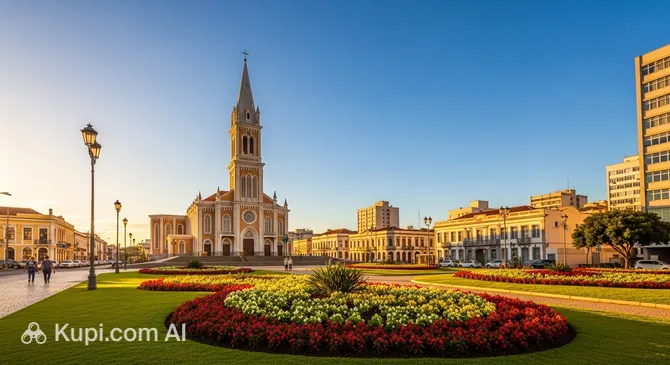
Santa Rosa pleasantly surprises guests with its harmonious combination of well-maintained green areas and cultural institutions that preserve the memory of the region's past. Despite its status as an agro-industrial center, the city offers excellent opportunities for leisurely walks in the fresh air and educational excursions that reveal the history of immigration in southern Brazil.
Parks and Natural Areas
The main place for outdoor recreation within the city is the Alfredo Leandro Carlson Exhibition Park (Parque de Exposições Alfredo Leandro Carlson). This is not just a venue for events, but a vast green territory ideal for morning jogs, picnics, or family walks. For tourists, the park is primarily interesting for its unique natural attraction — the "Lunar Tree" (a redwood grown from a seed that traveled to space), as well as its well-kept alleys and relaxation zones.
In the heart of the city lies Bandeira Square (Praça da Bandeira). This is a classic example of a Brazilian city square: a shaded space with trees, benches, and paved paths. Locals come here to drink traditional mate and discuss the news. For travelers, it is a great place to take a break after sightseeing and feel the steady pace of life in provincial Rio Grande do Sul.
Museums and Cultural Centers
You can dive into the past at the Santa Rosa Municipal Museum (Museu Municipal). The exposition is housed in the historic building of the former railway station, which creates a special atmosphere. The museum's collection is dedicated to the daily life and traditions of the first European settlers — Germans, Italians, and Russians. It gathers old tools, clothing, photographs, and documents that vividly show how these lands were developed in the early 20th century.
A unique institution that highlights the region's economic specialization is the Soy Museum (Museu da Soja), located on the grounds of the exhibition park. This is the only museum of its kind in the country, telling the history of this crop's development. Visitors can learn about cultivation technologies, the evolution of machinery, and the influence of soy on the development of the entire Brazilian economy. This educational site will be interesting even to those far from agriculture.
Architectural and Significant Sites
Among the architectural landmarks, the famous Xuxa Portico (Pórtico da Xuxa) stands out. The bright arch, built in honor of the well-known TV presenter, has become the city's calling card. Additionally, pay attention to the Old Station building itself, where the municipal museum is located. Its colonial-style architecture serves as a beautiful backdrop for photos and recalls the times when the railway was the region's main artery.
Insider Tip
If you have some free time, take a stroll around the Municipal Museum at sunset. The preserved elements of the railway infrastructure, combined with the soft evening light, create a nostalgic atmosphere ideal for a quiet end to the day and for taking atmospheric photos without crowds of tourists.