Navigating Tefé is a unique experience that differs significantly from the transport systems found in larger metropolitan areas. There is no public metro, tram, or extensive bus network operating within the city limits. Instead, the local transportation infrastructure is informal, efficient, and perfectly adapted to the town's layout and the pace of life in the Amazon. The primary and most popular mode of getting around is the moto-taxi (motorcycle taxi), which serves as the backbone of urban mobility for residents and visitors alike.
Moto-taxis are ubiquitous and can be identified by the drivers wearing numbered vests, often in bright colors like orange or green. They are agile, capable of navigating the city's streets quickly, and are available at almost any time of day or night. Standard car taxis do exist and can be found at specific stands, such as near the airport or the main port, but they are far less common than motorcycles. For most short trips within the town center or to hotels, a motorcycle is the standard choice.
The payment system in Tefé is strictly cash-based. There are no electronic travel cards, tickets, or validation machines. You simply pay the driver directly upon reaching your destination. Prices are generally fixed and very affordable for rides within the city center, with slightly higher rates for longer distances, such as trips to the airport or the port. It is always a good practice to confirm the price with the driver before hopping on, although overcharging is not a common issue in this tight-knit community. Ensure you carry small bills and coins, as drivers may not always have change for large banknotes.
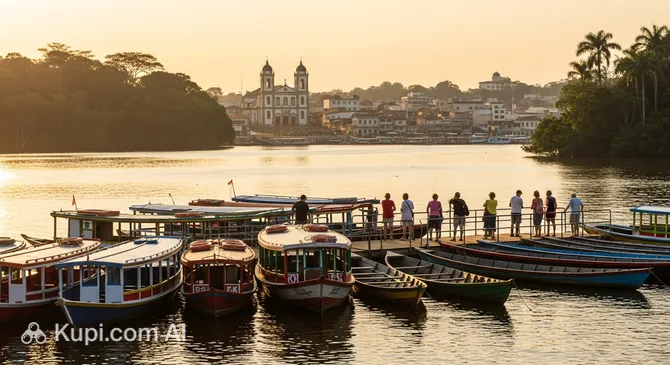
Given the city's geography on the banks of a lake, water transport functions as an extension of the public transit system. Small speedboats, locally known as voadeiras, and motorized canoes act as water taxis, connecting the urban center with nearby riverine communities and neighborhoods across the water, such as Nogueira. These depart from the main port area, and like the road taxis, payment is made in cash directly to the boat operator.
For tourists, the system is straightforward but requires a few safety precautions. When using a moto-taxi, always ask for a helmet if one is not immediately offered; it is a legal requirement and crucial for your safety. While you can easily hail a ride on the street by simply waving your hand, hotels and restaurants can also call trusted drivers for you, which is recommended at night. Operating hours are technically 24/7 for moto-taxis, though availability decreases late at night.
Alternatives to motorized transport are limited but viable for certain areas. The town center is compact and flat, making walking a pleasant option for exploring the market, the square, and the waterfront. Car rental agencies are virtually non-existent and unnecessary for a typical visit. Similarly, ride-sharing apps popular in global capitals are not active or reliable here, so relying on the local ecosystem of moto-taxis and walking is the best way to experience the city like a local.