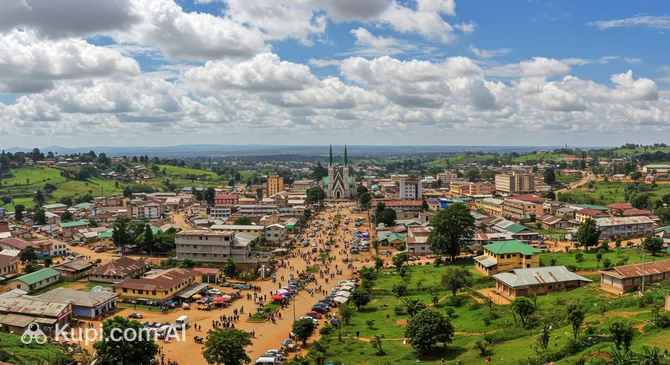
Bamenda is the heart of the North-West Region of Cameroon, a city with a unique character and stunning energy. Located in the picturesque highlands, it draws travelers with its misty peaks, cool air, and the hospitality of its residents. It is a place where the modern rhythm of life is harmoniously intertwined with a deep respect for the roots and traditions of numerous ethnic groups.
Bamenda. Illustration.
Source: Kupi.com AI
The city sits at an altitude of over 1,200 meters above sea level, giving it a milder and more pleasant climate compared to the country's coastal regions. With a population of around two million, Bamenda is not only a major administrative center but also an important hub for education and trade. Exploring the historical heritage of Bamenda, one can see how much the city's appearance has been influenced by its past as a significant cultural crossroads.
The city's main highlights include its bustling markets, where artisans offer unique wood and fabric crafts, as well as the majestic mountain landscapes that surround the residential areas. Bamenda invites those seeking an authentic African experience away from the standard tourist trails. Here, everyone will find something for themselves: from peaceful walks through the hills to immersion in the region's vibrant festive culture.
Weather Overview
The climate of Bamenda is one of the city's main draws, attracting those who find tropical heat difficult to handle. Thanks to its highland location, a pleasant coolness prevails here. Temperatures remain stable throughout the year and usually fluctuate between 14–28 °C. The warmest months are February and March, when the air reaches its maximum temperature, while the freshest weather occurs in July and August.
The region has two distinct seasons. The dry season lasts from November to April and is considered the ideal time to visit: the sky is most often clear, and the roads are dry and passable. From May to October, the rainy season arrives, bringing heavy precipitation and mists that envelope the mountain peaks, creating a mystical and very beautiful atmosphere. The highest rainfall occurs in September.
When planning your trip, be sure to check the detailed weather in the city for the dates of your arrival. Even on the sunniest day, it is worth having a light jacket or sweater with you, as it becomes noticeably cooler in the mountains after sunset. This variability makes the climate of Bamenda unique and invigorating against the backdrop of typical African heat.
Average monthly temperature
Average monthly precipitation
Interesting Facts
Bamenda is a city capable of surprising even the most seasoned traveler. Here are a few notable facts that highlight its uniqueness:
The city is located in a mountainous area at an altitude of 1,239 meters above sea level, making it one of the coolest and most climatically comfortable places in the region.
Bamenda is an important agricultural hub—thanks to fertile volcanic soils, some of the best coffee in West Africa is grown here.
The region is famous for its traditional Fonships—small kingdoms, each with its own ruler (Fon) and unique cultural protocols preserved over centuries.
The city is considered an important center for artistic casting and wood carving, and local masks are highly valued by African art collectors worldwide.
How to Get There
The road to Bamenda is the beginning of an exciting journey through the picturesque landscapes of Cameroon. The main hub for those who prefer air travel is Bafoussam International Airport (IATA: BPC), which handles regional flights. From the airport to the city center, you can travel by taxi or a pre-booked transfer, ensuring a comfortable entry into the regional capital.
Most travelers arrive in the city by road. A network of roads connects Bamenda with other major centers in the country, such as Douala and Yaoundé. Traveling by intercity bus is a great way to experience the local flavor; however, keep in mind that road conditions can vary and travel times increase during the rainy season. For more detailed route planning, you can research how to get to the city in the most convenient way.
Railway service directly to the city is currently not developed, so buses and private cars remain the primary means of transport. When planning a trip, it is recommended to consider weather conditions and prioritize reputable transport companies that provide regular services between key cities in the region.
Station
Passenger traffic
Distance
Bessengue train station
2
217 km
Makurdi Railway Station
1
265 km
Yaoundé train station
3
277 km
Enugu Railway Station
1
300 km
Main Attractions
The main attractions of Bamenda are closely linked to the rich cultural code of the North-West Region. Of great interest to visitors are the traditional palaces (Fonships), which serve not just as residences for local rulers, but as true open-air museums. Here, you can see unique architecture and ancient artifacts, and learn about the age-old customs of the local peoples.
Nature lovers should turn their attention to the mountain landscapes surrounding the city. The picturesque hills and valleys offer ideal conditions for hiking and eco-walks. The city's high-altitude location provides panoramic views that are especially beautiful at dawn, when the mist slowly rolls off the peaks, revealing the emerald greenery of the slopes.
The city's cultural life is also centered on its authentic markets and craft centers. These are the places where real life pulses: here, you can watch metal and woodworkers at their craft, as well as witness preparations for local festivals. If your visit coincides with one of the traditional holidays, you will be able to see vibrant dance performances and hear the rhythms of folk music that leave no spectator indifferent.
Local Cuisine
A culinary journey through Bamenda begins with an introduction to the gifts of the fertile lands of the North-West Region. Local cuisine is famous for using the freshest ingredients and aromatic spices. Be sure to try traditional soups and thick porridges made from root vegetables, served with tender meat or fish. A special place in the diet is occupied by dishes made from corn and greens, reflecting the agrarian wealth of the region.
The region is a recognized center for the production of high-quality coffee and cocoa. Morning coffee in one of the local establishments is a ritual that allows you to appreciate the depth of flavor of beans grown on mountain plantations. Among drinks, traditional palm wine, which has a unique sweet taste, and local beer, which perfectly complements spicy dishes, are also popular.
You can experience the true taste of the city at local markets and in small eateries where food is prepared over an open fire. Street food in Bamenda is not just a snack, but a part of the culture. The city's gastronomic scene offers simple but incredibly filling and honest dishes prepared according to recipes passed down from generation to generation. Visiting the food stalls will give you not only new taste sensations but also the opportunity to purchase the freshest tropical fruits.
Travel Tips
Preparing for a trip to Bamenda will help you feel confident and enjoy every moment in this distinctive city. We have prepared several tips to make your journey comfortable and safe.
Clothing and gear: Choose layered clothing. It is warm during the day, but because of the high altitude, evenings can be quite cool. Be sure to bring comfortable closed shoes for walking in the hills and an umbrella if your trip falls during the summer months.
Transport: The best way to get around is by licensed taxis. If you plan a trip out of town, agree on the price in advance or use car rental services with a driver through your hotel.
Finances: The official currency is the Central African Franc (XAF). Bank cards are rarely accepted, so always have a sufficient supply of cash in small denominations.
Health: Drink only bottled water and use insect repellent. Before the trip, it is recommended to consult a doctor regarding standard vaccinations for the region.
Communication:English is widely spoken in Bamenda (it is an English-speaking region of Cameroon), along with French and local dialects. Knowing basic English phrases will significantly ease communication.
Local Etiquette: Local residents are very polite. When entering a room or starting a conversation, always say hello. Politeness and a smile open many doors here.
What to Avoid: Do not photograph government buildings, military sites, or people without their prior consent. This can lead to misunderstandings with local authorities.
Extra Tip: Visit the market in the first half of the day—this is the best time to find the freshest selection of products and feel the true dynamics of the city.
Bamenda is a city that rewards the curious. By following these simple rules, you will discover an incredibly warm and hospitable land.
Entertainment & Nightlife
Entertainment in Bamenda is authentic and soulful, focused on social interaction and getting to know the local flavor. The city's nightlife is centered in cozy bars and cafes, where both locals and visitors gather in the evenings. These venues have a relaxed atmosphere, often playing modern African music, and conversations frequently last late into the night.
For those who prefer cultural leisure, the city offers traditional festivals and community gatherings. This is an excellent opportunity to see national dances and hear folk tales in an authentic setting. During the day, popular activities include excursions to the surrounding hills and visits to craft workshops, where you can not only watch the masters at work but also try your hand at creating something yourself.
Safety after dark is best ensured by choosing well-established venues in central districts. For traveling at night, it is best to use taxi services, which are easy to call from any popular cafe. Overall, a holiday in Bamenda will appeal to those who value sincerity and the chance for deep immersion in an environment free from pushy tourist services.
Parks & Museums
While Bamenda does not have classic museum complexes in the European sense, the city itself and its surroundings represent a living museum of culture and nature. The role of the main guardians of history here is performed by the traditional Fon palaces. In these residences, royal regalia, ancient thrones, wood carvings, and sacred artifacts are carefully kept, telling the stories of the origins of the local peoples and their glorious past.
The role of natural parks in Bamenda is played by the surrounding mountain slopes and plantations. Walks through coffee and cocoa plantations allow tourists to see the process of growing these crops in their natural environment. The green hills around the city are excellent spots for bird watching and nature photography, where every turn of the trail reveals a new breathtaking view.
For those who want to dive deeper into local creativity, it is worth visiting cultural centers and craft associations. Works by modern artists and sculptors, who reinterpret traditional motifs in their pieces, are often exhibited here. This combination of natural majesty and living art makes a visit to Bamenda a truly inspiring experience.
Getting Around
The transport system in Bamenda is adapted to the features of the mountain terrain and the local rhythm of life. The most popular modes of transport here are yellow taxis and minibuses. Taxis operate on a shared ride system, which makes them very affordable, but you can always negotiate a "special drop" if you want to reach your destination faster and without stops.
For short trips around the city, residents often use motorcycle taxis (okadas), which maneuverably navigate traffic on busy streets. However, tourists should use them with caution and choose only trusted drivers. There are no fixed tariffs in the city, so it is better to clarify and agree on the fare in advance, before starting the journey. Payment is made exclusively in cash.
Walking is possible in central areas, but keep in mind that the city is located on hills and many streets have steep inclines. For longer excursions outside Bamenda to attractions or neighboring cities, it is recommended to rent a car with an experienced local driver. This will not only save time but also ensure comfort when traveling on mountain roads, which can be challenging for self-driving.
Accommodation
A wide range of accommodation options is available for guests of Bamenda, capable of satisfying both budget tourists and business travelers. The city is dominated by cozy guesthouses and small hotels, where the hospitality of the hosts is combined with an authentic atmosphere. Such accommodation allows you to better get to know the daily life of the residents and receive useful tips for exploring the surrounding areas.
If you value comfort and developed infrastructure, it is worth looking at larger hotels located in the central districts. Staying in the center is convenient due to its proximity to main administrative buildings, banks, and transport hubs. Prices in Bamenda remain very affordable, making the city attractive for long stays.
During the peak tourist season or major festivals, it is recommended to book accommodation in advance. Most hotels can be found through popular international services or by contacting them directly. When choosing a place to stay, be sure to check for additional amenities such as Wi-Fi and secure parking, which will ensure a peaceful and safe holiday.
Nearby Cities
Bamenda serves as an ideal starting point for exploring the surroundings, which are rich in cultural discoveries and natural beauty. Very close by are small settlements, each preserving its own unique traditions and inviting tourists to spend an unforgettable day outside the city.
Just 16 kilometers away is Bafut, famous for its majestic royal palace and ancient ceremonies. It is also worth visiting the town of Bali, located about 18 kilometers away; it attracts visitors with its distinctive architecture and craft shops. For those interested in traditional pottery, a trip to Bamessing, famous for its ceramic masters, is an excellent choice.
Exploring these neighboring towns will allow you to see a deeper, rural Cameroon and enjoy the silence of the mountain slopes. Short trips to places like Bafanji or Balikumbat will fill your journey with bright colors and help you better understand the multifaceted culture of this amazing region.
Shopping & Souvenirs
Shopping in Bamenda is primarily an exciting adventure through local markets, where life teems from early morning. There are no giant shopping malls here, but instead, an abundance of authentic handmade goods. The city is rightly considered one of the best places in the country to buy wooden items: from massive decorative masks to exquisite animal figurines crafted with incredible detail.
Special attention should be paid to local textiles. Fabrics with traditional North-West regional patterns, often decorated with hand embroidery, make excellent souvenirs. In the markets, you can also find unique items made of copper and bronze, created by casting masters. Don't forget to purchase a pack of local mountain coffee—its rich aroma will long remind you of your trip.
Shops usually operate from morning until early evening, and payment is most often made in cash in the local currency. Bargaining in the markets is part of the local culture and is welcomed if conducted with a smile and respect for the seller. Visiting the stalls of Bamenda is not just about buying things, but an opportunity to chat with artisans and take home a piece of real Africa.