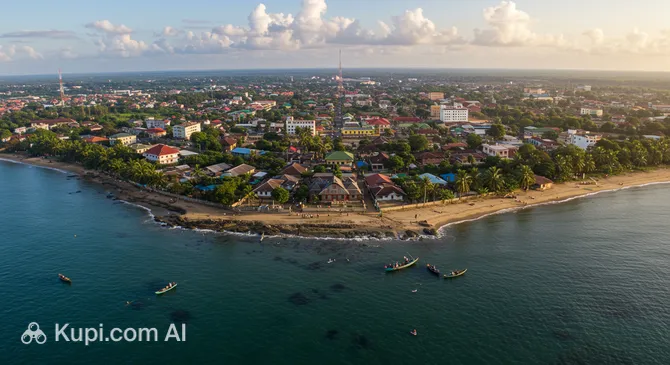
Bali is a colorful town located in the North-West Region of Cameroon. Situated at an impressive altitude of about 1,355 meters above sea level, it offers travelers a completely different atmosphere from the country's sweltering coastal areas. This is a place where mountain air meets the rich cultural traditions of local peoples, creating a unique character for the settlement.
The town's geographical position in the highlands of West Africa determines its temperate climate and picturesque landscapes. Bali serves as an important administrative and cultural hub of the region, while maintaining the spirit of a traditional community. Exploring this area, you can dive deeper into the history of this region, which is closely intertwined with the customs of local chiefdoms and the colonial past.
Bali. Illustration.
Source: Kupi.com AI
The town attracts authenticity seekers with its vibrant markets and proximity to mountain trails. There is no metropolitan bustle here, but instead an abundance of sincere hospitality and the opportunity to see the real, non-touristy way of life in Cameroon. A visit to Bali is an excellent choice for those seeking tranquility among green hills and wanting to experience the heritage of the North-West Region.
Weather Overview
The weather in Bali is largely determined by its high-altitude location, making the local climate milder and cooler compared to the country's coastal regions. The typical annual cycle is characterized by alternating wet and dry seasons. From April to November, the town is often dominated by rain, with the most intense rainfall occurring in September and October, when levels can exceed 400 mm per month.
Throughout the year, the air temperature remains fairly stable and comfortable: during the day, it usually warms up to 22–28°C, while at night during the dry season, it can drop to a brisk 14°C. January and December are the driest months, when the sky most often remains clear, making it ideal for hiking. It is worth checking detailed information about the climate of Bali before your trip to choose your wardrobe correctly.
Expect moderately warm summers with frequent but refreshing rains during the monsoon season and dry, sunny winter months. The oceanic influence combined with the altitude creates a unique atmosphere here, where even on the hottest days, you can find coolness in the shade of mountain slopes. Humidity during the rainy season is quite high, but thanks to the cool air, it is much easier to bear than on the plains.
Average monthly temperature
Average monthly precipitation
Interesting Facts
High-altitude status: Bali is located at an altitude of 1,355 meters above sea level, making its climate significantly cooler and more comfortable than in most other cities in Cameroon.
Oceanic influence: Despite its mountainous location, the city's rainfall patterns are significantly influenced by its proximity to the Atlantic Ocean.
Seasonal contrast: There are two distinct rainy seasons in the region (April-June and September-November), while dry weather prevails during the rest of the year.
Temperature range: The average annual temperature here fluctuates in a narrow range from 14°C to 27°C, creating an "eternal spring" effect.
Mountain heart: The town is located in one of the most mountainous areas of the country — the North-West Region, known for its breathtaking landscapes.
How to Get There
The transport accessibility of Bali is due to its location in the North-West Region of Cameroon. Although the town is located in a mountainous area, it is connected by main road arteries to larger hubs. Travelers should keep in mind that the journey may take longer due to the terrain and road conditions, but the picturesque views outside the window compensate for these inconveniences.
The nearest international air hub is located in the country's capital, Yaoundé. From the capital, Bali can be reached by intercity buses or a rented car. Information about various travel options should be checked in advance, as the schedules of local carriers may change depending on the season.
Internal communication in the region is maintained by regular minibus and taxi services that run between Bali and neighboring cities such as Bamenda. Railway communication is not developed in this part of the country, so road transport remains the primary way to get around. For maximum comfort, it is recommended to book transfers with trusted companies or use the services of official taxi agencies.
Station
Passenger traffic
Distance
Bessengue train station
2
206 km
Makurdi Railway Station
1
262 km
Yaoundé train station
3
279 km
Enugu Railway Station
1
286 km
Main Attractions
The main attractions of Bali and its surroundings are inextricably linked with the majestic nature of the North-West Region. The town is an ideal base for outdoor enthusiasts, offering access to numerous mountain trails. Trekking along the local slopes allows you to enjoy panoramic views of the valleys and get acquainted with the unique flora and fauna characteristic of the African highlands.
The cultural heritage of the region is expressed in the traditional architecture and way of life of local communities. Visiting traditional settlements allows you to see the work of artisans and learn more about the hierarchy and customs of the local people. Although there are no major world-class museums in the town itself, its streets and squares are a living exhibition of Cameroonian culture in their own right.
Special attention should be paid to the natural viewpoints in the vicinity of the town. The proximity to mountain peaks makes Bali a popular spot for photographers and naturalists. Walks through the surrounding forests and hills provide an opportunity to see rare bird species and enjoy the silence, broken only by the sound of the wind in the treetops.
Local Cuisine
The gastronomy of Bali is an honest and hearty reflection of the culinary traditions of North-West Cameroon. The local cuisine is based on the use of the freshest products grown in fertile mountain soils. The diet is based on various porridges, thick stews, and dishes made from local root crops such as yams and cassava, which provide the energy needed for mountain life.
One of the key elements of the meal is vegetable gravies and sauces, generously seasoned with local spices. Often, meat or poultry dishes cooked over a slow fire with the addition of herbs can be found on the menu. A characteristic feature is the combination of different textures: soft side dishes and crunchy additions. The food culture here is simple — most residents prefer home-cooked food or visiting small market stalls.
You should definitely try the traditional drinks prepared in this region. These can be both refreshing tropical fruit juices and local fermented beverages. Bali's markets are the best place to get acquainted with street food: you can always buy freshly roasted snacks or seasonal fruits here. The town's simple but fragrant cuisine will be long remembered for its authenticity and rich flavor.
Travel Tips
Traveling to Bali promises to be an unforgettable experience if you approach its planning wisely. These practical tips will help you feel confident in the mountains of North-West Cameroon.
Clothing and gear: Due to the high-altitude location, evenings here can be quite cool. Be sure to bring a *light jacket or sweater*. Comfortable closed shoes for walking in the hills will also come in handy.
Transport: Use official bus companies for travel between cities. Inside Bali, it is most convenient to get around by taxi, but always **agree on the fare** in advance.
Finances: The official currency is the CFA franc. Cards are very rarely accepted, so always have an adequate supply of cash in small denominations.
Health and safety: Use only bottled water and do not forget about sun protection. In the evening, it is useful to have repellents in the mountainous area.
Communication: The main language of communication is English (in its local version), but knowledge of basic phrases in French can also be useful. Wi-Fi is available only in some hotels.
Local etiquette: The people of Bali are friendly and appreciate a polite greeting. Before taking a photo of someone, *be sure to ask for permission*.
What to avoid: Do not plan long trips on mountain roads after dark, as lighting may be absent and the condition of the road surface can be unpredictable.
Best time to visit: Plan your trip for the **dry season** (December to March), when the weather is most favorable for trekking and sightseeing.
May your acquaintance with this mountain region bring only positive emotions and bright discoveries!
Entertainment & Nightlife
Leisure in Bali is predominantly quiet and contemplative, oriented towards nature lovers. The main entertainment here is related to exploring mountain landscapes: hiking, trekking, and studying local ecosystems attract ecotourism enthusiasts. During the day, the town lives an active life in market squares, where you can observe the daily life of local residents.
Nightlife in the classic sense — with noisy clubs and neon signs — is practically non-existent here. Evenings in Bali are usually spent in cozy local establishments where residents gather to socialize. This is a great opportunity to try local beer or traditional drinks in an informal, friendly atmosphere, immersing yourself in the rhythm of life of an African town.
For those looking for cultural experiences, local holidays and ceremonies will be interesting. If your visit coincides with a traditional festival, you will be able to see vibrant performances by dancers and hear the sounds of folk instruments. At other times, entertainment is limited to visiting small cafes and walking in the picturesque surroundings under the starry sky of the highlands.
Parks & Museums
Although there are no large state museums in Bali itself, the entire town and its surroundings can be considered a kind of open-air museum. The main wealth here is the natural zones. The surrounding mountain landscapes and forest tracts offer tourists an immersion into the untouched ecosystem of North-West Cameroon. These are ideal places for those who want to study the region's biodiversity in its natural form.
To get acquainted with the history and traditions of the region, you should pay attention to cultural sites associated with local rulers and communities. Traditional buildings and assembly places serve as keepers of the region's past. To get the most information, it is recommended to hire a local guide who can tell legends and facts not recorded in guidebooks.
Park zones in the classic European sense are replaced here by picturesque valleys and mountain slopes, which are perfect for walking. Nature lovers will be interested in exploring the local flora, which in this high-altitude area differs significantly from the vegetation of lowland Cameroon. The silence and purity of these places make them ideal for environmental education and a break from civilization.
Getting Around
The transport system of Bali is oriented towards the needs of local residents and adapted to the features of the mountain terrain. The main form of public transport is minibuses and buses that connect the town with other settlements in the region. This is an affordable, though not always the fastest, way to travel, allowing you to fully experience the local flavor.
For trips within the town and to the nearest suburbs, tourists most often use taxi services. Motorized three-wheeled taxis and moto-taxis, which easily maneuver through narrow streets, are also popular. It is customary to agree on the price of the trip in advance, as meters are usually absent in such vehicles. This is a budget-friendly and prompt way to get to your destination.
Those who value independence and comfort are recommended to consider renting a car with a local driver. This is especially relevant during the rainy season when mountain roads require special driving skills. Bicycle rental is practically non-existent in the town due to steep climbs, so walking combined with taxi services remains the best choice for a tourist.
Accommodation
The choice of accommodation in Bali reflects its status as a small and quiet town. You won't find huge chain hotels here, but the town offers cozy options for accommodation that allow you to feel the local flavor. The basis of the hotel stock consists of small guest houses and private hotels, where guests are offered basic comfort and a homey atmosphere.
Most accommodation options are concentrated in the town center or along main roads, which is convenient for travelers planning trips around the region. Accommodation prices here are very affordable compared to large cities in Cameroon. It is recommended to book in advance, especially if your visit coincides with local cultural events or holidays when the demand for housing increases.
When choosing a place to stay, you should pay attention to the availability of hot water and autonomous power supply systems, which is important for a comfortable stay in a mountainous area. If you are looking for a wider choice of mid-range hotels or luxury options, you should consider staying in a nearby large hub and making day trips to Bali.
Nearby Cities
The town of Bali is a great starting point for exploring the North-West Region of Cameroon, which is rich in historical and natural attractions. Thanks to its location, it allows for interesting day trips to neighboring settlements, each of which has its own unique character.
Just 18 kilometers away is Bamenda — a large regional center where you can find more modern infrastructure, markets, and cultural sites. It is also worth visiting Bafut, known for its traditional chiefdom (fondom) and the unique architecture of the royal palace, which is included in the UNESCO World Heritage tentative list. For those interested in rural life and crafts, a trip to the town of Mbouda will be curious.
Exploring the surroundings of Bali will allow you to see the full diversity of this mountain region — from the bustling market squares of large cities to quiet craft villages. Local roads winding among the hills guarantee unforgettable impressions from every journey.
Shopping & Souvenirs
Shopping in Bali is primarily an introduction to the vibrant local markets, which are the centers of the town's social life. There are no large shopping malls with global brands here, but this is more than compensated for by the opportunity to purchase unique handmade goods. Local masters are famous for their skill in working with wood, textiles, and clay.
On the main shopping streets and market squares, you can find authentic African masks, figurines, and traditional clothing embroidered by hand. The North-West Region of Cameroon is known for its special style of fabrics, which will make an excellent souvenir. Remember that in local markets, bargaining is an integral part of the communication culture — it allows you not only to lower the price but also to strike up a friendly conversation with the seller.
For everyday needs, small shops and stalls operate in the town. As useful gifts from Bali, it is worth bringing local spices, coffee, or honey collected in the mountains. Shop opening hours usually correspond to daylight hours, and payment is predominantly made in cash (Central African francs), so tourists should take care of currency exchange in advance.