Support

Baker Lake

About the Airport

Baker Lake Airport (YBK) is not merely a runway, but a vital aerial artery connecting a secluded Inuit settlement in the heart of Arctic Canada with the rest of the world. Located on the shores of a vast lake, it serves as a crucial hub for passengers, mail, and cargo, ensuring year-round access to a region where no ground roads lead. For travellers seeking to experience the rugged beauty of the tundra and the unique culture of the North, this airport becomes the starting point of an unforgettable adventure.
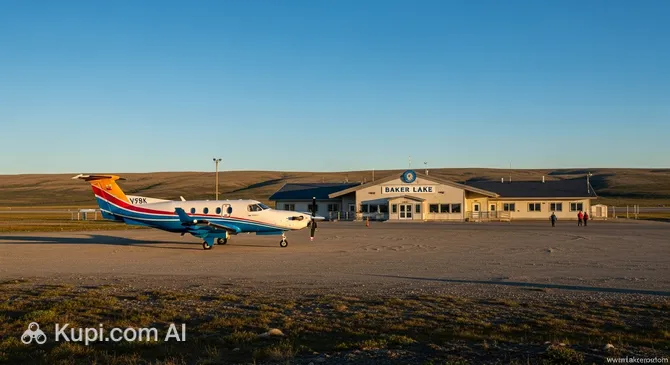
Baker Lake. Illustration.
Source: Kupi.com AI
PropertyValue
IATA CodeYBK
ICAO CodeCYBK
CityBaker Lake
CountryCanada
TimezoneAmerica/Rankin_Inlet
ScheduleOnline Timetable

The main feature of Baker Lake Airport is its key role in the life of the local community. It is a small but functional air terminal, adapted to the harsh climatic conditions of Nunavut. It is equipped with a single gravel runway capable of receiving turboprop aircraft, which are the primary mode of transport in this region.

Despite its modest size, the airport efficiently handles regular and charter flights. The main routes connect Baker Lake with other northern hubs, such as Rankin Inlet, from where one can reach major cities in the south of the country. For tourists, this is a reliable way to reach a unique destination known for its fishing opportunities, wildlife viewing, and introduction to Inuit art.

Contact Information

Below is the contact information for Baker Lake Airport (YBK). Please note that this is a small regional airport, and some specialized contacts may not be available.

  • Official Website: The airport does not have its own dedicated website. Essential information is published on the portal of the Government of Nunavut, which manages the airport.
  • Inquiry Service Phone: +1 867 793-2883. It is recommended to use this number for most enquiries.
  • Airport Address: Baker Lake Airport, P.O. Box 148, Baker Lake, Nunavut, X0C 0A0, Canada.
  • Email: An official email address for general enquiries is not provided. It is recommended to contact them by phone.
  • Social Media: The airport does not maintain official pages on social networks.
  • Lost Luggage Information: For issues related to lost or damaged luggage, you should primarily contact the airline directly with which you flew. You may also try to clarify information via the general airport phone number.
  • Passenger Support Contacts: For support and answers to questions, please use the main airport telephone number.

How to Get to the Airport

Getting to Baker Lake Airport (YBK) from the settlement of the same name in Canada is straightforward, as it is a small community and all facilities are in close proximity. The distance from the nominal centre of Baker Lake to the airport is only one to two kilometres, so the journey by transport will take no more than 5-10 minutes.

Taxi and Transfer — this is the most common and reliable way to get to the airport. Several local taxi services operate in the settlement. Given the remoteness of the region and the specific nature of air travel, it is strongly recommended to arrange your ride in advance, especially if you have an early or late flight. Some hotels and guesthouses may also assist with organizing transfers for their guests. The cost of the trip is usually fixed and reasonable, but it is best to confirm it when booking.

Personal Transport and Walking. Many locals travel by personal transport: All-Terrain Vehicles (ATVs) in the warmer months and snowmobiles in winter. If you are staying with friends or have rented such a vehicle, this is a convenient way to reach the terminal. In good weather, you can even walk to the airport — this will take about 20-30 minutes and allow you to better experience the atmosphere of the Arctic settlement.

Car Rental and Parking. Opportunities for car rental in Baker Lake are extremely limited and are not represented by major chain companies. If you require a vehicle for the duration of your stay, it is worth investigating this matter well in advance and contacting local hotels or cooperatives. The airport has a small parking area where vehicles can be left. Typically, it is free of charge but is not guarded.

It is important to note that in Baker Lake, there is a complete absence of public transport in the conventional sense — there are no buses, trains, or metro systems here. The main means of transport are taxis and private vehicles.

Terminals and Map

Baker Lake Airport (YBK) is a small regional airport, typical of the northern territories of Canada. Its infrastructure is designed with an emphasis on functionality and simplicity, making it very convenient for passengers.

The airport operates one passenger terminal, which handles all flights — both arrivals and departures. It is a small single-storey building where all key zones are within walking distance of each other. Complex layouts and the need for long walks are absent here, eliminating the risk of getting lost. Inside the terminal, check-in counters, a small waiting area, and the baggage handling zone are integrated.

The departure and arrival areas are essentially parts of one common hall. After check-in, passengers proceed to the general waiting area before boarding. The arrival area is located nearby, and luggage is usually delivered directly into the terminal building for manual unloading, rather than via an automated belt. Due to the absence of multiple terminals, the issue of transfers between them is not relevant.

Check-in and security procedures generally take minimal time. Nevertheless, airlines recommend arriving at the airport approximately 90 minutes before departure, as check-in counters may close one hour before the flight leaves. Security screening is conducted quickly and without long queues. The main advice for navigation is to follow the few signs available and listen to staff announcements, which are the primary source of information in such a compact space.

History of the Airport

Baker Lake Airport (YBK) is not just a transport hub, but a vital lifeline for the settlement of the same name, which is the only inland Inuit community in Canada. Although air connections to the region via seaplanes and ski-equipped aircraft existed previously, the modern history of the airport began in the late 1970s. It was then that Transport Canada constructed and certified an airfield with a gravel runway, ensuring year-round and more reliable connections with the rest of the world.

A key stage in the airport's development was its transfer to the management of the Government of Nunavut. This allowed for a more flexible response to local needs. A real impetus for modernization was provided by the development of the mining industry in the region, particularly the launch of large gold mines. The increased passenger flow and cargo volumes required an expansion of infrastructure. The most significant event was the construction in the 2010s of a new, more spacious, and modern terminal building, which replaced the old one that could no longer cope with the load.

Although Baker Lake Airport cannot boast world records, its main achievement is uninterrupted operation in harsh Arctic conditions. It plays an indispensable role not only in transporting passengers but also in delivering mail, fresh produce, and medicines, and performing emergency medical evacuations. An interesting fact: like many northern airports, YBK uses a gravel runway, which is ideally suited for operation in permafrost conditions and sharp temperature fluctuations. In essence, the entire history of the airport is the history of sustaining life and development in a remote northern community.

Services and Amenities

Baker Lake Airport (YBK) is a small regional air terminal serving the eponymous community in Nunavut. Given its size and remote location, the range of services here is basic but sufficient to ensure passenger comfort before departure.

In the airport terminal, you will find a small waiting hall with seating. Opportunities for shopping and dining are very limited and may be restricted to vending machines with drinks and snacks. It is recommended to bring food and beverages with you. There are no specialized VIP lounges at the airport. Wi-Fi access may be unstable or unavailable, and for charging electronic devices, you will likely have to use standard power outlets in the waiting area.

Banking services, currency exchange points, conference rooms, and business centres are absent from the airport building. It is recommended to complete all financial transactions in advance in larger cities. For medical assistance, one must contact the health centre in the Baker Lake settlement itself, as there is no dedicated medical post at the airport other than first aid supplies.

The airport is equipped to serve passengers with reduced mobility in accordance with basic standards; however, you should notify your airline in advance of the need for special assistance, for example, when boarding the aircraft. Facilities for passengers with small children are minimal and typically include standard amenities in the restrooms. There are no hotels directly on the airport grounds, but several accommodation options can be found in the Baker Lake settlement itself, which is a short distance from the terminal.

Where to Eat

When planning a trip through Baker Lake Airport (YBK), it is important to consider its specific nature. This is a small regional airport serving a remote northern community, so dining options here are very limited and not comparable to major aviation hubs.

There are no restaurants or cafes in the Baker Lake terminal building. Infrastructure for passengers is focused on fulfilling basic functions — check-in and waiting for flights. Sometimes, vending machines offering basic beverages (water, soda) and light snacks like crisps or chocolate bars may be available in the terminal. However, one should not rely entirely on their presence or assortment.

Consequently, the airport lacks any specialized meals, including local cuisine, as well as options for passengers with special dietary needs (such as Halal, vegetarian, gluten-free, and others). If you require a full meal or have specific dietary requirements, the only reliable solution is to bring everything you need with you.

Our main recommendation is to eat beforehand at one of the establishments in the Baker Lake settlement before heading to the airport, or to stock up on food and drinks. This will allow you to wait comfortably for your flight without worrying about finding sustenance.

Travel Tips

Travelling through Baker Lake Airport (YBK) is a unique experience characteristic of flying in Northern Canada. To ensure your trip goes as smoothly as possible, take advantage of these tips that consider the peculiarities of a small regional airport.

Arrival Time and Check-in. Baker Lake Airport is small, so there are rarely long queues. Nevertheless, it is recommended to arrive 90 minutes before departure, especially if you need to check in luggage. This will give you enough time for a calm check-in and security clearance. If possible, check in for your flight online to save time.

Security Screening. Despite the modest size of the airport, security rules here are standard for all of Canada. Be prepared to present your boarding pass and identification. To speed up the process, remove all metal objects from your pockets and electronics from your hand luggage in advance.

Choosing a Seat on the Plane. Flights in this region offer breathtaking views. If possible, choose a window seat. You will be able to enjoy stunning panoramas of the Arctic tundra, countless lakes, and a unique landscape that is only visible from a bird's-eye view.

Hand Luggage. Remember the general rules: liquids in containers no larger than 100 ml, packed in a transparent bag; no sharp or cutting objects. Be sure to check the weight and size limits for hand luggage on your airline's website (e.g., Calm Air or Canadian North), as they may be stricter on northern routes.

Passengers with Connections. Baker Lake is typically a final destination rather than a transit hub. If you have a connection planned at another, larger airport (e.g., in Winnipeg or Rankin Inlet), allow sufficient time between flights. The weather in the north is unpredictable and can cause delays, so it is better to have a time buffer.

Customs Control. Since all flights from Baker Lake Airport are domestic, there is no need to pass through customs or passport control. This procedure is only relevant for international flights.

Saving Time and Money. Air tickets to northern destinations can be expensive, so try to book them well in advance. Dining options at the airport may be limited, so it is wise to bring light snacks with you. This will help save money and ensure you do not go hungry in case of a delay.

Flight Delays. Delays and cancellations due to weather conditions (blizzards, fog, strong winds) are a common occurrence for the Arctic region. Please treat this with understanding. Ensure your phone is fully charged, bring a book, or download movies. Monitor the flight status on the airline's website and stay in touch with their representatives for current information.

Reached the end of the page?

That means the route is fully explored