Support

Charlottetown Airport

About the Airport

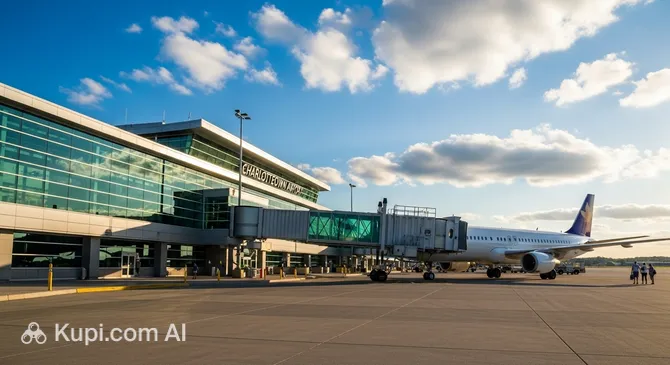
Charlottetown Airport. Source: Kupi.com Binoculars

Charlottetown Airport (YYG), the main air gateway to Prince Edward Island, welcomes travellers with its cozy and friendly atmosphere. Located just a few kilometres north of the capital city of the same name, it serves as the starting point for exploring the scenic landscapes and rich culture of Canada's smallest province. Despite its compact size, the airport demonstrates impressive growth, annually setting new passenger traffic records, and is constantly being modernized to make guests' stays even more comfortable.

IATA Code YYG
ICAO Code CYYG
City Charlottetown
Distance to Centre 8 km
Status International
Annual Passengers Over 410,000 (2024)
Popular Airlines Air Canada, Porter Airlines, WestJet
Schedule "Charlottetown Airport" Online Board

Although Charlottetown Airport cannot be called large, it offers everything necessary for a comfortable start or end to your journey. Passengers note the efficiency and speed of its services: from prompt flight check-in to short wait times at security checkpoints. The terminal features free Wi-Fi, several cafes for a quick bite, and car rental desks. A taxi ride to the city centre takes just about 15 minutes.

Currently, the airport is undergoing major modernization, which will make it even more spacious and modern. The administration places great emphasis on accessibility, implementing programs such as Autism Aviators and Hidden Disabilities Sunflower to support passengers with special needs. All this makes Charlottetown Airport not just a transport hub, but a convenient and welcoming part of your journey across Prince Edward Island.

Contact Information

  • Official Website: www.flyyyg.com
  • Information Desk Phone: +1 (902) 566-7997
  • Address: 250 Maple Hills Avenue, Charlottetown, PEI, C1C 1N2, Canada
  • Email: info@flyyyg.com
  • Social Media: Current information and airport news can be found on the official pages on Facebook and Twitter (X).
  • Lost Luggage Information: If you have lost items on board the aircraft, please contact your airline directly. For items lost within the terminal, please contact the airport administration via the main phone number.
  • Customer Service Contacts: For inquiries and assistance, passengers can contact the general airport phone number or use the feedback form on the official website.

How to Get to the Airport

Getting to Charlottetown Airport (YYG) from the city centre of Charlottetown is quite simple and quick, as it is located just a few kilometres north of the business district. A car journey usually takes about 10-15 minutes depending on traffic conditions. The choice of transport depends on your budget and preferences.

The most convenient and popular way to reach the airport is by taxi or a pre-booked transfer. Taxis are available 24/7 and offer quick "door-to-door" service. The fare from the city centre is typically fixed or metered. This is an excellent option if you are travelling with luggage or value comfort. Shuttle services also operate in the city, which may be slightly cheaper, especially if you are travelling alone and are willing to share the ride with other passengers.

It is important to note that public city buses (T3 Transit) do not have a direct route entering the airport terminal grounds. The nearest stops are at a significant distance, so this option is not recommended for tourists, especially those with luggage. It is better to use other modes of transport for trips to the airport.

If you plan to explore scenic Prince Edward Island, the best solution is car rental. Several major car rental companies have counters located within the Charlottetown Airport terminal building. You can book a car online in advance or rent one upon arrival, giving you complete freedom of movement throughout this province of Canada.

For those travelling to the airport in their own or rented vehicle, convenient parking is provided. The grounds feature both short-term and long-term parking zones located in immediate proximity to the terminal entrance. The cost depends on the duration of parking.

Terminals and Map

Charlottetown Airport (YYG) is a compact and modern aviation hub distinguished by a simple and intuitive structure. Thanks to its small size, navigating it will not cause difficulties even for those visiting for the first time. The airport complex consists of one main terminal, which serves all domestic and international (mostly seasonal) flights.

The terminal layout is logical and straightforward. Immediately upon entering the building, you find yourself in the public area, where airline check-in counters and baggage claim points are located. After check-in, passengers proceed to the security screening area, which is located nearby. Due to the airport's compactness, you won't have to walk far from one point to another—everything is within walking distance. There are no transfers between terminals, as there is only one.

Departure and Arrival Zones are clearly separated but located close to each other. The arrival zone is on the first level and includes the baggage claim belt, car rental counters, and the exit to the city. The departure zone, after passing security control, is a cozy waiting hall with several boarding gates, a small cafe, and a souvenir shop. Here, passengers can comfortably spend time before boarding is announced.

The time required to complete all formalities is generally short. For domestic flights, it is recommended to arrive at the airport 90 minutes before departure, and for international flights—2-3 hours prior. During peak tourist seasons (summer), queues for check-in and security may be longer, so it is worth allowing extra time. Overall, Charlottetown Airport is designed for the fastest and most convenient passenger service possible.

Airport History

The history of Charlottetown Airport (YYG) is closely intertwined with key events of the 20th century. Its predecessor, the airfield at Upton, was founded in 1938. However, by 1941, with the onset of World War II, the airport was moved to its current location and transformed into a Royal Canadian Air Force base known as RCAF Station Charlottetown. During the war years, it played a vital role in the British Commonwealth Air Training Plan, laying the foundation for future civil aviation on Prince Edward Island.

After the war ended, the facility was transferred to the Department of Transport and began its new life as a civil airport. The first passenger terminal opened its doors in 1946, marking the beginning of regular commercial air service. This was a turning point for the island, as reliable air links with the mainland gave a powerful boost to the development of local tourism and the economy.

As Prince Edward Island's popularity as a tourist destination grew, the airport continuously evolved. Significant modernization took place in 1986, when a new, more spacious and modern terminal was built, capable of handling the increased passenger flow. In subsequent years, work was carried out to lengthen the main runway, allowing for larger aircraft types and expanding flight geography.

Among interesting facts from the airport's history is its IATA code. In Canada, many airports have a code starting with the letter "Y", which historically indicated the presence of a weather station on its territory. The letters "YG" are the identifier for Charlottetown. The airport has also repeatedly hosted high-ranking guests, including members of the Royal Family arriving on the island known as the "Cradle of Confederation".

Today, Charlottetown Airport represents a modern and welcoming gateway to the province, continuing its history of development. It is not just a transport hub, but a vital part of the infrastructure connecting this picturesque island with the rest of the world, welcoming hundreds of thousands of travellers annually.

Services and Amenities

Charlottetown Airport (YYG), despite its compact size, offers passengers all necessary services for a comfortable wait before departure. The terminal is designed to ensure convenience and ease of navigation, making your stay here as pleasant as possible.

Restaurants, Cafes, and Shops: At the airport, you will find several establishments where you can have a snack before your flight or enjoy a cup of coffee. For instance, Budley’s Pub offers hot meals and drinks in a cozy setting, while Budley’s Fresh Eats & Coffee allows you to grab food to go. There is also a gift and convenience store, The Travel Store, where you can purchase gifts, press, and travel snacks.

Waiting Areas and Wi-Fi: Although there are no dedicated VIP lounges at the airport, comfortable waiting zones with convenient seating have been created for all passengers. Free Wi-Fi is available throughout the terminal, allowing you to stay connected or work. Numerous power outlets and special charging stations are provided for electronic devices.

Financial and Other Services: The terminal features ATMs for cash withdrawals. Currency exchange services within the airport itself may be limited, so it is recommended to exchange money in advance at one of the banks in Charlottetown. In case first aid is required, please approach any airport staff member.

Services for Passengers with Special Needs: The airport is fully equipped for passengers with reduced mobility: ramps, accessible restrooms, and designated parking are available. Passengers requiring additional assistance can book an escort service in advance through their airline. For travellers with small children, changing tables are provided in the restrooms.

Business Services and Hotels: There are no hotels directly inside the airport building; however, several hotels to suit any taste and budget are located in the immediate vicinity, just a few minutes away by car. For business travellers, there is an option to rent a small Boardroom for meetings. Additionally, free Wi-Fi throughout the territory and quiet waiting areas create comfortable conditions for working before departure.

Where to Eat

Charlottetown Airport (YYG) is a compact and convenient regional airport, so all main dining spots are concentrated in the main terminal. While the selection here is not as vast as in major hubs, you will be able to find options for both a quick snack and a full meal.

The main establishment at the airport is Budley's Restaurant and Bar. It is located in the public zone (landside), before security control. This makes it convenient not only for departing passengers but also for those meeting them. They offer a full menu with hot dishes, including breakfasts, soups, salads, sandwiches, and burgers. This is a great place to have a leisurely lunch. We recommend trying dishes featuring local seafood, for which Prince Edward Island is famous.

For those who have already passed through screening, Budley's On The Fly operates in the departure zone (airside). This establishment focuses on quick service. Here you can buy coffee, soft drinks, pastries, ready-made sandwiches, and light snacks to take on board or eat while waiting for your flight. This is an ideal option for those with little time left before boarding.

Opening hours of establishments are usually tied to the flight schedule: they open early in the morning before the first departures and close after the last plane leaves. Prices can be described as average for airports in Canada. Regarding special dietary requirements, vegetarian options (such as salads or vegetable sandwiches) can be found on the menu. However, choices for vegans, as well as gluten-free or halal dishes, may be extremely limited. If you have strict dietary requirements, it is recommended to bring food with you.

Travel Tips

Travelling through Charlottetown Airport (YYG) usually goes smoothly, as it is a small and convenient airport. Nevertheless, a few tips will help make your trip even more comfortable and predictable.

Arrival Time: For domestic flights within Canada, it is recommended to arrive at the airport 90 minutes before departure. If you have an international flight, it is better to arrive 2-3 hours in advance. During the peak tourist season (summer), it is worth allowing a little more time in case of queues.

Check-in and Security: To save time, complete online check-in for your flight in advance. Check-in counters and self-service kiosks are also available. The security screening procedure is standard: be prepared to remove laptops and other large electronic devices, as well as liquid containers, from your carry-on luggage.

Seat Selection: Want to enjoy views of scenic Prince Edward Island during takeoff or landing? Choose a window seat. If being able to stand up freely and stretch your legs is more important to you, your choice is an aisle seat. Note that many airlines charge a fee for advance seat selection.

Carry-on Luggage: Remember the rules for carrying liquids: all containers must be no more than 100 ml in volume and packed in a single transparent resealable bag with a capacity of up to 1 litre. Sharp objects, weapons, and flammable substances are prohibited in the cabin. Electronics and power banks are permitted, but they must be carried in hand luggage, not in checked baggage.

Connecting Passengers: If you arrive in Charlottetown on an international flight and are flying further within Canada, you will need to pass through customs and immigration control, collect your luggage, and check it in again for the next flight. For domestic connections, the procedure is simpler and usually does not require re-checking luggage.

Customs Control: When entering Canada from another country, you will need to complete a declaration (often done electronically at kiosks) and present it along with your passport to a Border Services Officer (CBSA). Be prepared to answer questions about the purpose of your trip and the items you are bringing in.

Saving Time and Money: To avoid unnecessary expenses, bring an empty reusable water bottle with you—it can be filled at drinking fountains after passing security. You can also bring dry snacks. If you are driving to the airport, explore parking options and book a spot online—this may be cheaper.

Flight Delays: In case of a flight delay or cancellation, first contact your airline representative for current information and possible options (rebooking, meal vouchers, or hotel accommodation). The airport has free Wi-Fi, a cafe, and comfortable waiting areas to pass the time.

Reached the end of the page?

That means the route is fully explored