Support

Kingston/Norman Rogers Airport

About the Airport

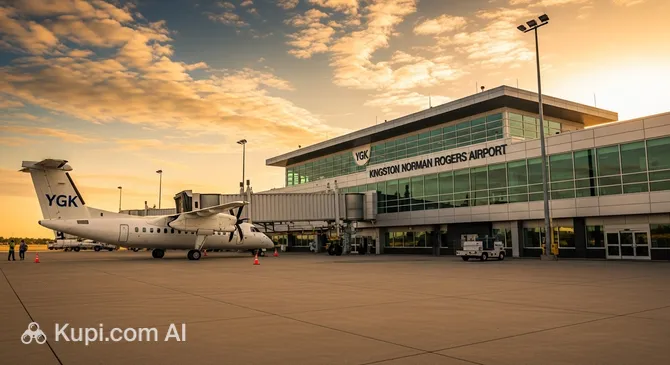
Kingston/Norman Rogers Airport. Source: Kupi.com Binoculars

Kingston/Norman Rogers Airport serves as a cosy and modern air gateway to the historic heart of Canada and the famous Thousand Islands region. Unlike congested international hubs, an atmosphere of tranquillity reigns here, allowing you to begin your journey without stress or bustle. Thanks to a recent large-scale reconstruction, this aviation hub combines domestic comfort with advanced service technologies, turning the wait for a flight into a pleasant part of your holiday.

IATA Code YGK
ICAO Code CYGK
City Kingston
Distance to Centre 10 km
Status Regional
Annual Passengers Approximately 80,000 (capacity)

Features and Benefits of the Airport

Kingston/Norman Rogers Airport possesses a number of advantages that make it an attractive choice for travellers heading to Eastern Ontario.

The main pride of the airport is the renovated passenger terminal. Following the completion of modernisation in 2019, the building became 30% more spacious, featuring high ceilings and panoramic glazing that fills the halls with natural light. The interior is designed using natural materials, stone, and wood, emphasizing the beauty of the local nature and creating a warm atmosphere.

A key benefit for passengers is the speed of service. Due to its compact size and efficient organisation of processes, check-in and security screening take mere minutes. There are practically no long queues here, which are typical of major airports, allowing travellers to arrive shortly before departure and save precious time.

Despite its status as a regional hub, the airport offers a high level of comfort. The extended runway is capable of accommodating modern airliners, while convenient navigation and an accessible environment make the terminal suitable for all categories of passengers, including families with children and people of determination.

Contact Information

You can contact representatives of Kingston/Norman Rogers Airport (YGK) in several ways. Below you will find essential contact information to help you plan your trip and resolve any potential queries.

  • Official Website: www.flyygk.ca
  • Information Desk Phone: +1 613-389-6404
  • Address: 1114 Len Birchall Way, Kingston, Ontario, K7M 4M1, Canada
  • Email: For most enquiries, it is recommended to use the contact form on the airport's official website.
  • Social Media: You can follow news and updates on the airport's official pages on Facebook and X (formerly Twitter).
  • Lost Baggage Information: If your query concerns lost or damaged luggage, you should contact the support service of the airline you flew with directly.
  • Passenger Support Contacts: For general information or assistance within the terminal, you can approach the information desk or call the main airport phone number.

How to Get to the Airport

Getting to Kingston/Norman Rogers Airport (YGK), located in the Collins Bay area in the west of Kingston, Canada, is quite simple. Travellers have access to several modes of transport, allowing them to choose the most convenient option depending on budget, time, and amount of luggage. The distance from the centre of Kingston to the airport is about 10 kilometres.

The most economical way to reach the airport is by public transport. The city bus operator, Kingston Transit, offers a route connecting the city centre with the airport. A trip on bus route `No. 18` will take approximately 30-40 minutes, making it an excellent choice for travellers without a large amount of luggage. The fare corresponds to the standard city rate. It is important to note that there is no direct rail or metro connection to the airport, however, taxis are always available from the VIA Rail station in Kingston.

For those who value speed and comfort, the best solution is a taxi or ride-hailing service (such as Uber). The journey from downtown Kingston to the terminal will take just `15-20 minutes` depending on traffic conditions. The estimated cost of such a trip is `25-35 Canadian Dollars`. This option is particularly convenient if you are travelling with family, bulky luggage, or simply wish to reach the airport without unnecessary transfers and waiting.

If you prefer independence in your movements, you can use a rental or personal car. Offices of several major rental companies operate within the Kingston/Norman Rogers Airport terminal. Renting a car is an ideal choice for those planning to explore the picturesque surroundings, such as the famous Thousand Islands region. For travellers with their own vehicles, convenient parking with zones for `short-term and long-term parking` is provided at the airport building. It is recommended to check the rates on the official airport website in advance.

Terminals and Map

Kingston/Norman Rogers Airport (YGK) is a small regional airport served by one passenger terminal. Thanks to its compact size, orienting yourself within it is very easy, and moving between zones takes just a few minutes. Since there is only one terminal, transfers between other buildings are not required, making the journey as convenient as possible.

The terminal is a modern building where all essential services are within walking distance. The airport layout is extremely simple:

  • Departures Zone: Includes airline check-in counters and the security screening point, which leads to a cosy waiting lounge for departing passengers.
  • Arrivals Zone: Located on the other side of the hall and equipped with a baggage claim belt. Immediately after collecting suitcases, passengers enter the public area with exits to the car park and transport stops.

Completing all pre-flight formalities at Kingston Airport usually proceeds very quickly. Flight check-in and security screening rarely take more than 20-30 minutes. Nevertheless, it is always recommended to arrive at the airport in advance, in accordance with your airline's rules, generally 60-90 minutes before a domestic flight departure.

To navigate the terminal, simply follow the clear and understandable signs. The main advantage of YGK airport is its compactness and the absence of the hustle characteristic of major aviation hubs. Getting lost here is practically impossible, making travel through Collins Bay maximally comfortable and calm.

Airport History

The history of Kingston/Norman Rogers Airport, located in Collins Bay, is inextricably linked with key events in the history of Canada. The airport was built in 1940 as part of the British Commonwealth Air Training Plan (BCATP) and initially functioned as a military airfield for training pilots during the Second World War. This was its primary task in the early years of its existence.

The airport received its name in honour of Norman McLeod Rogers, the Canadian Minister of National Defence, who tragically died in a plane crash in that same year, 1940. Thus, the name immortalised the memory of an important statesman. After the war ended, the airfield was transferred to the jurisdiction of the Department of Transport and began its transformation into a civil airport serving Kingston and its surroundings.

Over the decades, the airport gradually developed, but the most significant changes have occurred in recent years. In 2018, a large-scale expansion and modernisation project began. As part of the reconstruction, the main runway was significantly extended, allowing for the accommodation of larger aircraft, such as the Boeing 737 and Airbus A320. A new, more spacious, and modern terminal was also built, meeting the growing needs of passengers.

This expansion became the greatest achievement in the modern history of the airport, turning it from a small regional hub into a gateway capable of serving a greater number of flights and destinations. Today, Kingston/Norman Rogers Airport is a vivid example of how a facility with a rich military past has successfully adapted to modern realities, becoming a vital part of Eastern Ontario's transport infrastructure.

Services and Amenities

Kingston/Norman Rogers Airport (YGK) is a compact and modern regional airport offering all necessary amenities for a comfortable wait for your flight. While it may not boast the scale of major international hubs, passengers will find a cosy and functional environment here.

A café operates within the terminal where you can have a snack, drink coffee, or purchase light refreshments for the journey. The selection of shops is limited, so for serious shopping, it is better to allocate time in Kingston itself. Free Wi-Fi is available to all passengers throughout the terminal, and charging stations for electronic devices are provided in the waiting lounges to ensure you stay connected.

There are no specialised VIP lounges or business lounges at the airport. Regarding financial services, there are ATMs in the terminal for cash withdrawals. However, currency exchange points are not provided, so it is recommended to arrange currency exchange in advance at one of the city's banks. Conference room or business centre rental services are also not available at the airport.

The airport is fully equipped for passengers with reduced mobility, including accessible restrooms and ramps. Passengers requiring special assistance during boarding or moving through the terminal should notify their airline in advance. For travellers with small children, baby changing tables are available in the restrooms. In case first aid is needed, please approach airport staff.

Although there are no hotels directly on the airport grounds, many accommodation options—from budget motels to comfortable hotels—can be found in Collins Bay and its vicinity, just a few minutes' drive away. This makes it easy to plan an overnight stay before an early departure or after a late arrival.

Where to Eat

Kingston/Norman Rogers Airport (YGK) is a compact regional airport, so the choice of dining establishments here is limited but quite sufficient for a comfortable wait. It is important to remember that the main and, essentially, the only restaurant is located in the public zone (landside), that is, before passing security control.

The main place to eat is the At The Airport Restaurant. It serves both passengers and airport visitors. The establishment offers classic dishes of Canadian and American cuisine: from hearty breakfasts to burgers, sandwiches, salads, and soups for lunch or dinner. Opening hours usually cover the main flight period, approximately from 8:00 AM to 6:00 PM, but may vary depending on the flight schedule, so it is better to check them in advance. The price range here is moderate: the cost of a main dish, for example, a burger with a side, is about 15-25 Canadian Dollars.

If you have enough time, you can have a leisurely lunch here in a cosy setting. For those in a hurry, the restaurant offers options for a quick snack, such as coffee with pastries or a takeaway sandwich. The selection for passengers with special dietary needs is limited. Vegetarians will be able to find salads or vegetable sandwiches on the menu; however, for those strictly following a vegan, gluten-free, or Halal diet, it is recommended to either check for suitable dishes in advance or bring food with you.

Key advice for travellers: after passing screening and entering the sterile zone (airside), opportunities to buy food or drinks are practically non-existent. Therefore, it is strongly recommended to eat or purchase everything necessary at the restaurant before you pass security control to avoid inconvenience in the departure lounge.

Traveller Tips

Travelling through Kingston/Norman Rogers Airport in the town of Collins Bay will be easy and pleasant if you prepare in advance. These tips will help you orient yourself at the airport, which serves as an important gateway to a beautiful region of Canada.

Arrival Time at the Airport. Thanks to the compact size of Kingston Airport, completing all procedures usually takes little time. It is recommended to arrive approximately 90 minutes before departure. However, always check with your airline's requirements, as they may differ, especially during peak seasons.

Check-in and Security Control. To speed up the process, use online check-in and save your boarding pass on your mobile device. Remember that all liquids in carry-on luggage must be in containers of no more than 100 ml and packed in a single transparent bag. Be prepared to present them, as well as laptops and other large electronics, separately from the rest of your luggage during screening.

Food, Drinks, and Savings. An important tip for this airport: it is better to buy food and drinks before passing security control, as the selection in the departure zone after screening is limited. Also, to save money, you can bring an empty water bottle and fill it after screening, and book parking online in advance.

Transfers and Luggage. If your itinerary involves a transfer, clarify when checking in your luggage whether it will be transferred automatically to the final destination. This will help avoid the need to collect and re-check suitcases at the transit airport.

In Case of Flight Delay. In the event of a flight delay or cancellation, first contact your airline representative for up-to-date information. Find out about your rights as a passenger: depending on the length of the wait, you may be entitled to vouchers for meals, drinks, or other services.

Reached the end of the page?

That means the route is fully explored