Support

Birthplace of Canada

About

Imagine a place where the history of the modern North American power began. The "Birthplace of Canada" National Historic Site, also known as the "Cradle of Canada" (Berceau du Canada), is a unique open-air museum complex in the city of Gaspé. It was right here in 1534 that the legendary French explorer Jacques Cartier first stepped ashore and planted a cross, marking the beginning of a new era for the entire country of Canada.
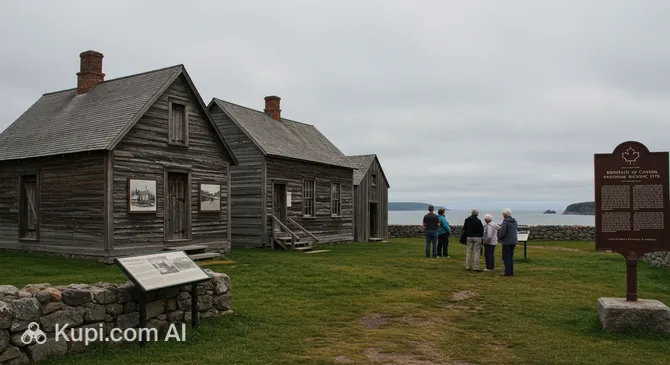
Birthplace of Canada National Historic Site. Source: Kupi.com AI

Today, this site is a harmonious blend of reconstructed historical buildings and modern exhibition spaces. Visitors can see authentic structures that reflect the spirit of bygone centuries and get acquainted with the rich cultural heritage of the province of Quebec. The complex is rightfully considered a must-visit stop for anyone who appreciates history and wants to understand the origins of Canadian identity.

Beyond its historical significance, the "Birthplace of Canada" attracts visitors with stunning panoramic views of the St. Lawrence River coastline. Its high rating among travelers confirms that the combination of educational displays and the natural beauty of the Gaspé Peninsula leaves an unforgettable impression on every guest.

Contacts

To plan your visit and check for the most up-to-date information, you can use the official contact details of the site. The project website contains useful information about seasonal events and available exhibits.

Address 179, Montée Wakeham, QC-198, Gaspé, QC G4X 1V3, Canada
Phone +1 418-368-9423
Website berceauducanada.com

What to Do

A visit to this historic site turns into a true journey through time. You can explore the museum exhibitions, which feature original maps, documents, and detailed reconstructions of the events of Jacques Cartier's expedition. Interactive displays allow you to not just look, but literally touch history: try your hand at the navigation tools used by 16th-century sailors or watch fascinating documentaries about the first settlers.

Summer events create a special atmosphere. During this period, scenes from the past come to life on the grounds—actors in Renaissance-era costumes reenact the legendary landing. This is a wonderful opportunity to take unique photos and ask questions of the "participants" of those long-ago events. Be sure to walk up to the commemorative cross—the site's main symbol, where tourists traditionally gather for souvenir photos.

The site's grounds are perfect for peaceful walks. Breathtaking views of Gaspé Bay and the surrounding hills open up from the shore. If you're lucky with the weather, you can have a picnic here and observe the local fauna: seabirds often circle in the sky, and in the distance, you can sometimes spot the spouts of whales. For families with children, there are special educational programs that tell the story of indigenous peoples' lives and the first steps of colonization in an accessible, playful format.

Getting There

Finding this historic corner is quite simple: it is located just 7 kilometers from downtown Gaspé via Montée Wakeham (QC-198). If you are arriving by plane, it is about 15 kilometers from Gaspé Airport (YGP). A trip by taxi or rental car will take no more than 15–20 minutes, making the site easily accessible for travelers.

For those who prefer public transport, there are bus routes from the city center to the Wakeham district. However, keep in mind that schedules may be limited, so using a car or taxi remains the most convenient option. For precise navigation in apps, you can use the coordinates 48.8275908, -64.4843924. There is ample free parking available on-site.

Travelers planning a longer route through the province of Quebec should remember that Gaspé is distant from major metropolises: the drive from Quebec City is about 900 km (9–10 hours), and from Montreal, it is over 1100 km. During the summer season, the city can also be reached by Orléans Express intercity buses or as part of cruises along the scenic St. Lawrence River.

History & Facts

The history of this site began in the summer of 1534, when French captain Jacques Cartier, commanding the ships Granville and Émérillon, dropped anchor off the shores of the Gaspé Peninsula. On June 24, he met with representatives of the indigenous Iroquois people here. To solidify the success of his expedition, Cartier erected a majestic 30-foot wooden cross bearing the French coat of arms, solemnly proclaiming these lands a possession of King Francis I.

This very moment is considered the symbolic birth of Canada. Interestingly, the name of the country itself is also linked to this region: Cartier borrowed the word "Canada" from the local inhabitants' language, which they used to describe their settlements. This location became the key point from which France's further exploration and colonization of northern territories began.

Over the centuries, the memory of this event has been carefully preserved. In the 19th century, a new commemorative cross was erected to mark the 350th anniversary of the landing. Later, in the 20th century, the idea emerged to create a full-scale museum park, "The Cradle of Canada", to help visualize history for new generations. The complex officially opened in 1993, receiving the status of a site of national significance.

Today, the site is recognized as one of Quebec's most important historical locations. Visitors are drawn not only by the facts of great discoveries but also by stories of the first contacts between Europeans and indigenous peoples, who exchanged gifts and knowledge, laying the foundations for the region's future culture.

Time Needed

To leisurely view all the exhibits and soak in the atmosphere, most visitors need between 1.5 to 2.5 hours. This time is quite sufficient to explore the museum section, study the artifacts and interactive displays, and take a walk through the scenic grounds of the complex.

If you plan to participate in themed tours or happen to visit during historical reenactments with actors, your visit may last longer. It is also worth leaving a little time to pick out souvenirs and relax in the cafe with a view of the bay, making your introduction to the "Cradle of Canada" as complete as possible.

Working Hours

At the moment, the historical complex may have the status of being temporarily closed. The site's operating hours are often seasonal, so it is highly recommended to check for current information on the official website or by phone before visiting.

Typically, the active tourist season lasts from June to September, when the site is open to guests daily, usually from 9:00 AM to 5:00 PM. During the winter and shoulder seasons, visiting hours may be significantly reduced or limited to special events only.

Nearby

The surroundings of Gaspé offer many opportunities to continue your journey. After immersing yourself in the country's history, it's worth taking time to explore other interesting locations situated just a few steps or a short drive from the historic site.

You can visit local museums, relax in cozy taverns, or enjoy the sea air at the marina. Exploring the coastal zone will allow you to better feel the atmosphere of the region's oldest city and see its modern life.

Name Type Distance (km)
Taverne BAKER - 0
Brise Bise - 0.2
TÉTÛ Taverne Gaspésienne - 0.2
Historic Statues and Building on the Waterfront in Gaspe - 0.3
Le Seaflower - 0.3
Bar La Voute - 0.3
bar de la marina - 0.4
Bar Le Castor - 0.5
Club Nautique Jacques-Cartier - 0.5
Gaspesie Museum - 1.2

Reached the end of the page?

That means the route is fully explored