Support

Grande Prairie Airport

About the Airport

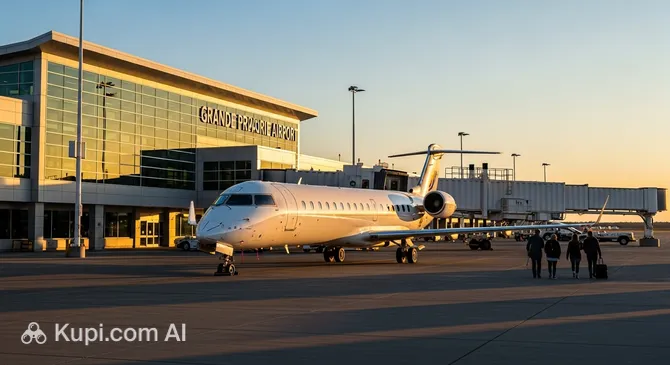
Grande Prairie Airport. Source: Kupi.com Binoculars

Grande Prairie Airport (YQU) is not merely a transit point on the map of Alberta, but a true aerial gateway to the picturesque Peace River region. This modern aviation hub connects the dynamic rhythm of business life with the serene grandeur of northern nature, welcoming oil and gas industry professionals and adventure seekers alike on a daily basis. The cosy terminal and friendly atmosphere make the start of any journey here easy and pleasant, setting the right tone for the entire trip.

IATA Code YQU
ICAO Code CYQU
City Grande Prairie
Distance to Centre ~6 km
Status Regional
Passengers per Year Over 270,000

Airport Features and Advantages:

Grande Prairie Airport stands out among other regional hubs for its commitment to maximum passenger comfort. Here are several key benefits that make it convenient for travellers:

  • Speed and Efficiency: Thanks to the compact size of the terminal, check-in and security screening processes here are much faster than in major hubs like Edmonton or Calgary. Long queues are a rare phenomenon at YQU.
  • Restaurant with a Panoramic View: On the second floor, you will find the popular The Viewpoint restaurant, which is famous not only for its delicious cuisine but also for its excellent view of the runway, allowing you to watch aircraft while enjoying a cup of coffee.
  • Winter Comfort: Given the harsh climate of northern Alberta, the airport parking lots are equipped with power outlets for engine block heaters, a feature particularly appreciated by locals and travellers leaving their cars for long periods during winter.
  • Modern Design: Following extensive renovation, the terminal has acquired a modern architectural look with high ceilings and an abundance of natural light, creating a sense of spaciousness and tranquillity.

Contact Information

If you need to contact representatives of Grande Prairie Airport (YQU), please use the following contact information. It is recommended to verify the data on the official website before your trip.

  • Official Website: www.grandeprairieairport.com – here you will find the latest information on flights, services, and airport regulations.
  • Information Desk Phone: +1 780-539-7414 (Airport Administration).
  • Airport Address: 10610 Airport Dr, Grande Prairie, AB T8V 7Z5, Canada.
  • Email: For general enquiries, it is recommended to use the contact form available on the official airport website.
  • Social Media: Follow airport news and updates on its official social media pages, such as Facebook.
  • Lost and Found Information: For items lost within the terminal, please contact the airport administration via the main phone number. If your items were lost on board the aircraft, you should contact your airline directly.
  • Passenger Support Contacts: For assistance and answers to general questions, you may call the main airport phone number.

How to Get to the Airport

Grande Prairie Airport (YQU) is located just a few kilometres west of the city centre of Grande Prairie, making the trip there quick and simple. Depending on your budget, time, and preferences, you can choose one of several convenient ways to reach the terminal.

Taxi, Transfer, and Ridesharing — the most popular and fastest method. The journey from the city centre takes only 10-15 minutes. The cost of a taxi ride or services like Uber is usually around 15-25 Canadian dollars. This is an excellent option for those who value comfort and are travelling with luggage. Many hotels in the city also offer complimentary or paid transfers for their guests, so do not forget to check this information when booking.

Car Rental — the ideal choice for travellers planning to explore the surroundings of Grande Prairie and the province of Alberta. The airport hosts counters for several major rental companies where you can both pick up and return a vehicle. If you are arriving at the airport in your own car, convenient parking is at your disposal. There are zones for short-term and long-term parking located in immediate proximity to the terminal.

It is important to note that there are currently no direct public transport (bus) routes to the airport building. Therefore, when planning your trip, you should rely on taxis, shuttles, or a car. If your itinerary across Canada is flexible, you might also consider other airports in the region, such as Dawson Creek (YDQ) or Fort St. John (YXJ).

Terminals and Map

Grande Prairie Airport (YQU) is a modern and compact aviation hub distinguished by a structure that is simple and easy for passengers to understand. The airport operates one main passenger terminal, serving all domestic flights — both departures and arrivals. Thanks to its small size and thoughtful layout, navigating it poses no difficulties even for those visiting for the first time.

The terminal layout is very logical. The building is divided into two main zones: the departure zone and the arrival zone. Upon entering the terminal, you immediately find yourself in the public hall, where airline check-in counters and self-service kiosks are located. After checking in and dropping off luggage, passengers proceed to the security screening point, which leads to the secure area — a small and cosy departure lounge with boarding gates.

The arrival zone is located in another part of the building. Passengers arriving in Grande Prairie enter the baggage claim hall, which has a single carousel. Immediately after collecting suitcases, you can exit into the main hall, where car rental counters, the information centre, and exits to taxis and parking are located. Since there is only one terminal, transfers between different buildings are not required — all services are within one building and within walking distance of each other.

Completing all pre-flight formalities at Grande Prairie Airport usually takes little time. It is recommended to arrive at the airport approximately 90 minutes before the departure of your flight. This time is generally more than sufficient for a relaxed check-in, baggage drop, and security screening. Small queues are possible during peak hours, but they are rarely lengthy.

For convenient navigation, follow the signs, which are clearly visible and understandable. All key points — from check-in counters to the departure hall and arrival zone — are clearly marked. If you have any questions, you can always ask the airport staff. The main advice for travellers: there is no need to worry about navigation, as it is practically impossible to get lost in this compact terminal.

Airport History

The history of Grande Prairie Airport (YQU) is closely linked to the development of aviation in northern Canada and key historical events of the 20th century. The site for the future airfield was selected back in 1930, and shortly after, it began functioning as an important point on Canadian airmail routes. From the very beginning of its existence, it played a strategic role in the development and transport logistics of the vast Peace River region.

The most significant stage in the airport's history occurred during the Second World War. It was transformed into RCAF Station Grande Prairie and became part of the British Commonwealth Air Training Plan (BCATP). Thousands of pilots, navigators, and other aviation specialists were trained at its base, making a significant contribution to the overall Allied effort. After the war, the facility was transferred to the Department of Transport and became a civilian airport once again.

In the post-war years, the airport continued to grow, responding to the needs of the developing regional economy, particularly the oil, gas, and forestry industries. In the 1950s, the first passenger terminal was built, serving the region for several decades. However, as passenger traffic increased, the need for a more modern building arose.

A major milestone in development came in 1981, when a new, more spacious terminal was opened. But over time, even this facility struggled to cope with the load. Consequently, a large-scale renovation and expansion began in 2009, concluding in 2014. As a result, the terminal area nearly doubled, and the runways and navigation equipment were modernised. Today, Grande Prairie Airport is a modern transport hub and one of the busiest regional airports in the province of Alberta, playing a key role in the life of the entire northern region.

Services and Amenities

Grande Prairie Airport (YQU) is a modern and convenient regional airport offering all necessary services for a comfortable start or end to your journey. Despite its compact dimensions, the terminal is designed to provide passengers with maximum convenience.

Within the airport, you will find several options for a snack. There is a cafe where you can enjoy coffee with fresh pastries, and a small restaurant offering hot meals. Shops are also available where you can purchase souvenirs, newspapers, and travel essentials. The selection may not be as extensive as in major hubs, but everything necessary is at hand.

For those who need to stay connected, free Wi-Fi is available throughout the terminal. The waiting areas are equipped with special zones and counters featuring power outlets and USB ports for charging electronic devices, so you can easily prepare your gadgets for the flight.

ATMs are installed in the airport for withdrawing cash. Currency exchange bureaus are generally absent in regional airports, so it is recommended to exchange money in advance. For business travellers, there are no specialised conference rooms, but the comfortable waiting areas allow for work on a laptop in a quiet environment.

Grande Prairie Airport is fully equipped for passengers with reduced mobility. There are ramps, accessible restrooms, and designated parking spaces. Passengers requiring additional assistance can request an escort from their airline in advance. For travellers with small children, baby changing tables are provided in the restrooms.

There are no hotels directly on the airport grounds; however, numerous hotels to suit any taste and budget are located just a few minutes' drive by car or taxi in the city of Grande Prairie. Medical assistance at the airport is limited to a first aid station, and in emergency cases, city services are called.

Where to Eat

Grande Prairie Airport (YQU) is a compact regional airport, so all dining facilities are concentrated in one main terminal. Passengers will not have to search long for a place to have a snack before departure; however, it is worth noting that the main selection of establishments is located before the security screening zone.

The main and, essentially, the only place for a full meal at the airport is The Viewpoint Restaurant & Lounge. It is located on the second floor of the terminal, in the public area. Here you can settle in comfortably and order hot dishes, whether it be a hearty breakfast before an early flight, lunch, or dinner. The menu usually includes North American classics: burgers, sandwiches, salads, and soups. This is the ideal place if you have enough time before departure and wish to have a proper meal.

For those looking for a quick snack, ready-made options such as pastries, sandwiches, or takeaway drinks are often available in the same restaurant. Regarding local cuisine, look out for offers using Canadian produce, for example, Alberta beef. Options for passengers with special dietary needs (vegetarian, gluten-free) may be limited, so it is recommended to verify availability directly with the staff. Prices in the restaurant are consistent with the average level for airports.

It is important to remember that The Viewpoint Restaurant & Lounge operates according to the flight schedule, opening early in the morning (usually around 4:30) and closing after the departure of the last evening flight. Since it is located before the security control zone, plan your time so that you can eat and then calmly proceed through all pre-flight formalities. After passing through security, opportunities to purchase food are generally absent or limited to vending machines.

Travel Tips

Travelling through Grande Prairie Airport can be easy and comfortable if you prepare in advance. To ensure your flight goes smoothly, use these useful tips relevant for travellers departing from this airport in Canada.

Arrival Time at the Airport. Although Grande Prairie Airport is not as large as international hubs, it is recommended to arrive early. For domestic flights, arrive at least 90 minutes before departure, and for flights to the USA or other international destinations — 2-3 hours prior. This will give you enough time for check-in, baggage drop, and passing security control without rushing.

Check-in and Security Control. To save time, complete online check-in for your flight, which usually opens 24 hours before departure. At the airport, you will only need to drop off your luggage at the dedicated counter. The screening point here operates according to the standard rules of the Canadian Air Transport Security Authority (CATSA). Prepare your boarding pass and ID in advance, and remove all electronic devices and liquids from your carry-on luggage.

Seat Selection and Carry-on Luggage. When choosing a seat on the plane, consider your preferences: a window seat offers beautiful views during take-off and landing, whilst an aisle seat allows you to stand up and stretch your legs freely. Regarding carry-on luggage, remember the rule for transporting liquids: all containers must be no more than 100 ml in volume and packed in one transparent bag. Check your airline's website for current weight and size allowances for carry-on luggage.

Transfers and Customs Control. If you have a connecting flight, clarify whether you will need to collect and re-check your luggage at the transit airport. At Grande Prairie Airport, which serves primarily domestic flights, customs control is undergone only by passengers of international flights. If you are flying abroad, be prepared to present your passport and complete a customs declaration.

Savings and Unforeseen Situations. To save money, you can book airport parking online — this is often cheaper than paying on-site. Bring an empty water bottle with you to fill it up after passing security control and avoid spending on drinks. In the event of a flight delay or cancellation, immediately contact your airline representative. Canada has passenger protection regulations that may provide for compensation, provision of meals, or accommodation depending on the situation.

Reached the end of the page?

That means the route is fully explored