Support

Cape Dorset

About the Airport

Cape Dorset Airport (YTE) is not just a runway at the edge of the earth, but a true gateway to the heart of Canada's Inuit culture. Located in the Arctic region of Nunavut, it serves as a vital artery for the isolated community of Kinngait, ensuring connection with the rest of the world. For travellers, this small but significant airport becomes the starting point for discovering unique art and the rugged beauty of the Canadian North.
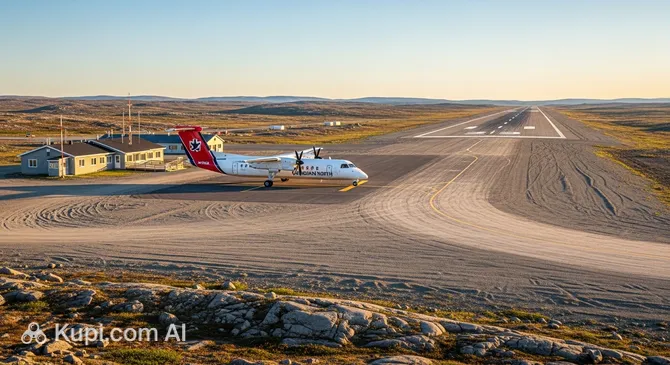
Cape Dorset. Source: Kupi.com Binoculars
IATA CodeYTE
ICAO Code CYTE
City Kinngait
Distance to Center approx. 2 km
Status Domestic
Annual Passengers over 10,000
Popular Airlines Canadian North
ScheduleOnline board

Despite its modest size, Cape Dorset Airport plays a colossal role in the life of the region. It is a key transport hub through which not only passenger transport is carried out, but also the delivery of mail, food, medicine, and other vital cargo. The terminal building is simple and functional; there are no luxurious lounges here, but there is everything necessary for passengers awaiting their flight in harsh Arctic conditions.

One of the features of the airport is its gravel runway, which is typical for many airfields in the North. Flights to and from here become an unforgettable adventure in themselves, revealing breathtaking views of icy landscapes and endless tundra to passengers. For art connoisseurs, the airport is the main access point to Kinngait, the globally recognized capital of Inuit graphic art and sculpture.

Contact Information

For a small regional airport like Cape Dorset Airport (YTE), most information is provided by the airlines operating the flights. Below are the main available contact details.

  • Official Website: Cape Dorset Airport is managed by the Government of Nunavut. It does not have a separate website, but information is available in the relevant section on the official portal of the territorial government.
  • Help Desk Phone: There is no direct help desk provided for passengers. For administrative questions, you can try contacting the airport manager, however, for flight information, you should contact the airline directly.
  • Airport Address: Airport Rd, Kinngait, Nunavut X0A 0C0, Canada.
  • Email: There is no official public email address for passengers.
  • Social Media: The airport does not maintain official pages on social networks. Up-to-date information on flight status is best checked on the carriers' websites.
  • Lost Luggage Information: For all questions related to lost, delayed, or damaged luggage, it is necessary to contact the airline's support service directly. Airport staff do not handle luggage tracing.
  • Passenger Support Contacts: Passenger support, including questions regarding tickets, check-in, schedules, and special assistance, is provided by the airlines (e.g., Canadian North) serving flights to Cape Dorset Airport.

How to Get to the Airport

Getting to Cape Dorset Airport (YTE) from the settlement of Kinngait is not difficult, as it is located in close proximity to residential areas. However, it is important to understand that the transport system in this remote Arctic settlement of Canada differs significantly from what is customary in major cities. Here are the main methods worth considering.

Taxi and Local Transfer
There are no traditional taxi services in Kinngait. Transport is usually provided by local residents in private vehicles, most often SUVs or pickup trucks. Such a transfer must be arranged in advance by agreeing directly with a driver or asking for assistance from your hotel representatives. The trip from any point in the settlement to the airport will take no more than 5–10 minutes. It is best to confirm the cost when booking, as it may be a fixed rate.

Walking
Given the compact size of the settlement, the simplest and most accessible way to get to the airport is a walk. The airport is practically within the settlement limits, and the path to it will take 15 to 30 minutes depending on your location and weather conditions. In summer, this is a pleasant walk, but in winter, under conditions of strong wind and frost, it is strongly recommended to order transport, especially if you have luggage.

Public Transport and Rental
There is a complete absence of public transport in the settlement — there are no buses or trains here. The main means of transport for locals are All-Terrain Vehicles (ATVs) in summer and snowmobiles in winter. There are also no formal car rental services in Kinngait. There is a small open parking lot at the airport building where private vehicles can be left, but most travellers arrive on foot or via pre-arranged transfer.

Terminals and Map

Cape Dorset Airport (YTE), serving the community of Kinngait, represents a small regional airport typical of Northern Canada. Its infrastructure is simple and functional, which fully corresponds to its tasks of ensuring air connection with a remote settlement.

The airport operates one passenger terminal, which serves both departing and arriving passengers. The terminal building is very compact, and all zones are located in one common space. Here you will find check-in counters, a small waiting area for departing passengers, and a baggage claim zone. Due to the presence of only one terminal, the question of transfers between them is irrelevant.

The layout of the airport is extremely simple. Upon entering the building, you will immediately see the airline counters. After passing check-in and dropping off luggage, passengers move to a small waiting area. Departure and arrival zones are not separated into large halls — everything happens within a single room. Boarding the aircraft is generally carried out by walking across the airfield, as jet bridges are absent in such airports.

The check-in and security screening procedures at Cape Dorset Airport take significantly less time than in major air hubs. Nevertheless, it is recommended to arrive at the airport well in advance — at least 60-90 minutes before departure, to drop off luggage and pass all formalities without haste. It is impossible to get lost in the terminal building; all navigation is intuitive, and staff are always ready to help and direct passengers.

Airport History

The history of Cape Dorset Airport (YTE) is inextricably linked with the development of the settlement of Kinngait itself, located in a remote corner of Canada. Although the exact founding date is not documented, its emergence in the second half of the 20th century became a turning point for the community. Initially, it was a simple gravel strip, but it immediately took on the role of a vital artery, ensuring the delivery of mail, cargo, and, most importantly, performing critical medical evacuations.

The airport acquired special significance thanks to the unique cultural role of Kinngait as the world capital of Inuit art. It was through this air hub that the famous prints and sculptures of local masters began their journey to galleries and private collections around the world. The airport became a gateway for tourists, researchers, and art connoisseurs wishing to touch the authentic culture of the Canadian North.

A key event in the modern history of the airport was a large-scale reconstruction completed in 2018. The old, cramped, and outdated terminal was replaced by a new, spacious, and modern building. This project significantly improved conditions for passengers and allowed for more efficient service of the community's growing needs. Modernization not only increased comfort but also strengthened the airport's status as a reliable and modern transport hub.

Cape Dorset Airport does not set records for passenger traffic, but its main achievement is far weightier — it is the uninterrupted life support of an entire region. Interestingly, despite the official return of the historical name Kinngait to the settlement in 2020, the airport is still known in many official sources and in everyday communication by its historical name. It remains a symbol of connection and a gateway to the amazing world of Inuit creativity.

Services and Facilities

Cape Dorset Airport (YTE) is a small regional airport serving the Kinngait community in Nunavut. Given its size and remote location, the set of services here is basic and oriented towards meeting the essential needs of passengers. Travellers should prepare in advance for the fact that amenities customary for major airports are absent here.

The terminal has a main waiting area with standard seating. There are no restaurants, cafes, or duty-free shops. Vending machines with snacks and drinks may occasionally be available, but it is better to bring food and water with you. VIP lounges or business lounges are not provided at the airport.

Opportunities for internet connection and charging devices are extremely limited. Free Wi-Fi is generally absent, and the number of electrical outlets is minimal. It is strongly recommended to bring a fully charged portable charger (power bank). Banking services, ATMs, and currency exchange points are not provided in the airport building — all financial matters should be settled in advance.

The airport is equipped to serve passengers with reduced mobility: staff provide assistance during boarding and disembarking, and a basic level of accessibility is ensured in the building. There are no specialized medical points, but staff can provide first aid and call emergency services if necessary. Separate mother and child rooms or play areas are absent. There are no hotels on the airport territory; accommodation options must be sought in the settlement of Kinngait itself.

Where to Eat

When planning a trip through Cape Dorset Airport (YTE), it is important to consider that this is a small regional air hub serving the remote settlement of Kinngait in Nunavut. Its infrastructure is focused on performing basic functions, so the choice of catering establishments directly in the terminal building is extremely limited.

There are no restaurants, cafes, or dining lounges at Cape Dorset Airport. Passengers should not count on the opportunity to have a full lunch or order specialized dishes. Typically, all available food options are limited to vending machines where you can purchase bottled water, carbonated drinks, and basic snacks such as chips or chocolate bars. Specialized dietary options (such as Halal, vegetarian, gluten-free, etc.) are unavailable.

For a full meal, it is recommended to eat in the settlement of Kinngait before leaving for the airport. Travellers departing from YTE are strongly advised to take care of food and drinks in advance and bring them along. This is especially relevant given that flights in the Arctic region may be delayed due to changeable weather conditions.

Travel Tips

Travelling through Cape Dorset Airport, serving the picturesque town of Kinngait, has its own specifics. Given that this is a small regional airport, knowing a few tips will make your trip more comfortable and predictable. Here are useful recommendations for passengers.

Arrival Time and Check-in. Despite the compact size of the airport, it is recommended to arrive at least 2 hours before your flight's departure. This will give you enough time in case of unforeseen circumstances. To save time, use online check-in if your airline provides such an option. Security screening procedures here usually go faster than in major airports, but security rules are standard for all of Canada.

Hand Luggage. Pay close attention to packing your hand luggage. All liquids, gels, and aerosols must be in containers of no more than 100 ml and packed in a single transparent resealable bag with a volume of no more than 1 litre. It is forbidden to carry sharp objects and other dangerous items in the cabin. Given the limited selection of shops at the airport, it makes sense to bring permitted snacks with you to save money.

Seat Selection and Transfers. If you want to enjoy breathtaking views of Arctic landscapes during takeoff and landing, choose a window seat. An aisle seat will provide more legroom and allow you to exit the aircraft faster. If you have a connecting flight, study the airport plan in advance and ensure you have enough time between flights. Since the airport serves domestic flights, there is no need to pass customs control, only standard pre-flight screening.

Flight Delays. Remember that the weather in the Arctic can be unpredictable and often causes flight delays or cancellations. It is recommended to monitor the status of your flight on the airline's website and have a backup plan. In case of a long wait, charge your electronic devices and download books, music, or movies onto them. Maintain contact with the airline representative to stay informed about the situation and know your rights as a passenger.

Airports in nearby cities

Reached the end of the page?

That means the route is fully explored