Support

Greater Moncton International Airport

About the Airport

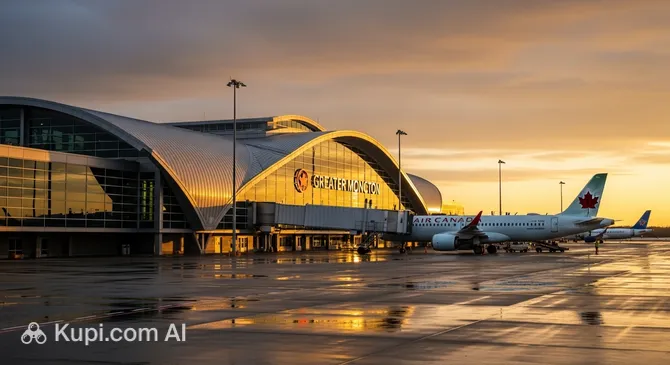
Greater Moncton International Airport. Source: Kupi.com Binoculars

Greater Moncton Roméo LeBlanc International Airport (YQM) is not just a dot on the map, but the main aerial gateway to the province of New Brunswick and a vital transport hub for Atlantic Canada. Renamed in honour of former Governor General Roméo LeBlanc, this modern airport combines the cosiness of a regional hub with the efficiency of an international terminal. Thanks to the constant growth in passenger traffic and the development of its route network, YQM serves as a convenient starting point for travel both within the country and to popular southern resorts.

IATA Code YQM
ICAO Code CYQM
City Moncton
Distance to Centre About 9 km
Status International
Passengers per Year Over 661,000 (2024)
Popular Airlines Air Canada, WestJet, Porter Airlines
Schedule online board "Greater Moncton International Airport"

One of the key features of the airport is its compactness and convenient navigation, which makes the pre-flight formalities process quick and comfortable. Passengers have access to a variety of services, including shops, cafes, and free Wi-Fi throughout the terminal. The airport is renowned for its cleanliness and friendly staff. In addition to year-round flights to major cities such as Toronto, Montreal, and Ottawa, YQM offers an extensive programme of seasonal charters to resorts in Mexico, Cuba, the Dominican Republic, and other sunny corners of the world.

Contact Information

Below is the essential contact information for Greater Moncton International Airport (YQM), which will help you plan your trip and contact its services.

  • Official Website: gmacc.ca — here you will find flight schedules, information on parking, services, and the latest news.
  • Inquiry Service Phone: +1 506-856-5444. You can obtain general information about the airport's operations at this number.
  • Airport Address: 777 Aviation Avenue, Dieppe, New Brunswick, E1A 7Z5, Canada.
  • Email: For most inquiries, it is recommended to use the contact form available on the official airport website in the "Contact Us" section.
  • Social Media: Follow updates on the official airport pages on networks such as Facebook and X (formerly Twitter) to stay informed about all events.
  • Lost Luggage Information: If your luggage was lost or damaged during the flight, you should immediately contact your airline's baggage tracing service. For items forgotten within the airport terminal (excluding the aircraft), please contact security via the main phone number.
  • Passenger Support Contacts: For general support and answers to questions, please use the main airport inquiry service phone number.

How to Get to the Airport

Getting to Greater Moncton International Airport (YQM), a key air transport hub on the Atlantic coast of Canada, is quite simple. The airport is located approximately 10 kilometres east of the city centre of Moncton, and a journey by car usually takes about 10-15 minutes depending on traffic conditions. Travellers have several transport options available, including public buses, taxis, and car rentals.

The most budget-friendly way to get to the airport is public transport. The Codiac Transpo city bus network serves Moncton, however, there are no direct routes to the terminal, which may require an additional short taxi ride from the nearest stop. It is recommended to check schedules and routes in advance on the official Codiac Transpo website. For those arriving from other cities, the regional bus operator Maritime Bus may be a convenient alternative, although its stop may also not be directly at the terminal. There is no direct rail or metro connection to the airport.

Taxi is the most convenient and fastest way to drive from the city centre to the airport. Ranks of licensed taxis are easy to find in the city, as well as at the exit of the arrivals hall. The trip will cost approximately 25-30 Canadian dollars. Ridesharing services (such as Uber) may also be available in Moncton, providing additional choice. For greater peace of mind, you can book a private transfer in advance, especially if you are travelling with a large amount of luggage or as part of a group.

Car rental is an excellent option for those planning to explore not only Moncton but also the picturesque surroundings of New Brunswick. Having a car gives freedom of movement and allows you to easily reach neighbouring cities such as Saint John or Halifax. Counters of several major rental companies are located in the terminal building. If you are arriving at the airport in your own vehicle, convenient parking is at your disposal. There are zones for short-term (for pick-ups and drop-offs) and long-term parking. This is a safe and reliable way to leave your car for the duration of your trip, but corresponding costs should be considered.

Terminals and Map

Greater Moncton Roméo LeBlanc International Airport (YQM) is a modern and compact airport distinguished by its well-thought-out and passenger-friendly structure. Its main feature is a single passenger terminal that serves both domestic and international flights. This completely eliminates the need for transfers between terminals and makes navigation extremely easy even for those visiting for the first time.

The terminal layout is intuitive. The building has two main levels. On the second floor is the departure zone: here you will find airline check-in counters, baggage drop-off points, and the security screening area. After passing control, passengers enter a spacious waiting hall with boarding gates, where cafes, shops, and other amenities are also available. The first floor is entirely dedicated to the arrivals zone. Passengers arrive here, and this is where baggage claim belts, customs control for international flights, as well as car rental offices, taxi stands, and shuttles are located.

Thanks to the airport's compactness, passing through all pre-flight formalities usually takes significantly less time than in major hubs. Check-in and screening proceed quite quickly. Nevertheless, it is recommended to arrive at the airport as per standard practice: 90 minutes before a domestic flight and 2-3 hours before an international one, to go through all procedures without haste, especially during peak seasons.

To navigate the terminal, simply follow the clear and understandable signs in English and French. All key zones — from check-in to the boarding gate — are within a few minutes' walk of each other. You will not have to worry about finding the right gate or transferring on shuttles, which makes the journey through the airport of Moncton as comfortable and predictable as possible.

Airport History

The history of Greater Moncton International Airport (YQM) dates back to 1928, when the first runway was established in Moncton. The official opening took place a year later, in 1929. A few years later, by 1938, it became an important point on the routes of Trans-Canada Air Lines (the predecessor of Air Canada), which laid a solid foundation for the development of air travel in the Atlantic region of Canada.

The airport played a special role during the Second World War. It was transferred to the Royal Canadian Air Force and, under the name RCAF Station Moncton, became one of the key bases for pilot training under the British Commonwealth Air Training Plan. After the war ended, the facility returned to civilian management and continued to serve passenger and cargo flights, gradually increasing its capacity.

A real breakthrough in the airport's development occurred at the turn of the century. In 2002, the grand opening of a new, modern terminal took place. Its award-winning architectural design was developed with an emphasis on abundant natural light and the use of wood, symbolizing the nature of the province of New Brunswick. It was after this large-scale modernization that the airport received its current name and official international status.

Over the years of its operation, Greater Moncton Airport has repeatedly broken records for passenger traffic volume, establishing itself as one of the busiest airports on the Atlantic coast. An interesting fact: it is one of the first fully bilingual airports in the country, reflecting the official status of New Brunswick. Due to its favourable location, YQM is often used as an alternate airfield for transatlantic flights, which underscores its strategic importance in the global air transport system.

Services and Amenities

Greater Moncton International Airport (YQM) offers passengers a wide range of services and amenities to make their stay as comfortable as possible. In the terminal, you will find several dining options: from cafes where you can quickly grab a coffee with fresh pastries, to a restaurant with a full menu. Shops offering souvenirs, press, and essential goods are also at your service.

For those who wish to stay connected or work, free Wi-Fi is provided throughout the airport territory. Numerous charging stations for mobile devices are equipped in the waiting lounges. Passengers who value extra comfort can utilize the services of the premium lounge, offering a more secluded and quiet atmosphere.

Financial services at the airport include ATMs located in the public zone of the terminal, as well as a currency exchange point for the convenience of international travellers.

The airport is fully adapted for passengers with special needs. It is equipped with ramps, elevators, accessible restrooms, and designated parking spaces. Travellers with small children can use the mother and child rooms. In case of necessity, first aid is available at the airport.

For business travellers, business services are provided, including the possibility of renting a conference room for meetings and negotiations. Although there is no hotel within the airport territory itself, several hotels of various price levels are located in the immediate vicinity, many of which provide free shuttle transfers for their guests.

Where to Eat

At Greater Moncton International Airport (YQM), travellers will find several convenient dining options to have a snack before departure or a full meal. Catering establishments are located both in the public zone and in the departure zone after passing security control.

In the zone before security screening (landside), accessible to all airport visitors, is the famous Canadian coffee shop Tim Hortons. The main advantage of this establishment is its round-the-clock operation (24/7), making it an ideal choice for passengers on night and early morning flights. Here you can order fresh coffee, tea, the famous "Timbits" doughnuts, sandwiches, soups, and pastries. Tim Hortons is excellent for a quick and inexpensive snack, as well as for those seeing off or meeting travellers.

The main part of the establishments is located after passing security control (airside), in the departure lounge. For passengers awaiting their flight, the following options are available:

  • Bistro Altitude: This is a full-service restaurant offering a more refined menu and a comfortable setting. Here you can order breakfast, lunch, or dinner, including hot dishes, salads, and appetisers. The menu often features dishes inspired by local cuisine, and there is a counter with a wide selection of beverages. This is the best choice for a leisurely lunch.
  • St-Hubert Express: A popular Quebec fast-food chain specializing in roasted chicken. An excellent option for a hearty and quick lunch. Besides chicken, the menu includes salads, sandwiches, and ribs.

Regarding special dietary needs, vegetarian and gluten-free dishes can usually be found at Bistro Altitude — it is recommended to check availability with the staff. In fast-food establishments, the choice may be more limited, although vegetarian sandwiches and salads are usually available. The opening hours of establishments in the departure zone (airside) are tied to the flight schedule and serve passengers from early morning until the last evening departure.

Traveller Tips

When planning a trip through Greater Moncton International Airport, use these tips to make your journey as comfortable as possible. This airport serves the city of Moncton and the surrounding region, and although it is not as large as the main air hubs of Canada, proper preparation is always useful.

Arrival Time and Check-in: It is recommended to arrive at the airport at least 90 minutes before the departure of domestic flights and 2-3 hours before international ones. To save time, use online check-in, which most airlines open 24 hours before departure. This will allow you to proceed directly to baggage drop-off or, if you are travelling light, to the security screening point.

Passing Security Control: Prepare for screening in advance: remove all metal objects from your pockets, take off your outerwear. Laptops and large electronics must be removed from bags. Remember the rules for carrying liquids: all containers must be no more than 100 ml in volume and packed in one transparent resealable bag with a volume of no more than 1 litre. It is prohibited to carry sharp objects, weapons, and flammable substances in hand luggage.

Seat Selection and Customs Control: When choosing a seat on the plane, be guided by your preferences: a window seat will offer beautiful views during take-off and landing, while an aisle seat will allow you to stand up freely. Upon arrival on an international flight, you will have to pass through customs and immigration control. Have your passport and completed declaration (if required) ready. Be prepared to answer the border officer's questions about the purpose of your visit and the items you are bringing in.

Connecting Passengers and Flight Delays: Moncton Airport is quite compact, so transfers here usually proceed quickly. Follow the "Connections" signs. In case of a flight delay, first contact your airline representative to obtain information about the new departure time and possible options (compensation, rebooking). The terminal has free Wi-Fi, cafes, and rest areas to brighten up the wait.

Saving Tips: To save on parking, book a spot in the airport car park online in advance — discounts are often available this way. Take an empty reusable water bottle with you to fill it after passing security control and avoid spending money on drinks. You can also bring non-liquid snacks with you, which will help save on food at the airport or on board the plane.

Reached the end of the page?

That means the route is fully explored