Support

Moose Jaw

About

Moose Jaw is a remarkably vibrant and welcoming city located in the heart of Saskatchewan. Situated at the crossroads of the Trans-Canada Highway and the banks of the Moose Jaw River, it serves as the perfect starting point for exploring the atmosphere of the authentic prairies. This is not just a transit stop, but a unique destination where small-town comfort harmoniously blends with a spirit of adventure and unexpected urban legends.

With a population of about 34,000, the city retains the charm of a small community while playing a vital role in the region's life. When traveling through Canada, tourists often choose Moose Jaw to escape the hustle and bustle of major metropolises and enjoy a more relaxed pace of life. The continental climate here offers guests hot, sunny summers and real snowy winters, making the city picturesque in any season.

The past of this place resembles an exciting movie plot: from stories of Prohibition-era bootleggers and ties to gangsters to the settlement of the Wild West. Moose Jaw's rich history can be traced through the magnificent architecture of the historic center and the famous murals that adorn the building facades, turning an ordinary stroll into an open-air tour.
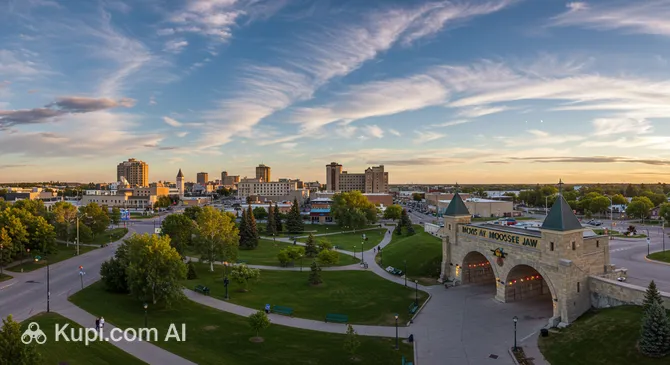
Moose Jaw. Illustration.
Source: Kupi.com AI

The city attracts travelers with its unique features that are hard to find elsewhere. Here, you can descend into mysterious underground tunnels shrouded in myths about Al Capone, relax in healing geothermal mineral waters, or take a commemorative photo with the giant statue of Mac the Moose. Moose Jaw offers a rare combination of historical intrigue, cultural richness, and a relaxing resort vacation.

This city is definitely worth including in your itinerary if you are looking for authentic experiences and a warm welcome. Moose Jaw is waiting to reveal its secrets, show you the "friendly side" of Saskatchewan, and provide memories that will stay with you for a long time.
Weather Overview

The climate in Moose Jaw is humid continental, providing distinct seasonal changes and a variety of experiences for tourists. Summers are generally sunny and warm, excellent for walking, while winter brings real Canadian cold. The warmest month is July, with an average temperature of about 20.9°C, often reaching daily highs of 27.3°C.

Winter months, especially January and February, require serious wardrobe preparation. Average temperatures during this time range from -9.4°C to -11.5°C, and nighttime temperatures can drop to -16.7°C. Despite the cold, winters here are quite dry — with only 4–5 days of precipitation per month, unlike June, when it can rain for up to 10 days. Expect warm summers with occasional rain and cold, dry winters.

Spring and autumn in the region pass dynamically. By May, comfortable temperatures around 12.7°C are established, and September enjoys mild weather with averages around 15.6°C before the first frosts begin in November. When packing your suitcase, be sure to check the weather in Moose Jaw for your travel dates to be prepared for any whims of nature.

Average monthly temperature

Average monthly precipitation

Interesting Facts

In addition to its main attractions, Moose Jaw holds many fascinating secrets and urban legends that make it one of the most intriguing places in the province. Here are a few surprising facts that will allow you to see the city's history in a new light:

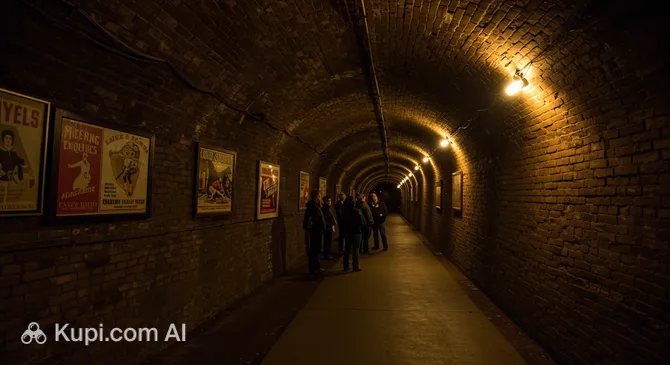
  • "Little Chicago" in the Canadian Prairies. During the Prohibition era in the US, the city became a major hub for bootlegging. A popular legend suggests that the famous gangster Al Capone visited the Tunnels of Moose Jaw multiple times, using them as a hideout and a transit point for smuggled alcohol, though no official documents confirming this have survived.

  • A Ship in the Middle of the Steppe. In the city's outskirts, you can see a surreal sight — a real sea vessel standing far from any water. Finnish immigrant Tom Sukanen spent years building it by hand, dreaming of sailing home to Finland via the Saskatchewan River, but he was never able to launch the ship. Today, this ship is a symbol of perseverance and the central exhibit of the Sukanen Ship Pioneer Village & Museum.

  • An Open-Air Gallery. Moose Jaw is famous for its massive murals. Over 40 large-scale frescoes adorn the building facades downtown, depicting scenes from the past in detail: from the first aviators and steam locomotives to the Jazz Age, turning an ordinary walk into a history lesson.

  • The Battle for Height. The famous Mac the Moose once lost the title of the world's tallest moose statue to a silver moose from Norway. However, the townspeople did not accept defeat and raised funds for new, larger antlers for Mac, allowing him to reclaim the world record.

Tunnels of Moose Jaw. Illustration.
Source: Kupi.com AI

Traveler photos:

How to Get There

When planning a trip to this colorful corner of Saskatchewan, it’s worth noting that the city is located at the intersection of major transport routes, making it easily accessible for tourists. Most travelers arrive through nearby major air hubs and then continue their journey by car or bus. You can find more details on how to get to Moose Jaw by exploring all available routes and choosing the most convenient option for yourself.

Since Moose Jaw does not have a major civilian airport with regular passenger flights, most tourists fly into Regina International Airport (YQR). It is located in the provincial capital, Regina, just 62 km from Moose Jaw. This is the most convenient option: the drive by rental car or taxi takes less than an hour (approximately 45–50 minutes) on a well-maintained highway. The airport services flights from major Canadian cities and some international destinations.

An alternative option is Saskatoon International Airport (YXE), located in the city of Saskatoon. It is significantly farther away — about 214 km from Moose Jaw. The travel time by car is around 2 hours and 15 minutes. This option might be beneficial if you plan to visit the northern part of the province or if you find more convenient connecting flights through this hub.

For convenience, here is a summary of the main airports used to reach the city:

AirportPassenger trafficDistance
Regina International Airport1.1 mln62 km
Saskatoon International Airport1.5 mln214 km

Regarding rail travel, there are currently no direct passenger trains to Moose Jaw that are convenient for mass tourism. The main rail line operated by VIA Rail passes further north through Saskatoon. Therefore, if you prefer ground transportation, a car or intercity bus is the best choice. Moose Jaw is conveniently located right on the Trans-Canada Highway, making it an ideal stop for road trippers crossing the country from east to west.

Main Attractions

Despite its modest size, Moose Jaw offers a diverse program for tourists. The city's main attractions are linked to its intriguing past and unique natural resources. Here, history comes to life in theatrical performances, and relaxation takes on healing properties thanks to local geothermal springs.

The undisputed symbol of the city and a magnet for travelers are the famous Tunnels of Moose Jaw. This is not just a museum, but a thrilling interactive underground adventure. Guests are offered two main routes: "The Chicago Connection," immersing you in the atmosphere of gangster times and bootlegging, and "Passage to Fortune," telling the story of the first Chinese immigrants. Actors in period costumes and detailed sets make the tour incredibly realistic.

Tunnels of Moose Jaw. Illustration.
Source: Kupi.com AI

Traveler photos:

For those seeking relaxation, a visit to the Temple Gardens Hotel & Spa is a must. This complex is known for its geothermal mineral pool, which draws water from an ancient underground sea. Swimming in hot water outdoors, even when surrounded by snow, provides an unforgettable sensation and health benefits. It is the largest geothermal spa resort in Canada, located right in the city center.

History and technology buffs should visit the Western Development Museum – Moose Jaw. The museum's exhibition is dedicated to the history of travel by land, water, and air. Here, you can see a collection of vintage cars, historic steam locomotives, and even aircraft related to the history of the Canadian Snowbirds flight demonstration team, whose base is located nearby.

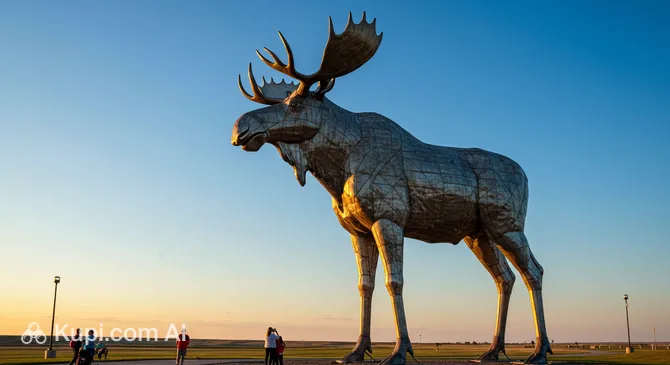
And, of course, a visit to the city would be incomplete without a photo with a local celebrity — the Mac the Moose statue. This giant monument, standing about 10 meters tall, held the title of the world's largest moose for a long time. It stands on the grounds of the visitor center and serves as a greeting to all city guests, embodying the majesty of Saskatchewan's nature.

Local Cuisine

The gastronomic scene in Moose Jaw is pleasantly surprising with its variety and authenticity. Here, in the heart of the Canadian prairies, hearty farm-to-table traditions harmoniously intertwine with modern culinary trends. Travelers will have no trouble finding classic Canadian treats as well as gourmet dishes made from local products grown right in Saskatchewan.

The foundation of the local menu is high-quality meat. Thanks to the region's developed agriculture, the city's restaurants often serve excellent beef steaks and homemade roasts. Game dishes are considered a special delicacy: be sure to try bison burgers or venison steak. This meat has a rich flavor and is considered leaner. Of course, no meal is complete without traditional Canadian "poutine" — hot fries generously topped with fresh cheese curds and thick brown gravy.

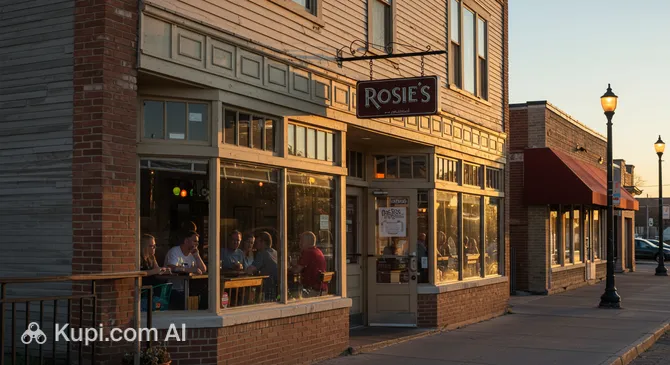
Rosie's on River Street. Illustration.
Source: Kupi.com AI

Traveler photos:

The city's history as "Little Chicago" is also reflected in its dining culture. Some establishments, such as Rosie's on River Street, offer an immersion into the 1920s atmosphere. During the day, you can have a hearty lunch enjoying dishes inspired by the Prohibition era, while the interior transports guests back to the times of gangsters and bootleggers, making the meal part of a historical adventure.

If you crave variety or a break from meat dishes, the city also offers international cuisine. For example, Mitsu Sweet Cafe & Sushi is famous for its fresh rolls and Japanese desserts, providing a pleasant contrast to traditional Western fare. This spot is popular among both locals and tourists looking for a light snack or exotic sweets.

As for drinks in Moose Jaw, look for products from local producers. Craft beer is often brewed here using select barley from Saskatchewan's fields. For non-alcoholic options, try teas and lemonades infused with local berries, especially the Saskatoon berry. This berry is one of the province's gastronomic symbols and is frequently used in pie fillings and jams.

The dining culture in the city is relaxed and friendly. During the warm season, the local farmers' markets become the epicenter of gastronomic life, where you can buy fresh bread from family bakeries, craft cheeses, maple syrup, and seasonal fruits. This is a great opportunity to have a picnic in one of the city's parks and experience the true taste of local life.

Travel Tips

Moose Jaw is often called the "Friendly City," and to ensure your trip to this cozy corner of Saskatchewan is as comfortable as possible, it’s worth considering a few local specifics. These practical recommendations will help you avoid organizational hiccups and focus on your vacation.

  1. Clothing and Gear. The weather in the region is changeable, so layering is your best friend year-round. In winter, thermal underwear, a windproof parka, and warm boots are essential, as the frost can be severe. In summer, a hat and sunscreen are necessary: the prairie sun is very strong. Important tip: definitely bring a swimsuit, even if there is snow outside. Visiting the outdoor geothermal pool is one of the city's main rituals that shouldn't be missed.

  2. Transport Nuances. The historic center is compact and ideal for walking, but if you plan to visit outlying areas, be mindful. City buses (Moose Jaw Transit) do not run on weekends or holidays, and on weekdays, they stop around 6:30 PM. During these times, rely only on taxis or walking. A rental car is the best solution for complete freedom of movement.

  3. Finances and Tipping. The official currency is the Canadian Dollar (CAD). Visa and Mastercard are accepted almost everywhere, even in small coffee shops, but having some cash for farmers' markets is useful. The tipping culture here is the same as in the rest of Canada: in restaurants, taxis, and spas, it is customary to leave 15–20% of the total bill for good service.

  4. Health and Safety. Moose Jaw is a quiet and safe city, but standard precautions apply. In Wakamow Valley and even on the city outskirts, you can often encounter wild deer. Observe them from a distance and never try to approach or feed them — it can be dangerous. Pharmacies are easy to find in large supermarkets, but there are almost no 24-hour pharmacies in the city, so it’s best to have essential medications with you.

  5. Communication and Internet. The primary language is English; locals speak it clearly and are eager to help tourists. Free Wi-Fi is available in most hotels, cafes, and public libraries. If you need a constant connection, SIM cards from local providers can be purchased at the Town 'n' Country Mall.

  6. Local Etiquette. Moose Jaw residents take pride in their friendliness. It is common to greet bus drivers, shopkeepers, and even strangers if you make eye contact. Don't hesitate to engage in small talk about the weather or hockey — it's a great way to build rapport with locals.

  7. What to Avoid. Don’t plan for a late dinner unless it’s at a bar or pub. The kitchens in many establishments close quite early (around 8:00 PM – 9:00 PM), especially early in the week. Also, avoid making jokes about "boring prairie life" — locals are very patriotic and value their history and unique lifestyle.

  8. Planning Tip. If you want to visit the famous tunnels, book your tour tickets online in advance. This is the most popular attraction, and during the tourist season (summer) or on weekends, tour spots fill up very quickly, so there’s a risk of not getting into the show you want if you wait until arrival.

By following these simple tips, you can easily settle into the rhythm of Moose Jaw and feel not just like a tourist, but like a welcome guest. The city opens up to those who are ready to slow down, smile at a passerby, and immerse themselves in its amazing atmosphere with interest.

Entertainment & Nightlife

Nightlife in Moose Jaw has its own unique charm, dictated by the city's history as "Little Chicago." You won't find massive night clubs with lasers and techno until morning here; instead, the city is famous for its atmospheric pubs, cozy lounges, and live music venues filled with a spirit of camaraderie. Evening entertainment here is primarily about socializing, quality drinks, and immersion in the local prairie flavor.

The epicenters of evening activity are traditionally Main Street North and the legendary River Street. Most establishments are concentrated here in historic buildings, where locals and tourists gather after sunset. The atmosphere is casual and relaxed: there is practically no strict dress code, and "casual" style (jeans and a shirt) is appropriate almost everywhere. The crowd is friendly, and striking up a conversation with a neighbor at the bar is considered the norm.

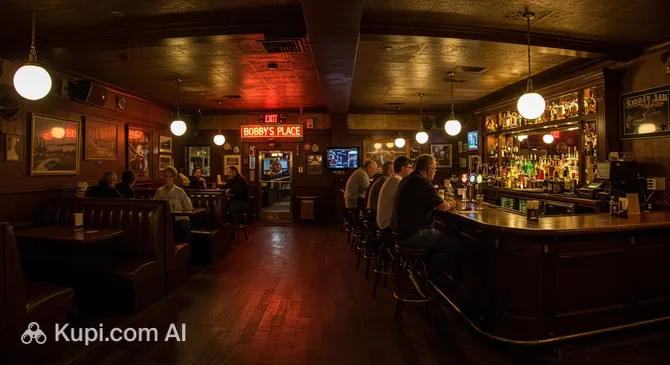
For those seeking an authentic experience, Bobby's Place is an excellent choice. This is a real Scottish pub in the heart of Saskatchewan, known for its massive selection of whiskies and beers. Local bands often play here in the evenings, performing everything from Celtic folk to classic rock, creating an incredibly warm and boisterous festive atmosphere.

Bobby's Place. Illustration.
Source: Kupi.com AI

Traveler photos:

If you want to start your evening with a delicious dinner and a cocktail in a historic setting, stop by Rosie's on River Street. The restaurant's name references the street's turbulent past, and the interior and menu maintain this nostalgic note. It’s a wonderful place to feel the spirit of old Moose Jaw before heading out for a night walk through the city.

For those who prefer a more tranquil and sophisticated evening, the lounge areas in major hotels are worth noting. For example, at the Temple Gardens Hotel & Spa complex, you can not only relax in the bar but also visit the casino, which is often a magnet for those seeking some gaming excitement. Additionally, the hotel's geothermal pool is open until late evening, offering a unique opportunity to swim under the stars.

Practical Tips and Safety:

Downtown Moose Jaw is considered safe for nighttime strolls, especially around the well-lit Main Street. However, as in any city, it is better to avoid unlit alleys and outskirts late at night. If you plan to stay out late, write down the number of a local taxi service in advance, as hailing a car on the street at night can be difficult, and services like Uber may have longer wait times.

Beyond the bars, the city's cultural life offers other evening entertainment. The Moose Jaw Cultural Centre (Mae Wilson Theatre) regularly hosts concerts, theatrical productions, and comedy shows. This is a great alternative for those who prefer the arts over noisy social gatherings. Prices in the city's establishments are moderate: the average check for dinner with drinks will be lower than in Canada's major cities.

Parks & Museums

Moose Jaw is not just about historic architecture and gangster legends; it is also a remarkably green city with a rich cultural heritage, offering tourists picturesque natural areas and fascinating museums. Here, you can easily alternate between walks in the fresh air and immersion into the history of the Canadian prairies' settlement.

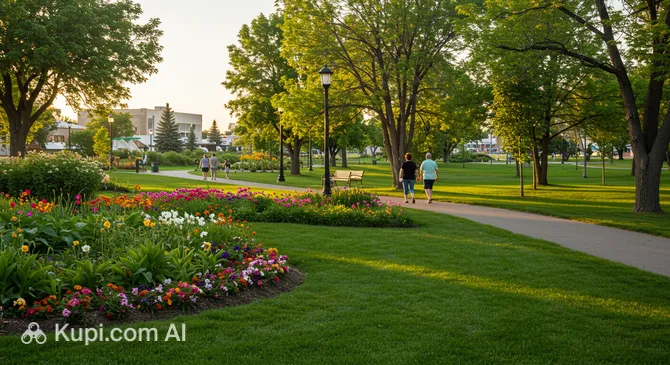
A true oasis of tranquility in the heart of the city is Crescent Park. This magnificent 28-acre landscaped park is perfect for leisurely walks, picnics, and photoshoots. The winding Serpentine Creek flows through its grounds, surrounded by century-old trees, and it also features an outdoor amphitheater and a library. In summer, concerts and festivals are often held here, while well-tended flower beds and shaded alleys offer cool relief even on the hottest days.

Crescent Park. Illustration.
Source: Kupi.com AI

Traveler photos:

Nature lovers seeking more expansive landscapes should head to Wakamow Valley. This vast parkland stretches along the Moose Jaw River and offers over 20 kilometers of hiking and cycling trails. The park operates year-round: kayaking and birdwatching are popular in summer, while snowshoeing and cross-country skiing take over in winter. This location allows you to feel one with nature without leaving the city limits.

Among cultural institutions, the Western Development Museum – Moose Jaw holds a special place. It is dedicated to the history of transportation and how technological advancements changed life on the prairies. The exhibition is impressive in scale: vintage cars, steam locomotives, and agricultural machinery are all on display. A particular point of pride for the museum is the gallery dedicated to the famous Canadian Snowbirds aerobatic team, where you can see real aircraft and learn about the skills of military pilots.

To get acquainted with local art and ethnography, be sure to visit the Moose Jaw Museum & Art Gallery, located within Crescent Park. It houses unique collections telling the history of Indigenous peoples and early settlers, alongside rotating exhibitions of contemporary Canadian artists. It is an intimate but very informative space that allows for a deeper understanding of the region's spirit.

If you are looking for unusual experiences, visit the Sukanen Ship Pioneer Village & Museum, located on the outskirts. This open-air museum features that surreal sea vessel built in the middle of the prairie by a Finnish immigrant, as well as a collection of historic buildings and tractors that recreate the life of early pioneers.

Getting Around

The public transport system in Moose Jaw is compact and intuitive, perfectly matching the laid-back pace of this small city. Since most historic attractions and popular spots are concentrated downtown, many travelers prefer to get around on foot. However, if you need to reach distant residential areas or major shopping centers, the city offers an organized bus network and convenient alternatives.

The primary form of public transport is the municipal bus network, Moose Jaw Transit. It consists of four routes covering key points in the city. It is important to note the schedule: buses run only Monday through Friday, approximately from 7:15 AM to 6:30 PM. Tourists should be careful when planning their trips: public transport does not operate on Saturdays, Sundays, or public holidays. During these times, you will need to rely on taxis, rental cars, or walking.

Fare payment is modern and convenient. A single adult fare is approximately 3.25 CAD. If paying in cash to the driver upon boarding, please have exact change, as drivers do not carry change. For greater convenience, passengers can use the HotSpot mobile app. This is an ideal option for city guests: you can buy a ticket right on your smartphone, avoiding the need to hunt for coins.

For those planning multiple trips, there are cost-effective options such as 10-ride passes or day passes. Paper tickets can be purchased at City Hall or the Kinsmen Sportsplex. If you need to change routes, remember to ask the driver for a transfer — it entitles you to a free connection within a certain time limit at the central terminal.

Given the absence of buses on weekends and evenings, taxi services are in high demand in Moose Jaw. Several reliable local companies operate in the city, such as Amil’s Taxi or Capone’s Taxi. It is most reliable to call for a car via a dispatcher. Popular rideshare services (like Uber) are also available, but the number of drivers on the line in a small city can be limited, which sometimes increases wait times.

Of particular interest to tourists is the Moose Jaw Trolley — a vintage-style streetcar on wheels. This is more of a sightseeing attraction than a transit vehicle, but riding it is a wonderful way to get to know the city. The trolley runs during the warm season (usually May to September), departing from the visitor center, with guides sharing exciting stories from Moose Jaw's past during the ride.

For active lifestyle enthusiasts, the city offers a network of scenic cycling routes, such as the Rotary Trail, connecting parks and major sites. However, for total independence from schedules and comfortable exploration of the surrounding areas, a rental car remains the most practical solution for travelers in this region of Canada.

Accommodation

The choice of accommodation in Moose Jaw, while not comparable in scale to major metropolises, is pleasantly surprising in its variety and quality. The city offers options for every taste and budget: from affordable roadside motels convenient for transit travelers to cozy Bed and Breakfasts (B&Bs) in historic buildings and luxury spa resorts. The main focus here is on hospitality and comfort, making tourists feel right at home.

In terms of location, the historic Downtown is the most attractive for tourists. Staying here puts you within walking distance of the main attractions, parks, restaurants, and shops on Main Street. This is the ideal choice for those who want to immerse themselves in the "Little Chicago" atmosphere and get around on foot. An alternative is the area along the Trans-Canada Highway (North Service Road), where modern chain hotels and motels are concentrated. This area is best suited for road travelers who value quick access to the highway and spacious parking.

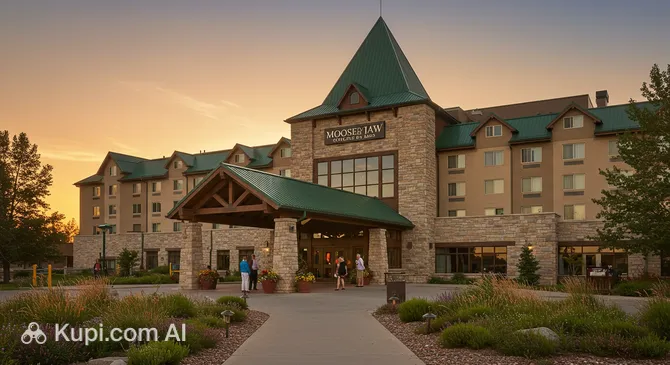
The undisputed gem of the city's hotel offerings is the famous Temple Gardens Hotel & Spa. This luxury resort hotel is located in the heart of downtown and is known far beyond the province. The main feature of the hotel is access to healing geothermal waters: guests can visit the indoor and outdoor mineral pools without leaving the building. Staying here is a popular choice for those looking to combine sightseeing with a wellness vacation and relaxation.

Temple Gardens Hotel & Spa. Illustration.
Source: Kupi.com AI

Traveler photos:

Booking Tips and Prices:

The price range in Moose Jaw varies from budget (simple motels and hostels) to high-end (spa resorts and suites). On average, the cost of a standard room in a mid-range hotel is quite affordable by Canadian standards. However, seasonality should be considered: in summer, as well as on holidays and weekends, demand rises sharply due to the influx of tourists wanting to visit the tunnels and mineral springs.

It is highly recommended to book accommodation in advance, especially if your trip falls in July or August. This can be done through popular international online platforms or directly on hotel websites, which sometimes allows you to find special package deals that include spa access or tours.

Nearby Cities

For those looking to explore the surrounding area, Moose Jaw serves as an excellent starting point for day trips to several interesting nearby locations:

Just an hour's drive to the east is Regina, the capital of Saskatchewan. It is an ideal destination for a short visit where you can stroll through the scenic Wascana Centre park, visit the majestic Legislative Building, or learn the history of the famous Canadian Mounted Police at the RCMP Heritage Centre. The city offers a rich cultural program and excellent restaurants.

If you head west on the Trans-Canada Highway, you will reach Swift Current. Often called a "frontier city," it is famous for its hospitality and Wild West history. Here you can visit the Mennonite Heritage Village museum, walk along the creek side, or play a round of golf at one of the local courses.

A little further away, about two hours north, is Saskatoon — the province's largest city, known as the "Paris of the Prairies" due to its beautiful bridges. It is a dynamic metropolis with a rich art scene, where it is worth visiting Wanuskewin Heritage Park to learn about the culture of the Northern Plains Indigenous peoples.

CityPopulationDistance
Regina215 10665 km
Weyburn10 870145 km
Swift Current16 604161 km
Plentywood1 700193 km
Melville4 500202 km

These nearby destinations provide an overview of the region's diverse culture and landscapes.

Shopping & Souvenirs

General Overview: Shopping in Moose Jaw is not about chasing high fashion, but rather a pleasant immersion into the atmosphere of small-town comfort and a search for unique treasures. The city is not overloaded with massive shopping complexes, which allows it to preserve the charm of small businesses. Here, you will find many independent boutiques, antique shops, and art galleries where owners often stand behind the counter and are ready to tell the story of every item. It is the perfect place for those who value authenticity and locally-made goods.

Main Shopping Districts: The heart of the city's trade is the historic center, especially the area around Main Street North. Walking here is an aesthetic pleasure: shops are located in restored early 20th-century buildings with beautiful facades. This street concentrates clothing stores, home decor shops, bookstores, and jewelry salons. The "Little Chicago" atmosphere is felt particularly strongly here, turning an ordinary shopping trip into a mini-tour.

Shopping Centers: For those used to classic shopping under one roof, Town 'n' Country Mall serves the city. This is the only major indoor shopping center in Moose Jaw, featuring popular Canadian chain stores for clothing, electronics, and home goods. While smaller than malls in major cities, you can find everything needed for travel or daily life here.

Markets: To experience the true flavor of Saskatchewan life, visit the seasonal Moose Jaw Homegrown Farmer's Market, which usually takes place on Langdon Crescent. Here, local farmers and artisans offer fresh produce, homemade baked goods, honey, and handmade crafts. It's a great place to buy something tasty for a park picnic or to find a unique, soulfully-made gift.

Mac the Moose. Illustration.
Source: Kupi.com AI

Traveler photos:

Souvenirs: You should definitely bring back something related to Moose Jaw's unique symbols. Souvenirs featuring the famous Mac the Moose statue are very popular: from magnets and t-shirts to plush copies of the giant. History buffs will appreciate 1920s gangster-style merchandise found in the gift shop at the Tunnels of Moose Jaw complex. Also, look for gastronomic souvenirs: jams, syrups, and teas made from local Saskatoon berries, which are the province's trademark. Interesting retro gifts and books on regional history are offered by the gift shop at the Western Development Museum – Moose Jaw.

Hours and Payment: Most downtown shops are open Monday through Saturday from 10:00 AM to 6:00 PM. Town 'n' Country Mall often stays open later, especially on Thursdays and Fridays. On Sundays, many small shops may be closed or operate on a reduced schedule (12:00 PM to 5:00 PM). Canadian dollars and major credit cards (Visa, Mastercard) are accepted everywhere.

Taxes: In Saskatchewan, sales tax is added to the shelf price at the register, consisting of federal (GST, 5%) and provincial (PST, 6%) taxes, totaling 11%. Tourists should remember that price tags do not include these taxes. Tax Free refund programs for foreign tourists are not currently active in Canada.

Reached the end of the page?

That means the route is fully explored