Support

Norman Wells

About the Airport

Norman Wells Airport is not merely a runway in northern Canada, but a true gateway to the very heart of the Sahtu region. For many travellers and residents, it serves as a vital artery connecting this remote corner of the Northwest Territories with the rest of the world. It is from here that unforgettable adventures into the wilderness and business trips to the natural resources, in which this land is rich, begin.
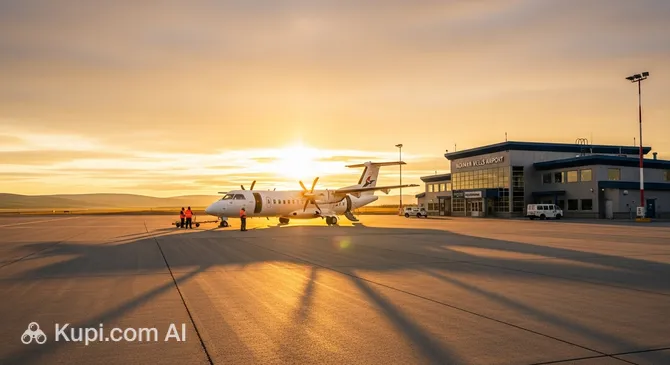
Norman Wells. Illustration.
Source: Kupi.com AI
PropertyValue
IATA CodeYVQ
ICAO CodeCYVQ
CityNorman Wells
CountryCanada
TimezoneAmerica/Inuvik
ScheduleOnline Timetable

The main feature of Norman Wells Airport is its strategic role for the entire region. It acts as a key transport hub for several small communities, ensuring not only passenger transport but also the delivery of mail, food, and essential goods. For tourists, it is the starting point for expeditions, such as to the famous historic Canol Heritage Trail, or for charter flights to secluded fishing lodges.

One should not expect the scale of a major international hub from this airport. Everything here is subordinated to functionality and efficiency: a small but cosy terminal where one can wait for their flight in warmth. The airport's main virtue is its reliability and indispensability for life in the harsh north. The staff is well-acquainted with the specifics of polar aviation, ensuring a high level of flight safety even in difficult climatic conditions.

Contact Information

  • Official Website: Norman Wells Airport is managed by the Government of the Northwest Territories. Up-to-date information can be found on the official government resource: www.inf.gov.nt.ca
  • Inquiry Service Phone: +1 (867) 587-2331. You can contact the airport administration at this number for general enquiries.
  • Airport Address: 1000 Airport Rd, Norman Wells, NT X0E 0V0, Canada.
  • Email: A dedicated email address for passengers is not provided. It is recommended to use the telephone for communication.
  • Social Media: The airport does not maintain official pages on social networks. Please follow airline websites for news and flight status.
  • Lost Luggage Information: For all issues related to lost or damaged luggage, please contact the representative of the airline you travelled with directly.
  • Passenger Support Contacts: Support regarding booking, ticket changes, and special assistance is provided by the airlines. For general questions regarding terminal operations, you may contact the airport administration by phone.

How to Get to the Airport

Getting to Norman Wells Airport (YVQ) from the city of the same name is not difficult, as it is located in immediate proximity to residential areas. Due to the compact size of the settlement, the transport system here differs from metropolises but offers convenient solutions for travellers arriving in this corner of Canada.

The most common and reliable way to reach the terminal is by taxi. A trip from any point in the city of Norman Wells will take just 5–10 minutes. The cost of the trip is low, but it is recommended to confirm the fare with the dispatcher when booking or with the driver before starting the journey. Given the remoteness of the region, it is better to book a car in advance, especially if your flight is early in the morning or late in the evening. Some local hotels can also assist with arranging transfers for their guests.

For those who value independence, car hire is available. This is an excellent option if you plan not only to drive to the airport but also to explore the surroundings. However, it is important to remember that the fleet in small northern towns is limited, so vehicles must be booked well in advance. If you arrive at the airport in your own or a hired car, a convenient car park located directly at the terminal building is at your service. It is suitable for both short-term and long-term parking.

It is worth noting that Norman Wells lacks traditional forms of public transport, such as city buses, metro, or trains. At the same time, thanks to the airport's close location, some travellers living nearby and travelling light may reach it on foot. This option is possible in good weather, but one should always consider the harsh climatic conditions of the north.

Terminals and Map

The Norman Wells Airport (YVQ) is a small regional airport, typical for the northern part of Canada. Its infrastructure is simple and functional, making navigation intuitively understandable even for first-time visitors.

The airport operates one passenger terminal, which serves all flights — both arrivals and departures. Due to the compact size of the building, there is no need for transfers between terminals or complex navigation. All key zones are within walking distance of each other in one common hall.

The terminal layout is extremely simple. Upon entering the building, you immediately find yourself in the general area where airline check-in counters are located. The departure zone consists of a small waiting lounge with a boarding gate. The arrival zone is also combined with the main space and includes a baggage claim belt. There is no separation into domestic and international sectors, as the airport mainly serves local and regional routes.

Check-in and security procedures at Norman Wells Airport take place significantly faster than in major hubs. Thanks to the low passenger flow, queues here are a rarity. As a rule, it is sufficient to arrive at the airport 60-90 minutes before departure to complete all formalities without haste. The main advice for navigation is not to worry: in this compact terminal, it is practically impossible to get lost, and the staff is always ready to help and indicate directions.

Airport History

The history of Norman Wells Airport (YVQ) is a story of survival and strategic importance in the harsh north of Canada. Its emergence is directly linked to the events of the Second World War and one of the most ambitious engineering projects of that time — the Canol project (Canadian American Norman Oil). The airport was founded in the early 1940s as a key logistical hub for the construction of an oil pipeline intended to supply fuel to military bases in Alaska. During this period, the airfield received countless transport aircraft delivering people and tons of cargo to this inaccessible region.

After the war ended, the Canol project was closed, yet the airport did not lose its significance. It became a vital artery for the developing town of Norman Wells and the centre of the region's oil industry. For many decades and to this day, the airport remains the only year-round way to reach the city, as no all-season roads lead to it. This makes it not just a transport facility, but a true lifeline for the local population and oil company workers.

In the 21st century, the airport underwent several stages of modernisation to meet modern safety and service standards. A significant event was the construction of a new terminal building, which was completed in 2017. This modern structure significantly improved conditions for passengers and optimised the work of airport services. Today, Norman Wells Airport continues to play its historic role, ensuring a reliable connection between the remote northern community and the rest of the world.

Services and Amenities

Norman Wells Airport (YVQ) is a small regional airport in northern Canada, so the range of services here corresponds to its size and focuses on the basic needs of passengers. It is important to understand that the infrastructure here is not comparable to major international hubs.

Dining and Shopping: There are no restaurants, cafés, or duty-free shops in the airport terminal. Passengers are recommended to carry snacks and drinks with them or eat in the city before arriving at the airport. Vending machines may occasionally be available.

Waiting Areas and Wi-Fi: A general waiting hall with seating is equipped for passengers. Specialised VIP halls or business lounges are absent. Wi-Fi connectivity may be limited or unavailable, so it is better to have alternative internet access. Power outlets for charging mobile devices can be found in the waiting hall, but their number may be small.

Financial and Other Services: There are no bank branches or currency exchange points at the airport. It is recommended to complete all financial transactions in advance. Medical assistance is limited to first aid capabilities. For passengers with children, changing tables may be available in the restrooms.

Accessibility and Accommodation: The terminal is equipped for the convenience of passengers with reduced mobility, ensuring basic accessibility. There are no hotels directly on the airport territory, however, several accommodation options can be found in the city of Norman Wells itself, which is a few minutes' drive away.

Where to Eat

When planning a journey through Norman Wells Airport (YVQ), it is important to consider that this is a small regional airport serving a remote settlement in Canada. Its infrastructure differs significantly from large international hubs, which is directly reflected in the available services, including dining.

There are no full-service restaurants, cafés, or bars on the airport premises. The terminal is a compact building designed mainly for check-in, waiting, and baggage handling. You will not find a food court, establishments with diverse menus, or zones for a prolonged rest over lunch here.

Dining options for passengers are extremely limited and usually amount to the following:

  • Vending Machines: This is the most likely source of food and beverages at the airport. You can purchase bottled water, carbonated drinks, crisps, chocolate, and other packaged snacks for a quick bite.
  • Small Kiosk: Sometimes a small kiosk may operate in airports of this type, but its presence and opening hours are not guaranteed. If it is open, its activity is usually synchronised with the flight schedule. The assortment will consist of basic drinks and simple snacks.

Passengers with special dietary requirements (vegetarians, vegans, people with gluten intolerance) should be particularly attentive. It is practically impossible to find specialised dishes at the airport. The only reliable option is to bring food with you.

Main Recommendation: Take care of your meals in advance. It is best to eat a substantial meal at one of the establishments in the city of Norman Wells before heading to the airport. If you are in transit or simply wish to have a snack, we strongly advise bringing food and drinks with you to avoid inconvenience.

Traveller Tips

To ensure your journey through Norman Wells Airport goes as smoothly as possible, make use of these tips. Despite it being a small regional airport, it is worth arriving here in good time. For domestic flights within Canada, it is recommended to be at the airport at least 90 minutes before departure. This time is sufficient to complete all procedures without haste.

Flight check-in and security screening usually proceed faster than at major airports. To save time, complete online check-in if your airline provides such an option. Security checkpoints operate according to standard rules: be prepared to remove electronics, liquids, and metal items. Despite the small flow of passengers, one should not leave passing through control to the last moment.

When choosing a seat on the plane, consider that flights in this region often delight passengers with stunning views of northern landscapes, so a window seat can be an excellent choice. Regarding hand luggage, standard aviation rules apply: liquids in containers no larger than 100 ml (packed in a transparent bag), and no sharp objects or other prohibited items. The full list can always be clarified on the Canadian Air Transport Security Authority (CATSA) website.

If you have a connection in Norman Wells, rest assured: thanks to the compact dimensions of the terminal, you will easily find the necessary boarding gate. The main thing is to clarify with the airline in advance whether you need to collect and re-check your luggage. Customs control at this airport is undergone only by passengers arriving from abroad, which happens extremely rarely. Most flights are domestic, so this procedure will not be required for the majority of travellers.

To save money, book tickets in advance, especially if you plan to fly during the peak season. Also, check the baggage allowance with your airline to avoid extra charges at the airport. Considering that the choice of cafés and shops in the terminal is limited, it makes sense to bring a light snack and a water bottle, which can be filled after passing security.

In the event of a flight delay or cancellation, which is possible due to weather conditions in northern regions, first contact your airline representative for up-to-date information. Keep your phone charged and check the flight status online. Learn about your rights as a passenger — the airline may be obliged to provide you with meals or accommodation depending on the length of the delay.

Reached the end of the page?

That means the route is fully explored