Support

Repulse Bay

About the Airport

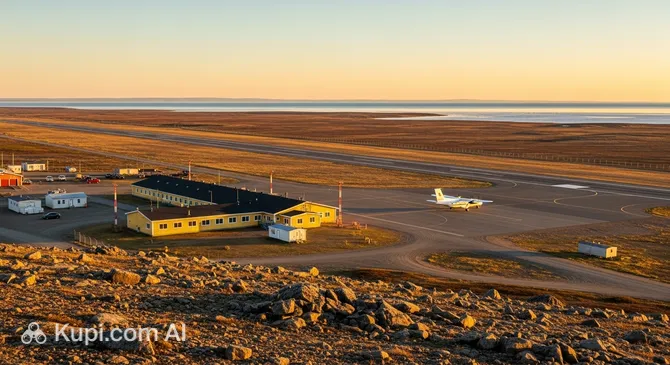
Repulse Bay. Illustration.
Source: Kupi.com AI

Repulse Bay Airport, officially known today as Naujaat, is not merely a transport hub but a true "lifeline" for one of the most isolated settlements in the Canadian Arctic. Located directly on the Arctic Circle, this small airfield serves as the only reliable link for local residents with the outside world, as there are no roads leading here. Here, amidst the endless tundra and permafrost, the journey begins with a landing on a gravel strip, which in itself becomes a thrilling adventure for any tourist.

PropertyValue
IATA CodeYUT
ICAO CodeCYUT
CityRepulse Bay
CountryCanada
TimezoneAmerica/Rankin_Inlet
ScheduleOnline Timetable

Airport Features and Highlights:

Naujaat Airport plays a key role in the life of the Kivalliq region. Despite its modest size, it possesses everything necessary to ensure flight safety in harsh northern conditions. Its main feature is the gravel runway, approximately 1,000 metres long, which requires special skill from pilots and accommodates turboprop aircraft, such as the ATR-42, which are the "workhorses" of the North.

In 2025, the airport received a significant upgrade with the opening of a new passenger terminal. The modern building is much more spacious and comfortable for waiting for flights, offering passengers improved conditions compared to the old structure. The terminal is decorated with elements of local art, immediately immersing guests in the atmosphere of Inuit culture.

For tourists, the airport serves as the main gateway to the world of Arctic wildlife. It is from here that expeditions to Ukkusiksalik National Park and tours for observing polar bears, narwhals, and beluga whales begin. The name of the airport and the settlement, "Naujaat", translates from Inuktitut as "nesting place for seagulls", highlighting the close connection of this place with the unique fauna of the region.

Contact Information

  • Official Airport Website: The airport does not have its own commercial website. Information on operating regulations is available on the Government of Nunavut portal (Department of Economic Development and Transportation), and flight schedules are on the Calm Air airline website.
  • Help Desk Phone: +1 867-462-9973 (Direct terminal number).
  • Airport Address: Naujaat Airport, Naujaat, Nunavut, X0C 0H0, Canada.
  • Email: There is no direct public email for the terminal. For official inquiries, it is recommended to use the general contacts of the Nunavut Department of Transportation: edt@gov.nu.ca.
  • Airport Social Media: Official accounts are absent. News can be tracked on the Hamlet of Naujaat pages on Facebook.
  • Lost Luggage Information: Airlines are responsible for tracing items. You must contact representatives of Calm Air (or Canadian North, if it is a charter) directly at the terminal or via their official website.
  • Passenger Support Contacts: All questions regarding booking, tickets, and special assistance are handled through the Calm Air call centre: +1 800-839-2256 (toll-free within Canada).

How to Get to the Airport

Transport logistics in Naujaat (Repulse Bay) differ radically from the familiar urban environment. Since the settlement is isolated from the rest of Canada and has no road connections to other cities, you can only get to the airport from the settlement itself. The distance from the community centre to the terminal is only about 2 kilometres, making the trip very quick, though dependent on harsh weather conditions.

Public Transport

There is a complete absence of a public transport system in the traditional sense in Naujaat: there are no buses, fixed-route taxis, or trains here. Given the compactness of the settlement, there is simply no need for regular routes. Locals move around using personal transport adapted to the Arctic.

Transfers from Hotels and Lodges

For tourists, the most reliable and convenient way to get to or from the airport is a transfer organized by your accommodation. There is a limited number of hotels operating in the settlement (e.g., Naujaat Hotel), and they typically know the schedule of all arriving flights.

  • Recommendation: Be sure to arrange a pick-up in advance when booking your room. In most cases, hotel staff will meet you right at the terminal exit in a car or SUV.
  • Cost: Often included in the price of the stay, but may cost around 15–20 CAD one way if the service is paid separately.

Taxis and Private Transport

There are no official taxi services with signage and meters here. However, a system of private transport ("local taxi") exists. Usually, these are local residents in pickup trucks or SUVs willing to give passengers a lift for a fixed fee.

  • Price: A trip around the settlement, including the route to the airport, usually costs a fixed 5–10 CAD per person.
  • How to find: Phone numbers of local drivers can be found on the notice board at the "Northern Store" or by asking airport staff upon arrival.
  • Payment: Only cash Canadian dollars are accepted.

Car Rental and Transport Specifics

Familiar international car rental services (Hertz, Avis, etc.) are absent in Naujaat. It is impossible to rent a standard car here. However, depending on the season, you may use the services of local outfitters to rent specialized equipment if you are planning expeditions, but not for a simple trip to the airport.

  • In Winter: The main transport is snowmobiles. You may be taken to the aircraft in a qamutiik (traditional sled) attached to a snowmobile. This is a colourful and very effective way of travelling.
  • In Summer: ATVs (Quad bikes) and pickup trucks are popular.

On Foot

In the summer period (July-August), if you have little luggage and the weather is good, you can walk from the settlement centre to the airport in 20–30 minutes. The road is gravel and runs through the tundra. However, in winter or during strong winds, such walks are categorically not recommended due to the risk of frostbite and encounters with wild animals (including polar bears).

Parking

A small open parking area is equipped in front of the new terminal building. It is unguarded and free of charge. Locals leave their cars or ATVs here when meeting relatives.

Nearest Airports and Air Connections

Since Naujaat can only be reached by air, it is useful to know about the key transport hubs of the Kivalliq region and neighbouring settlements. Flights are often connecting or include stopovers in these localities:

  • Rankin Inlet Airport (YRT) — The largest hub of the region, located approximately 500 km to the south. It is through here that the main flow of tourists and cargo passes (about 73,000 passengers). Most flights to Naujaat fly via Rankin Inlet.
  • Hall Beach Airport (YUX) — A small airport 328 km from Naujaat.
  • Igloolik Airport (YGT) — Located 366 km away, often used for routes linking northern communities.
  • Chesterfield Inlet Airport (YCS) — Located 413 km to the south, another point on the map of local airlines.
  • Gjoa Haven Airport (YHK) — Located on King William Island, 471 km from Naujaat.
Terminals and Map

The structure of Naujaat Airport (formerly Repulse Bay) is distinguished by extreme simplicity and functionality, typical of small Arctic aviation hubs. You will not find confusing corridors or multiple levels here. The entire airport complex consists of a single passenger terminal that serves both departing and arriving flights.

Layout and Navigation

Thanks to the compact size of the new building, opened in 2025, navigation here is intuitive. It is impossible to get lost in the terminal: all key zones are in direct line of sight of each other.

  • Entrance Area: Immediately after entering the building, you find yourself in the main hall.
  • Check-in Zone: Airline counters (mainly Calm Air) are located directly opposite the entrance. Baggage drop-off and boarding pass issuance take place here.
  • Waiting Hall: Located in the same space or in an adjacent room past the security screening area. It is equipped with comfortable seats and panoramic windows overlooking the airfield.

Departure and Arrival Zones

There are no jet bridges at YUT airport. All boarding and disembarking procedures are carried out on foot across the apron.

  • Departure: After completing check-in and, if necessary, security screening, passengers wait for the boarding call in the general hall. The boarding gate is a standard door leading outside to the aircraft.
  • Arrival: Arriving passengers descend the aircraft stairs and walk independently to the terminal building (the distance usually does not exceed 50–100 metres). Inside, they are met by a small baggage claim area. There may not be a conveyor belt here: luggage is often unloaded manually onto a special platform or shelves.

Terminal Features

Since the terminal is brand new, it is designed taking the harsh climate into account:

  • Thermal Insulation: The building is excellently heated so that passengers can wait for their flight comfortably even at extremely low temperatures outside.
  • Amenities: Inside, there are restrooms adapted for people with disabilities. Food outlets (cafes or restaurants) and Duty Free shops are absent, however, vending machines with water and snacks may be installed.
  • No Transit Zones: Since there is only one terminal, transfers between buildings are not required. If you have a connecting flight (which is rare for Naujaat itself, as it is usually the final destination), the entire process takes place within a single hall.

Check-in and Pre-flight Procedures

Despite the low passenger volume, airlines strictly adhere to regulations. Being late by even 5 minutes can result in being denied boarding, as planes must depart strictly on schedule to return to the hub before darkness or a change in weather.

Recommended arrival time at the airport:

  • 60 minutes before departure is the optimal time. This is sufficient to calmly check in luggage and pass document checks.
  • Check-in closes usually 45 minutes before departure (check exact rules on your Calm Air or Canadian North ticket).
  • Security Screening: The procedure is quick, queues are rare, but security requirements (CATSA) are just as standard as in major Canadian airports.

Navigation Tips for the Tourist:

The main recommendation is to keep documents handy and dress warmly before going out for boarding. Since you will have to walk in the open air from the terminal to the aircraft, even a short walk in the wind can be very cold. Listen to staff announcements: there may be few electronic boards, and essential information is often repeated verbally by airline staff.

Airport History

The history of Naujaat Airport (formerly Repulse Bay) is a chronicle of humanity's struggle with the harsh nature of the Arctic and an isolated community's striving for connection with the outside world. Unlike major international hubs that emerged at the dawn of commercial aviation, the air harbour of this settlement developed as a vital point on the map, ensuring survival in the conditions of the Far North.

Establishment and Early Years

Aviation communication with the settlement began to be established in the mid-20th century when the Canadian government started active development of the northern territories. Before the appearance of a prepared runway, supplies were delivered mainly by sea during the short navigation period or by seaplanes that could land on water in summer and on ice in winter. The construction of a permanent gravel strip in the 1970s became a turning point: it allowed wheeled aircraft to be received all year round, forever changing the lifestyle of the local community.

Change of Name and Identity

An important milestone in the airport's history was 2015. It was then that the settlement of Repulse Bay, named by British explorer Christopher Middleton back in 1742, officially returned to its traditional Inuit name, Naujaat. Following the renaming of the settlement, changes also affected the airport: the new name was secured in navigation charts and official documents, symbolizing respect for the culture of Indigenous peoples, although the IATA code (YUT) remained the same as a tribute to history.

Modernization and New Terminal

For a long time, passengers were served by a tiny and obsolete terminal building, which barely accommodated travellers and luggage. In the early 2020s, the Government of Nunavut, with the support of the federal centre, initiated a large-scale reconstruction project. The culmination of this process was the opening of the new passenger terminal in 2025. This event became a real celebration for residents: the modern building not only solved logistics problems but also became an architectural landmark, designed with energy efficiency in permafrost conditions in mind.

Interesting Facts and Historical Details:

  • "Gravel" Specifics: Throughout its history, the airport runway has remained gravel. Paving in such climatic conditions (permafrost, extreme temperature changes) is often impractical and technically difficult, so the airport's history is also a story of the constant skill of ground crews maintaining the ground in ideal condition.
  • Role in Supply: During periods when maritime navigation is impossible, the airport became the only route for delivering fresh food and medicines. Historically, local pilots know the landing conditions in Naujaat like the back of their hand, as visual landmarks here are minimal — a continuous white desert in winter and tundra in summer.
  • Arctic Records: The airport has repeatedly been used as a refuelling and logistical support base for scientific expeditions heading to the northern part of Hudson Bay and deep into the mainland to study the polar bear population.

Services and Amenities

Passengers accustomed to the service of huge international hubs with their endless shops and food courts should adjust their expectations before visiting Naujaat Airport (YUT). This is a small regional airfield where functionality and safety are placed above entertainment. Given that waiting times here are usually minimal, the list of available services is limited to the basic needs of travellers in Arctic conditions.

Restaurants, Cafes, and Shops

There are no full-service food outlets in the passenger terminal building. You will not find cafes, restaurants, or coffee shops here. Also, there are no shops, newsstands, or Duty Free zones in the airport.

  • Advice for Tourists: It is strongly recommended to arrange food and drinks in advance. Purchase water and snacks (sandwiches, chocolate, nuts) at local village stores (e.g., Northern Store or Co-op) before leaving for the airport, especially if you are travelling with children.
  • Vending: Vending machines with carbonated drinks and snacks may be installed in the new terminal, but their availability and assortment are not guaranteed.

Waiting Lounges and VIP Services

The airport does not have separate business lounges or VIP lounges. The terminal is a single space for all passengers. Thanks to the recent reconstruction, the general waiting hall has become sufficiently spacious, warm, and comfortable, with a good view of the runway. The atmosphere here is usually quiet and calm.

Connectivity and Electronics

  • Wi-Fi: The availability of public free Wi-Fi in the terminal is unstable. Satellite internet quality in the Arctic depends heavily on weather conditions. It is recommended to download necessary maps, tickets, and entertainment content to your devices in advance.
  • Charging Stations: The waiting hall provides a sufficient number of electrical outlets for charging phones and laptops, which is critically important in cold conditions when batteries drain faster.

Financial Services

There are no ATMs or currency exchange points in the airport building.

  • Important: In Naujaat, many services (for example, private transfers or buying souvenirs from local artisans) are paid in cash. Withdraw the necessary amount of Canadian dollars (CAD) in advance in major transfer cities (Winnipeg or Rankin Inlet) or at the ATM in the Northern Store in the settlement itself.

Medical Services

There is no medical centre or pharmacy in the terminal. Airport staff are trained in first aid and have access to basic first aid kits and defibrillators. In case of serious health problems, it is necessary to contact the Health Centre located in the settlement. Given the proximity of the airport to the town (2 km), transporting a patient takes mere minutes.

Passengers with Children

Specialized mother-and-child rooms or play areas are not provided in the terminal. Nevertheless, the renovated restrooms have changing tables. Given the lack of entertainment, parents should bring toys or books themselves to occupy their child while waiting for the flight.

Accessible Environment

The new terminal is designed taking into account the needs of passengers with reduced mobility and meets basic accessibility standards:

  • The entrance to the building is equipped with ramps or is at ground level.
  • Doorways are widened for wheelchair access.
  • There is a specially equipped toilet.
  • Boarding the Aircraft: Since there are no jet bridges and boarding takes place from outside, passengers with disabilities must notify the airline in advance (Calm Air or Canadian North). Staff will help you board using special lifting devices or physical assistance when climbing the stairs.

Accommodation (Hotels)

There are no hotels on the airport territory. The nearest accommodation is located directly in the settlement of Naujaat (about 5–7 minutes drive):

  • Naujaat Hotel (Inns North): The main hotel of the settlement, offering comfortable rooms and meals. Often provides transfers for its guests.
  • Passengers stranded at the airport due to non-flying weather should immediately contact the hotel, as the number of places is limited. Sleeping in the terminal is not permitted.

Business Services

Business centres and conference rooms are absent in the airport. If you need to hold a meeting or work with documents, it is best to use the services of the hotel in the settlement or the local administration office (Hamlet office), where there is access to office equipment upon request.

Where to Eat

The issue of food at Naujaat Airport (YUT) requires special attention from travellers. Unlike major international hubs, here passengers face the harsh reality of Arctic logistics: cafes, restaurants, bars, and coffee shops are completely absent in the terminal building. This is a typical situation for small Nunavut airports, where passenger flow is insufficient to support catering outlets.

To avoid going hungry while waiting for a flight, it is strongly recommended to plan meals in advance, keeping in mind the lack of service directly at the airport.

Restaurants and Cafes: Current Situation

Neither in the departure zone (airside) nor in the general zone (landside) are there establishments where you can order hot food or drink freshly brewed coffee. The terminal performs a strictly transport function.

  • Vending Machines: The only possible source of snacks in the terminal is vending machines. However, their availability and assortment (usually chocolate bars, crisps, and soda) can be unstable. You should not rely on them as a main source of food.
  • Drinking Water: It is recommended to have an empty water bottle with you, which can be filled at a drinking fountain (if available) or to buy bottled water in advance in the settlement.

Where to Eat: Recommendations for a Full Meal

Since it is not possible to eat at the airport, the only option for a full meal is the settlement of Naujaat before leaving for your flight.

  • Naujaat Hotel (Inns North): The hotel restaurant serves full breakfasts, lunches, and dinners. This is the best place to fortify yourself before a flight. Here you can order Canadian and local dishes in a comfortable setting.
  • Opening Hours: The hotel restaurant usually operates on a strict schedule (breakfast, lunch, and dinner at specific hours). Check the opening times at reception.

Quick Snacks and Takeaway

For those who want to take food with them onto the plane or into the waiting lounge, the best strategy is to visit local shops before the trip to the airport. The main retail outlets in the settlement are Northern Store and Co-op.

What to Buy and Try (Local Specifics):

  • Arctic Delicacies: In the deli sections of local shops, you can sometimes find ready-made dishes or products from local game. If you are lucky, try smoked or dried Arctic Char — this is the region's main gastronomic souvenir.
  • Bannock: Traditional Inuit bread (fried flatbread). It is often sold in shops or baked at the hotel. Bannock is excellent for a snack on the road, as it remains filling and tasty for a long time.
  • Standard Set: A wide selection of sandwiches, pastries, fruits, yoghurts, and drinks is always available in stores.

Special Diets (Vegetarian, Halal, Gluten-Free)

Due to the lack of catering at the airport, dietary control falls entirely on the passenger. Specialized menus (vegan or gluten-free) in the settlement's shops may be scarce, and the choice is limited to basic products (vegetables, fruits, nuts, rice). Halal options may be difficult to find.

  • Advice: If you are on a strict diet (e.g., Halal or gluten-free), it is best to bring a necessary supply of specialized products with you from major cities (Winnipeg or Montreal) when arriving in Naujaat, as the assortment of specific goods in village shops is extremely limited.

Price Range

Be prepared for "Northern prices". The cost of groceries in Naujaat is significantly higher than in the south of Canada due to complex aviation delivery logistics.

  • The average bill for a light snack (sandwich + drink) in a shop will be around 15–20 CAD.
  • A full meal at the hotel will cost 35–50 CAD per person.

Important Safety Note:

Remember that after passing security (if conducted on your flight), carrying liquids over 100 ml may be prohibited. However, solid food (sandwiches, bannock, snacks) is permitted in the "clean zone" and on board the aircraft without restrictions.

Tips for Travellers

Travelling to the Canadian Arctic is a unique experience that requires special preparation. Naujaat Airport (Repulse Bay) operates according to rules dictated by the harsh climate and remoteness from civilization. To ensure your flight is as comfortable and stress-free as possible, we have compiled the most important practical tips.

Optimal Arrival Time

Despite the airport being very small, do not arrive at the last moment. It is recommended to be at the terminal 60–90 minutes before departure. Unlike major cities, there are no online queues here, but the process of processing luggage and cargo may take time due to manual handling. Remember: planes fly strictly on schedule, and if the weather allows for departure, pilots will not wait for late passengers.

Check-in and Security: What to Expect

Security procedures here are standard for Canada (CATSA) but have their nuances:

  • Outerwear: Be prepared to remove bulky parkas, heavy boots, and warm sweaters at security. To speed up the process, wear base layers and clothes that are easy to remove.
  • Paper Copies: Internet in the Arctic can work intermittently. We strongly recommend having printed itinerary receipts and documents with you. An electronic boarding pass on a smartphone may simply not load at the right moment.
  • Documents: For domestic flights within Canada, photo identification (passport or driving licence) is sufficient, but keep them in an easily accessible pocket.

Seat Selection

Flights to Naujaat are operated on turboprop aircraft (usually ATR-42 or ATR-72). Here are a few tricks when choosing a seat:

  • Views: Upon approach to the settlement in clear weather, stunning views of the tundra and the bay open up. Try to take a window seat. Ask the flight attendants upon boarding which side is expected to have the best view (this depends on wind direction during landing approach).
  • Noise: Turboprop engines are quite loud. If you are sensitive to noise, avoid seats in the front of the cabin (near the propellers). It is usually quieter in the tail of the plane, but turbulence may be felt more strongly.
  • Open Seating: Often, open seating is practised on local flights. In this case, it is worth boarding among the first to choose a seat you like.

Hand Luggage: Do's and Don'ts

Due to the small size of the aircraft, overhead bins in the cabin are very small. A standard "cabin size" suitcase simply won't fit there.

  • SkyCheck (Valet) Service: Large hand luggage will be taken from you right at the aircraft stairs and placed in the cargo hold, and returned immediately upon exit upon arrival. Remove all fragile items, valuables, and batteries from the bag in advance.
  • Bear Spray: This is a critical point. Pepper spray (Bear Spray) is strictly prohibited in hand luggage and checked baggage on passenger flights without special dangerous goods documentation. If you bought it for a hike, you will have to leave it behind or send it via cargo flight.
  • Electronics: Lithium-ion batteries and power banks must be carried only in hand luggage (in the cabin). In the cold, they discharge quickly, so keep them in an inner pocket closer to your body.

Tips for Transit Passengers

Most routes to Naujaat pass through the hub in Rankin Inlet (YRT). Connections in the Arctic are risky due to weather.

  • Single Ticket: Always try to book the flight on a single ticket (e.g., with one airline like Calm Air). In case of flight cancellation due to a blizzard, the airline is obliged to rebook you on the next flight and provide a hotel.
  • Time Buffer: If you are flying with different airlines, allow at least 4–6 hours for the connection, or better yet — plan an overnight stay at the transfer hub. Weather changes instantly, and a delay of the first flight can ruin all plans.

Customs Control and Alcohol

There are no international flights here, so you will not encounter customs in the traditional sense. However, strict rules on alcohol importation apply in Nunavut.

  • Restrictions: Naujaat is a community with regulated alcohol circulation. A permit from the local committee may be required to import alcohol. Before travelling, strictly check the current rules on the Government of Nunavut website to avoid confiscation of beverages from your luggage.

How to Save Time and Money

  • Your Own Food: Food prices in the Arctic are 2–3 times higher than in southern Canada. Buy sandwiches, nuts, and chocolate in Winnipeg or Montreal before flying North. This will save you a significant amount.
  • Luggage Weight: Strictly monitor the weight of your suitcases. Excess weight on northern flights is very expensive, and you won't be able to "negotiate" — every kilogram counts for flight safety.
  • Cash: Always have cash Canadian dollars (small bills) with you. They will be useful for paying for taxis or buying souvenirs, as card payment terminals may not work due to connection issues.

What to Do in Case of Delay or Cancellation

In the Arctic, the phrase "weather permitting" is commonplace. Delays can last from a few hours to several days.

  • Act Quickly: If the flight is cancelled, do not wait until the crowd leaves the terminal. Call the local hotel (Naujaat Hotel) immediately to book a room. The number of rooms in the settlement is severely limited, and there may not be enough for all passengers.
  • Insurance: It is strongly recommended to have travel insurance covering accommodation and meal expenses in case of flight delays due to weather conditions.
  • Entertainment: There is no Wi-Fi or entertainment at the airport. Be sure to bring a paper book, downloaded movies, or games on a tablet to pass the waiting time.

Reached the end of the page?

That means the route is fully explored