Support

The Basilica Cathedral of St. John the Baptist

About

Towering over the city, the Basilica-Cathedral of St. John the Baptist is more than just a religious edifice; it is a true spiritual and architectural symbol that graces St. John's. As the primary Catholic church of Newfoundland and Labrador, this cathedral embodies the resilience and deep faith of the Irish immigrants whose efforts brought it to life.
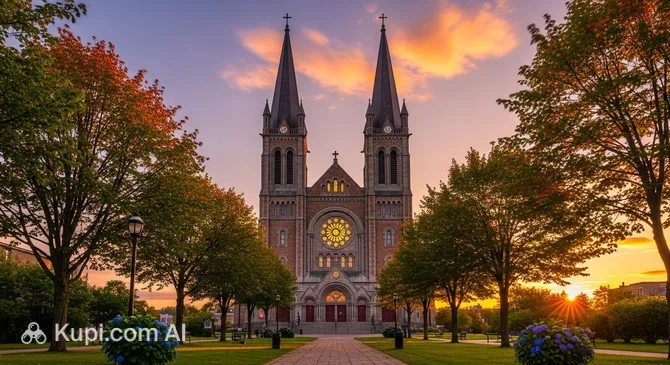
Basilica Cathedral of St. John the Baptist. Source: Kupi.com AI

The building is a rare and majestic example of Lombard Romanesque Revival architecture. It is one of the first examples of a return to Romanesque canons in North American architecture. The cathedral is listed among the national historic sites that Canada takes pride in and is considered a site of international cultural significance.

Travelers are drawn not only by its monumental appearance with its two distinctive towers but also by the unique blend of Irish heritage and the craftsmanship of 19th-century builders. Inside the temple, an atmosphere of solemn tranquility reigns, highlighted by a magnificent interior.

Contacts

For your convenience, we have gathered the essential contact information to help you plan your visit to this majestic cathedral. If you have questions about special events or mass times, you can contact the administration directly.

Address 200 Military Rd, St. John's, NL A1C 5G9, Canada
Phone +1 709-754-2170
Website thebasilica.net
Google Rating 4.8 out of 5 (based on 511 reviews)

What to Do

First and foremost, take some time to appreciate the cathedral's exterior. Its gray towers, standing approximately 45 meters tall, are a signature feature of the city's skyline. As you get closer, you can appreciate the scale of the stonework and the austere lines characteristic of the Romanesque style.

Once inside, be sure to look up: the ornamental ceiling, created by artist Dan Carroll, is striking in its detail. Special mention should be made of the stained glass windows by William Warrington, which depict scenes closely tied to Irish traditions. The interior also features masterful sculptures by renowned artists John Hogan and John Edward Carew.

Music and history enthusiasts will be interested to learn about the nine Irish bells installed in the towers. The heaviest, the two-ton St. John Bell, was cast back in 1850. The Basilica remains a vibrant cultural center, so if you're lucky, you might catch a religious service or one of the cultural events regularly held here.

Getting There

The region's primary Catholic church is located on Military Road in the heart of the city. The Basilica stands on one of the highest ridges, making it an excellent landmark for any traveler. Its two massive 45-meter towers are visible from almost anywhere in the historic center.

You can reach the cathedral by public transport—bus routes regularly pass through the central districts of the city. If you prefer comfort, a taxi from downtown St. John's will take you to the Basilica's doors in just a few minutes. For those traveling by private or rental car, parking is available near the main entrance on Military Road.

History & Facts

The history of this grand structure is inextricably linked to the development of the region's Catholic community, which began in 1784 with the arrival of the first bishop. Before acquiring its current form, the community used a small wooden chapel that had to be expanded several times due to the rapid influx of parishioners from Ireland.

The construction of the modern basilica became the life's work of Bishop Michael Anthony Fleming. To secure permission to use the land, he crossed the Atlantic five times to travel to England. The foundation stone was laid on May 21, 1841, and the construction itself, which required colossal effort and resources, lasted for 16 long years.

At the time of its completion in 1855, the cathedral was one of the largest buildings in British North America, capable of holding up to 2,000 people. A century later, in 1955, Pope Pius XII granted the church the honorary title of Minor Basilica, noting its outstanding architectural and historical value. In 1983, this status was recognized at the national level, as the basilica officially became a National Historic Site of Canada.

Time Needed

To leisurely explore the cathedral's interior, study the details of the facade, and walk around the grounds, most visitors need 1 to 2 hours. This is usually enough time to view the unique stained glass windows and appreciate the acoustics of the vaults.

If you are interested in art history or plan to examine every sculpture and architectural element in detail, we recommend setting aside a bit more time. The Basilica often maintains a special atmosphere of peace, perfect for quiet reflection and contemplation.

Working Hours

The Basilica welcomes guests daily: from Monday to Friday, the doors are open from 08:30 to 16:00. On Saturdays, opening hours are extended until 18:00, and on Sundays, the cathedral is open until 20:00, which is convenient for those wishing to attend the evening service.

As this is an active place of worship, the schedule may change due to religious holidays, weddings, or special events. Before your visit, we highly recommend checking the cathedral's official website to confirm the current opening hours.

Nearby

A walk around the cathedral allows you not only to enjoy the silence but also to discover many other interesting places. The area around Military Road is rich in historic monuments and cultural sites, all within walking distance.

Exploring the surrounding area will help you better feel the atmosphere of North America's oldest city, which combines the rugged beauty of the ocean coast and the elegance of historic architecture.

Name Distance (km)
The Rooms 0.2
Colonial Building 0.5
King's Beach 0.6
"A TIME" Statue 0.6
St. Thomas's Anglican Church Monument 0.7
Railway Coastal Museum 1.5
O'Brien Farm Foundation 3.5
Dinosaur Park 4.6
Peter Pan Statue 5.1
Public Splash Pad 5.7

What to see in closed cities

Reached the end of the page?

That means the route is fully explored