Support

Clearwater

About the Airport

Clearwater Airport (The Pas Airport) is not just a runway, but a true gateway to the rugged and beautiful nature of Northern Manitoba. Located near the city of The Pas, it serves as a starting point for explorers, fishermen, and anyone seeking adventure in the wild lands of Canada. It is from here that journeys to crystal-clear lakes and endless forests, unreachable by road, begin. The airport plays a key role in the life of the region, providing a link to remote settlements and opening up the world to local residents.
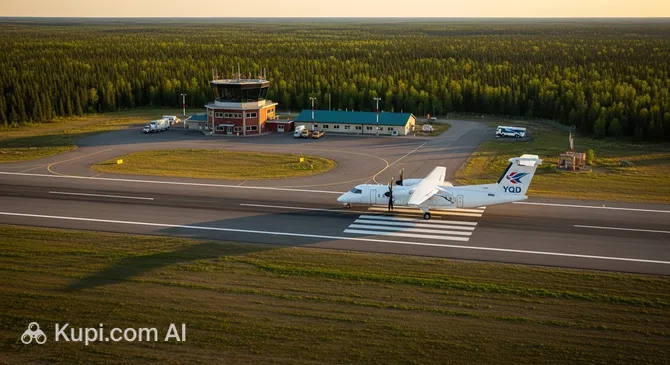
Clearwater. Source: Kupi.com Binoculars
IATA Code YQD
ICAO Code CYQD
City The Pas
Distance to Centre approx. 19 km
Status Domestic
Annual Passengers over 15,000
Popular Airlines Calm Air, Missinippi Airways

Despite its modest size, Clearwater Airport offers everything necessary for a comfortable start or end to your journey. It is a modern and functional terminal where every passenger's time is valued. Its main advantage is its strategic location, making it an indispensable transport hub for accessing the northern territories. The airport handles scheduled and charter flights, connecting The Pas with Winnipeg and other key points in the province. For travellers, this means a fast and convenient way to reach world-class hunting, fishing, and eco-tourism destinations.

Contact Information

To ensure your journey goes as smoothly as possible, it is useful to have the airport's contact information at hand. Below are the main contacts and useful details for the airport in the city of The Pas (YQD).

  • Official Website: You can find schedules, flight information, and services on the official airport page on the City of The Pas website.
  • Information Desk Phone: For general enquiries, you can call: +1 204-624-5231.
  • Airport Address: The Pas Airport, The Pas, Manitoba, Canada. The airport is located approximately 19 kilometres north of the city centre.
  • Email: A dedicated email address for general enquiries is not published. It is recommended to use the telephone for communication.
  • Social Media: The airport does not have official pages on social networks. It is best to check the official website for up-to-date information.
  • Lost Luggage Information: For issues related to lost or damaged luggage, please contact the airline you flew with directly.
  • Passenger Support Contacts: For assistance with tickets, check-in, or special needs, contact your airline. For general questions regarding airport operations, you can call the main phone number.

How to Get to the Airport

The airport serving The Pas region and the picturesque surroundings of Clearwater Lake is located approximately 30 kilometres north of the city centre. Given the location in northern Manitoba, trip planning requires attention to detail, as transport options common in metropolitan areas may not be available here.

The most reliable and common way to reach the terminal is by taxi or private transfer. Several local taxi services operate in the city of The Pas. It is recommended to book a car in advance, especially if your departure is scheduled for early morning or late evening. The travel time from the city centre is usually about 25–30 minutes; however, in winter, extra time should be allowed due to weather conditions. The cost of the trip should be confirmed with the dispatcher when booking, as there may not be fixed rates.

For travellers preferring independence, car rental is the optimal solution. This is particularly relevant if you plan to visit the region's natural attractions. The road to the airport is via Highway 10. There is parking for private vehicles on the airport grounds. There are usually plenty of free spaces here, and the rates are significantly more affordable than in major international hubs.

It is important to note that public transport in the conventional sense (metro, city bus routes) does not run to the airport. The VIA Rail train station is located in the city of The Pas itself, but there is no direct link between the station and the airport — you will still need to transfer to a car or taxi.

If you are planning a complex route across Canada, it is useful to know the location of other transport hubs, although distances in this region are significant. The nearest major neighbour is Thompson Airport, located approximately 290 km away. In the neighbouring province of Saskatchewan are Glass Field Airport (Prince Albert city) and the major Saskatoon International Airport, which handles a larger number of flights. Also within a radius of 460 km are Island Lake Airport and Regina International Airport.

Terminals and Map

The Pas Airport (YQD) is a compact and functional regional airport. Contrary to expectations one might have when comparing it to major international hubs, there is no complex system of multiple terminals here. All airport infrastructure is housed in one main building, making it extremely convenient for navigation.

The terminal structure is very simple and intuitive. All necessary zones are located within a single building:

  • Check-in Zone: Check-in counters are located near the main entrance.
  • Departure Zone: After check-in, passengers pass through security control and enter a small but comfortable waiting lounge before boarding.
  • Arrival Zone: A separate section with a baggage claim belt and exit to the city is provided for arriving passengers.

Since all zones are within the same building, transitions between them take mere minutes.

Completing pre-flight formalities at The Pas Airport usually does not take much time. Thanks to the low passenger traffic, queues for check-in and security screening are generally minimal. It is recommended to arrive at the airport approximately 60-90 minutes before departure — this time is more than sufficient to go through all procedures without rushing.

The main advice for navigating this airport is simply to follow the signs. Due to its compact size, getting lost here is practically impossible. All key points — from the entrance to the gate — are in direct line of sight, ensuring fast and hassle-free movement through the terminal.

Airport History

The history of The Pas Airport (YQD) begins during the years of the Second World War. It was established in 1941 as part of the British Commonwealth Air Training Plan (BCATP) and initially functioned as a Royal Canadian Air Force station named RCAF Station The Pas. The base's primary mission was training navigators for the Allied air forces. This military past laid the foundation for the future development of the aviation hub in the region.

After the war ended in 1945, the military station was closed, and the airfield was transferred to the Department of Transport for civilian use. This transition was a key moment in the airport's history, transforming it from a military facility into a vital transport hub for the city of The Pas and all of Northern Manitoba. It began servicing passenger and cargo flights, providing a link for remote communities with the rest of Canada.

A significant stage of modernisation was the construction of a new terminal in 1968, which significantly improved the quality of passenger service and expanded the airport's capabilities. Over the following decades, regular work was carried out to upgrade the runway and navigation equipment to meet modern safety standards and accommodate various types of aircraft.

Today, The Pas Airport remains a crucial element of the region's infrastructure. Its main achievement is not records in passenger numbers, but decades of uninterrupted operation as a reliable bridge connecting northern settlements and supporting industries such as mining, forestry, and tourism. An interesting fact: many regional airports in Canada have similar military origins, but The Pas Airport is a prime example of successful transformation into a key civilian hub.

Services and Facilities

The Pas Airport (YQD), serving the city of the same name and its surroundings, provides passengers with a basic set of services necessary for a comfortable wait for their flight. Despite its modest size, the terminal is designed to ensure convenience for all categories of travellers.

For passengers wishing to have a snack before their flight, the airport typically has a small café or vending machines with snacks and beverages. The selection may be limited, so if you require a full meal, it is better to arrange this in advance. Free Wi-Fi is also available in the terminal building, allowing you to stay connected, and power outlets for charging electronic devices can be found in the waiting areas.

There are no full-service bank branches or currency exchange points at The Pas Airport. Travellers are advised to arrange for cash in advance or use an ATM if one is available in the terminal. Specialised VIP lounges and business centres are absent in this regional airport.

The airport is equipped to serve passengers with reduced mobility and offers an accessible environment, including ramps and specially equipped restrooms. Families with small children can use the mother and child rooms or changing tables. For additional assistance or information, it is recommended to contact airport staff. Although there are no hotels on the airport grounds, various accommodation options can be found in the nearby city of The Pas.

Where to Eat

When planning a snack or lunch at The Pas Airport (YQD), it is important to consider that this is a small regional airport, and the choice of establishments here differs greatly from major international hubs. Dining options on its premises are very limited and intended to satisfy the basic needs of passengers.

In the main terminal building, you will most likely find vending machines with drinks (water, soda) and light snacks (chips, chocolate bars). Sometimes, a small buffet or café offering coffee, tea, pastries, and sandwiches may operate in airports of this size. These service points, if present, are usually located in the public area before security control and operate according to the flight schedule.

There are no full-service restaurants or specialized lounges at The Pas Airport. If you are looking for a hearty lunch or dinner, the best solution would be to eat in the city of The Pas itself before arriving at the airport. There you will be able to find cafés and restaurants with a wider menu.

Passengers with specific dietary requirements (vegetarians, vegans, as well as those requiring Halal meals) are strongly advised to bring food with them. Relying on the availability of such options at the airport is not recommended. Thus, the main advice for travellers flying from YQD is to plan your meals in advance.

Traveller Tips

To ensure your journey through Clearwater Airport goes smoothly and leaves only pleasant impressions, use our tips. They will help you prepare for your flight from the city of The Pas and make your stay at the airport as comfortable as possible.

Clearwater Airport is small and cosy, so there are rarely long queues here. Arriving 90 minutes before the departure of a domestic flight will be quite sufficient to complete all formalities without haste. Nevertheless, we recommend completing online check-in on the airline's website. This will save time and, if you are travelling light, allow you to head straight to the security zone.

The screening procedure is standard: be prepared to remove electronics from your hand luggage. Remember the rules for carrying liquids (in containers up to 100 ml). An important tip for those travelling in the northern regions of Canada: the weather here is changeable. Pack a warm sweater or windbreaker in your hand luggage, even if you are flying in summer. If you are carrying special equipment, such as fishing gear, check the carriage rules with your airline in advance.

Choosing a seat on the plane can significantly influence your flight experience. A window seat will give you unforgettable views of the endless forests and lakes of Manitoba — a wonderful opportunity to see the wild nature from above. An aisle seat will provide more freedom of movement, which is convenient during the flight.

If you have a connecting flight, clarify when checking in your luggage whether it will be automatically transferred to the next flight. Try to plan your route so that there is sufficient time between connecting flights, especially in the winter period when weather can cause adjustments to flight schedules.

In a small regional airport, the choice of cafés and shops may be limited. To save money, take an empty reusable water bottle with you (it can be filled after the security zone) and non-perishable snacks. Travelling light, with only hand luggage, will also help avoid additional baggage costs.

Flight delays in northern latitudes are not uncommon; they are often related to weather conditions. If your departure is delayed, contact an airline representative for information. Remain calm and keep your boarding documents at hand. Given the modest size of the terminal, it is useful to have a book or a charged power bank with you to pass the waiting time.

Reached the end of the page?

That means the route is fully explored