Support

Wollaston Lake

About the Airport

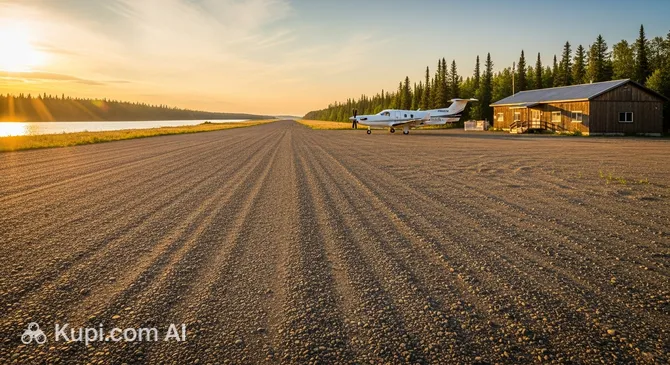
Wollaston Lake. Illustration.
Source: Kupi.com AI

Wollaston Lake Airport (ZWL) is not just a transport hub, but a true "lifeline" connecting this secluded corner of northern Saskatchewan with the outside world. Located amidst the harsh boreal forest and endless lakes, this airport serves as a gateway for wildlife enthusiasts, fishermen, and local residents. Arriving here offers a unique sense of adventure: instead of the usual glass-walled terminals, you are greeted by the fresh scent of pine and the atmosphere of the true Canadian North.

PropertyValue
IATA CodeZWL
ICAO CodeCZWL
CityWollaston Lake
CountryCanada
TimezoneAmerica/Regina
ScheduleOnline Timetable

Airport Features and Advantages:

A key feature of the airport is its critical importance to the region: in winter and during the off-season, it is often the only reliable way to reach the settlement or deliver necessary supplies. The gravel runway, approximately 1,150 metres long, is capable of handling small turboprop aircraft, such as the Saab 340 or ATR 42, which are perfectly suited for local conditions.

Travellers appreciate this airport for its simplicity and lack of urban bustle. There are no long queues for security checks or complex terminal mazes here — everything happens quickly and with a homely feel. Furthermore, even on the approach to Wollaston Lake, breathtaking views of the forest expanses and the water surface open up, making the flight itself an unforgettable part of the journey.

Contact Information

  • Official Airport Website: The airport does not have its own website. It is managed by the Saskatchewan Ministry of Highways and Infrastructure. Information on flights and tickets can be found on the Rise Air airline resources.
  • Inquiry Service Phone: +1 306-633-2022 (Local Rise Air office — the main contact for passengers).
  • Airport Address: General Delivery, Wollaston Lake, Saskatchewan, S0J 3C0, Canada (located in the immediate vicinity of the Hatchet Lake Dene Nation settlement).
  • Email: There is no direct email for the airport. For booking and flight inquiries, it is recommended to contact Rise Air via their feedback forms.
  • Airport Social Media: Official accounts are absent. Current regional aviation news is often published on Rise Air's social media channels.
  • Lost Luggage Information: +1 306-633-2022 (Cargo services in Wollaston Lake).
  • Passenger Support Contacts: +1 844-754-4929 (Saskatchewan Ministry of Highways Hotline — the airport operator) or +1 800-667-9356 (Rise Air Reservations Department).

How to Get to the Airport

Getting to Wollaston Lake Airport (ZWL) is quite simple, given the compactness of the settlement itself and its isolated location. However, it is worth remembering that this is a remote northern region, so familiar urban services, such as chain taxis or regular buses, are absent here. Logistics in this area have their own unique features, dictated by the harsh climate and the taiga landscape.

Transfers and Taxis

Since most guests to the region arrive here for trophy fishing or hunting, the main way to get to the airport (or leave it) is via organised transfer. When booking a tour at local lodges (fishing bases), meeting and seeing off at the airport are usually already included in the package price. You will be met by representatives of the base in SUVs or minibuses.

There are no official taxi services with meters in the village. If you are travelling independently, you will have to rely on arrangements with local residents. In the small community of Hatchet Lake Dene Nation, many are willing to give tourists a lift for a nominal fee, but it is better to arrange this in advance through your place of accommodation.

Public Transport

There is a complete absence of public transport in Wollaston Lake. There are no city buses, trains, or metro. Distances within the settlement are small, and locals move around on foot, in private cars, and in winter — on snowmobiles.

Car Rental and Parking

There are no car rental desks in the airport terminal. Renting a car on the spot is impossible. You can only reach here in your own vehicle during the winter period via the seasonal Ice Road, which connects the settlement to Highway 905. In summer, there is no land connection with the "mainland" for cars (only a barge for cargo).

As for parking, there is a small unpaved area in front of the airport building. Parking here is free, but it is not guarded, so leaving valuables in the car is not recommended. There is usually enough space for everyone.

Travel Time and Cost

  • Distance from centre: The airport is located just 1–1.5 km from the residential zone of the settlement.
  • Travel time: A car ride takes literally 3–5 minutes. In good weather and with light luggage, you can walk to the airport in 15–20 minutes.
  • Cost: Transfers from lodges are usually free (included in the tour). A private ride with locals may cost between 10 to 20 CAD by agreement.

Nearest Alternative Airports

Wollaston Lake is located deep in the province, so the nearest major transport hubs are located at a significant distance. If your flight is cancelled or you are planning a complex route through Northern Canada, the following airports may be useful:

  • Stony Rapids (YSF) — the nearest regional airport, located approximately 200 km away.
  • Thompson (YTH) — an important hub in the neighbouring province of Manitoba (about 412 km).
  • Fort Chipewyan Airport (YPY) — located 469 km to the west.
  • Clearwater (YQD) — located 478 km away.
  • Fort McMurray International Airport (YMM) — a major airport with a large number of flights, located 510 km away.

Terminals and Map

The terminal complex of Wollaston Lake Airport (ZWL) is the embodiment of northern minimalism and functionality. Unlike major international hubs, you will not find confusing corridors, moving walkways, or multi-level crossings here. The airport is represented by one small single-storey building, which services all flights and functions as both the departure and arrival zone.

Layout and Navigation

Navigation in the airport is extremely simple and intuitive: getting lost here is impossible even if you tried. The terminal building is compact, and all key points are within direct line of sight from the entrance door. You will not require maps or electronic boards — simply step inside, and you are immediately at the centre of activity.

Passenger Service Zones

Inside the terminal, the space is organised as efficiently as possible to service the small flow of passengers:

  • Check-in and Departure Zone: The airline check-in counter is located right at the entrance. The process of issuing tickets and checking in luggage happens quickly and without formality. The waiting room is a small area with seats where passengers can wait for boarding in the warmth.
  • Arrival Zone: There is no baggage carousel in the traditional sense here. Luggage is unloaded manually by staff from the aircraft and delivered either to the terminal entrance or handed to passengers directly near the aircraft (depending on the weather and carrier rules).

Features and Amenities

Travellers should take note of the ascetic nature of the local terminal. There are no shops, cafes, ATMs, or currency exchange points here. The main function of the building is to provide shelter from the wind and frost. The interior is simple but cosy, often creating the feeling that you are visiting local residents rather than a transport hub. Toilets are available, but the range of additional services is minimal.

Processing Time

Despite the lack of queues, air carriers recommend arriving at the airport 45–60 minutes before departure. This time is necessary not for passing through endless security cordons, but for cargo processing. Since flights are operated on small turboprop aircraft, pilots and ground crews require time for precise weighing of luggage and calculating the aircraft's balance.

Navigation Recommendations

There are no transfers between terminals, as there is only one building. The entire journey from the taxi door to the aircraft steps takes mere minutes. The main advice for tourists: keep your documents ready and follow the verbal instructions of airport staff — in the conditions of a small northern airfield, live communication replaces any signs.

History of the Airport

The history of Wollaston Lake Airport (ZWL) is inextricably linked with the history of the exploration of the Canadian North and the life of the indigenous Dene people. Unlike metropolitan hubs that opened with ceremonial ribbons and orchestras, this airfield appeared on maps gradually, as a response to the vital necessity of ensuring a reliable connection for the remote settlement with the outside world amidst the harsh taiga.

From Floatplanes to a Gravel Runway

Before the appearance of a proper airfield, aviation communication with the region was carried out exclusively via floatplanes ("bush planes"), which landed directly on the water surface of Wollaston Lake in summer or on the ice in winter. However, periods of freezing and thawing (the off-season) cut the village off from supplies for weeks. The construction of a land-based runway in the second half of the 20th century became a turning point, allowing for year-round communication and cargo delivery regardless of ice conditions.

Stages of Formation and Development

Initially, the airport was a simple clearing with levelled ground. Over the years, the infrastructure was modernised under the management of the provincial authorities of Saskatchewan. Key stages of development included:

  • Strengthening and extending the runway to the current ~1,150 metres to accommodate heavier turboprop aircraft.
  • Installation of lighting equipment, allowing flights to be performed in conditions of polar twilight and low visibility.
  • Implementation of modern navigation systems (GPS approaches), which significantly increased flight safety in difficult weather.

Role in Emergencies

The airport's history contains dramatic pages related to forest fires, which often threaten the northern forests of Saskatchewan. ZWL has repeatedly become an evacuation centre for the residents of Hatchet Lake Dene Nation and the village of Wollaston Lake. It was thanks to the presence of an active airfield that hundreds of people could be quickly transported to safe areas when the fire approached too close to residential homes.

Interesting Facts and Features

The uniqueness of this place's history lies in its logistical duality. The airport historically competes with and simultaneously complements the famous seasonal Ice Road. Locals know: as soon as the winter road melts, the airport becomes the only "thread" connecting them to civilisation. Pilots who have been flying here for decades note that, despite the lack of asphalt, the local gravel runway is maintained in exemplary condition, being the pride of the local road service.

Services and Facilities

Given the remote location and status of a small regional airfield, the range of services at Wollaston Lake Airport (ZWL) is extremely limited. Passengers should prepare for the flight in advance, as amenities familiar to major international hubs are absent here. The terminal functions primarily as a heating and check-in point, rather than an entertainment or shopping complex.

Restaurants, Cafes, and Shops

There are no catering outlets or shops within the airport terminal. You will not find coffee shops, vending machines, or newsstands here. In this regard, it is strongly recommended to:

  • Bring a supply of drinking water and food (sandwiches, snacks) with you, especially if you are travelling with children.
  • Purchase all necessary goods at the local store in the Hatchet Lake settlement before arriving at the airport.

Waiting Halls and VIP Services

The airport has only one general waiting hall. There is no separation into business classes or Priority Pass zones. The hall is a small heated room with seats where all passengers wait for boarding together. The atmosphere here is intimate and calm, so a separate VIP lounge is not required.

Communication and Electronics

  • Wi-Fi: Stable public Wi-Fi is generally absent in the terminal building. It is recommended to rely on mobile internet (coverage from major Canadian operators works in the region, but the signal may be unstable).
  • Charging Stations: There are no specialised stands for charging gadgets. The number of power outlets in the waiting hall is limited, so it is better to carry a fully charged phone or a portable battery (Power Bank).

Financial Services

There are no ATMs or currency exchange points in the terminal. Bank branches are also absent. If you need cash Canadian dollars to pay for taxis or tips for guides, ensure you withdraw funds in advance in major cities (for example, in Saskatoon or Prince Albert) before flying north.

Medical Services

There is no medical post or pharmacy in the airport building. The nearest medical assistance is available at the settlement clinic (Hatchet Lake Health Centre). In emergencies, the aircraft crew and ground staff can provide first aid using standard medical kits.

Services for Passengers with Children

Specialised mother-and-child rooms or play areas are absent. Given the compactness of the waiting hall, parents are advised to keep children under supervision and bring toys or books for the journey.

Services for Passengers with Reduced Mobility

Despite the lack of high-tech equipment, the airport is quite accessible for citizens with limited mobility thanks to its layout:

  • The terminal building is single-storey, with no thresholds or stairs at the entrance, which facilitates wheelchair access.
  • However, boarding the aircraft (usually turboprop models) is carried out via built-in stairs. There are no special ambulifts, so boarding is done with the help of airline staff. It is recommended to notify the carrier (Rise Air) of the need for assistance when booking the ticket.

Hotels and Accommodation

There are no hotels directly on the airport territory or within walking distance. The main places of accommodation in this region are fishing bases (lodges) located on the shores of the lake. Transfers to them are usually organised by the hosting party (by car or boat).

Conference Rooms and Business Centres

Business services, such as meeting room rentals, photocopying, or fax, are not provided at the airport.
Where to Eat

When planning a trip through Wollaston Lake Airport (ZWL), passengers must take into account the specifics of this remote northern transport hub. There are absolutely no food service points in the terminal building. There are no restaurants, cafes, coffee shops, bars, or even vending machines with snacks or drinks. The airport performs exclusively a transit function, so tourists will have to solve the issue of food independently and in advance.

Recommendations for Organising Meals

Since it is impossible to buy food on site, the only option remains to bring provisions with you. Experienced travellers and locals recommend the following strategy:

  • Buying Groceries in the Village: Before leaving for the airport, visit the local shop (Northern Store) in the Hatchet Lake settlement. There you can purchase basic products: sandwiches, pastries, fruit, nuts, chocolate, and bottled water. Note that food prices in Northern Canada are usually higher than in the southern provinces.
  • Packed Lunches from Lodges: If you are returning from a fishing base, be sure to ask the staff to prepare a "road ration" (packed lunch) for you. Most tourist bases willingly provide this service to their guests, packing sandwiches, home-baked goods, and drinks. This is the most reliable and tasty option.

Local Cuisine and Delicacies

Although you won't be able to make gastronomic discoveries in the airport itself, your "travel kit" may include local delicacies purchased earlier. Popular items in this region include:

  • Jerky (Dried Meat/Fish): A traditional snack that stores for a long time and is excellent for a bite while waiting for a flight.
  • Smoked Lake Trout or Pike: If you have sealed packaging, this will make an excellent souvenir and snack, reminiscent of fishing on Wollaston Lake.
  • Berry Desserts: In season (late summer), you can take fresh blueberries or bilberries gathered in the surrounding forests with you.

Dietary Requirements (Vegetarian, Halal, Gluten-Free)

Due to the lack of cafes, passengers with special dietary needs must rely exclusively on their own supplies. In the local store, the assortment of specialised goods (for example, gluten-free bread or certified Halal products) may be extremely limited. It is strongly recommended to bring specific products with you from the "mainland" or to discuss the menu in advance with the chef at your fishing base. For Halal observers, focusing on fish or vegetarian options available at the lodge is often the most practical solution.

Drinks and Water

There are no drinking fountains in the waiting hall. Access to tap water is available only in the restrooms, however, drinking water from the tap without boiling or filtration is not recommended. Be sure to take care of a supply of drinking water before arriving at the airport, especially on hot summer days.

In-Flight Catering

Flights from Wollaston Lake are usually operated by small aircraft and last from one to two hours. Full hot meals are not provided on such routes. Rise Air generally offers passengers light snacks (biscuits, crackers) and drinks (water, coffee, juice). However, one should not rely on this as a full meal, especially if travelling with children.

Travel Tips

Travelling through Wollaston Lake Airport (ZWL) differs significantly from flying through major international hubs. An atmosphere of northern hospitality reigns here, but technical capabilities are limited. To ensure your flight goes smoothly, use the following recommendations, compiled taking into account the specifics of small aviation in Canada.

Arrival Time Recommendations

Despite the absence of large queues, do not arrive at the airport at the last minute. The optimal arrival time is 45–60 minutes before departure. This time is critical for ground services: since flights are operated on small aircraft, pilots need to precisely calculate the weight of passengers and luggage to balance the vessel. Check-in usually closes strictly 30 minutes before departure, and latecomers may not be allowed on board even if there are empty seats.

Check-in and Security Features

  • Weighing: Be mentally prepared for the fact that at check-in, you may be asked to weigh not only your luggage but also your hand luggage, and sometimes even yourself (for fuel calculation accuracy).
  • Security Check: The screening procedure here is less formalised than in major cities and is faster. However, aviation safety rules remain strict. All sharp objects (knives, fishing hooks, multi-tools) must be checked in as luggage.
  • Documents: Keep your identification (passport) at hand. In the small terminal, there are no electronic kiosks; the entire procedure takes place through live interaction with an agent.

Choosing a Seat on the Plane

On flights operated by small turboprop aircraft (like the ATR 42 or Saab 340), advance online seat selection is often unavailable. Seating may be "free" (first come, first served) or assigned by the agent at the counter for aircraft balance.

  • Best Views: Try to take a window seat. Flight over northern Saskatchewan is a unique excursion: you will see the endless boreal forest and thousands of lakes from a bird's eye view.
  • Noise: Turboprop aircraft are quite noisy. If you are sensitive to sounds, bring earplugs or noise-cancelling headphones.

Hand Luggage: What is Allowed and What isn't

The main problem is the size of the overhead bins. In small planes, standard "cabin size" suitcases (55x40x20 cm) often do not fit on the shelf.

  • Skycheck Service (Valet Service): Most likely, you will be asked to leave your large hand luggage on a cart near the stairs before entering the plane. You will receive it back immediately after landing, upon exiting the aircraft.
  • Valuables: Documents, money, electronics, lithium batteries, and medicines must be packed in a small bag or backpack that is guaranteed to fit under the seat. Never check these items into the cargo hold.
  • Hunting and Fishing Gear: The transport of weapons and tackle is strictly regulated. Weapons must be in a hard case, unloaded, and declared in advance. Fishing rods are best transported in hard tubes checked as luggage.

Tips for Transit Passengers

There are no direct flights from Wollaston Lake outside the province. Usually, passengers fly to Saskatoon or Prince Albert for a transfer.

  • Allow Extra Time: The weather in the north is unpredictable. A flight may be delayed due to fog or blizzards. When planning a connection in a large airport, leave at least 3–4 hours between flights, or better yet — spend the night in the transfer city.
  • Separate Tickets: If you are flying with different airlines (for example, Rise Air + Air Canada), your luggage will likely not be checked through to the final destination. You will have to collect it at the intermediate airport and check it in again.

Customs Control Features

Wollaston Lake Airport serves only domestic flights, so customs and border control are absent here. If you are an international tourist, you will pass all formalities at the first airport of arrival in Canada (Toronto, Vancouver, Calgary, etc.). However, if you are exporting fishing trophies, ensure you have all necessary licences and permits for the export of biological resources, as these may be checked at major airports upon departure from the country.

Tips for Saving Money

  • Food and Water: Bring an empty reusable bottle and fill it with water in advance (if there is access to a source at the lodge) or buy it in the village. There is nothing to buy at the airport, and only a modest snack will be offered on board.
  • Transfer: Always clarify with your lodge (fishing base) in advance if the transfer is included. There are no taxis here, and private rides can be expensive or completely unavailable.

What to Do in Case of Flight Delay

Delays due to weather are common for the north. The terminal is small and not designed for long stays.

  • Charging Gadgets: Outlets are few, so keep a fully charged power bank with you.
  • Communication: Have the phone number of your lodge or local contacts at hand. If the flight is cancelled until the next day, you will need to quickly return to warm accommodation, as there are no hotels at the airport.
  • Entertainment: Download films, books, or music to your devices in advance. Wi-Fi may be absent or overloaded.

Reached the end of the page?

That means the route is fully explored