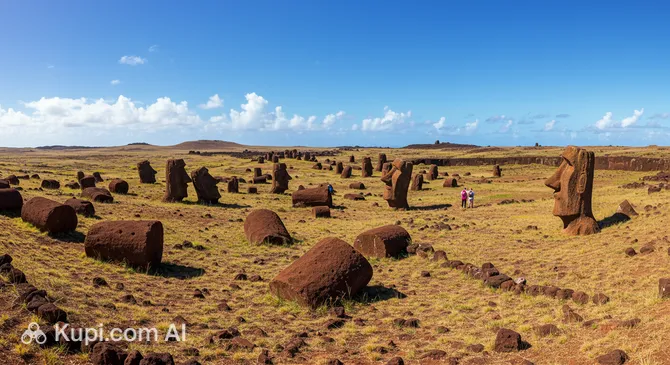
The mysterious red "hats" crowning the giant stone heads on Easter Island began their journey right here. Puna Pau is a small, picturesque volcanic crater located on the outskirts of Hanga Roa in Chile. This site served the ancient Rapa Nui masters as a unique quarry where they extracted soft red scoria (pumice tuff) to create pukao — the massive cylindrical headgear for the moai statues.
Puna Pau. Illustration.
Source: Kupi.com AI
Traveler photos:
The crater's landscape is striking in its contrast: the bright red slopes stand out vividly against the island's green meadows. Unfinished pukao are scattered throughout the territory, appearing to grow out of the ground and creating a surreal scene. Each piece is a testament to the incredible engineering prowess of the ancient people who managed not only to carve these multi-ton cylinders but also to transport them over vast distances.
Today, Puna Pau is included in the UNESCO World Heritage list. It is not just a historical monument, but a place where you can see first-hand the stone-working technology that remained unchanged for centuries. Visitors appreciate this site for its authenticity and the chance to touch the mystery behind one of human civilization's most recognizable symbols.
Contacts
When planning a visit to this unique archaeological site in Chile, it is helpful to know its exact location. Visitors are recommended to have a copy of their national park entry ticket, as it may be checked at the entrance.
The main activity at Puna Pau is exploring the crater itself and closely examining the unfinished pukao. You can see the red cylinders in various stages of readiness, which provides a clear understanding of their creation process: from being hollowed out of the rock to the final polishing. A walk along the specially designated trails around the crater offers stunning panoramic views of the surrounding area and the island's contrasting landscape.
Many tourists prefer to visit the quarry as part of comprehensive guided tours. This allows you to compare the raw pieces at Puna Pau with the "hats" already installed at sites like Ahu Tahai or the famous Rano Raraku. Listening to guides' stories about the transportation of these 27-ton giants will help you fully appreciate the scale of the ancient Rapa Nui people's efforts.
This location is also ideal for quiet contemplation and photography. Unlike the more popular moai sites, it is often less crowded here, allowing you to take unique shots of the red stones against the bright blue sky and green hills without the tourist crowds. Don't forget to notice the difference in color and texture between the gray moai and their vibrant red headgear — this contrast was a key element of the island's ritual aesthetics.
Getting There
Thanks to its location on the northern outskirts of Hanga Roa, reaching the crater is quite easy. The distance from the city center is only about 3–5 kilometers, making it one of the most accessible sites on the island. Most tourists prefer to rent an SUV, a motorcycle, or even a bicycle, as the roads to the quarry are paved and well-signed.
If you don't plan on driving, you can use a taxi — the trip from town takes about 10 minutes and costs approximately 10–20 USD. Group excursions are also popular, including the quarry as part of a general island tour. From the nearby Mataveri Airport, the drive takes no more than 15 minutes.
For those who prefer active recreation, walking is possible, though you should consider the strong sun and lack of shade along the way. In the summer, be sure to bring plenty of water and a wide-brimmed hat. Free parking is available at the entrance, where the trail to the crater begins.
Nearest city: Hanga Roa
History & Facts
The history of this site is inextricably linked to the peak of Rapa Nui culture between 1200 and 1500 AD. During this time, Puna Pau functioned as the primary quarry for red scoria — a porous volcanic rock prized for its unique color and relative ease of carving. It was from this material that ancient craftsmen carved the pukao (cylindrical topknots) that were placed atop the heads of the most significant moai statues.
The color red held deep sacred meaning in Polynesian culture, symbolizing a connection to divine power and high social status. Archaeologists have discovered that pukao were added to the statues after they had already been erected on their ahu platforms. The weight of some finished "hats" reached 12 tons, while the raw blocks in the quarry weighed up to 27 tons, a feat that still inspires admiration for the engineering skills of the island's ancient inhabitants.
More than 50 unfinished cylinders have been found in the quarry itself and on the hillsides. The fact that many remain in various stages of completion suggests a sudden cessation of work, caused by the decline of Rapa Nui society in the 17th and 18th centuries. Today, these artifacts serve as a silent reminder of the former greatness and skill of the ancient stone carvers.
Interestingly, Puna Pau is a small secondary crater of the extinct Terevaka volcano. Its soft rock was ideal for working with primitive stone tools, while the moai statues themselves were made from harder tuff at a different quarry — Rano Raraku. This division of labor highlights the complexity of ancient production management on the island.
Time Needed
To explore the quarry at a leisurely pace, walk along the crater rim, and take some memorable photos, a typical visitor will need about 1 to 2 hours. This is plenty of time to examine the texture of the red stone and appreciate the scale of the pukao blocks.
As part of organized island sightseeing tours, approximately 30–45 minutes is usually allocated for this location. If you are traveling independently and are passionate about archaeology, set aside a bit more time to enjoy the panoramic views and the peaceful atmosphere of this site without any rush.
Working Hours
The attraction is open to visitors daily, making it easy to include in any travel itinerary. The quarry is open from 09:00 to 17:30 Monday through Sunday, with no lunch breaks.
Given that the site is located within the national park, operating hours may change depending on the season or administrative requirements. Before your trip, it is highly recommended to check for current information on the official Rapa Nui National Park website.
09:00–17:30
Nearby
Exploring the area around this ancient quarry allows you to dive deeper into the island's atmosphere and see how various archaeological sites come together to tell the story of Rapa Nui history. Numerous ritual platforms and iconic sites are concentrated within a few kilometers of the crater.
Many of these sites are located along the coast, allowing you to combine a historical walk with stunning ocean views. Visiting the neighboring ahu will give you the chance to see those same red topknots in their final destination — atop the heads of the majestic stone giants.