Support

Rapa Nui Museum

About

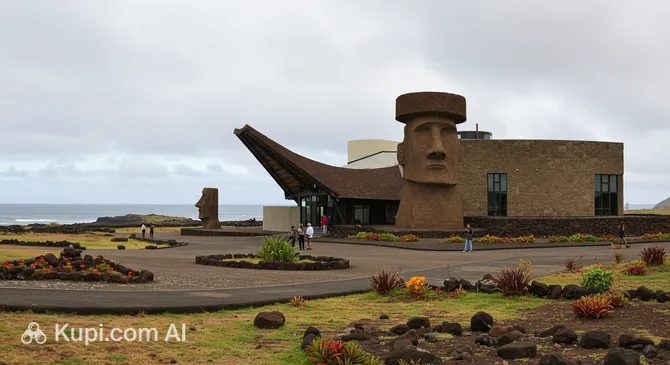
If you want to truly understand the soul of Easter Island, your journey should begin at the Father Sebastian Englert Anthropological Museum, better known as the Rapa Nui Museum. Located in the picturesque town of Hanga Roa, this unique cultural center in Chile carefully preserves the secrets of one of the world's most mysterious civilizations.
Rapa Nui Museum
Rapa Nui Museum. Иллюстрация. Источник: Kupi.com AI

The museum is a treasure trove of artifacts spanning centuries of history. Here, you can see not only the famous moai statues but also rare ceremonial objects that tell the story of the life, beliefs, and art of the ancient islanders. This place serves as a key to unlocking the mysteries of the giant stone titans scattered across the island.

The collection's value is enhanced by original rongo-rongo tablets and a unique coral moai eye, which forever changed scientists' understanding of the statues' original appearance. The museum is considered the most important educational center in the region, allowing visitors to immerse themselves in the atmosphere of the past before visiting the island's main archaeological sites.

Contacts

To plan your visit and check current information, you can use the contact details provided below. It is recommended to verify the availability of exhibits in advance by phone or on the official website.

How to contactContact
AddressTe Karera, Hanga Roa, Isla de Pascua, Valparaíso, Chile
Phone+56 32 255 1020
Websitewww.museorapanui.gob.cl

What to Do

A visit to the museum is a deep immersion into the island's cultural landscape. In the galleries, you can examine ceremonial axes, kava kava wooden figurines, and the tools ancient masters used to carve their monoliths in great detail. One of the most fascinating exhibits is an "unconventional" moai statue discovered by the legendary explorer Thor Heyerdahl in 1956.

Be sure to pay attention to the information boards, which explain the complex clan system and the history of ecological changes on Rapa Nui. Visitors can trace all the stages of creating the statues — from selecting the stone in the quarries to placing them on ceremonial platforms. This provides an opportunity to see the moai not just as blocks of stone, but as a living embodiment of the ancestor cult.

It is recommended to stop by here at the very beginning of your stay in Hanga Roa. The knowledge gained here will help you view monuments like Rano Raraku or Tahai through completely different eyes, noticing important historical details hidden from the unprepared tourist.

Getting There

Getting to the Rapa Nui Museum is easy, as it is conveniently located within the town of Hanga Roa. If you are staying in the town center, a pleasant 10–15 minute walk along the coastline will lead you there. The famous Tahai archaeological complex, located in the immediate vicinity of the museum, can serve as a useful landmark.

For those who prefer more comfort, a taxi ride from the main square or the port takes no more than 5 minutes. If you are arriving from Mataveri Airport, the distance is about 3 kilometers, which takes 10 minutes by car. Scooter and bicycle rentals are also popular on the island and offer a great way to reach the museum while enjoying the ocean breeze.

Although there is virtually no public transport on the island, the town's compact size makes the museum easily accessible for any traveler. For precise navigation, use the Te Karera address or GPS coordinates.

Ближайший город: Hanga Roa

History & Facts

The history of the museum is inextricably linked with the name of the priest and researcher Father Sebastian Englert, who dedicated decades of his life to studying the language, traditions, and genealogy of the Rapa Nui people. Founded in 1973, the Anthropological Museum became the primary stronghold for preserving the island's heritage, representing a unique civilization that reached its peak in the 16th–17th centuries.

Interestingly, the museum's collection continues to grow even today. For example, in 2022, one of the oldest moai statues, which had been held in the national museum's collections in Santiago for decades, was solemnly returned here. This gesture was a significant event for the local community, highlighting the importance of returning cultural treasures to their historical homeland.

The museum's exhibits also shed light on the mysterious period of the "Birdman" cult (Tangata-manu), which replaced the era of giant statue construction. Here, you can learn legends about the arrival of the first king, Hotu Matu'a, and how Polynesian navigators managed to cross thousands of miles of ocean to establish a settlement in one of the most remote corners of the planet.

Special attention is given to the preservation of the rongo-rongo tablets — a unique writing system that scientists are still trying to decipher today. The museum does not just house antiquities; it serves as an important scientific center that continues to unlock the secrets of the ancient inhabitants of Rapa Nui.

Time Needed

Even though the museum building seems quite compact, its exhibition is incredibly rich in detail. For a comfortable and thoughtful tour, most visitors need about 1.5–2 hours. This is plenty of time to read the explanatory texts at your own pace and examine the artifacts in the halls in detail.

If you have a deep interest in anthropology or linguistics, plan your visit with a little extra time, as studying the materials on the rongo-rongo writing system can take longer. Overall, the museum fits perfectly into a morning or afternoon walk around town.

Working Hours

Please note that the museum is currently temporarily closed (CLOSED_TEMPORARILY). This may be due to restoration work or updates to the exhibition.

We strongly recommend checking the official website for the most up-to-date information on opening hours or inquiring at the tourist center in Hanga Roa immediately before planning your visit.

Nearby

Exploring the surroundings of the museum will allow you to immediately put your newly acquired knowledge into practice. Just a few minutes' walk away are the grounds of ancient ceremonial complexes, where stone giants stand on their platforms against the backdrop of the endless Pacific Ocean.

Visiting these locations pairs perfectly with a trip to the museum, creating a complete picture of the island's history. Below are the nearest attractions to include in your itinerary:

NameDistance
Tahai0.3 km
Artisan Market1.2 km
Kari Kari Cultural Ballet1.6 km
La Pizzeria2 km
Hangaroa Eco Village & Spa2.1 km
Puna Pau2.4 km

Reached the end of the page?

That means the route is fully explored