Support

Changsha Huanghua Airport

About the Airport

Changsha Huanghua International Airport (CSX) is not merely the main aerial gateway of Hunan Province, but a true symbol of the rapid development of Central China. Opened in 1989, today it stands as one of the busiest aviation hubs in the country, connecting Changsha with over 145 cities worldwide. The airport is renowned for its modern infrastructure and innovative approach, being the first in China to implement a facial recognition system at all stages of passenger service. It is from here that many travelers begin their acquaintance with the fascinating culture, picturesque mountains, and the famous spicy cuisine of the region.
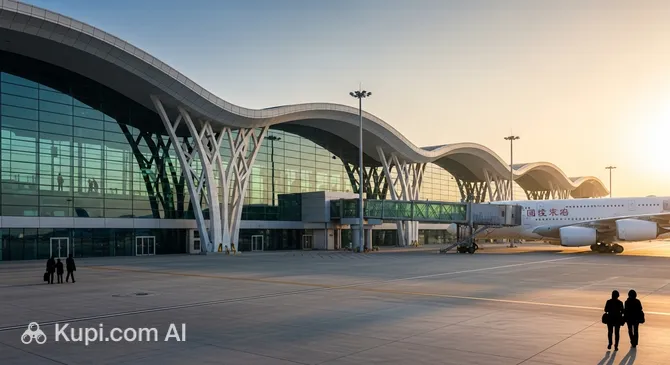
Changsha Huanghua Airport. Source: Kupi.com Binoculars
IATA Code CSX
ICAO Code ZGHA
City Changsha, China
Distance to center 25 km
Status International
Annual Passengers Over 27.25 million (2023)
Popular Airlines China Southern Airlines, Hainan Airlines, XiamenAir
Schedule Online Flight Board "Huanghua Airport (Changsha)"

Huanghua Airport offers passengers a high level of comfort and convenience. It consists of two modern terminals, T1 and T2, with a free shuttle running between them. Navigation inside the buildings is intuitive thanks to signs duplicated in English. One of the key advantages of the airport is its excellent transport accessibility: a unique maglev line will quickly take you to Changsha South Railway Station, where you can transfer to the metro. Numerous bus routes and taxis are also available to passengers. Within the terminals, you will find plenty of restaurants, duty-free shops, comfortable waiting lounges, and even a hotel.

Contact Information

To obtain the most up-to-date information regarding flights, services, and regulations at Changsha Huanghua Airport, it is recommended to contact official channels directly. Below are the main contact details for your convenience.

  • Official Website: www.csa.hn.cn (information available in Chinese and English).
  • Help Desk Phone: Unified number for passenger consultation and support: +86-731-96777.
  • Airport Address: Huanghua Town, Changsha County, Changsha City, Hunan Province, P.R. China.
  • Email: A direct email address for general inquiries is not published. It is recommended to use the feedback forms on the official website.
  • Lost and Found: For inquiries regarding lost items and luggage, you can contact the Lost and Found service at: +86-731-84797221.
  • Social Media: The airport may have official accounts on popular Chinese social networks (such as WeChat). Links to these are usually posted on the official website.

Getting to the Airport

Getting to Huanghua International Airport (CSX), the main aerial gateway of Changsha, is quite simple thanks to a well-developed transport system. Depending on your budget, time, and preferences, you can choose from several convenient methods. The journey from the city center usually takes 40 to 60 minutes, but it is always wise to allow extra time for potential traffic, especially during peak hours.

Public Transport is the most economical and often the fastest way to reach the airport. Efficiency is highly valued in China, and Changsha is no exception. At your service are:

  • Metro and Maglev: The most modern option is the Changsha Maglev Express line. It connects the Changsha South Railway Station (accessible via Metro Line 2) directly to the airport. The maglev ride takes only about 20 minutes and offers a futuristic experience. This is the ideal choice if you wish to avoid city traffic.
  • Shuttle Buses: Special buses run regularly to the airport from various districts of the city, including the main railway station and major hotels. This is a budget-friendly and reliable method, though slower compared to the maglev. Routes and schedules can be easily checked at stops or at your hotel.

Taxis and Private Transfers offer maximum comfort, especially if you are traveling with a lot of luggage or with family. Taxis can be hailed on the street or ordered via an app. The cost of a trip from the city center will vary depending on traffic, but it offers a good balance between price and convenience. Important tip: save the name of the airport (长沙黄花国际机场) and the terminal in Chinese on your phone in advance to show the driver.

For those who value independence, car rental is available. Both international and local rental company offices are present at the airport. However, bear in mind that foreign tourists may require a local driver's license to drive in China. If you arrive at the airport in your own or a rented vehicle, convenient parking with zones for short-term and long-term stays is available right by the terminals.

Terminals and Map

Huanghua Airport in Changsha is a large and modern aviation hub in China, consisting of two passenger terminals: T1 and T2. They serve both domestic and international flights, though the main load is handled by the newer and larger Terminal 2. It is important to check your ticket in advance to see which terminal your flight operates from to avoid confusion.

Terminal 2 is the airport's main international and domestic hub. It is a large, modern building with clear navigation. The departure area is located on the upper floors, and the arrival area on the lower ones. Inside, you will find numerous shops, restaurants, and service counters. Signs are duplicated in English, which significantly facilitates orientation. Transfer between terminals is via a covered pedestrian corridor connecting T1 and T2; the walk takes about 5-10 minutes.

Terminal 1, older and more compact, mainly serves certain domestic flights and budget airlines. Despite its smaller size, it is also equipped with everything necessary for a comfortable wait before departure. The structure here is simpler, allowing for quick orientation even if you are at the airport for the first time.

For check-in and security screening, it is recommended to allow standard time: about 1.5-2 hours for domestic flights and 2.5-3 hours for international ones. Queues are possible during peak hours, so it is better to arrive with time to spare. To navigate easily, follow the signs and information boards that will help you find the correct boarding gate, check-in zone, or baggage claim.

Airport History

The history of Huanghua International Airport (CSX) began on August 29, 1989, when it was officially opened to serve the city of Changsha and Hunan Province. It replaced the old Datuopu Airport, which could no longer cope with the growing passenger traffic and had limitations for development. From the very beginning, Huanghua was designed as a modern civil airport capable of accommodating large aircraft, becoming an important gateway to Central China.

The first significant phase of expansion occurred in 2000, when a new terminal (now known as Terminal 1) was built and the runway was extended. However, the real breakthrough was the opening of Terminal 2 in 2011, which surpassed its predecessor in area and capacity several times over. This event turned the airport into one of the country's key aviation hubs, capable of serving tens of millions of passengers a year.

Further development followed swiftly. In 2017, a second runway was put into operation, significantly increasing the airport's capacity. And in 2016, a unique event took place — the launch of China's first commercial magnetic levitation (Maglev) line, which connected the airport with Changsha South Railway Station. This is not only a technological achievement but also a huge convenience for travelers, allowing quick access to the high-speed train network.

Over the years, Huanghua Airport has repeatedly broken passenger traffic records, confidently ranking among the busiest airports in China. An interesting fact: its name "Huanghua" translates as "Yellow Flower" and comes from the name of the town where it is located. Today, the airport continues to grow: construction is underway for a gigantic Terminal 3 and a third runway, promising to turn it into one of the largest international hubs in Asia.

Services and Amenities

Changsha Huanghua International Airport offers passengers everything needed for a comfortable wait for their flight. Here you will find a wide selection of establishments for every taste: from restaurants serving local Hunan cuisine to familiar international fast-food chains and cozy coffee shops. Numerous stores, including Duty Free, allow you to purchase souvenirs, travel essentials, as well as branded clothing and electronics.

For those wishing to stay connected or work, free Wi-Fi is available throughout the airport. Numerous charging stations for mobile devices are located throughout the terminal. Passengers preferring elevated comfort can utilize the business lounges and VIP areas, where one can relax, have a snack, and prepare for the flight in a quiet atmosphere.

Bank branches, ATMs, and currency exchange points operate at Huanghua Airport, making it easy to resolve all financial matters upon arrival or before departure. To ensure the safety and health of passengers, a medical center operates around the clock within the terminal, ready to provide first aid if necessary.

Travelers with children will appreciate the specially equipped mother-and-child rooms, where one can comfortably feed and change a baby. The airport is also fully adapted for the needs of passengers with reduced mobility: there are ramps, special elevators, and restrooms, and an escort service is available upon prior request.

For those with a long layover or an early flight, several hotels are located in the immediate vicinity of the airport, offering convenient accommodation. Business travelers arriving in China have access to the airport's business centers and conference rooms, where meetings can be held or work can be done in silence.

Dining

At Changsha Huanghua International Airport (CSX), passengers are offered a wide choice of dining options to suit every taste and budget. Whether you are looking for a quick snack before departure or a full meal, you will easily find a suitable option in both terminals.

For those wishing to experience local cuisine, the airport offers several restaurants specializing in Hunan Province cuisine, known for its spicy and aromatic dishes. Be sure to try the traditional beef noodles or spicy chicken to experience the true taste of the region. Such establishments are generally located in the "airside" zone after passport control and security, offering full service.

If you prefer something more familiar, numerous chain cafes and fast-food restaurants are at your service. Here you will find both international brands (e.g., Starbucks, KFC, McDonald's) and popular Chinese chains. This is an excellent choice for those short on time. Most fast-food outlets are located in both the public area (landside) and the departure area.

Regarding special dietary needs, finding certified Halal or gluten-free dishes might be challenging. However, many restaurants offer vegetarian options, mostly based on rice and vegetables. It is recommended to clarify the ingredients with the staff to ensure they meet your requirements.

Food prices at the airport are expectedly higher than in the city but remain at an acceptable level for a major transport hub. Most establishments operate from early morning until late evening, aligning with flight schedules. For a leisurely lunch, it is better to choose one of the restaurants in the departure zone, while cafes in the public zone before check-in are suitable for a quick coffee or sandwich.

Travel Tips

To ensure your journey through Huanghua Airport proceeds smoothly, make use of our tips. The airport in Changsha is a large and modern hub, so a little preparation will help save time and reduce stress. We recommend arriving at the airport 2-3 hours before a domestic flight and 3-4 hours before an international one. This time is sufficient to calmly go through all procedures, especially during peak hours.

To save time, complete online check-in if your airline provides this option. Security checks at airports in China can be very thorough. Be prepared to remove all electronic devices from your carry-on luggage, including laptops, tablets, and power banks. Pay special attention to power banks: they can be carried only in carry-on luggage, and they must have a clearly visible marking indicating capacity. Lighters and matches are strictly prohibited.

If you have a connecting flight, check in advance whether you need to collect and re-check your luggage. Follow the "Transfer" signs to get to the correct zone. When passing through customs control, have your passport and boarding pass ready. If you are importing or exporting goods subject to declaration, fill out the customs declaration form in advance.

To save a little money, bring an empty reusable bottle — after the security zone, you can fill it with drinking water at special dispensers. You can also bring light snacks, as prices in airport cafes and shops can be high. When choosing a seat on the plane, remember a simple rule: a window seat is for beautiful views, an aisle seat is for the ability to stretch your legs and exit quickly after landing.

In case of a flight delay, first find an information board or your airline's counter to find out the current status and reason. Airlines usually provide drinks and food during long delays. Stay calm, keep your phone charger handy, and have a good book. Having travel insurance can also be useful in such situations.

Reached the end of the page?

That means the route is fully explored