Support

Wenshu Yuan Monastery

Nearby attractions

About

Located in the heart of Chengdu, Wenshu Monastery is considered one of the most significant and best-preserved Buddhist temple complexes in Sichuan Province. This spiritual oasis in China is dedicated to Manjushri, the Bodhisattva of Wisdom, and serves not only as a pilgrimage site but also as an important center for the region's Buddhist Association.

The monastery's architectural ensemble is designed in the traditional Qing Dynasty style and represents a harmonious system of enclosed courtyards where majestic halls are located: the Mahavira Hall, the Bell Tower, and the Drum Tower. Exquisite wood carvings, curved roofs, and tranquil gardens create an atmosphere of authentic seclusion that contrasts with the bustle of a modern metropolis.
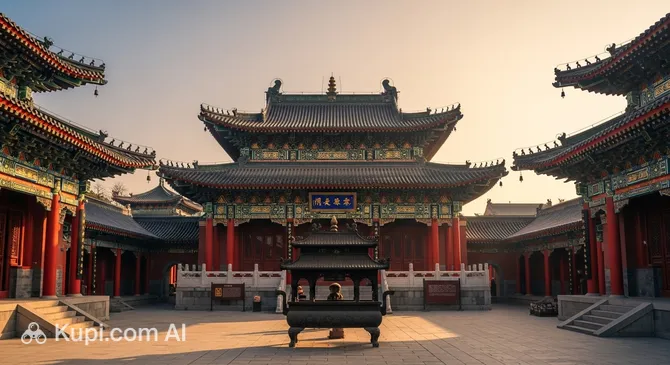
Wenshu Monastery
Wenshu Monastery. Иллюстрация. Источник: Kupi.com AI

Inside the temple walls lies an impressive collection of cultural treasures, including over 500 works of calligraphy and painting by masters of past centuries. Visitors can see rare statues of Buddha made of jade, bronze, and wood, as well as unique Buddhist sutras and relics, such as a fragment of the skull of the famous monk Xuanzang, making Wenshu a must-visit for all history and Eastern philosophy enthusiasts.

Contacts

To plan your visit to this spiritual landmark, you may find the following contact information useful. Although the monastery is an active religious site, it is open to tourists and pilgrims alike.

How to contactContact
Address66 Wen Shu Yuan Jie, Qing Yang Qu, Cheng Du Shi, Si Chuan Sheng, Китай, 610084
Phone+86 28 8693 5293

What to Do

A visit to Wenshu Monastery is, above all, an opportunity to touch a living tradition. Begin your exploration with a walk through the main halls: the Mahavira Hall and the Hall of Great Compassion. Here, you can not only admire the craftsmanship of ancient sculptors but also observe Buddhist rituals and see a unique jade Buddha statue brought from Burma.

One of the most authentic experiences is visiting the monastery tea house. This is the perfect place to rest in the shade of trees, watching games of mahjong or simply enjoying the taste of traditional Chinese tea. Surrounded by greenery and birdsong, you can feel that slow pace of life for which the Sichuan capital is famous.

Be sure to stop by the local vegetarian canteen, where dishes are prepared according to ancient Buddhist recipes. For art lovers, the Sutra Pavilion, which displays masterpieces of calligraphy and painting from the Tang and Song dynasties, will be of particular interest. The monastery remains an active sanctuary, so you can often encounter monks in traditional robes, which adds a special solemnity and depth to the place.

Getting There

Getting to this spiritual center in Chengdu is quite simple thanks to the well-developed transport network. The most convenient and fastest way is to use the metro. You need Lines 1 or 4, getting off at Wenshu Monastery station. From the metro exit, it is just a 5–10 minute walk to the main gates of the monastery.

If you prefer comfort, you can take a taxi or use the Didi mobile app. The ride from the city center will take very little time, and the journey from Shuangliu International Airport is about 30–40 minutes, depending on traffic. Buses 1, 16, 27, 82, and 101 also stop nearby.

For those who enjoy walking, the monastery is within a 20–30 minute stroll from other cultural sites in the Qingyang District. Look for the address 66 Wen Shu Yuan Jie or use navigation apps to find the exact entrance to the complex.

Ближайший город: Chengdu

History & Facts

The history of this sacred site in China dates back to the Sui and Tang dynasties (6th–7th centuries). Originally, the monastery was known as Xinxiang Temple. Over its more than 1,400-year history, the monastery has witnessed many events, and its current appearance was largely formed after a major reconstruction in 1697 during the Qing Dynasty.

The complex received its current name thanks to the legend of the monk Cidu, who lived here at the end of the 17th century. It is said that he led an exceptionally ascetic lifestyle, and after his death, witnesses saw the image of the Bodhisattva Wenshu (Manjushri) in the flames during his cremation. Upon hearing of this miracle, Emperor Kangxi considered the monk an incarnation of the deity, after which the temple was renamed Wenshu Yuan and became an important center for Chan Buddhism.

The monastery is also inextricably linked with the legendary monk Xuanzang, whose journey to India formed the basis of the classic novel "Journey to the West." A fragment of his parietal bone, recognized as a vital Buddhist relic, is carefully preserved here. Today, the monastery is under state protection as a cultural heritage site of provincial significance.

Time Needed

To leisurely explore all the halls and soak in the peaceful atmosphere of the monastery, most travelers need about 2–3 hours. This time is sufficient to get acquainted with the Qing Dynasty architecture, examine the ancient Buddha statues, and stroll through the picturesque inner courtyards.

If you plan to stop by the local tea house or try dishes at the famous vegetarian canteen, you should allow an extra hour in your schedule. Visiting Wenshu Monastery is a great way to take a break from a busy travel itinerary and enjoy moments of tranquility in the heart of a metropolis.

Working Hours

Wenshu Monastery typically welcomes visitors daily from 8:00 AM to 6:00 PM. Morning hours are especially good for those who want to catch the monastery rituals in silence, before the main groups of tourists arrive. Entry to the complex traditionally remains free of charge, highlighting the monastery's status as an open spiritual center.

It is worth noting that the monastery canteen and the famous tea house may close a bit earlier, usually around 5:00 PM. As the exact schedule may change depending on religious holidays or internal events, it is recommended to check for up-to-date information on the city's official tourism resources before your visit.

Nearby

The area surrounding Wenshu Monastery is steeped in history, and exploring this district will help you look deeper into the cultural code of Chengdu. A walk through the adjacent blocks allows you to combine a visit to ancient shrines with modern entertainment and recreational parks.

NameDistance
Kuan Zhai Alley2.2 km
People's Park2.4 km
Wuhou Shrine3.9 km
Jinli Ancient Street3.9 km
Du Fu Thatched Cottage4.7 km
Chengdu Research Base of Giant Panda Breeding – No. 14 Giant Panda Enclosure9.5 km
Chengdu Research Base of Giant Panda Breeding9.6 km

Reached the end of the page?

That means the route is fully explored