Support

Fuyuan Dongji Airport

About the Airport

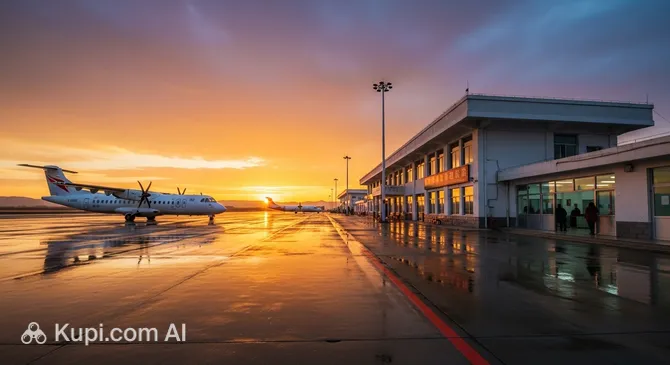
Fuyuan Dongji Airport. Source: Kupi.com Binoculars

Fuyuan Dongji Airport is not just a regional transport hub, but a symbolic air gateway to the country's extreme east, where China is the first to greet the sunrise. This compact and cosy airport, whose name "Dongji" literally translates as "Eastern Pole", provides a vital link between this remote border area and major metropolises. For travellers, it becomes the starting point into a world of wild nature, river landscapes, and a unique blend of cultures.

IATA Code FYJ
ICAO Code ZYFY
City Fuyuan
Distance to City Centre 19 km
Status Domestic
Annual Passenger Traffic ~27,000 (2021 data)

Airport Features and Advantages

The airport's main pride and distinguishing feature is its geographical status as China's easternmost civil airport. For many tourists, arriving here becomes a unique achievement, an opportunity to visit the point that sees the new day before anywhere else in the country. The airport is characterised by high efficiency: thanks to low passenger traffic and a compact terminal, all pre-flight formalities are completed incredibly quickly, sparing guests from tiring queues.

Despite its modest size, Fuyuan Dongji offers passengers a modern level of comfort. The terminal building, opened in 2014, was designed taking into account the region's harsh climatic conditions, ensuring warmth and cosiness at any time of the year. The airport plays a key role in regional accessibility: the flight from Harbin takes just about one and a half hours, which is an excellent alternative to a long journey by train or car.

Contact Information

Fuyuan Dongji Airport (FYJ) is a key transport hub serving the city of Fuyuan and its surroundings in China. Obtaining up-to-date contact information for regional airports can be challenging, so we recommend checking details on your flight tickets or aggregator websites before travelling. Below are the main ways to contact the airport or find the necessary information.

  • Official Website: Finding a dedicated official website for Fuyuan Airport can be difficult. It is recommended to search for information on major Chinese travel portals (such as Ctrip/Trip.com) or on the websites of airlines operating flights to this airport.
  • Inquiry Service Phone: It is best to verify the current phone number on the website of the airline you are flying with, or directly on your ticket. Do not forget that to call from abroad, you must use the international code for China (+86).
  • Airport Address: Fuyuan Dongji Airport, Fuyuan, Jiamusi, Heilongjiang, China. To plot an exact route, use online maps by entering the airport name Fuyuan Dongji Airport (FYJ).
  • Email: A direct email for general inquiries is likely unavailable for the airport. For specific questions (e.g., booking, flight changes), please contact your airline directly.
  • Social Media: Information may appear on official airport accounts on Chinese social networks such as Weibo or WeChat. Use the Chinese name for searching: 抚远东极机场.
  • Lost Baggage Information: In case of lost or damaged luggage, you should immediately contact the Lost & Found counter in the arrival hall or your airline's representative office at the airport.
  • Passenger Support Contacts: Upon arrival at the airport, you can always ask for assistance from staff at the Information Desk located in the main terminal.

How to Get to the Airport

You can get to Fuyuan Dongji Airport (FYJ), located approximately 20-25 km from the city centre of Fuyuan, in several ways. The choice of the best option depends on your budget, time, and personal preferences. On average, the journey from the city centre to the terminal takes about 30-40 minutes.

Public Transport. The most economical way to get to the airport is to use the special shuttle bus that runs between the city and the terminal. Its route and schedule are usually coordinated with arriving and departing flights. The fare is typically around 15–20 CNY. It is better to verify the exact departure point in the city and the time in advance, as there is no direct railway or metro connection to the airport.

Taxi and Transfer. Taking a taxi is the most convenient and fastest option. Cars can be easily found anywhere in the city or booked via an app. This is an excellent choice for travellers with heavy luggage or those who value comfort. The estimated cost of a trip from the city centre to the airport is 60–80 CNY, but the price may vary depending on the time of day and traffic conditions. You can also book a private transfer in advance, which guarantees a meeting at the appointed time.

Car Rental and Parking. If you plan to travel actively around the region, renting a car might be a good solution. However, it is worth noting that for driving in China, foreign tourists are required to hold a Chinese driving licence in most cases. Fuyuan Dongji Airport provides parking where you can leave your car for both short and long terms, which is convenient for those arriving at the airport in their own vehicle.

Terminals and Map

Fuyuan Dongji Airport (FYJ) is a modern and compact aviation hub, making it very convenient for passengers. The airport operates with just one terminal, which serves both domestic and international flights. Thanks to this, you will not have to worry about complex transfers between different buildings—all processes, from check-in to boarding, take place in one location.

The terminal structure is intuitively clear. The building is divided into main zones: departures and arrivals. The departure hall houses check-in counters, after which passengers proceed to the security screening area. The arrival hall is equipped with baggage claim belts and an exit to the public area, where you can order a taxi or meet hotel representatives. Navigation through the terminal is simplified by clear signage, duplicated in English, so it is practically impossible to get lost here.

One of the main features of the airport is the rapid completion of all formalities. Due to low passenger traffic, flight check-in and pre-flight security screening usually take minimal time—often no more than 20-30 minutes. Nevertheless, it is recommended to arrive at the airport generally 1.5-2 hours before departure to avoid unforeseen delays, especially during peak seasons.

Despite its modest size, the terminal offers a basic set of services for a comfortable wait. There are small cafes where you can have a snack, several shops with souvenirs and travel goods, as well as clean and modern waiting lounges. For navigation, simply follow the signs—all key points, from check-in counters to boarding gates, are within a few minutes' walk of each other.

Airport History

The history of Fuyuan Dongji Airport (FYJ) does not go back to the distant past, as it is one of the youngest and most modern airports in the country. Its official opening took place on 26 May 2014. The emergence of this air harbour was a key event for the city of Fuyuan and the entire region, which until that moment did not have direct air connections. The main goal of construction was the development of tourism and the strengthening of economic ties. The airport immediately became an important transport hub in the extreme east of China.

Construction of the airport began in 2012 and was completed in record time. From the very beginning, the project had strategic importance, as it ensured a reliable and fast link between the remote county and major economic centres such as Harbin and Beijing. The airport was designed taking into account modern safety and passenger comfort requirements, and its runway is capable of accommodating medium-haul aircraft, fully covering the region's needs.

One of the most interesting facts is related to the airport's name. The word "Dongji" (东极) translates as "Eastern Pole" or "Extreme Eastern Point". This is not just a beautiful name: Fuyuan Dongji is the easternmost airport in China. It is here, in the vicinity of Fuyuan, that the country meets the first rays of the rising sun, and the airport rightfully bears its symbolic status. For travellers, its opening brought very practical benefits: travel time to major cities was reduced from tens of hours by train to just a few hours of flight.

Services and Facilities

Fuyuan Dongji Airport (FYJ) is a modern and compact air hub offering passengers all necessary services for a comfortable wait for their flight. Despite the small size of the terminal, its infrastructure is well thought out and meets the basic needs of travellers.

Dining and Shopping. Several cafes and snack bars operate within the terminal where you can have a quick bite or a hot drink before departure. There are also small shops selling souvenirs, travel essentials, and local products. The range is not extensive but allows you to purchase the most necessary items.

Wi-Fi and Lounges. For passenger convenience, free Wi-Fi is available in the terminal building. The waiting halls are equipped with counters and sockets for charging mobile phones and other electronic devices. In addition to general areas, VIP lounges with an enhanced level of comfort may be available for business class passengers and loyalty card holders.

Financial and Medical Services. Financial services are represented by ATMs for cash withdrawal. It is worth noting that currency exchange points may be absent or have limited operating hours, so it is better to arrange for local currency in advance. A medical point operates around the clock at the airport to provide emergency assistance.

Services for Passengers with Special Needs. The airport is equipped for the comfortable stay of all categories of passengers. For travellers with small children, a mother and child room is provided. Passengers with reduced mobility can use ramps, special restrooms, and, if necessary, request staff assistance for escorting through the terminal.

Hotels and Business Services. There are no hotels within the airport building itself. The nearest hotels and guesthouses are located in the city of Fuyuan, which can be quickly reached by taxi. Since the airport is primarily focused on passenger transport, specialised conference rooms or business centres are absent on its premises.

Where to Eat

When planning a departure from Fuyuan Dongji Airport (FYJ), it is important to remember that this is a small regional air station. The choice of catering establishments here corresponds to its size—it is focused on basic passenger needs and does not imply a wide variety. All food outlets are concentrated in the single terminal, accessible both in the public area before security and in the departure lounge.

For a quick snack before departure or upon arrival, you will find small kiosks or cafes offering packaged snacks, crisps, pastries, and drinks. This is the simplest and most reliable way to satisfy hunger. If you are hoping for a full meal, look for establishments serving simple hot Chinese dishes. Typically, this is hearty noodles with various toppings or rice with meat and vegetables—a classic option for travellers in China.

Cafes and restaurants at Fuyuan Dongji Airport usually operate according to the flight schedule, opening a few hours before the first departure and closing after the last one. Prices here, as in most airports, will be higher than in the city of Fuyuan itself. Local delicacies or gourmet dishes are hard to find here; the emphasis is on simple and fast food.

Passengers with specific dietary requirements (such as vegetarian, gluten-free, or Halal preferences) may find it difficult to find suitable dishes. Specialised menus are generally unavailable, and the choice is limited. Therefore, if you have strict dietary restrictions, it is recommended to bring food with you. Overall, the establishments at the airport offer functional service for those who need to refresh themselves before the journey.

Travel Tips

Travelling through Fuyuan Dongji Airport, serving the city of Fuyuan in eastern China, will be easier and more pleasant if you prepare in advance. To avoid rushing, arrive at the airport at least 2 hours before a domestic flight and 3 hours before an international one. During peak seasons or holidays, it is worth allowing extra time for completing all formalities.

To save time, use online check-in if your airline provides this option. This will allow you to proceed straight to baggage drop or, if you are travelling light, to the security screening area. Be prepared for security checks at Chinese airports to be quite thorough. Remove all electronic devices, including laptops, tablets, and portable power banks, as well as liquid containers, from your hand luggage in advance.

When choosing a seat on the plane, be guided by your preferences: a window seat offers beautiful views during take-off and landing, while an aisle seat allows you to stand up and stretch your legs freely. Regarding hand luggage, standard rules limit the carriage of liquids (up to 100 ml in one container, packed in a transparent bag). Sharp objects are prohibited. Pay special attention to portable batteries (power banks): they can be carried only in hand luggage, and their capacity must not exceed the limits established by the airline (usually clearly marked on the device).

If you have a connecting flight, verify in advance whether you will need to collect and re-check your luggage. For international transfers, you will have to undergo customs and passport control. Familiarise yourself with China's customs regulations to know which goods and amounts are subject to declaration. Keep all necessary documents (passport, visa, boarding passes) close at hand.

To save money, bring an empty reusable water bottle with you—after security, it can be filled at drinking fountains. Prices for food and drinks at the airport are generally higher, so you can bring light snacks with you. Study transfer options from the airport to the city in advance: buses are often a more budget-friendly alternative to taxis.

In case of a flight delay or cancellation, remain calm. First of all, monitor information on the departure boards and listen to announcements. Contact your airline's counter for current information. Depending on the length of the delay, the carrier is obliged to provide passengers with drinks, meals, and for long waits, hotel accommodation. Having travel insurance that covers such cases can significantly simplify resolving any issues that arise.

Reached the end of the page?

That means the route is fully explored